

Small rooms become frustrating when everyday belongings have nowhere convenient to return.
These Small Space Storage Ideas focus on practical systems that stay organized after the initial cleanup, not containers that simply hide clutter for a few days.
You will find solutions for overlooked gaps, cabinet corners, doors, walls, furniture interiors, and high spaces, along with simple routines that protect each setup. Every idea considers access, safety, capacity, and the way people actually use their homes. In my experience, storage remains tidy when returning an item requires less effort than leaving it on a nearby surface. Start with the area that creates the most daily frustration, then choose a solution that fits your habits, available space, and realistic maintenance time.
Table of Contents
Daily Clutter Inventory
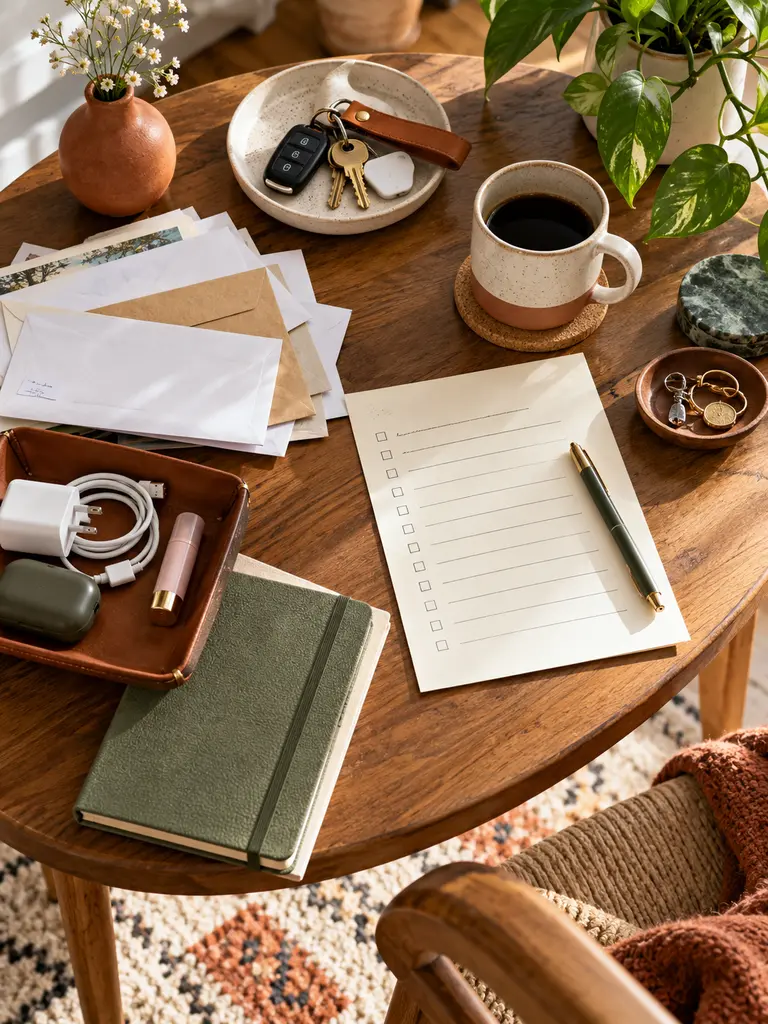
Clutter rarely appears randomly. Track what lands on counters, chairs, floors, and tables for three ordinary days before buying containers. Record the item, where it collects, who uses it, and how often it needs to be returned to its proper storage location.
Patterns reveal whether the real problem is limited capacity, inconvenient placement, or an unrealistic routine. In my experience, the best small space storage ideas begin with these repeated habits. Give frequently dropped items nearby homes, while relocating occasional belongings away from valuable everyday surfaces.
Before adding more containers, review these Small Apartment Decorating Ideas to improve furniture placement, daily function, and storage flow throughout a compact home.
One-Motion Drop Zone
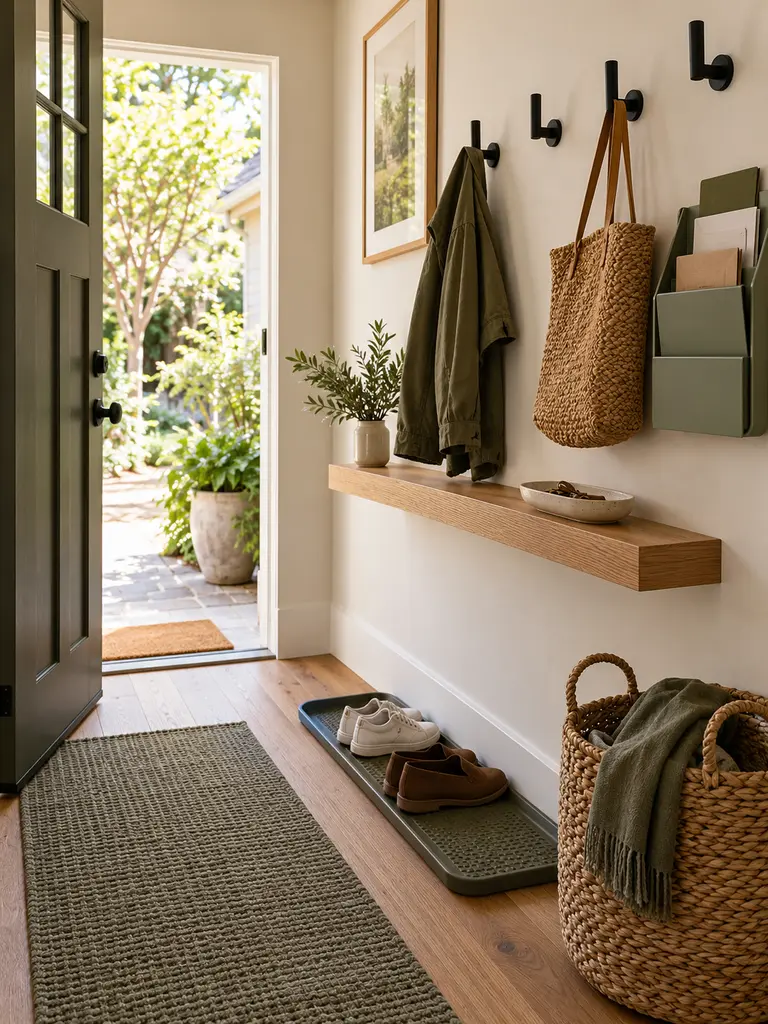
- Choose a location directly beside the entrance or the first surface people naturally approach.
- Add one tray for keys, cards, and other pocket-sized essentials.
- Install sturdy hooks for bags and lightweight outerwear at comfortable reaching heights.
- Place a washable shoe tray or compact basket below the hooks.
- Include a narrow mail slot so papers do not spread across the console.
A drop zone stays tidy when every item can be stored without opening several lids or crossing the room. Keep each category limited to its assigned space, and clear unwanted mail immediately. If bags still land on chairs, move the hook closer to the natural arrival path instead of adding another container.
Toe-Kick Drawer Zone

Quick Tip:
Confirm that the cabinet base can be modified safely before installing anything. Choose smooth, fully enclosed drawers with recessed pulls so feet, vacuum heads, and nearby doors do not catch on projecting hardware.
Toe-kick drawers recover a shallow area that often remains unused beneath suitable cabinetry. They work best for flat baking trays, spare linens, placemats, or occasional supplies rather than daily essentials. Label the inner edge discreetly, and avoid storing anything vulnerable to floor moisture, dust, heat, or accidental impact.
Door-Depth Pantry
BEFORE:
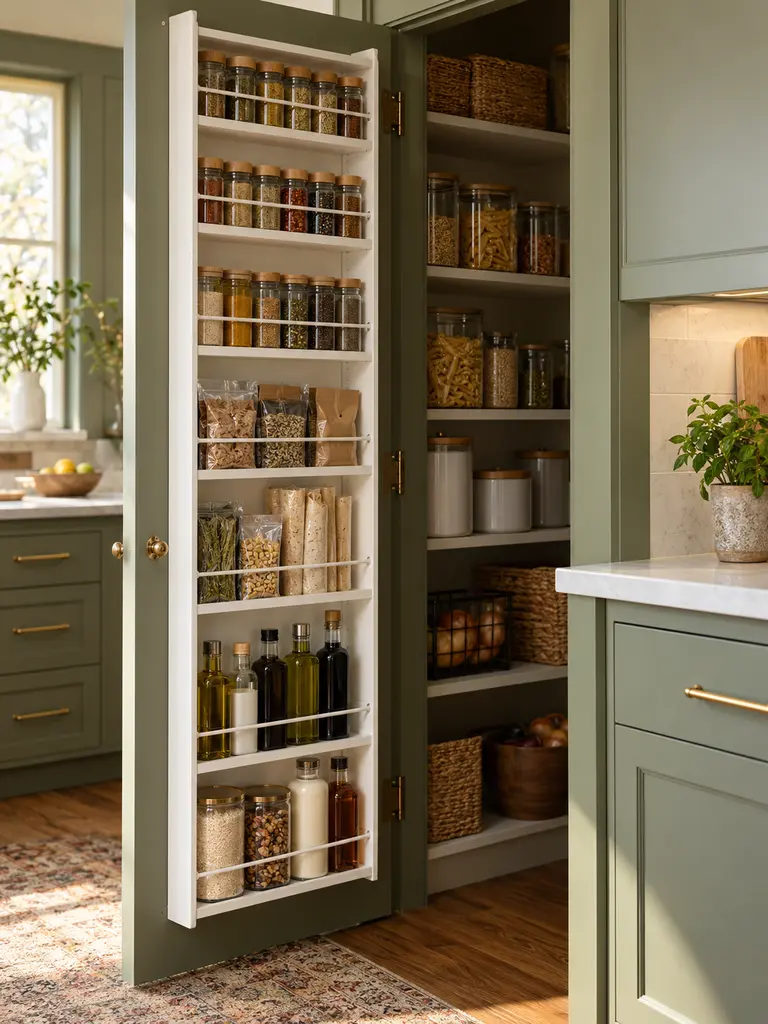
Packets, wraps, spices, and lightweight jars compete for space on deep shelves. Smaller supplies disappear behind larger containers, leading to forgotten food and duplicate purchases.
AFTER:
A narrow rack behind the door keeps frequently used items visible in one layer. The main shelves remain available for heavier groceries, appliances, and bulk supplies.
A door-mounted pantry works only when the rack depth suits the available clearance. Measure the gap between the closed door and interior shelving, then test hinge movement with the organizer loaded. Store lightweight goods below the recommended weight limit, and prevent tall bottles from tipping with secure front rails.
Stair-Riser Compartments
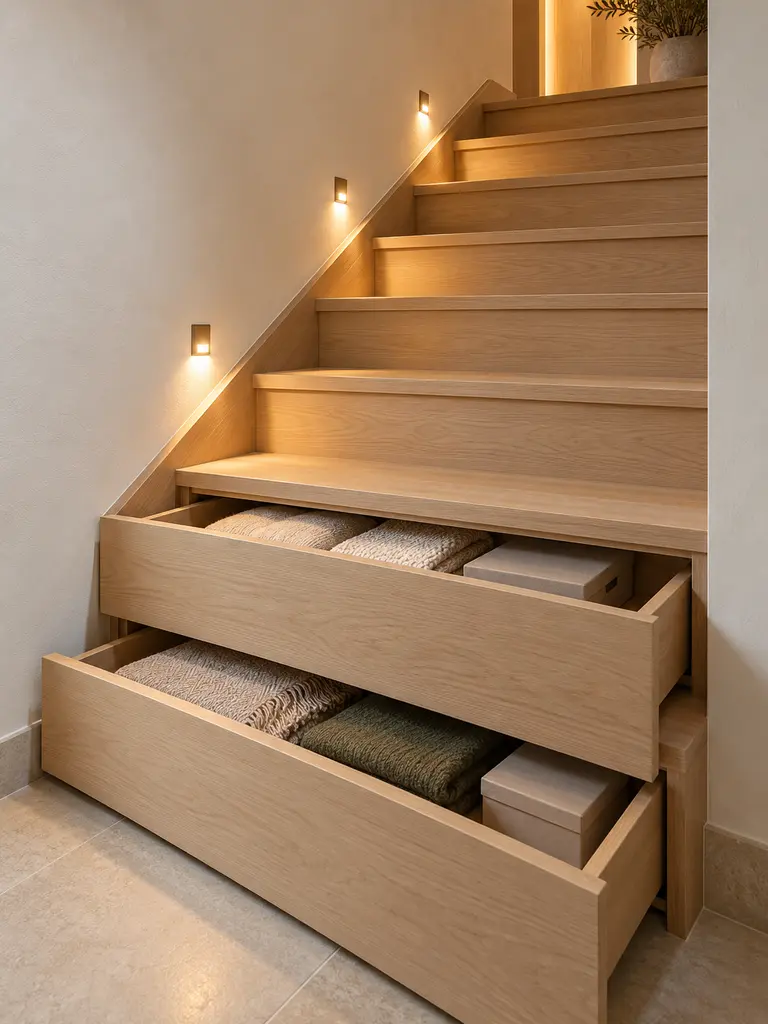
- Request a structural assessment. Confirm that the selected risers can be altered without weakening the staircase.
- Choose suitable contents. Reserve the compartments for compact, lightweight items used occasionally.
- Install flush fronts. Use recessed pulls or push-release hardware that will not catch feet.
- Protect the interior. Add smooth liners that can be removed for cleaning.
- Test every step. Check for movement, noise, sharp edges, and incomplete closure.
Hidden stair storage adds capacity without placing another cabinet in the room, but safe construction matters more than volume. Professional installation is often appropriate because stairs are structural and heavily used. Keep frequently needed objects elsewhere, and inspect the closures regularly so no drawer can project into the walking path.
Sofa-Back Storage Console

| Feature | Standard Side Table | Sofa-Back Console |
|---|---|---|
| Storage position | Beside one seat | Across the sofa width |
| Floor use | Occupies side clearance | Uses narrow rear space |
| Cable control | Often visible | Easier to conceal |
| Best contents | Drinks and small items | Books, chargers, and remotes |
A slim console behind a floating sofa can organize shared living room essentials while defining the seating zone. Select a unit no taller than the sofa back, secure unstable furniture, and leave sufficient passage behind it. Shallow drawers or lidded compartments keep practical objects available without exposing everyday visual clutter.
A sofa-back console can also support Smart Studio Apartment Zones by creating storage and a clear boundary between living and sleeping areas.
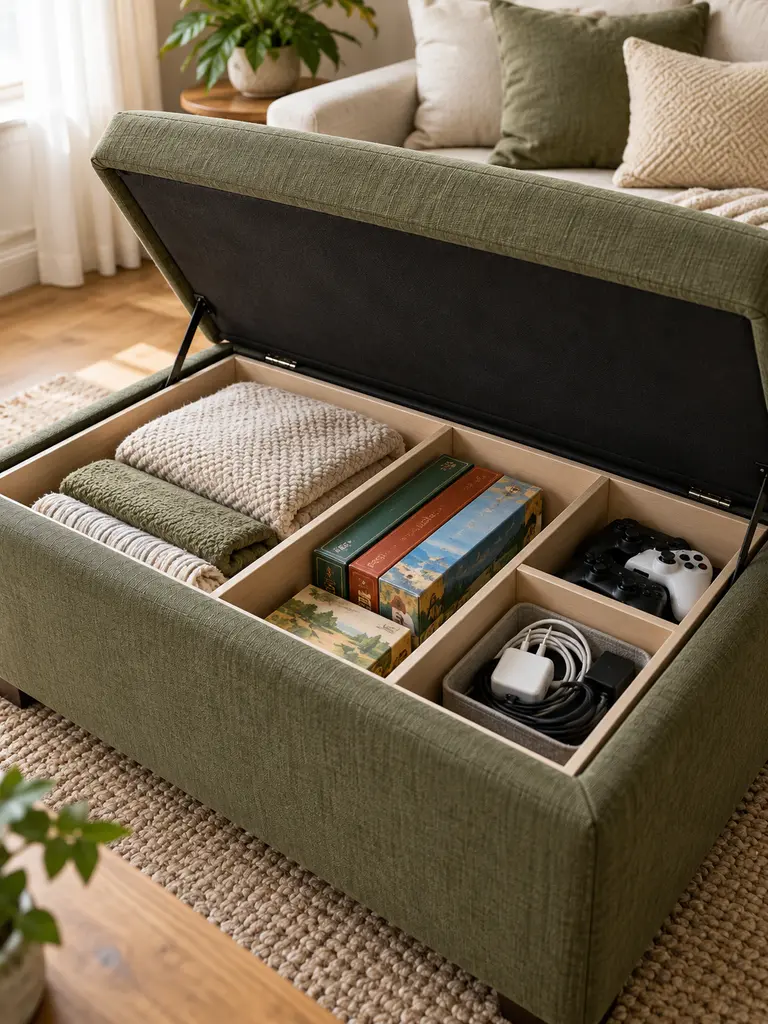
Divided Ottoman Interior
DO
- Assign one removable compartment to each item category.
- Use soft dividers that will not damage electronics or textiles.
- Keep frequently used objects near the opening edge.
- Measure the interior before purchasing organizers.
DON’T
- Mix chargers, games, blankets, and loose accessories together.
- Fill the ottoman beyond its closing capacity.
- Store damp fabrics inside enclosed furniture.
- Place heavy objects where they affect stability.
Internal dividers stop a storage ottoman from becoming one deep, disorderly container. Lift-out bins also make cleaning and category changes easier. Keep the heaviest items low and evenly distributed, and review the contents monthly. If the lid requires force to close, remove items rather than compressing soft furnishings inside.
A storage ottoman works especially well in Easy-flow Living Room Layouts because it can replace a fixed table and move when extra floor space is needed.
Ceiling-Edge Cabinet Run

Cost: Moderate to high
Installation: Professional support may be required
Best For: Seasonal decor, spare linens, and lightweight archives
Result: Closed storage without sacrificing usable floor area
Upper perimeter cabinets make use of wall space that ordinary shelving rarely reaches. Match their color to the wall or ceiling for a quieter visual effect, and reserve them for infrequently needed belongings. Secure every unit to appropriate structural support and use a stable step stool whenever access is required.
Pegboard Utility Strip

A narrow pegboard creates adaptable storage without covering an entire wall. Install it near a desk, craft table, kitchen work zone, or utility corner where small tools repeatedly gather. Limit the setup to hooks, cups, and shelves that serve clear categories instead of filling every available hole.
Arrange frequently used items between waist and eye level, with lighter occasional supplies above. I’ve seen this work well because the layout can change without replacing the whole system. Trace container positions discreetly or photograph the finished board so everyone knows where each item should return.
Fold-Down Supply Desk
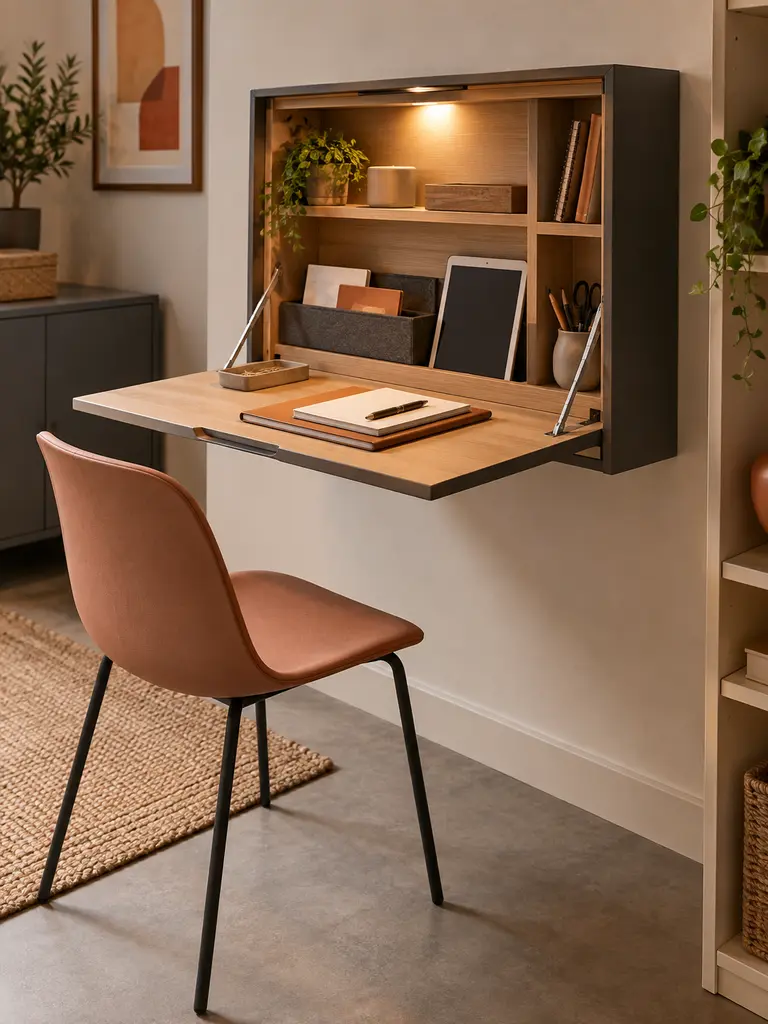
- Let one wall surface handle both focused work and closed storage.
- Choose a desk with a secure folding mechanism and clearly stated weight capacity.
- Reserve shallow compartments for current paperwork, stationery, and compact devices.
- Mount the unit at a comfortable seated height with appropriate wall fixings.
- Keep the floor beneath it clear so a chair can move away easily.
A fold-down desk suits rooms where permanent furniture would obstruct circulation between tasks. Close it after work to recover floor space and hide active supplies. Before installation, test the proposed outline with removable tape, then confirm comfortable knee room, nearby power access, and enough clearance for the fully opened panel.
For more compact workspace inspiration, explore these practical desk ideas for small bedrooms that keep floor space clear and everyday supplies organized.
Nested Basket Categories

Quick Tip:
Place smaller baskets inside one larger category bin only when every layer remains easy to lift and identify. Use simple labels on inner containers so family members do not need to search through the full set.
Nested baskets prevent tiny belongings from becoming mixed inside an oversized container. For example, one larger craft basket can hold separate bins for adhesives, cutting tools, and paper scraps. Choose washable or wipeable materials, avoid stacking beyond comfortable reach, and leave a little spare capacity for items awaiting return.
Renters can combine portable baskets with these Damage-free Rental Bedroom Ideas to add storage, color, lighting, and personality without altering permanent surfaces.
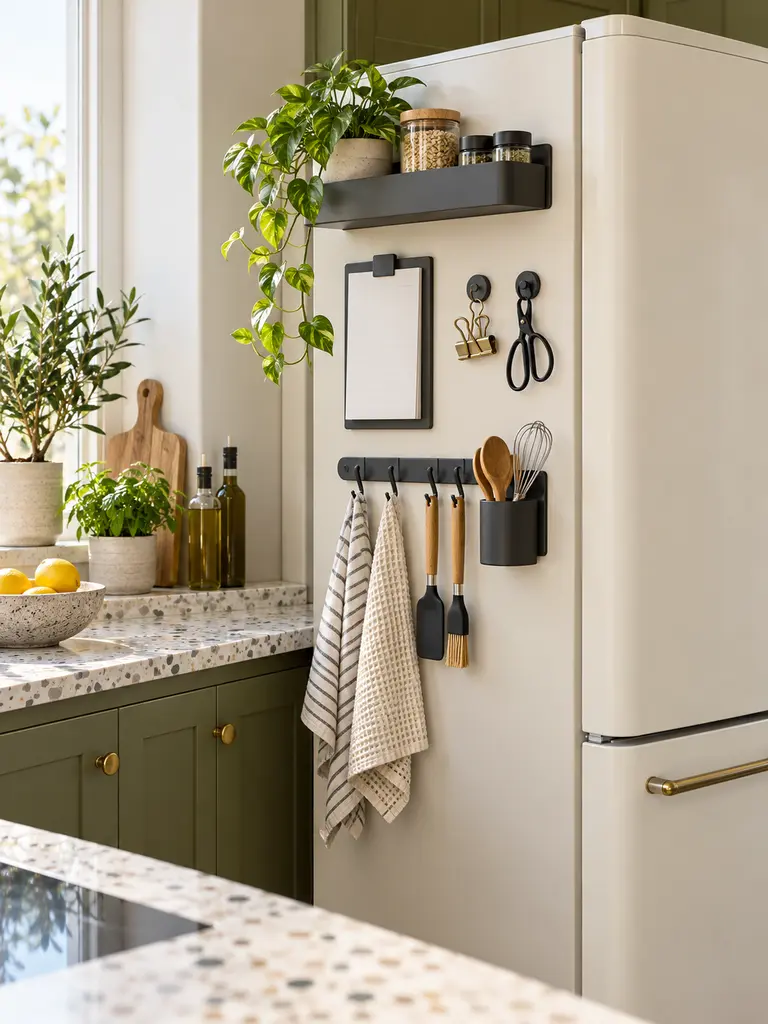
Magnetic Sidewall Station
BEFORE:
The refrigerator side remains empty while clips, shopping lists, towels, and small tools occupy drawers or countertops. Loose magnets hold random papers without creating useful order.
AFTER:
Purpose-built magnetic organizers group lightweight essentials into clear categories. Frequently used items become visible without taking over the front of the refrigerator or reducing worktop space.
A magnetic station works best with a limited purpose, such as meal planning, cleaning cloths, or coffee supplies. Verify that the surface is magnetic, respect each organizer’s load rating, and keep attachments away from heat and moving doors. Remove unused pieces before the sidewall becomes another crowded display.
Sink-Side Pullout

- Measure the complete gap. Record width, depth, height, plumbing clearance, and nearby door movement.
- Choose sealed construction. Select moisture-resistant materials with smooth surfaces that clean easily.
- Group supplies by use. Separate bottles, brushes, cloths, and refill products inside removable containers.
- Add secure stops. Prevent the unit from rolling or pulling completely free during daily use.
- Test loaded movement. Confirm that weight remains stable when the pullout is extended.
A narrow pullout keeps sink supplies upright and reachable without covering the counter. Use short containers that cannot tip into plumbing or door hardware, and wipe spills quickly. In bathrooms, allow damp cloths to dry before storing them inside. A removable liner makes leak checks and routine cleaning much easier.
Once everyday supplies are organized, these budget-friendly bathroom ideas can help the room feel calmer and more spa-like.
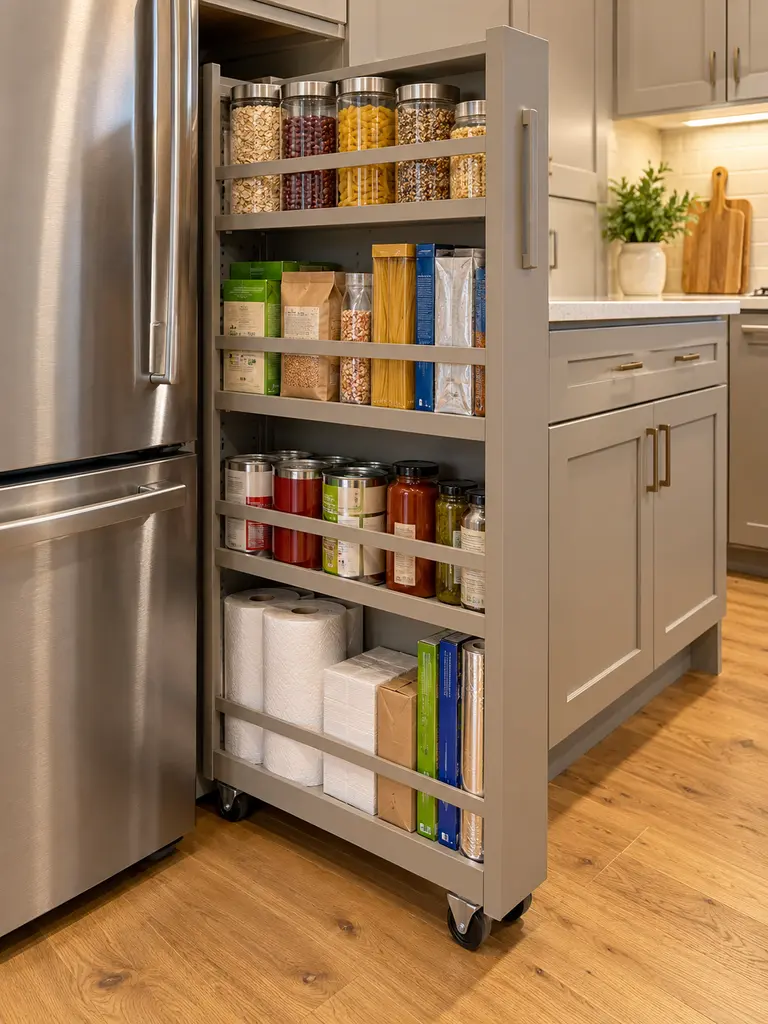
Refrigerator Gap Tower
| Feature | Open Gap | Rolling Tower |
|---|---|---|
| Storage value | Space remains unused | Narrow capacity is recovered |
| Item visibility | Not applicable | Products stay in shallow rows |
| Cleaning access | Easy but often ignored | Unit rolls out for cleaning |
| Safety concern | Dust accumulation | Stability and ventilation |
A gap tower can hold sealed tins, packets, wraps, or spare paper goods without crowding kitchen cabinets. Follow the refrigerator manufacturer’s ventilation requirements and never force storage into required clearance. Select a stable unit with raised edges, smooth wheels, and a handle that does not project into the walking route.
For more ways to organize groceries without dedicated storage, explore these Small Kitchen Ideas Without A Pantry.
Towel Ladder Storage
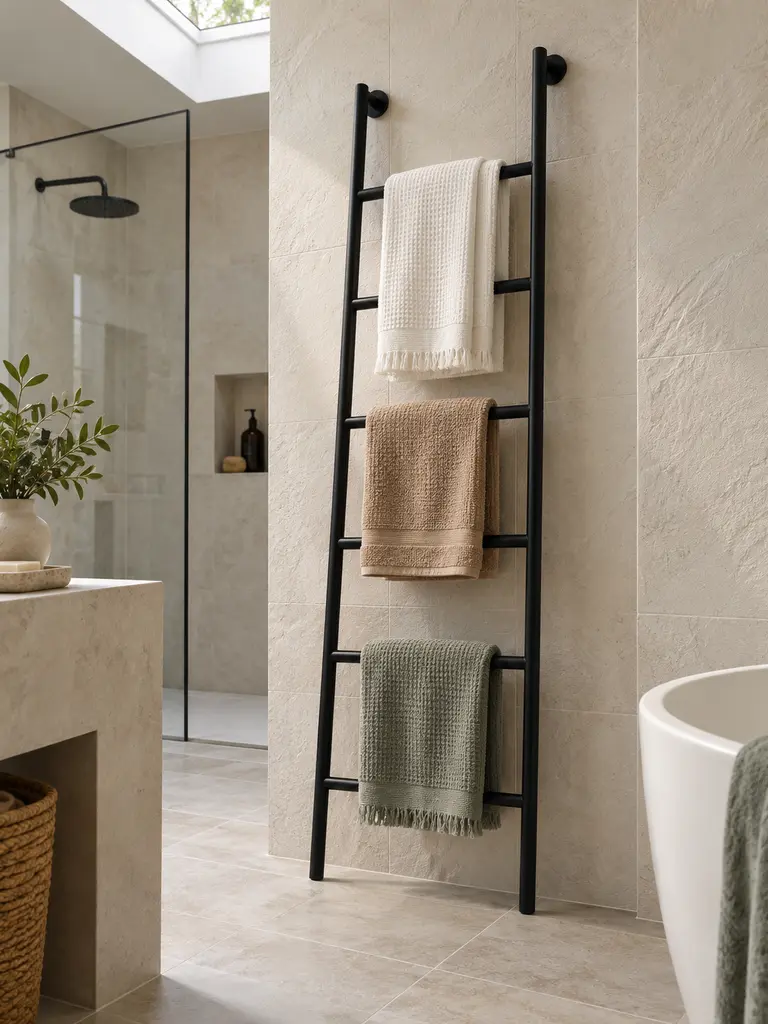
DO
- Secure the ladder according to its design.
- Assign each rung to one towel size or user.
- Leave space between damp textiles for airflow.
- Position it beyond door and drawer swings.
DON’T
- Depend on an unsecured decorative ladder.
- Overload narrow rungs with heavy wet towels.
- Block ventilation or heating equipment.
- Allow fabric to trail onto the floor.
Vertical towel storage uses wall height while keeping folded and drying textiles easy to reach. Choose moisture-resistant materials and check that the structure cannot slide or tip. Washable hooks or small hanging baskets may hold light accessories, but limiting the ladder to towels creates a calmer and more maintainable bathroom setup.
If your bathroom has limited floor space, these Over The Toilet Storage Ideas provide shelves, cabinets, and covered organization above an overlooked area.
Bedside Pocket Rail
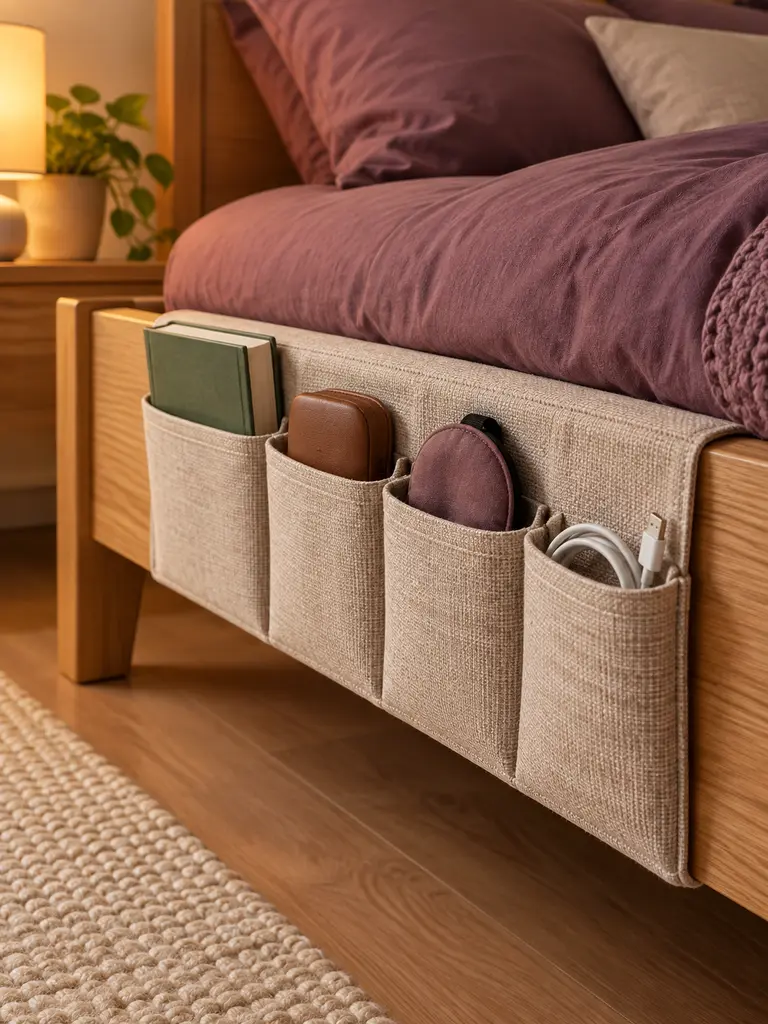
Cost: Low
Setup Time: Less than one hour
Best For: Books, glasses, chargers, and sleep accessories
Result: Clearer bedside surfaces with essentials within reach
A fabric pocket rail gives small nighttime items a defined home without requiring another table. Choose washable, structured pockets that remain flat against the bed and do not interfere with getting in or out. Secure cords separately, avoid overfilling the compartments, and confirm that every attachment suits the bed-frame design.
For additional ways to organize nighttime essentials without crowding the floor, explore these practical Small Bedroom Storage Ideas.
Above-Door Archive Shelf
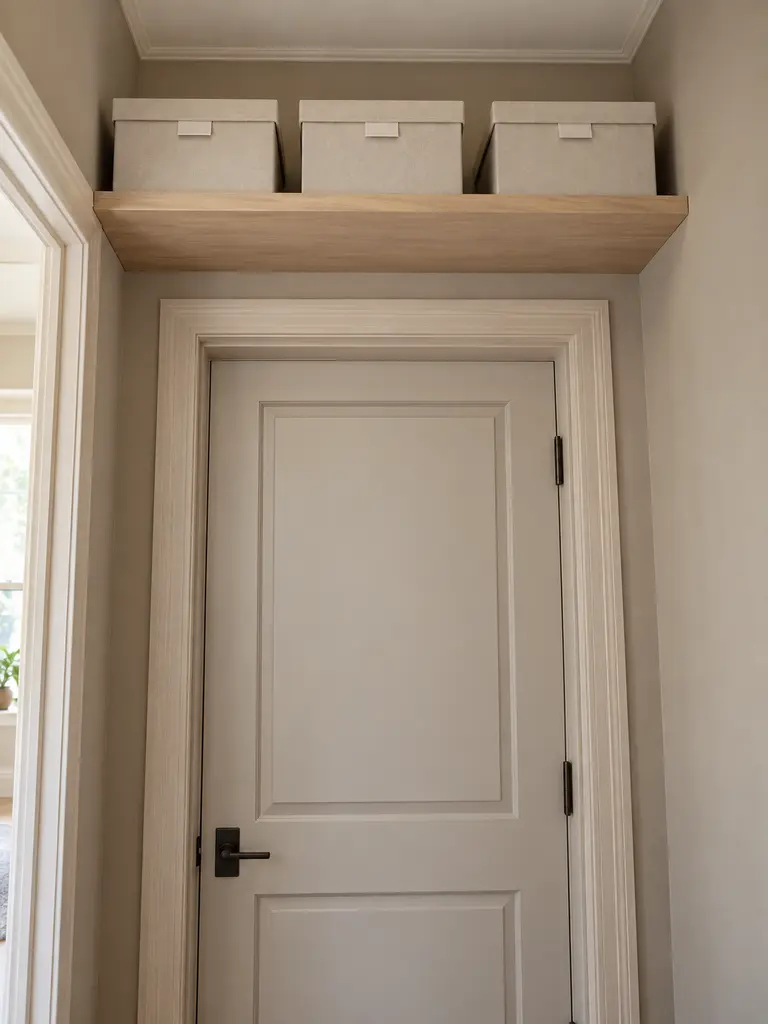
The wall above a doorway can hold lightweight archives without reducing useful floor area. Install one properly supported shelf with enough clearance for the door, trim, and ceiling. Store only infrequently used items inside matching lidded boxes that can be lifted safely without shifting their contents.
Label each box from below and record what it contains before placing it overhead. In my experience, high storage stays useful only when retrieval is planned carefully. Avoid loose objects, fragile pieces, and excessive weight, and use a stable step stool rather than climbing nearby furniture.
If your bedroom lacks built-in storage, these No closet Bedroom Storage Ideas provide more ways to use overlooked walls, doors, and vertical areas.
Corner Carousel Storage

- Recover the deepest part of a corner cabinet with a rotating organizer sized for the interior.
- Measure around hinges, plumbing, shelf supports, and door openings before purchasing it.
- Group similar jars, bottles, or cleaning products on the same level.
- Keep heavier containers near the center to support smooth rotation.
- Leave enough space between items so labels remain visible.
A carousel turns hard-to-reach cabinet depth into accessible storage without requiring items to be removed from the front first. Choose a model with a raised rim and nonslip base, then rotate it fully while loaded. Regularly wipe the platform and remove expired or duplicate products before the organizer becomes overcrowded.
Refill Supply Station

Quick Tip:
Choose one shelf, cabinet, or lidded bin for household refills and organize it by room or product type. Write the open date on products with limited shelf life, and place older supplies toward the front.
A refill station reveals what the household already owns before another purchase is made. Keep a simple inventory note inside the cabinet or on your phone, and set a maximum quantity for each product. Avoid storing incompatible chemicals together, and always follow packaging guidance for temperature, ventilation, and child safety.
For a tidier bathroom, explore these small bathroom storage ideas to organize spare toiletries, everyday essentials, and cleaning supplies without overcrowding your space.
Vertical Lid Divider
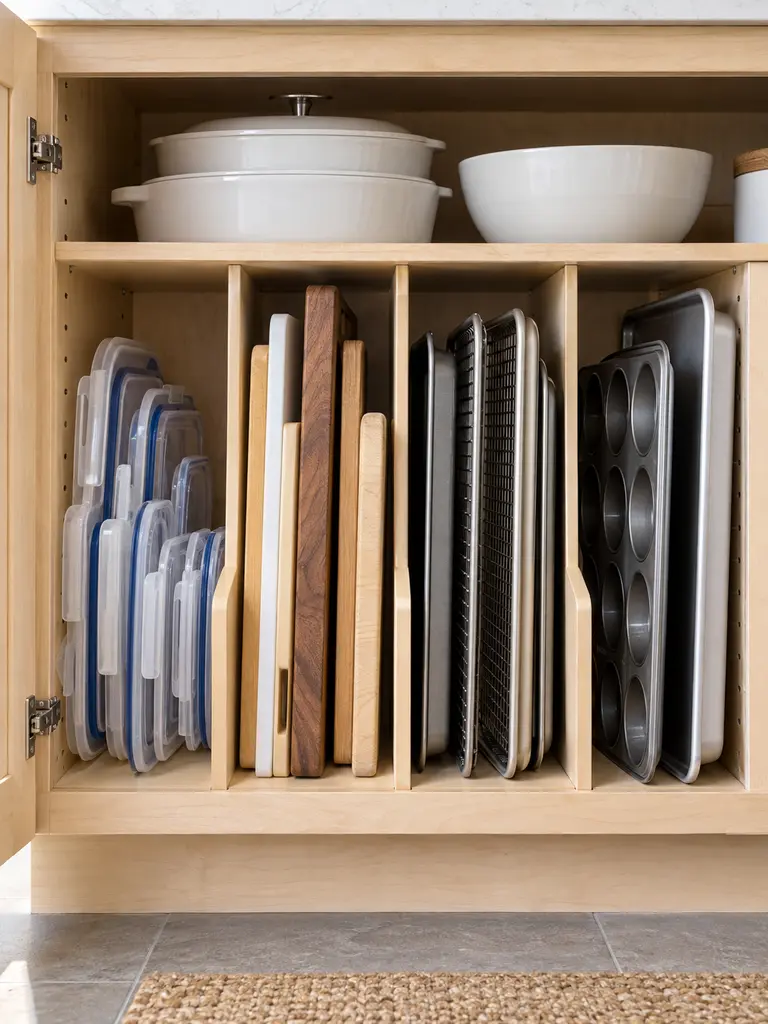
BEFORE:
Container lids and flat trays are stacked in uneven piles that shift whenever one piece is removed. Matching the correct lid takes longer, while smaller pieces disappear beneath larger ones.
AFTER:
Adjustable dividers hold each category upright in visible rows. Lids, boards, trays, and baking sheets can be removed individually without disturbing everything beside them.
Vertical storage makes thin kitchen items easier to sort, count, and return. Arrange pieces by shape or purpose, and keep matching container lids close to their bases. Select dividers that remain stable inside the cabinet, and avoid packing sections so tightly that sharp edges scrape neighboring items or fingers.
For more ways to organize cookware, cabinets, and overlooked kitchen areas, explore these small kitchen storage ideas designed to reduce everyday clutter and make limited space work harder.
Room Return Basket
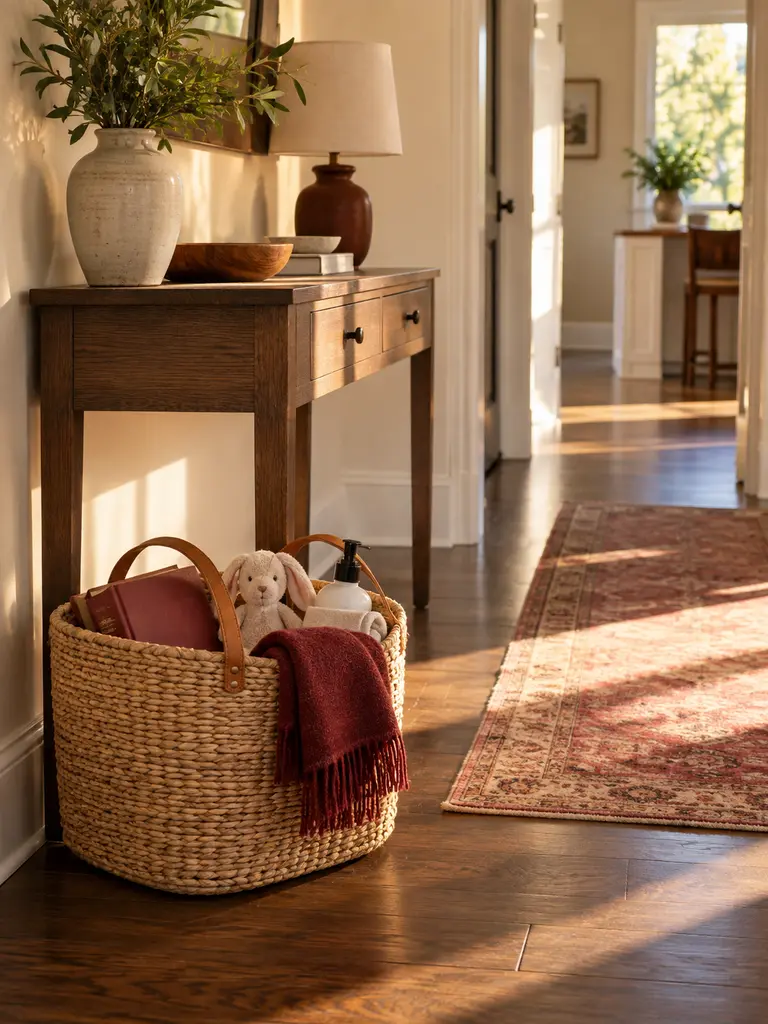
- Choose one portable basket. Select a lightweight container with comfortable handles and a fixed capacity.
- Assign its purpose. Use it only for objects that belong in another room.
- Set a reset time. Empty the basket once each evening or after the busiest household period.
- Return by route. Carry it through the home once and replace each item directly.
- Finish empty. Put the basket back in its assigned location without leftover objects.
A return basket prevents misplaced belongings from creating small piles across several rooms. The system works because collection and redistribution happen at predictable times. Keep the basket small enough to carry easily, and never let it become permanent storage. An item that repeatedly returns may need a more convenient home.
Five-Minute Surface Reset

| Task | Occasional Deep Cleanup | Daily Five-Minute Reset |
|---|---|---|
| Frequency | Weekly or irregular | Every evening |
| Main focus | Entire room | Visible active surfaces |
| Effort | Longer and tiring | Short and repeatable |
| Clutter control | Removes existing buildup | Prevents new buildup |
A brief reset protects the storage systems already in place by returning daily items before piles develop. Start with the entry surface, kitchen counter, coffee table, and bedside area. Use a timer, involve everyone who shares the space, and stop after five minutes so the routine remains realistic enough to repeat.
Monthly Capacity Review

DO
- Check containers for overflow and unused contents.
- Remove empty packaging and expired products.
- Resize categories that have genuinely changed.
- Return misplaced items to their correct zones.
DON’T
- Buy larger containers before reducing unnecessary contents.
- Keep empty organizers without a planned purpose.
- Move clutter from one hidden area to another.
- Treat every sentimental item as everyday storage.
Monthly reviews keep compact storage responsive to real household needs instead of allowing each zone to become permanently full. Focus on one room at a time and note which categories repeatedly exceed their limits. The goal is not constant decluttering, but maintaining enough spare capacity for items to return easily.
Conclusion
An organized small home does not require filling every wall with shelves or buying endless containers. The most effective Small Space Storage Ideas give everyday belongings clear homes, make frequently used items easy to reach, and include enough spare capacity for simple returns. Choose one problem area, test a practical solution, and adjust it around your routine. I’ve seen how a well-placed basket, divider, or narrow pullout can remove repeated frustration from daily life. Save this post on Pinterest, try one or more ideas this week, and share it with someone who needs calmer rooms. Start small and keep your progress easy to maintain.