
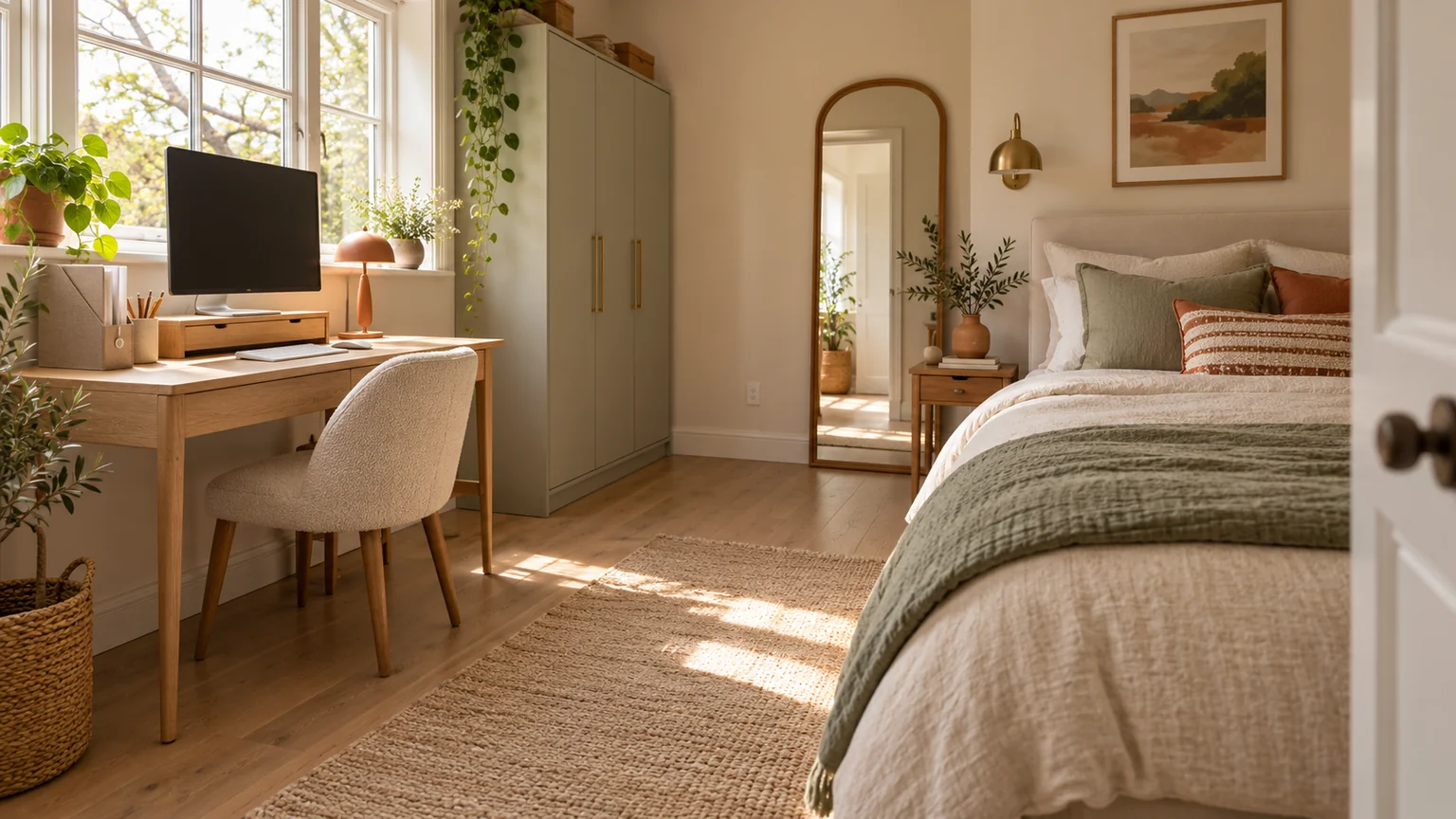
A productive workspace should not make your bedroom feel cramped or chaotic.
These Small Bedroom Desk Ideas show how the right furniture, placement, and storage choices can create a comfortable work zone while protecting valuable floor space.
You will find practical solutions for awkward corners, narrow walls, window areas, closets, and spaces beside the bed. Each setup considers everyday details such as chair clearance, cable control, natural light, and easy cleanup. In my experience, a compact workspace stays useful longer when it supports your actual routine instead of holding unnecessary office supplies. Whether you work remotely, study, journal, or manage household tasks, these ideas will help you build a desk area that feels focused, tidy, and visually calm.
Table of Contents
Work Zone Audit
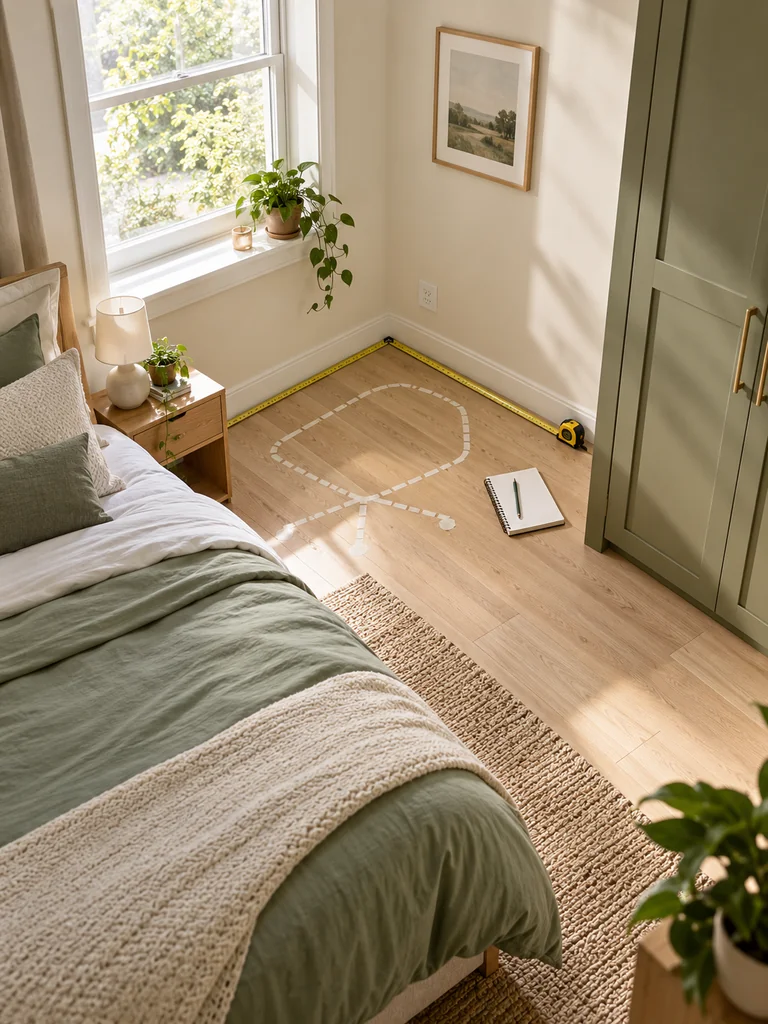
A desk that fits physically can still disrupt a small bedroom if it blocks drawers, curtains, or the natural walking route. Measure the wall width, available depth, chair movement, door swing, outlets, and window access before comparing furniture. Record every measurement instead of estimating.
List the tasks you complete most often, including laptop work, writing, video calls, or crafts. In my experience, this step prevents people from buying oversized desks with storage they never use. Your final setup should support real work while preserving comfortable movement, sleep, and daily bedroom routines.
Slim Parsons Desk
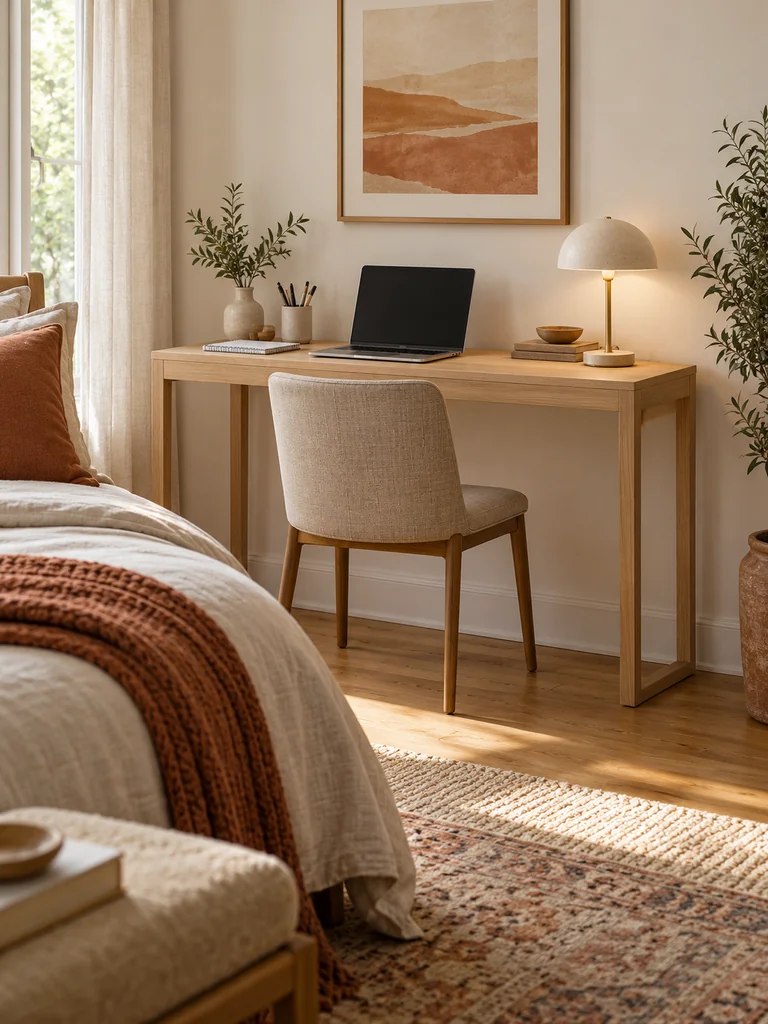
- A visually quiet desk begins with straight lines, slim legs, and a shallow work surface.
- Choose a width that supports your laptop and one notebook without encouraging unnecessary piles.
- Check the desk height against your chair before purchasing to protect comfortable posture.
- Select an open-leg design so more flooring remains visible beneath the furniture.
- Keep storage separate and limited rather than choosing a bulky desk with deep side cabinets.
A slim Parsons desk creates a defined workspace without making the bedroom feel furniture-heavy. Place it against an uninterrupted wall and keep the styling restrained with one lamp and a small supply container. This arrangement works especially well for light computer tasks, studying, journaling, or occasional remote work.
Nightstand Desk Hybrid
Quick Tip:
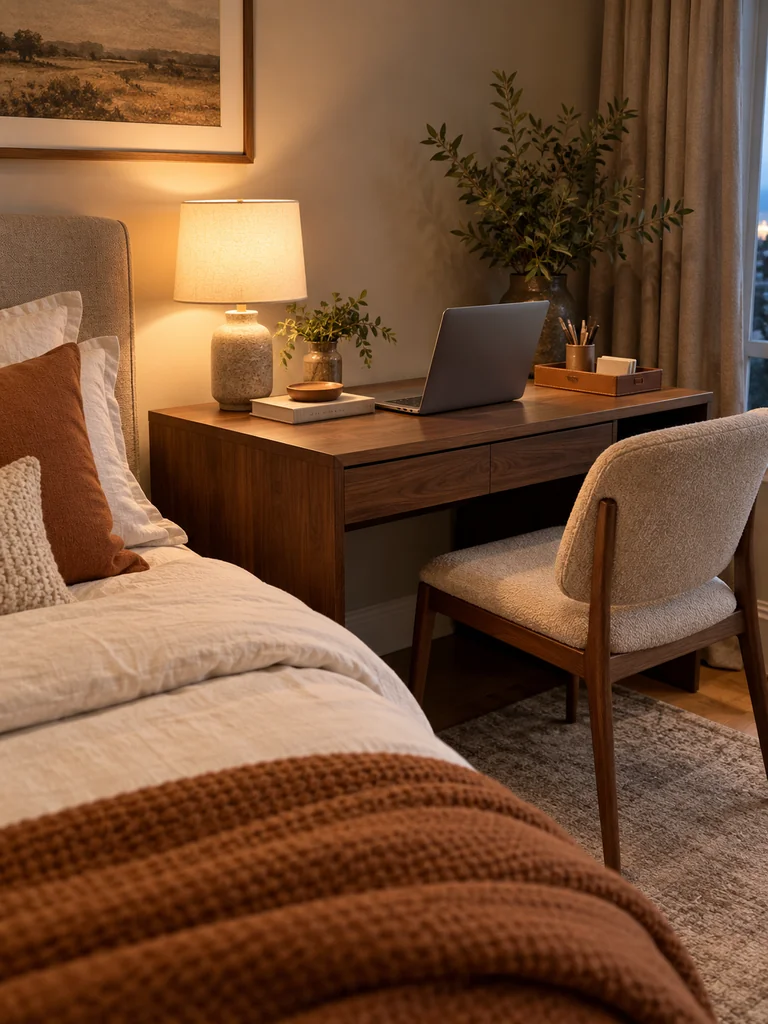
Choose a desk surface that sits close to the mattress height and provides enough room for both nighttime essentials and work tools. Use separate trays for each function so a water glass never sits beside electronics or paperwork.
One compact surface can replace two furniture pieces when the bedroom lacks space for a separate nightstand. Reserve the side nearest the bed for a lamp, book, and phone, then keep the remaining area clear for work. Finish each session by removing office supplies before bedtime.
Window-Facing Workspace

BEFORE:
A desk placed without considering daylight can leave the screen covered in glare or make the room feel unnecessarily dark. Curtains may catch behind furniture, while a nearby window becomes difficult to open.
AFTER:
A shallow desk sits near the window at an angle that provides natural light without reflecting directly on the screen. Curtains, handles, ventilation, and the walking route remain fully accessible.
Natural light can make a compact workspace feel more pleasant, but comfort depends on careful positioning. Test the screen at different times of day before settling on the layout. Leave enough distance for curtain movement, avoid blocking heating sources, and add an adjustable blind if afternoon glare becomes distracting.
Closet Office Nook
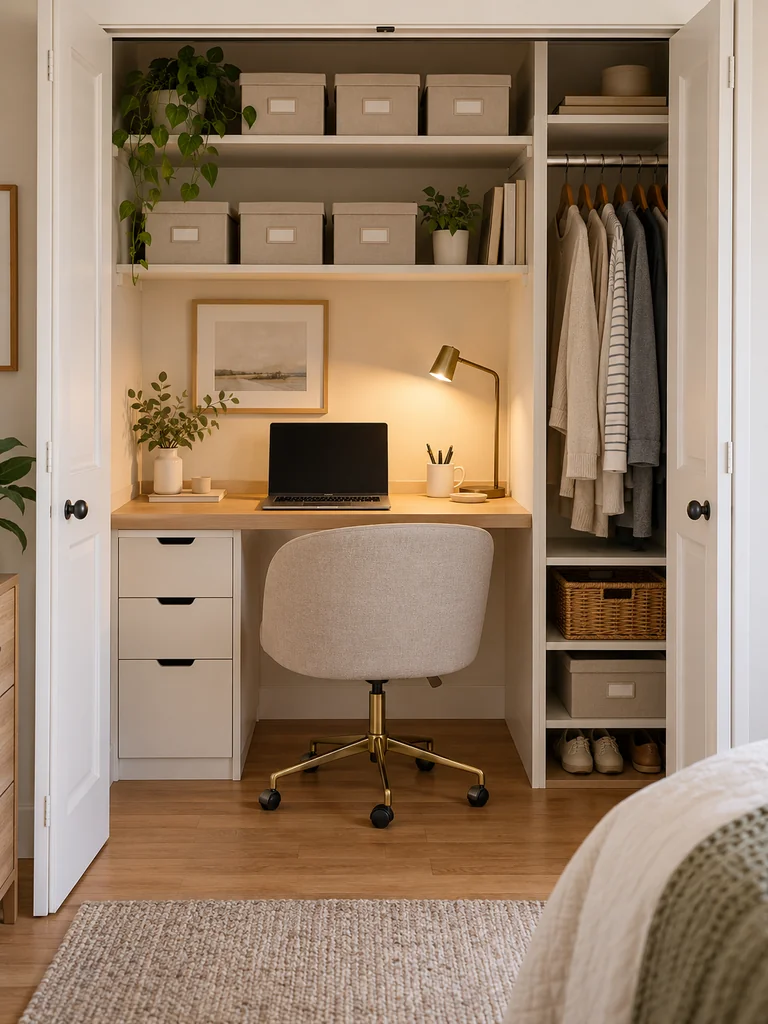
- Empty one suitable closet section and confirm which clothing or belongings must remain.
- Measure the interior width, depth, shelf height, outlet access, and chair clearance.
- Install a correctly supported work surface or place a precisely sized freestanding desk inside.
- Use upper shelving for lightweight office supplies stored inside shallow labeled containers.
- Add a focused rechargeable lamp if the nook lacks safe, suitable lighting.
A closet nook contains visual work clutter behind existing doors or curtains, helping the bedroom return to a restful mood after work. Preserve ventilation and essential wardrobe capacity, and never crowd electrical equipment into a closed space. This arrangement works best for compact laptops, paperwork, and short focused sessions.
Before converting closet space into an office, review these small bedroom storage ideas to protect the room’s essential clothing capacity.
Corner Triangle Desk
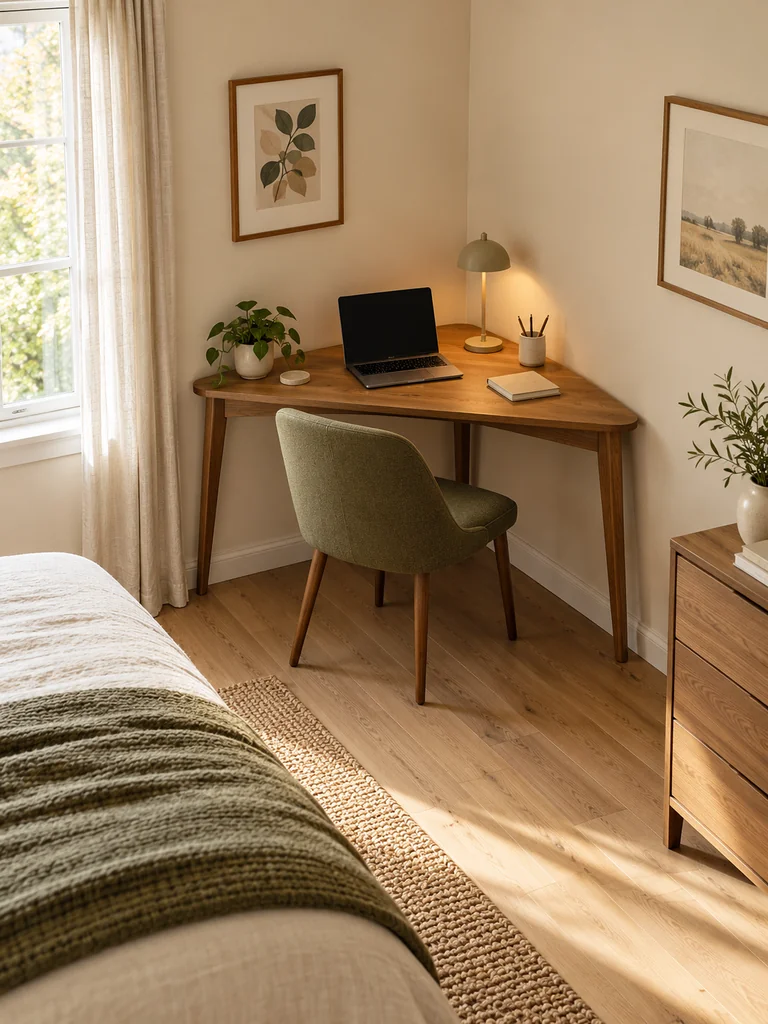
| Feature | Rectangular Desk | Triangle Desk |
|---|---|---|
| Corner Fit | Leaves awkward gaps | Uses the full corner |
| Floor Projection | Extends farther outward | Keeps central space open |
| Work Surface | Wider and deeper | Compact and focused |
| Best Use | Multiple devices | Laptop and writing tasks |
An unused corner can become a practical work zone without dividing the bedroom visually. Measure both adjoining walls and confirm the chair can pull out comfortably. Keep the desktop limited to essential equipment, since triangular surfaces become crowded quickly. Rounded front edges can also make movement around the setup more comfortable.
Clear Acrylic Desk
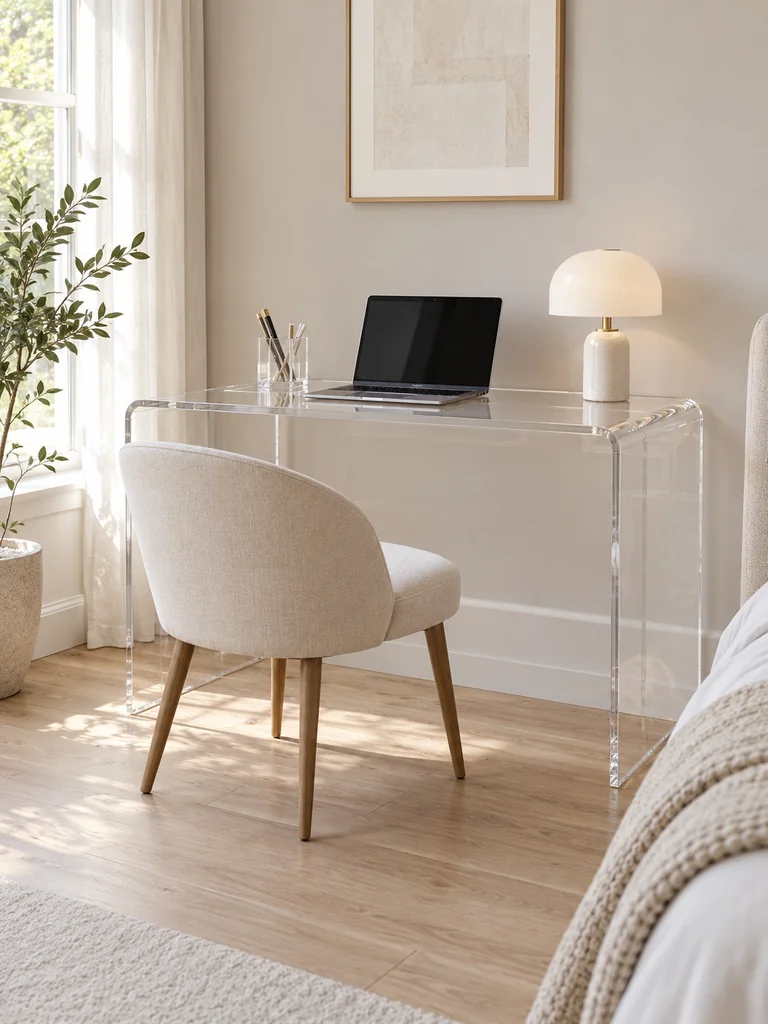
DO
- Choose thick, well-finished acrylic with a verified weight capacity.
- Keep the desktop limited to one device, a lamp, and essential stationery.
- Position the desk where visible flooring strengthens the open appearance.
- Clean fingerprints with products recommended for acrylic surfaces.
DON’T
- Place hot items directly on the transparent surface.
- Use abrasive cleaners that can leave fine scratches.
- Overload the desk with heavy equipment or stacked books.
- Hide the clear design beneath crowded organizers.
A transparent desk provides a usable surface while allowing walls and flooring to remain visible through it. This visual continuity can make tight bedrooms feel less interrupted by furniture. Pair it with a simple chair and restrained accessories, but confirm stability and material quality before trusting it with valuable equipment.
Leaning Ladder Desk
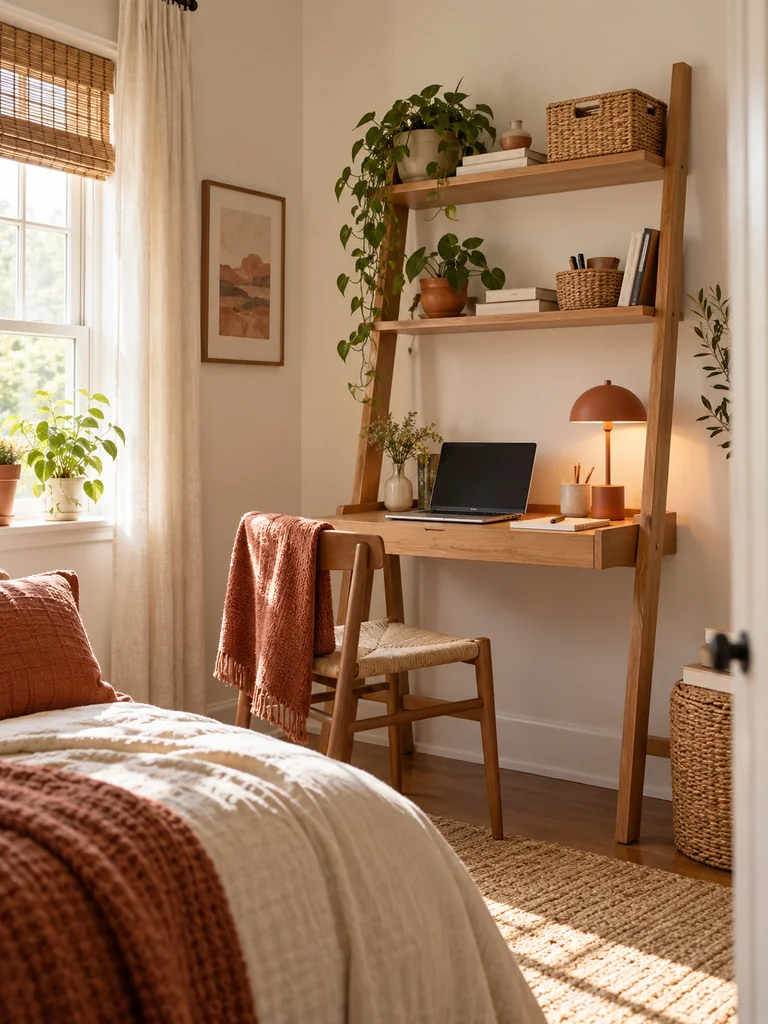
Cost: Moderate, depending on material and construction
Best For: Laptop work, writing, and lightweight supplies
Space Required: One narrow section of clear wall
Result: Vertical storage with a compact work surface
A ladder desk draws the eye upward and combines a desktop with shallow display shelves in one controlled footprint. Select a model designed specifically for working, not a decorative leaning shelf. Secure it according to the manufacturer’s instructions, respect weight limits, and keep heavier equipment on the lowest supported surface.
Secretary Cabinet Workspace
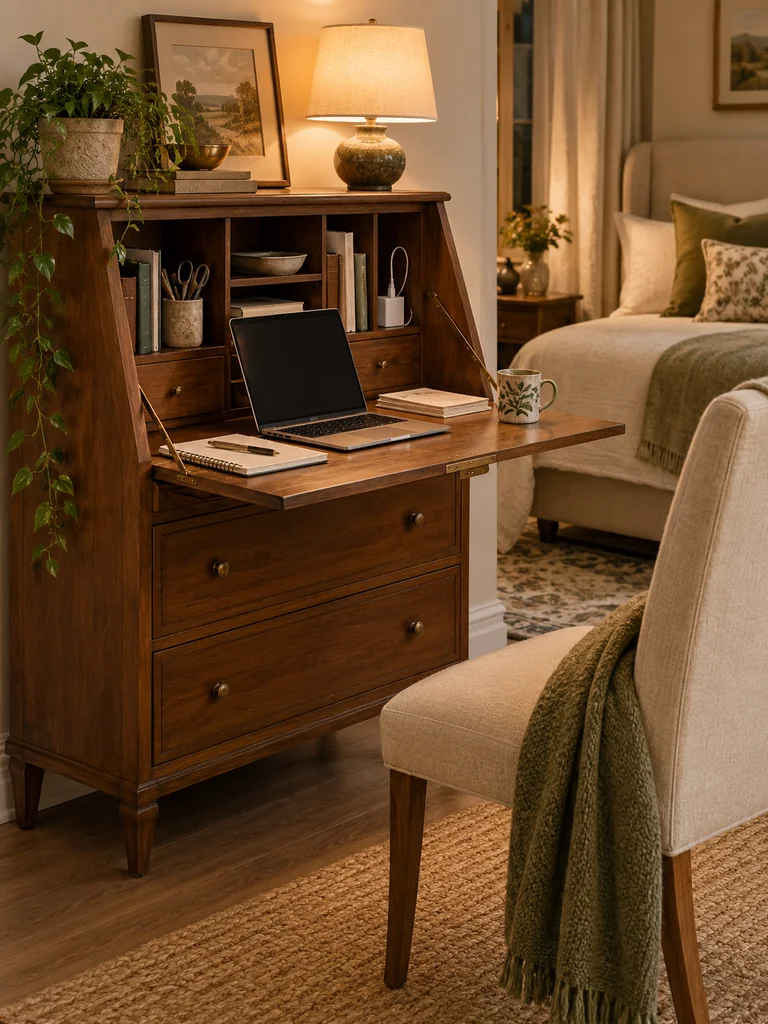
A closed secretary cabinet can restore the bedroom’s calm appearance within seconds after work. Its fold-down surface supports a laptop or notebook, while internal compartments keep chargers, stationery, and current paperwork together. Choose a shallow model that opens without touching the bed or blocking the walkway.
Before purchasing, test the working height, knee clearance, hinge strength, and maximum surface load. Keep the interior edited so the panel closes without pressure against devices or supplies. This setup suits bedrooms where visible office equipment makes relaxation difficult and storage must remain contained after working hours.
Console Desk Setup
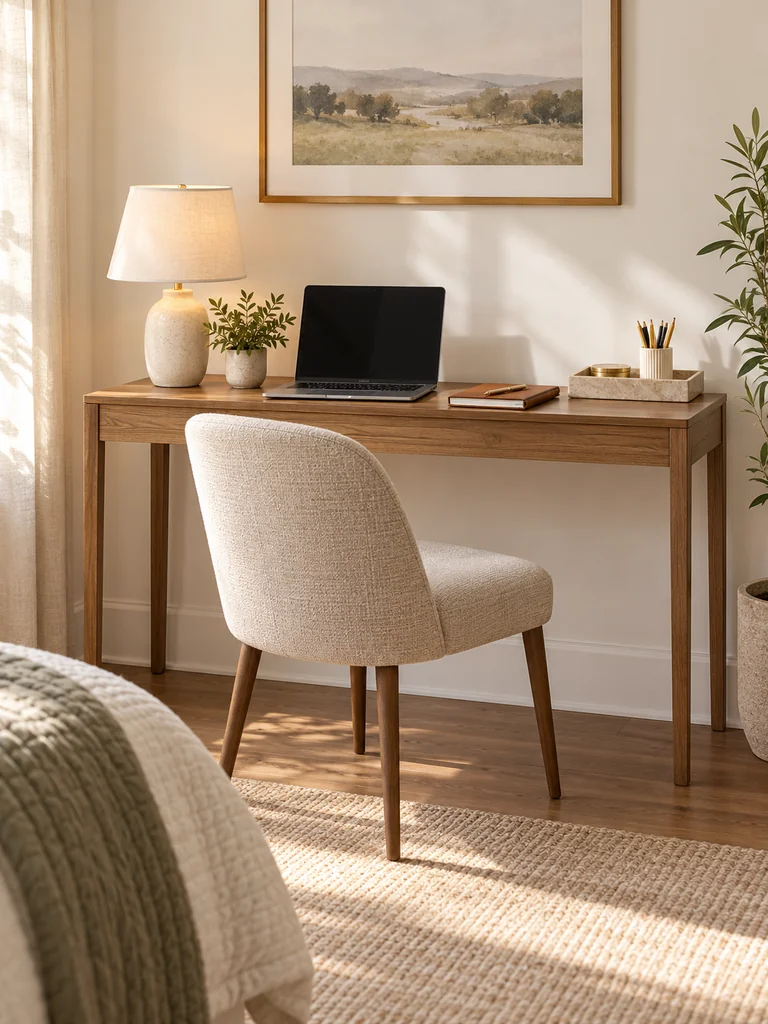
- A slim console can become a useful desk without introducing bulky office furniture.
- Choose a depth that supports your laptop while leaving comfortable space for your hands and wrists.
- Confirm the height works with a proper chair rather than relying on decorative proportions.
- Add one shallow tray for stationery and keep the remaining surface open.
- Use this setup for light tasks rather than multiple monitors or heavy equipment.
Console tables work best as occasional desks for journaling, household planning, studying, or short laptop sessions. Their shallow proportions preserve more bedroom floor space than traditional office furniture. Select a stable model with adequate legroom, and avoid decorative crossbars that prevent the chair from sitting at a comfortable distance.
A freestanding console also works well with these renter-friendly bedroom ideas because it provides function without permanent installation.
Bed-Foot Worktable
Quick Tip:
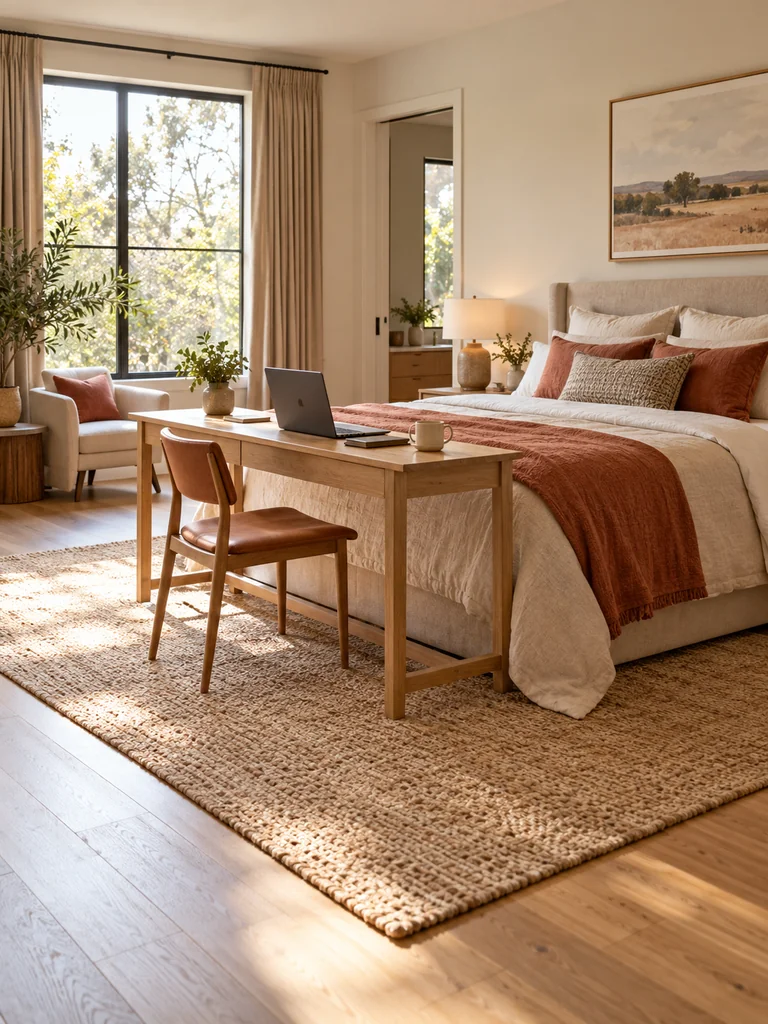
Mark the proposed desk and chair footprints on the floor with removable tape. Walk around the bed, open nearby drawers, and pull the chair out fully before committing to this arrangement.
The foot of the bed can hold a narrow workspace when the room has sufficient length but limited open wall space. Maintain a comfortable passage between the furniture pieces and avoid placing sharp desk corners along the main route. A low-profile design will preserve a clearer view across the bedroom.
Recessed Alcove Desk
BEFORE:
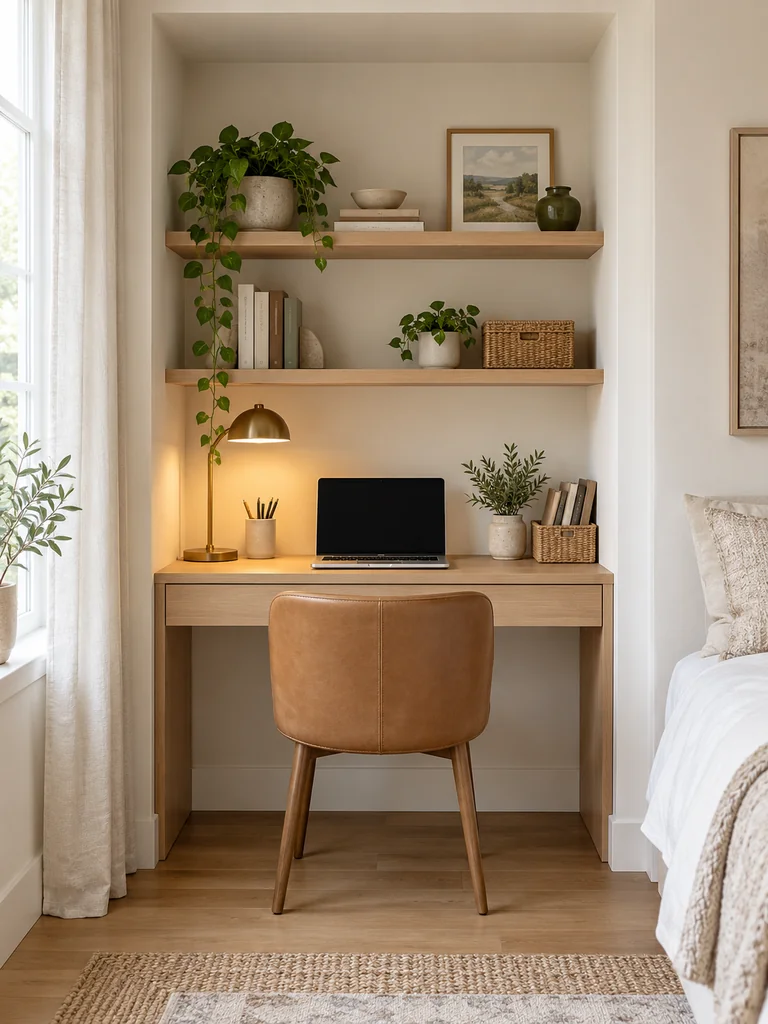
A shallow bedroom recess remains empty because standard furniture projects beyond its edges or leaves awkward gaps. The unused area collects bags, boxes, or objects without becoming genuinely useful.
AFTER:
A precisely measured desk fits neatly inside the alcove and creates a defined work zone. The surrounding walls naturally contain supplies while the furniture stays outside the main walking path.
Alcoves vary considerably, so measure the width at the front, back, top, and floor before selecting furniture. Check for uneven walls, baseboards, outlets, and ventilation. A freestanding desk fitted closely inside the recess is often easier to adjust than a permanent surface and remains practical for renters.
Rolling Laptop Perch
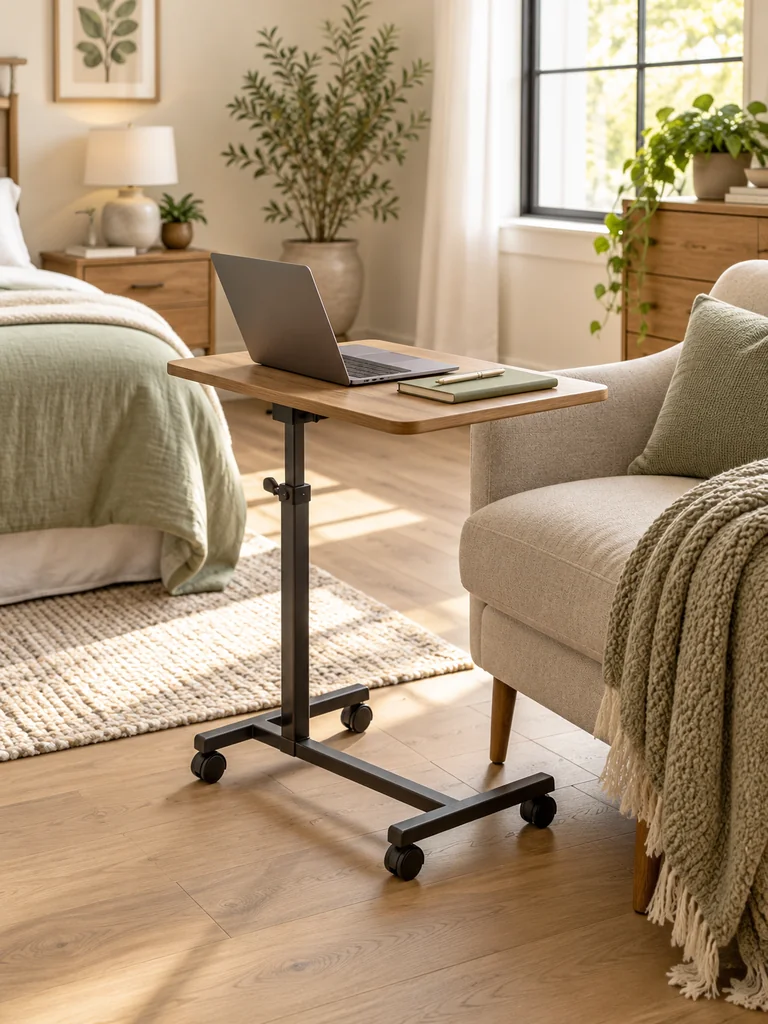
- Measure the clearance beneath the bed, chair, and other places where the table may be used.
- Choose a stable height-adjustable model with locking wheels and a verified equipment capacity.
- Set the surface at a comfortable height for the intended chair or bedside position.
- Keep only a laptop and essential accessory on top while moving the table.
- Assign one clear parking spot so it never blocks the bedroom walkway.
A rolling perch supports flexible work without claiming one permanent section of the bedroom. It suits short laptop sessions, reading, or household planning, but should not replace an ergonomic desk for long workdays. Lock the wheels during use and remove drinks before moving the table between locations.
Shallow Desk Hutch
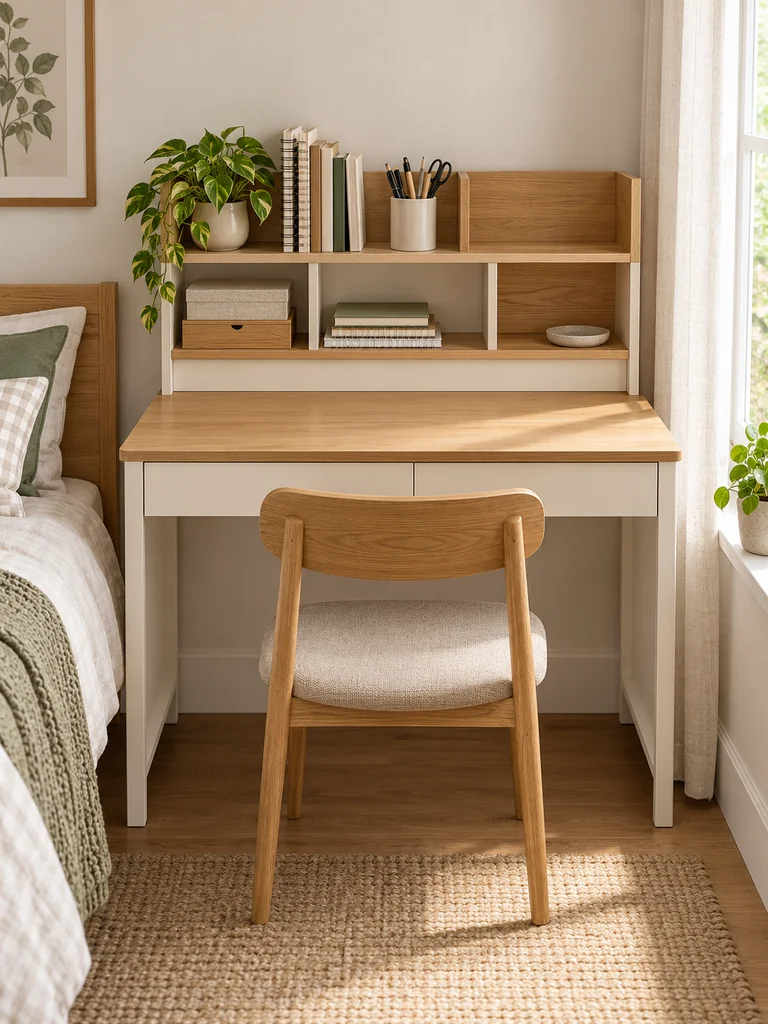
| Feature | Deep Hutch | Shallow Hutch |
|---|---|---|
| Visual Weight | Dominates a small wall | Keeps the setup lighter |
| Storage | Encourages excess supplies | Holds selected essentials |
| Desktop Light | Can create shadows | Preserves more open light |
| Best Use | Large office equipment | Compact bedroom workspace |
A proportionate hutch keeps everyday supplies within reach without spreading containers across the desktop. Choose compartments for specific items such as notebooks, pens, and charging accessories. Leave some sections empty, secure the unit according to its instructions, and avoid storing heavy objects above your seated position.
If the hutch cannot provide enough storage, these space-saving bedroom shelves offer additional options without overwhelming the work area.
Monitor Riser Drawer
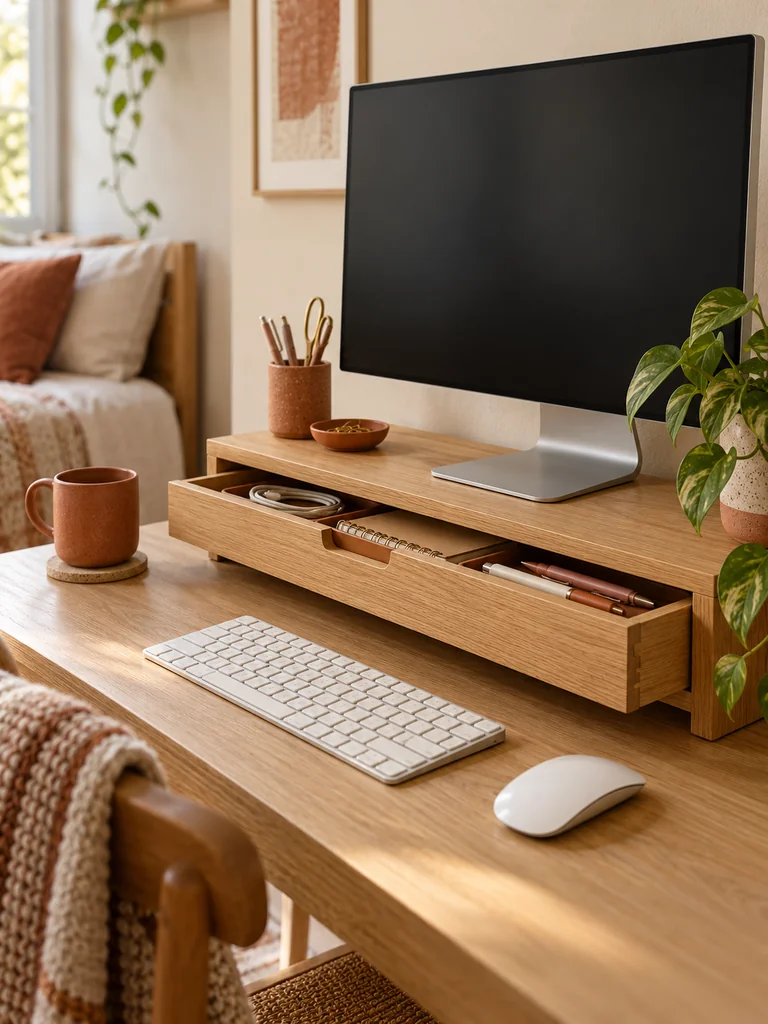
DO
- Set the screen at a height that supports a comfortable viewing position.
- Choose a riser wide enough for the monitor base.
- Store flat items such as notebooks, cables, and pens inside the drawer.
- Keep ventilation openings around electronic equipment unobstructed.
DON’T
- Raise the monitor higher than your comfortable eye level.
- Place unstable stacks beneath the screen.
- Force bulky supplies into a shallow drawer.
- Exceed the riser’s stated weight capacity.
A drawer riser uses the small area beneath a monitor that would otherwise remain empty. It creates one defined place for work essentials while reducing containers on the desktop. Measure the monitor stand and available desk depth first, then choose a stable model that leaves adequate room for the keyboard.
Side-Mounted Supply Caddy
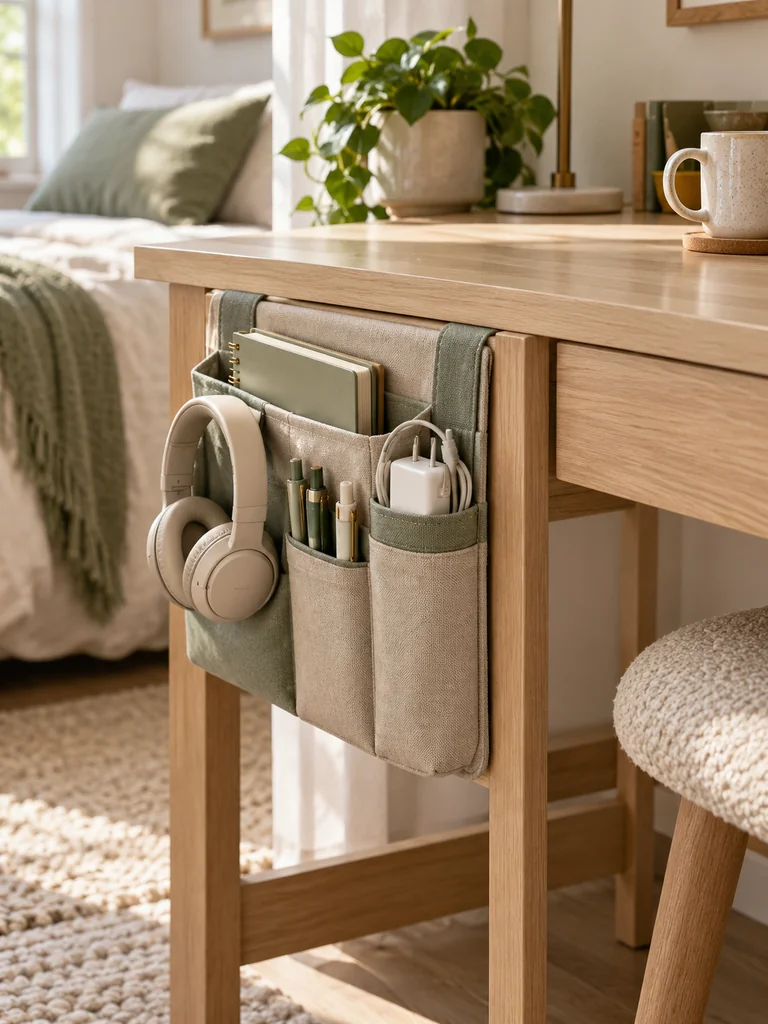
Cost: Low to moderate
Installation: Removable straps, clamps, or compatible brackets
Best For: Pens, chargers, headphones, and small notebooks
Result: Clearer desktop with essentials kept within reach
A side caddy shifts small supplies away from the work surface without sending them to distant drawers. Choose a slim organizer that does not interfere with your legs, chair, or nearby furniture. Keep weight evenly distributed and use protective padding wherever clamps touch a finished desk surface.
Cable Control Channel
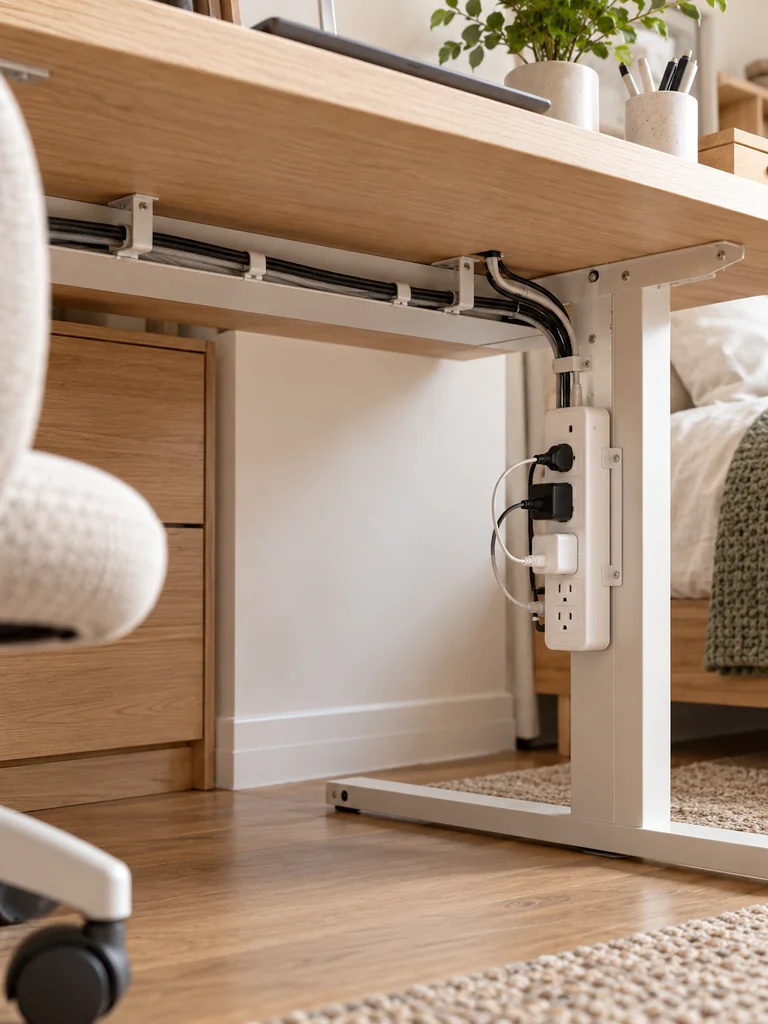
Loose cords can make a tidy desk look unfinished and create problems beneath the chair. Attach a suitable cable channel under the rear edge of the desktop, then guide power leads and charging cables through it. Keep plugs accessible and separate cables that need frequent removal.
Leave gentle curves rather than pulling cords tight, and avoid routing them near heat, moving hinges, or sharp edges. Label similar connectors at the device end for faster identification. I’ve seen this work especially well when one secured power strip supports the complete desk setup.
Vertical Paper File
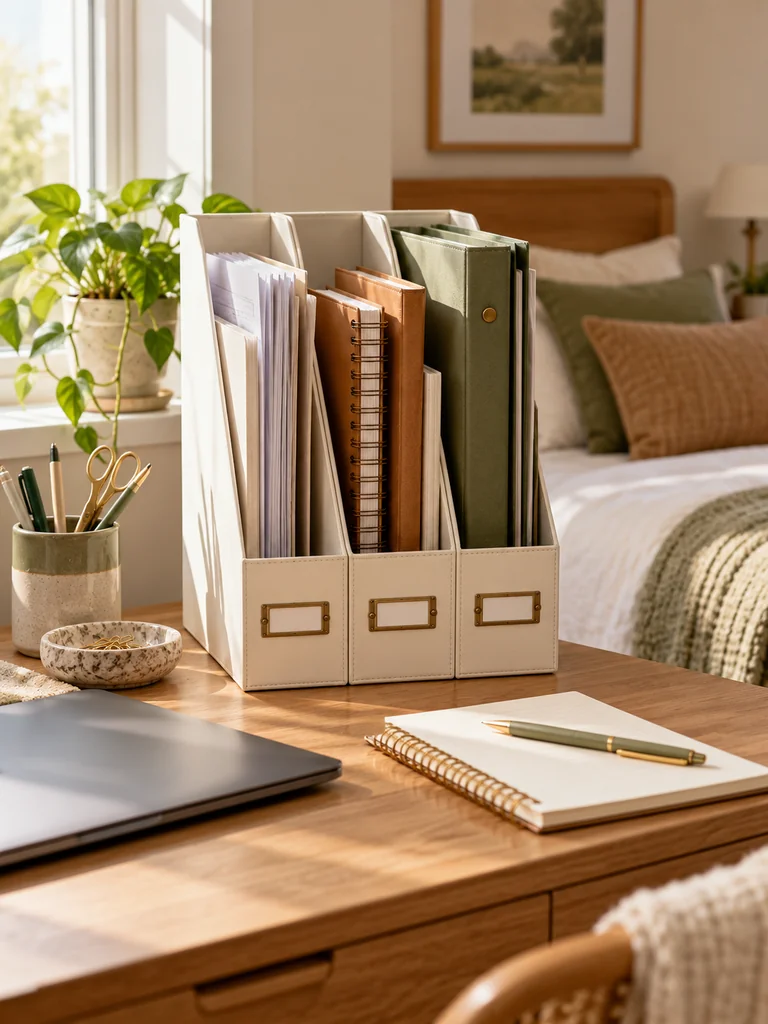
- Paper clutter loses control quickly, so keep active documents upright and visible from the desk.
- Assign separate slots to current work, reference material, notebooks, and papers awaiting filing.
- Choose a narrow holder with firm dividers that prevent documents from leaning or folding.
- Position it within reach without blocking the lamp, screen, or natural light.
- Process completed papers weekly instead of allowing every slot to remain permanently full.
Vertical filing reduces the amount of desktop area consumed by stacked notebooks and loose documents. Limit the holder to active materials and move completed work into long-term storage elsewhere. Clear labels make returning papers easier, while fixed slot capacity signals when it is time to review, file, or recycle.
Under-Desk Drawer Rail
Quick Tip:
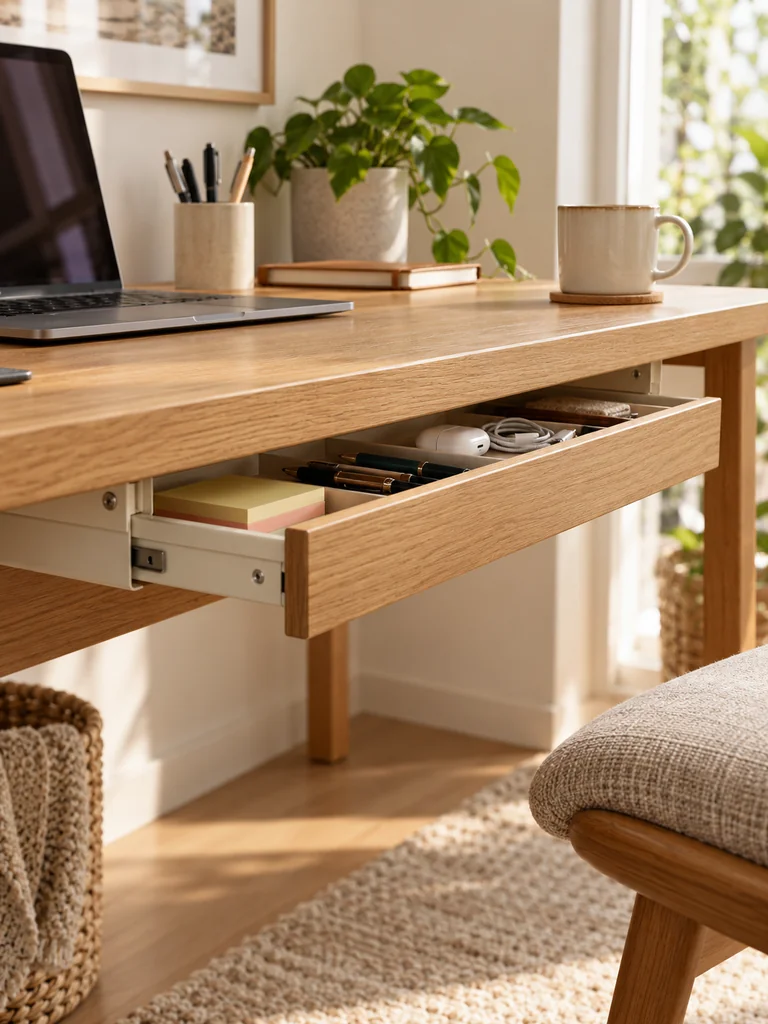
Measure the underside of the desktop before ordering a sliding drawer. Check the available depth, support frame, screw length, knee clearance, and any cables that could interfere with installation.
A shallow under-desk drawer keeps small essentials hidden without adding a pedestal cabinet or desktop organizer. Reserve it for lightweight items such as pens, sticky notes, charging leads, and earbuds. Choose a compatible mounting method, follow the weight limit, and confirm the drawer closes securely before sitting beneath it.
Folding Chair Station
BEFORE:
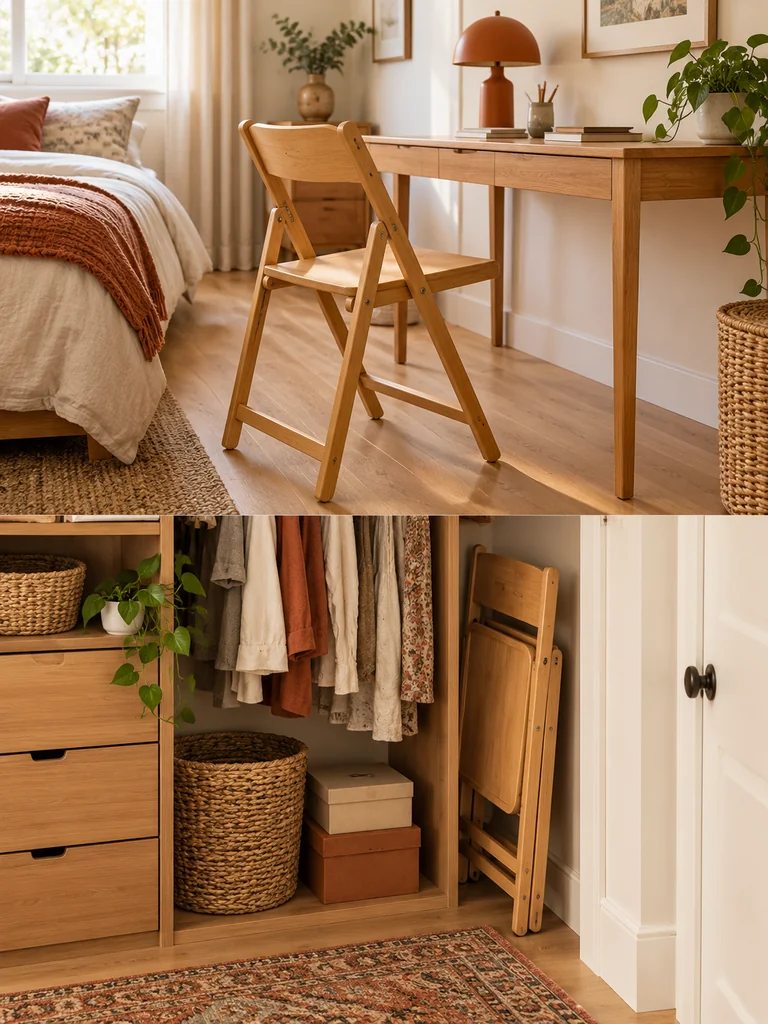
A permanent office chair occupies valuable floor space even when the desk is not being used. Its base can obstruct the bed, wardrobe, or main walking route throughout the day.
AFTER:
A supportive folding chair provides seating during work and moves to a dedicated storage point afterward. The cleared floor makes the bedroom feel more open and easier to navigate.
Not every folding chair supports long sessions, so check the seat height, back support, stability, and weight rating before relying on one. Add a thin removable cushion if needed, but never sacrifice posture solely to save space. Store the chair securely where it cannot fall or block closet access.
Nightly Desktop Reset
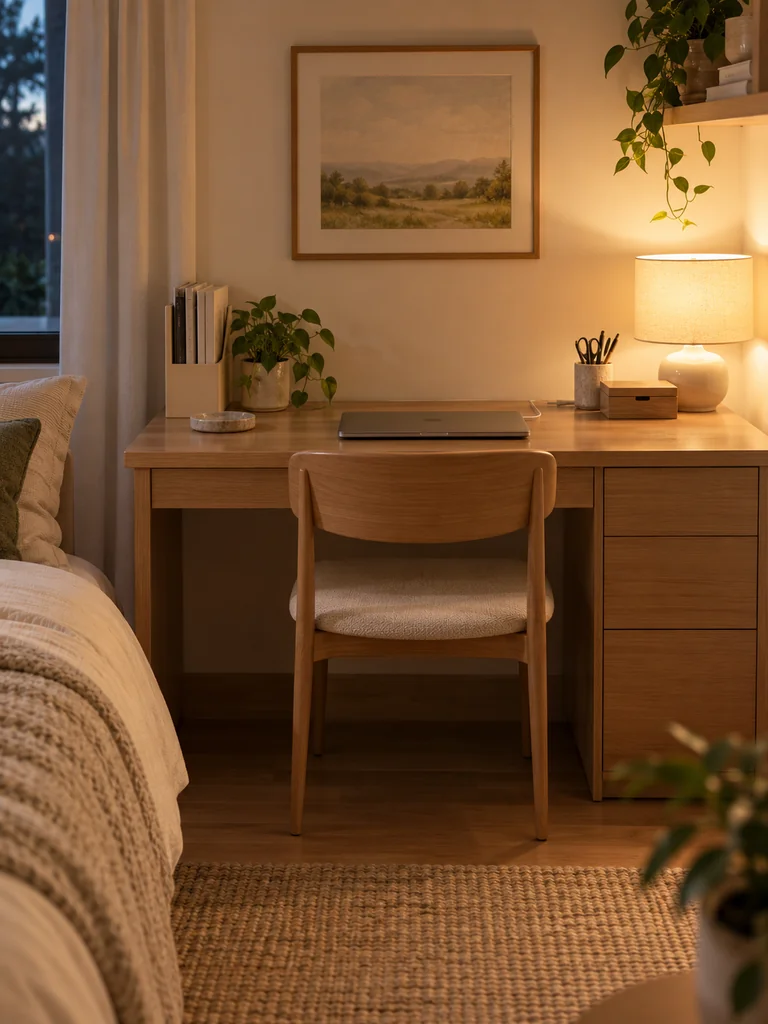
- End the work session by closing devices and moving drinks or dishes out of the bedroom.
- File active papers vertically and recycle anything no longer required.
- Return stationery, headphones, and chargers to their assigned compartments.
- Wipe the desktop and reconnect only the equipment needed for the next session.
- Push in or store the chair so the surrounding walkway remains clear.
A short reset helps the workspace stop competing with the bedroom’s restful purpose. Keep the routine under five minutes and complete it before starting your evening activities. The next morning begins with a clear surface, fewer distractions, and no need to move yesterday’s clutter before working.
Conclusion
A small bedroom can support focused work without becoming crowded or losing its restful character. The best Small Bedroom Desk Ideas combine correct proportions, thoughtful placement, and limited storage with a simple daily reset. I’ve noticed that even one adjustment, such as controlling cables or choosing dual-purpose furniture, can make the whole room easier to use. Save this post on Pinterest for your next bedroom update, try the idea that fits your available space, and share the article with someone creating a workspace at home. Keep the setup light, practical, and easy to clear, then let your bedroom work better every day.