
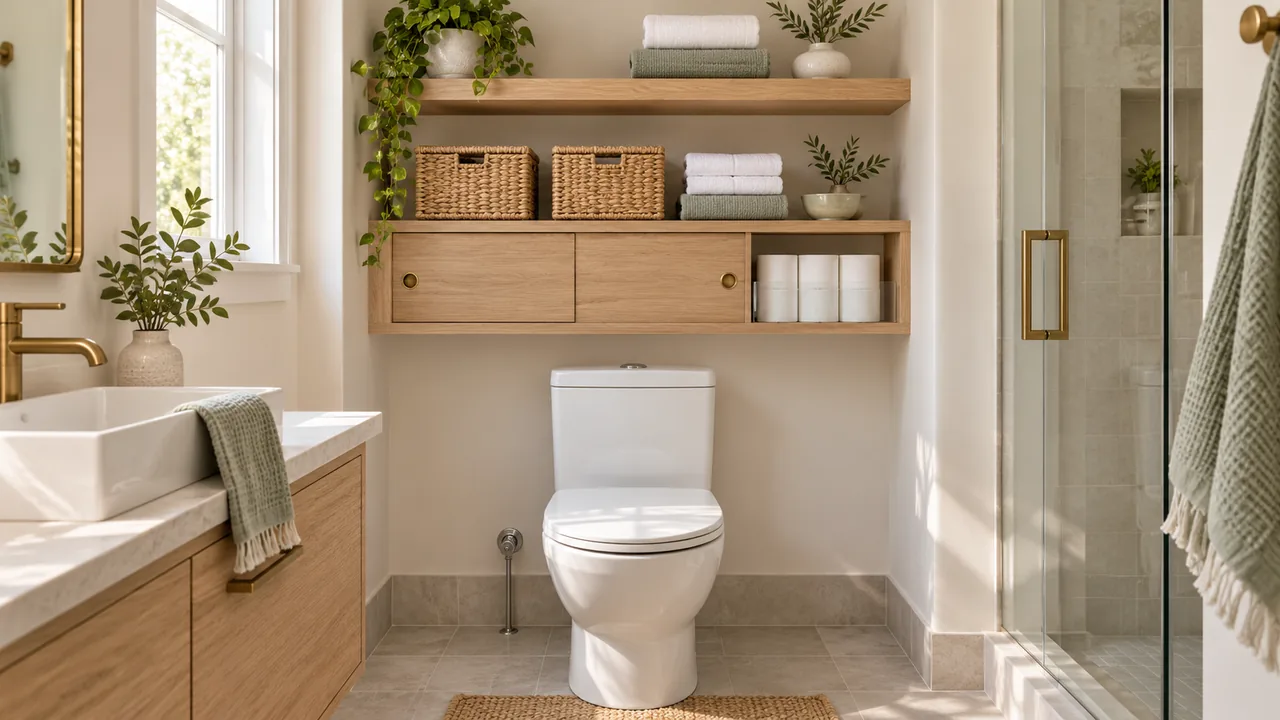
That empty wall above the toilet can provide valuable storage without taking away another inch of floor space. These Over the Toilet Storage Ideas will help you organize towels, spare rolls, toiletries, guest supplies, and cleaning essentials while keeping a tiny bathroom visually calm.
The collection includes floating shelves, slim cabinets, lidded baskets, glass shelving, compact cubbies, and other practical arrangements. Each option considers everyday access, moisture, cleaning, plumbing clearance, and secure installation. In my experience, bathroom storage works best when frequently used items are easy to reach and personal supplies remain neatly concealed. With accurate measurements and thoughtful placement, you can turn an overlooked wall into useful organization without making the room feel crowded.
Table of Contents
Toilet Wall Assessment

Smart storage begins with knowing exactly what the wall and floor can support. Measure the toilet width, tank height, ceiling clearance, and distance to nearby fixtures. Mark the flush control, shutoff valve, and plumbing access so shelves or cabinets never interfere with maintenance.
Next, identify the wall type, ventilation level, and any hidden pipes or electrical lines before drilling. In my experience, a simple measured sketch prevents most installation problems. Include enough clearance to remove the tank lid, clean behind the toilet, and use the bathroom comfortably.
Floating Shelf Trio
- Three well-spaced shelves can turn an empty wall into useful storage. Choose moisture-resistant wood, sealed composite, metal, or another bathroom-suitable material.
- Mount each shelf with supports rated for the wall type and intended load.
- Keep frequently used toiletries on the lowest reachable shelf.
- Place folded towels or lightweight baskets on the middle level.
- Reserve the top shelf for spare supplies or minimal decoration.
Floating shelves keep the floor open while providing flexible organization above the toilet. Among practical over the toilet storage ideas, this arrangement works especially well in narrow bathrooms. Avoid excessive depth, use washable containers, and leave enough vertical space between levels to reach every item without knocking others forward.
For more guidance on shelf depth, spacing, and visual balance, explore these Space-saving Shelving Ideas.
Slim Cabinet Tower

Quick Tip:
Measure the cabinet at its widest point, including doors, trim, and side supports. Confirm that the tank lid, flush control, seat, and plumbing remain fully accessible before assembling or anchoring the unit.
A narrow tower combines open and closed storage without requiring a wide bathroom wall. Choose adjustable shelves, moisture-resistant surfaces, and a stable base that sits level around the toilet. Secure the cabinet according to its instructions, then keep heavier items low and lightweight supplies on the upper shelves.
Bridge Cabinet Frame
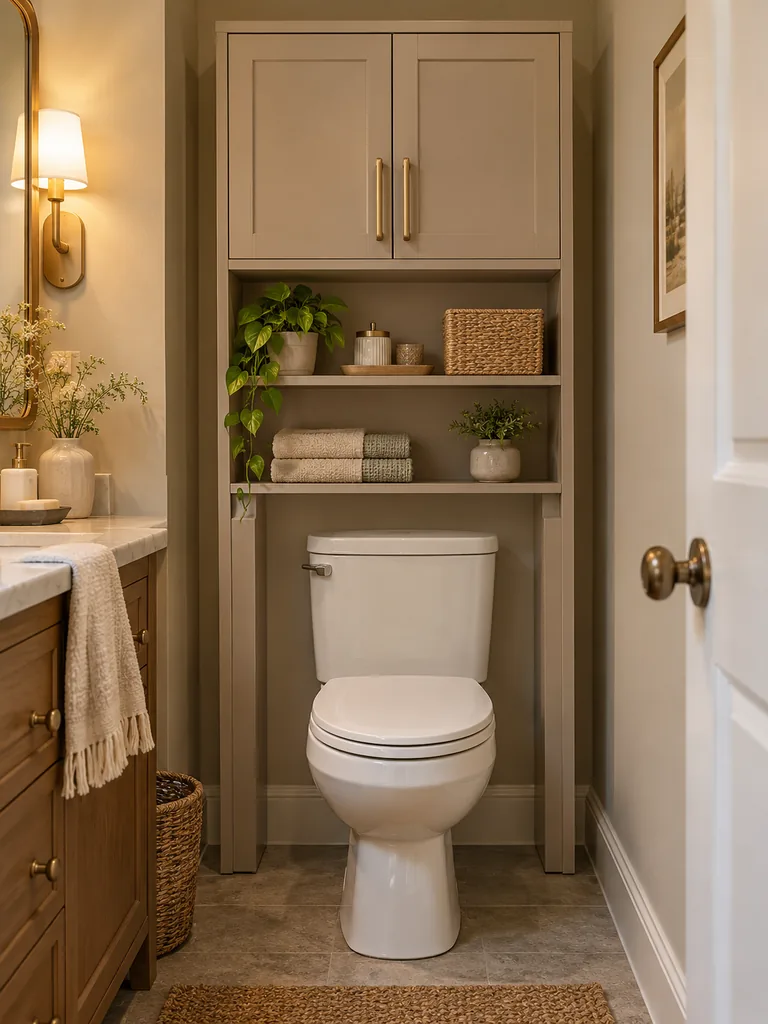
BEFORE:
Open supplies sit on the toilet tank or nearby floor, making cleaning slower and the bathroom appear crowded. Personal items remain exposed to dust, splashes, and changing humidity.
AFTER:
A stable toilet-surround frame uses the vertical area for enclosed storage. Closed doors hide visual clutter while side supports transfer the cabinet’s weight safely to the floor.
A bridge cabinet works best when its frame fits around the toilet without touching plumbing or limiting tank access. Measure baseboards and uneven flooring before purchase, then anchor the assembled unit as directed. Keep daily supplies within comfortable reach and avoid storing heavy objects directly above the toilet.
Recessed Wall Niche
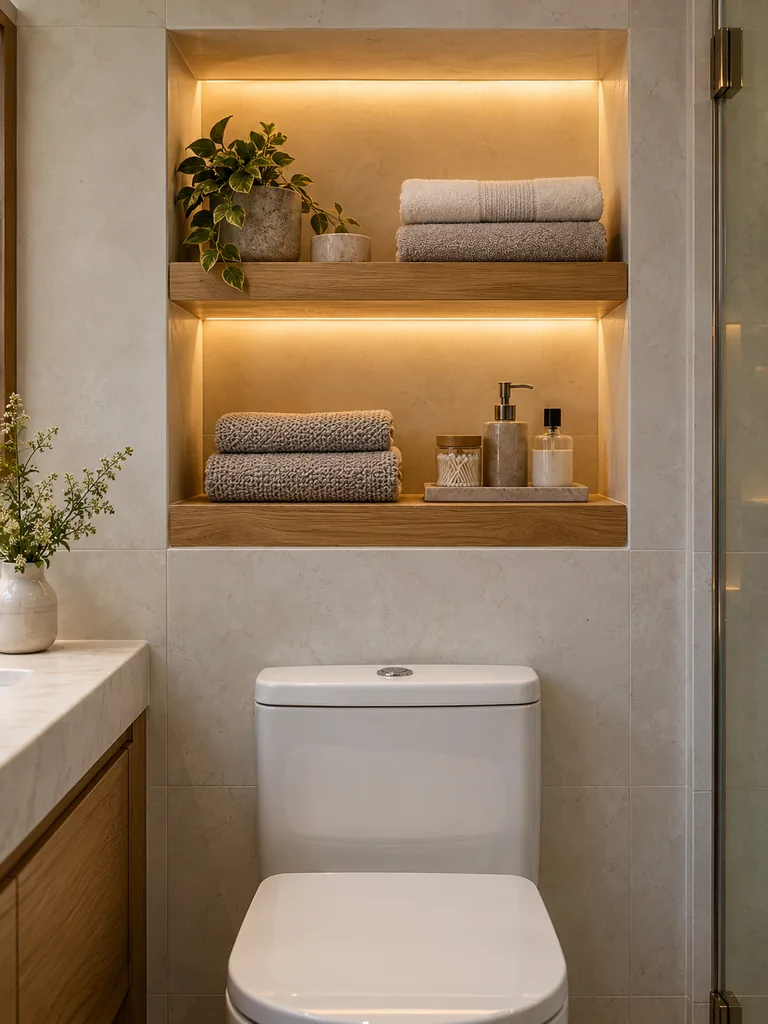
- Inspect the proposed wall. Confirm whether it contains plumbing, wiring, ventilation components, or structural elements.
- Consult a qualified professional. Cutting into a bathroom wall can affect waterproofing, fire protection, and building compliance.
- Plan the niche depth. Make sure it provides useful storage without weakening the wall assembly.
- Select moisture-safe materials. Use properly sealed surfaces and bathroom-rated finishing products.
- Add easy-clean shelves. Space them for the exact items you intend to store.
A recessed niche provides storage without projecting into a tiny bathroom, but it requires more planning than a surface-mounted shelf. Never cut into an unknown wall based on guesswork. Professional assessment protects concealed services and ensures the finished niche remains secure, sealed, ventilated, and simple to clean.
Lidded Basket Pair
| Feature | Open Baskets | Lidded Baskets |
|---|---|---|
| Dust protection | Contents remain exposed | Supplies stay covered |
| Visual effect | Shows every package | Creates a calmer appearance |
| Access | Fast but less contained | Requires lifting the lid |
| Best contents | Frequently used towels | Personal or backup supplies |
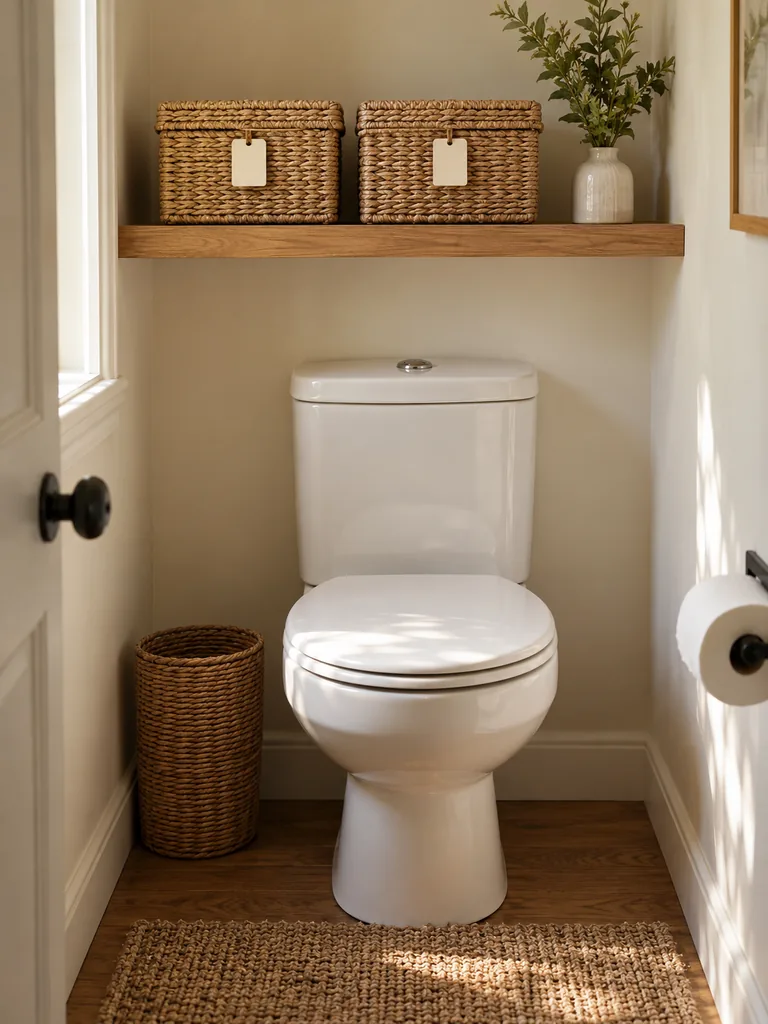
Two matching baskets provide useful separation without filling the shelf with mismatched packaging. Label one for spare paper products and the other for personal care backups, then review the contents monthly. Choose washable, moisture-resistant materials, and avoid placing damp towels inside because trapped moisture can encourage odors or mildew.
For additional ways to organize compact areas with baskets and hidden containers, explore these practical Small Space Storage Ideas.
Towel Cubby Grid
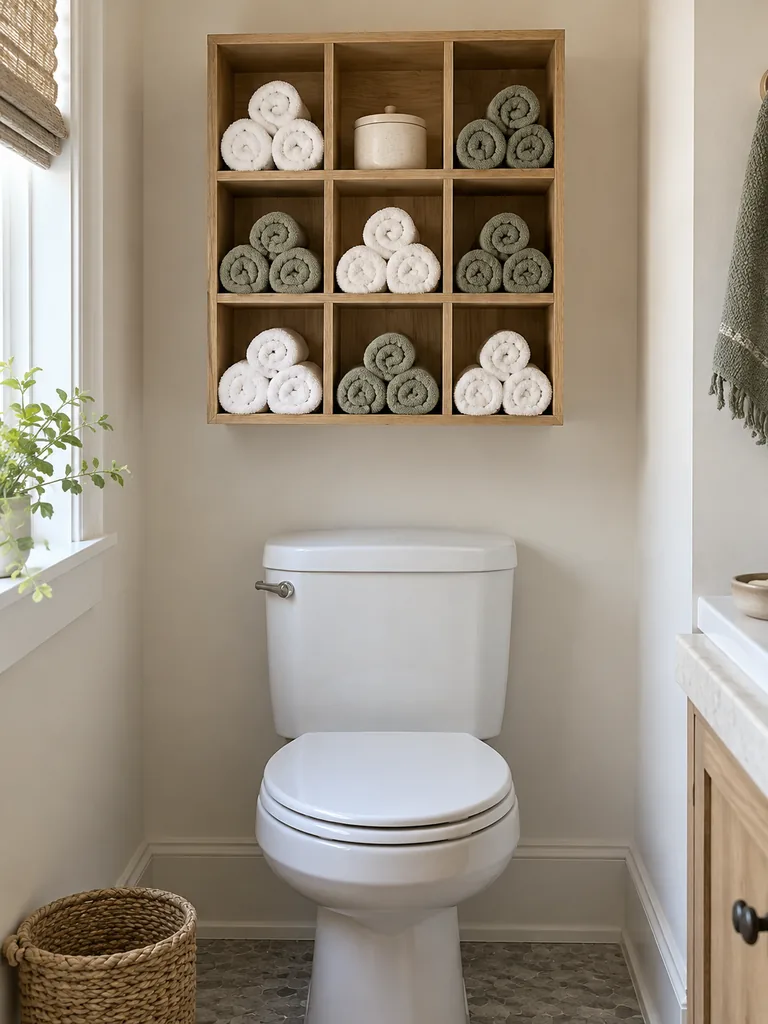
DO
- Create clear categories with one lightweight item type assigned to each cubby.
- Roll clean hand towels loosely so air can circulate around them.
- Use moisture-resistant, easy-clean materials suited to bathrooms.
- Secure the entire unit according to its weight and installation instructions.
DON’T
- Allow towels or containers to project over the toilet.
- Pack damp linens into enclosed or crowded compartments.
- Store heavy bottles in unsupported upper cubbies.
- Block ventilation, plumbing access, or the flush control.
A cubby grid gives towels and lightweight essentials individual homes, making supplies easier to see and replace. Keep the arrangement restrained so open compartments do not become clutter displays. Rotate linens frequently, wipe the surfaces during regular cleaning, and relocate anything that repeatedly falls forward or collects moisture.
Sliding Door Cabinet
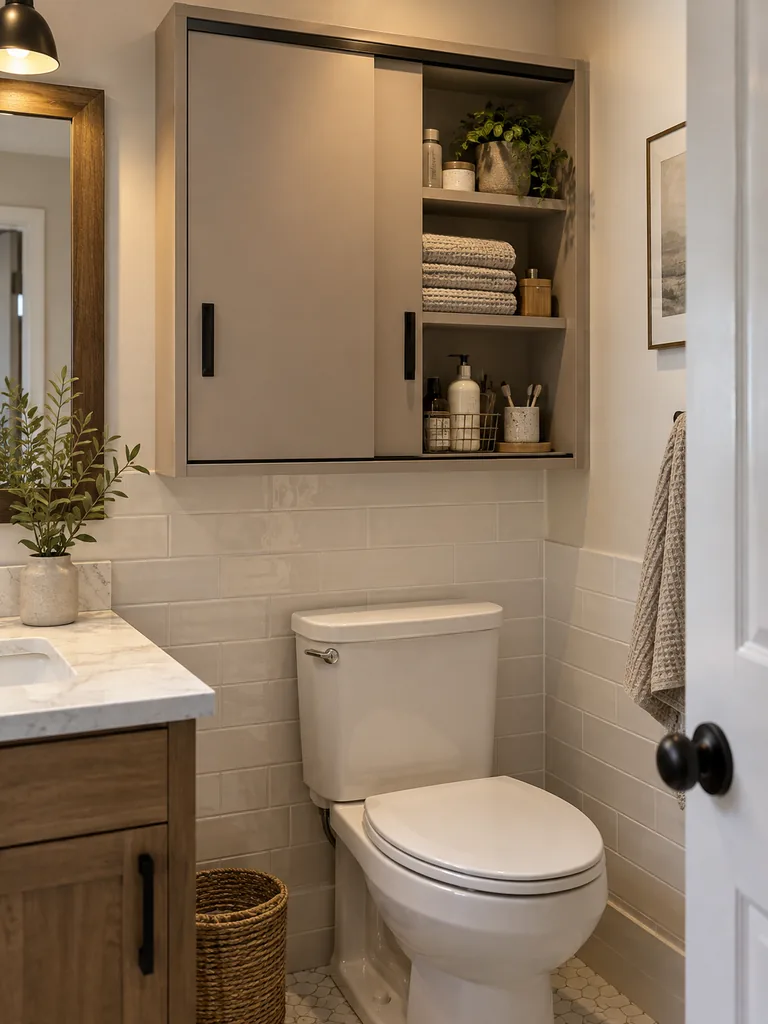
Cost: Moderate
Best For: Narrow bathrooms with limited forward clearance
Material: Moisture-resistant sealed wood, composite, or metal
Result: Enclosed storage without outward-swinging doors
Sliding doors allow access to stored supplies even when the toilet sits close to the opposite wall or vanity. Choose a shallow cabinet with smooth tracks, removable shelves, and secure wall fixings. Keep the track clean, avoid overloading upper levels, and confirm both panels move without striking nearby fixtures.
Ladder Shelf Frame
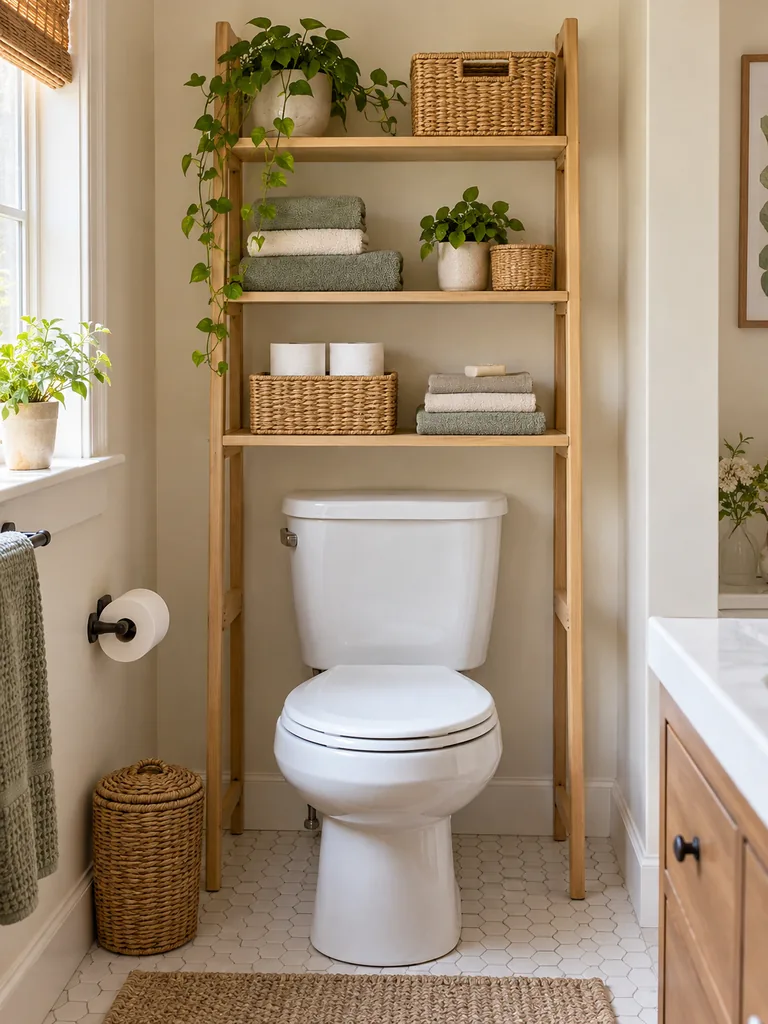
A ladder shelf adds height and storage while keeping the arrangement visually lighter than a solid cabinet. Choose a model specifically designed to stand securely around a toilet, then verify its width, depth, and tank clearance before assembly. Place it on level, dry flooring.
Anchor the frame according to the manufacturer’s instructions, even when it appears stable. Store heavier supplies on the lowest suitable tier and lighter baskets above. Leave enough room to clean the tank, reach the flush control, and access plumbing without dismantling the entire unit.
Wire Basket Rail
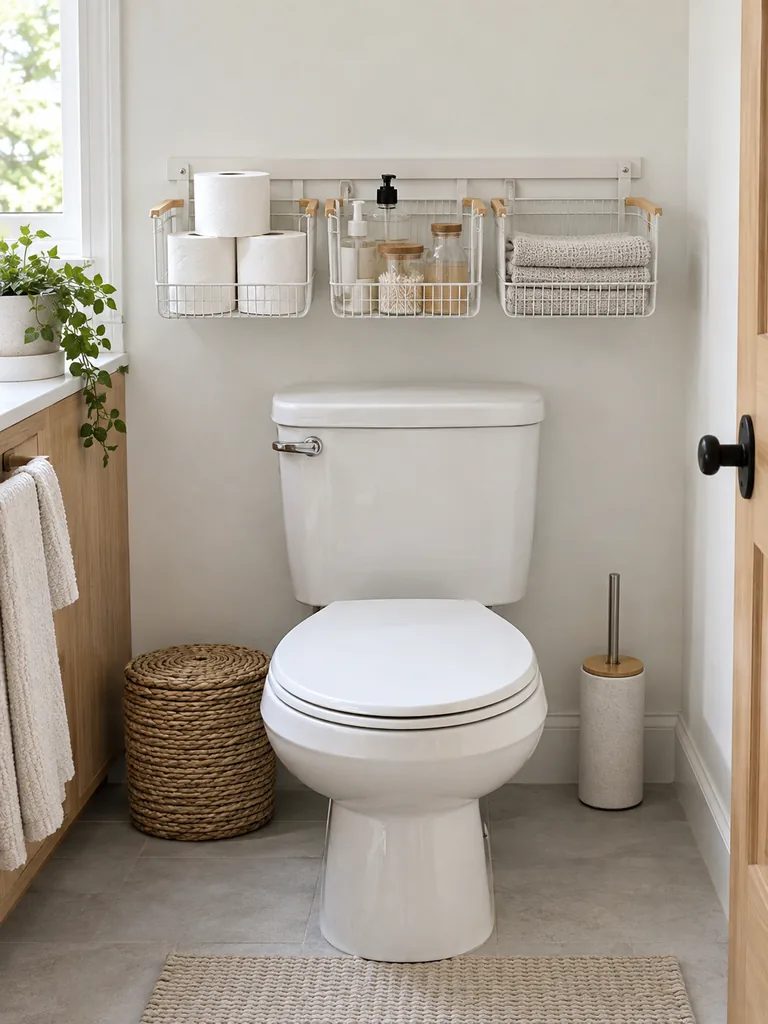
- A rail system keeps small supplies visible without requiring several separate shelves. Choose coated wire baskets that resist moisture and clean easily.
- Mount the rail with suitable fixings for the wall type and expected load.
- Assign one basket to spare rolls, one to sealed toiletries, and one to clean cloths.
- Keep heavier bottles on a lower, separately supported surface.
- Remove baskets individually for quick cleaning and restocking.
Wire baskets create flexible organization because their positions can change as storage needs evolve. Select shallow designs that do not project over the toilet user’s head or interfere with cleaning. Check mounting points regularly, dry any damp contents before storage, and discard damaged coating that exposes rusting metal beneath.
Glass Shelf Pair

Quick Tip:
Use only tempered safety glass with brackets designed for its exact thickness and weight. Position shelves high enough to prevent accidental contact while keeping stored items comfortably reachable from the bathroom floor.
Glass shelves reflect light and reduce visual heaviness in a narrow bathroom. Keep the arrangement simple with folded towels, one lidded container, and a limited number of toiletries. Clean both sides regularly, avoid chipped glass, and never exceed the stated shelf or fixing capacity, even when items appear lightweight.
Apothecary Jar Row
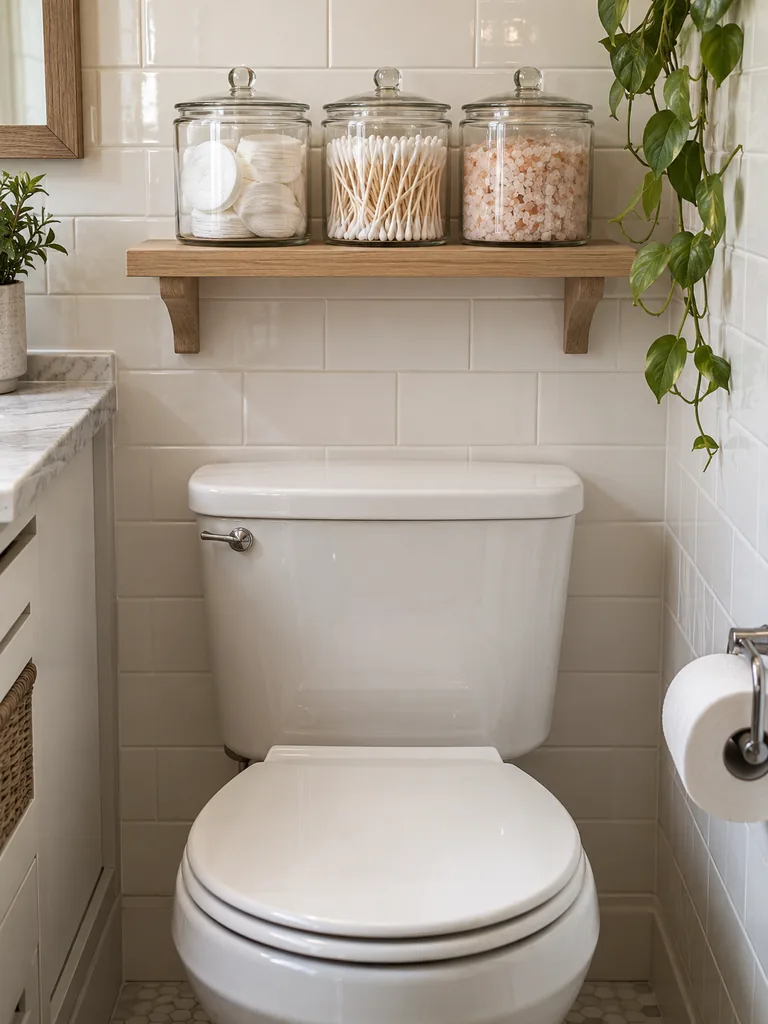
BEFORE:
Cotton pads, bath salts, and other suitable dry supplies remain inside mismatched packages. The shelf looks busy, and open containers allow humidity or dust to reach their contents.
AFTER:
A restrained row of lidded jars creates clear categories and a more orderly display. Simple labels make each suitable item easy to identify without unnecessary handling.
Jars should hold only products that remain safe and practical in a humid bathroom. Use wide, stable containers with secure lids, keep labels readable, and clean them before refilling. Medicines, razors, chemicals, and hygiene-sensitive products belong in safer storage locations according to their individual instructions.
Spare Roll Dispenser
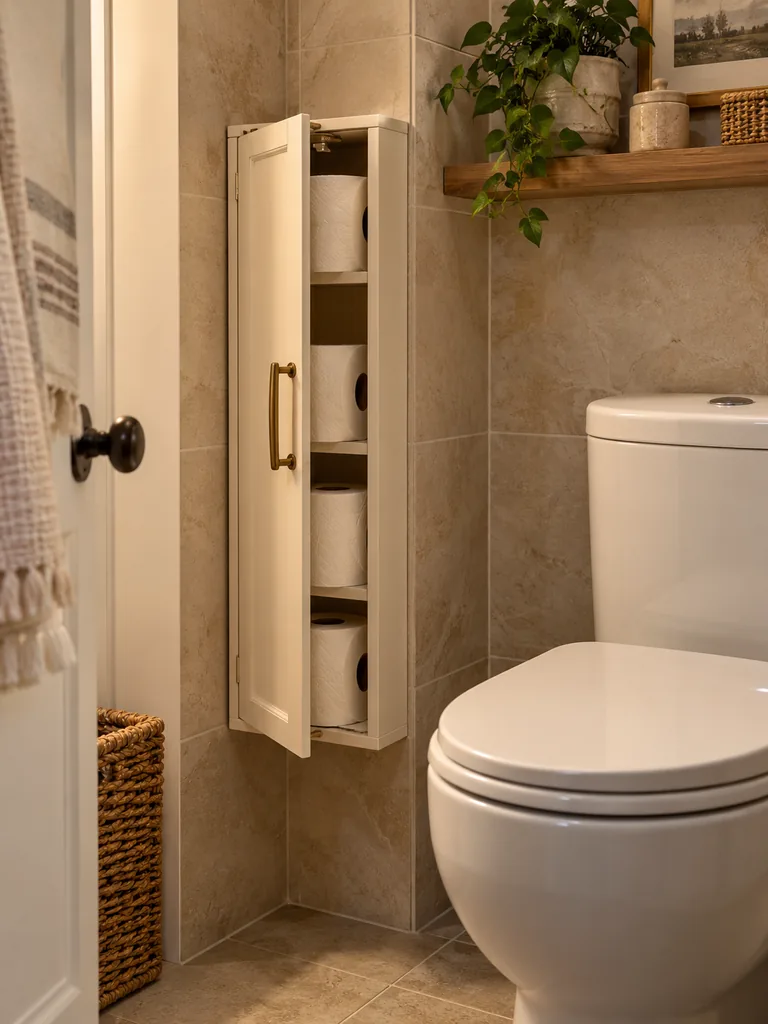
- Count regular usage. Store enough spare rolls for convenience without creating unnecessary bulk.
- Choose a covered design. A lid or door helps protect paper from dust, splashes, and bathroom humidity.
- Confirm comfortable reach. Position the dispenser where adults can refill and access it without stretching over the toilet.
- Mount it securely. Match the fixings to the wall type and loaded weight.
- Create a refill routine. Restock before the final visible roll is used.
A covered dispenser solves a practical need while keeping spare rolls visually contained. Choose a shallow profile that does not interfere with sitting, cleaning, or tank access. Keep the interior dry, wipe it regularly, and avoid compressing rolls so tightly that they become difficult to remove when needed.
Guest Supply Caddy

| Feature | Permanent Display | Portable Caddy |
|---|---|---|
| Shelf space | Occupies space every day | Appears only when needed |
| Cleaning | Requires frequent dusting | Stores indoors between visits |
| Contents | Often become outdated | Easy to review before guests arrive |
| Flexibility | Fixed arrangement | Moves wherever access is easiest |
A portable caddy keeps guest essentials welcoming without leaving extra products above the toilet throughout the year. Include a fresh hand towel, sealed basic toiletries, and spare paper supplies. Check expiration dates, wash the container between uses, and place it on a stable shelf only after confirming sufficient clearance.
For more affordable ways to improve comfort, color, lighting, and organization, explore these small bathroom ideas on a budget.
Ventilated Linen Cabinet

DO
- Choose moisture-resistant construction with ventilation gaps or suitable airflow features.
- Store only clean, fully dry towels and washcloths.
- Rotate linens frequently so the same pieces are not left unused.
- Leave space between stacks for easier access and circulation.
DON’T
- Pack damp towels into a closed cabinet.
- Block ventilation openings with baskets or folded fabric.
- Overfill shelves until linens press against the doors.
- Ignore persistent condensation, odors, or visible mildew.
A ventilated cabinet protects small linens while reducing the closed, crowded feeling of solid storage. Keep stacks low, place frequently used towels within easy reach, and clean interior surfaces regularly. If the bathroom remains persistently humid, improve ventilation and store backup linens in a drier room instead.
Hidden Cleaning Shelf
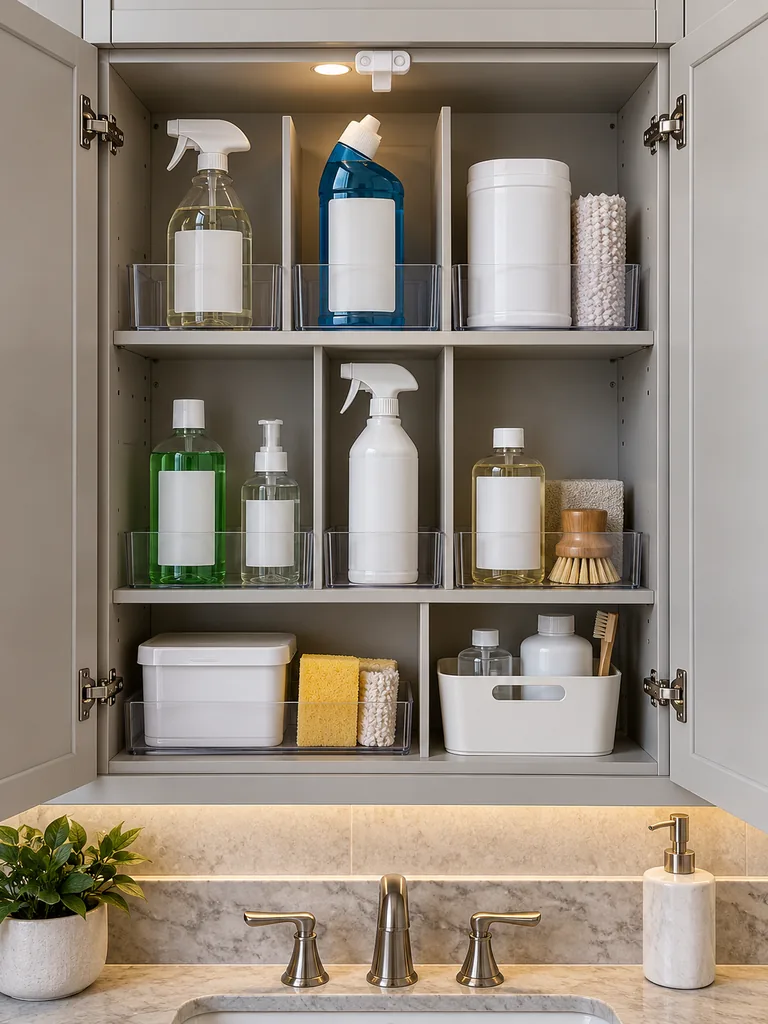
Cost: Low if existing cabinet space is available
Best For: Lightweight bathroom-specific supplies
Safety: Enclosed, secured, and inaccessible to children
Result: Cleaning products remain organized and visually concealed
Cleaning supplies require careful placement rather than decorative styling. Store only compatible products according to their labels, keep every container upright and closed, and never transfer chemicals into unmarked bottles. Use a child-resistant cabinet where needed, avoid excessive weight, and inspect regularly for leaks or damaged packaging.
Bathroom Storage Audit
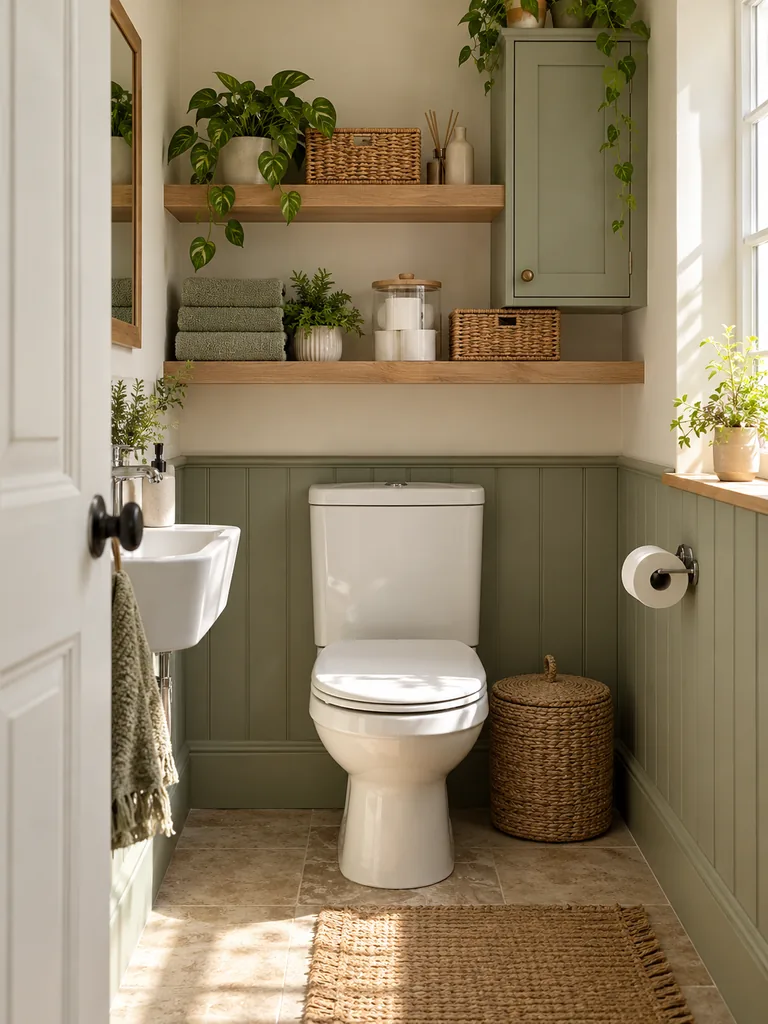
The final review reveals whether attractive storage also works safely in daily life. Sit on the toilet, stand at the sink, open every cabinet, and reach for common supplies. Confirm that shelves do not create head hazards or interfere with flushing, cleaning, ventilation, and plumbing access.
Check every fixing, basket, jar, and cabinet for movement, moisture damage, sharp edges, or excessive weight. Remove products that do not belong in humid conditions and simplify crowded shelves. I’ve noticed that leaving some open space makes restocking easier and the entire bathroom feel cleaner.
These Small Apartment Organization Ideas can help you carry the same uncluttered approach into bedrooms, living areas, and entryways.
Conclusion
Useful bathroom storage should improve daily routines without interfering with comfort, cleaning, or plumbing access. These Over the Toilet Storage Ideas offer flexible solutions through shelves, baskets, cabinets, cubbies, and covered dispensers suited to different budgets and bathroom sizes. I’ve noticed that enclosed storage combined with a little open space creates the cleanest overall result. Save this post on Pinterest for your bathroom update, then try the idea that best fits your wall measurements and storage needs. Share the article with someone managing a tiny bathroom, and start turning that overlooked vertical area into safe, practical, and attractive organization.