
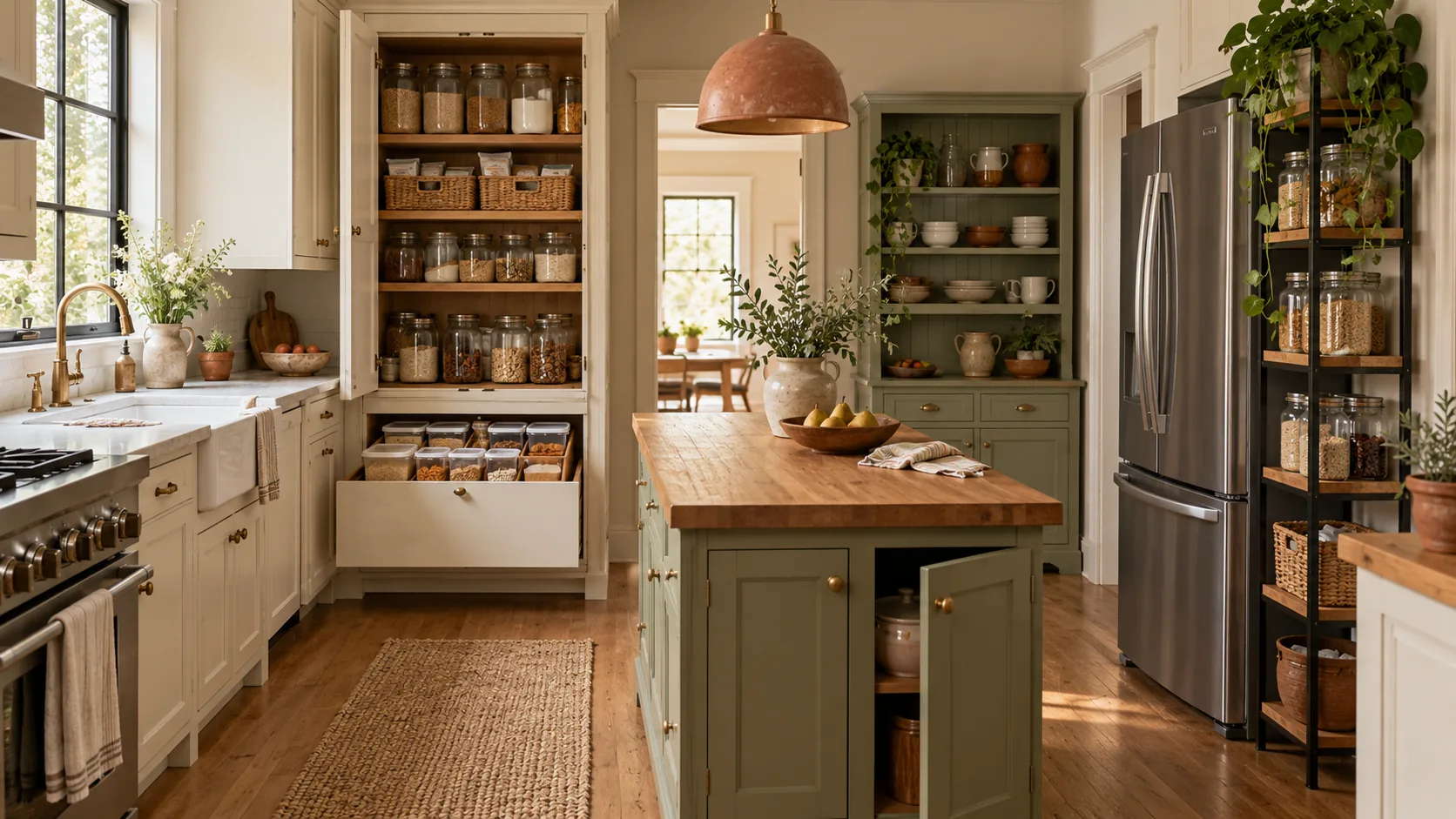
Limited food storage does not have to leave your kitchen crowded or difficult to use. These Small Kitchen Ideas Without a Pantry show how cabinets, drawers, walls, islands, and narrow gaps can work harder without disrupting daily routines.
You will find practical ways to organize groceries, create visible categories, control backstock, and keep frequently used ingredients close to where they are needed. In my experience, the strongest storage systems begin with an honest inventory rather than a collection of new organizers. Whether you rent or own your home, these approachable ideas will help you reduce wasted space, avoid duplicate purchases, and build a kitchen that stays functional between grocery trips.
Table of Contents
Food Storage Audit
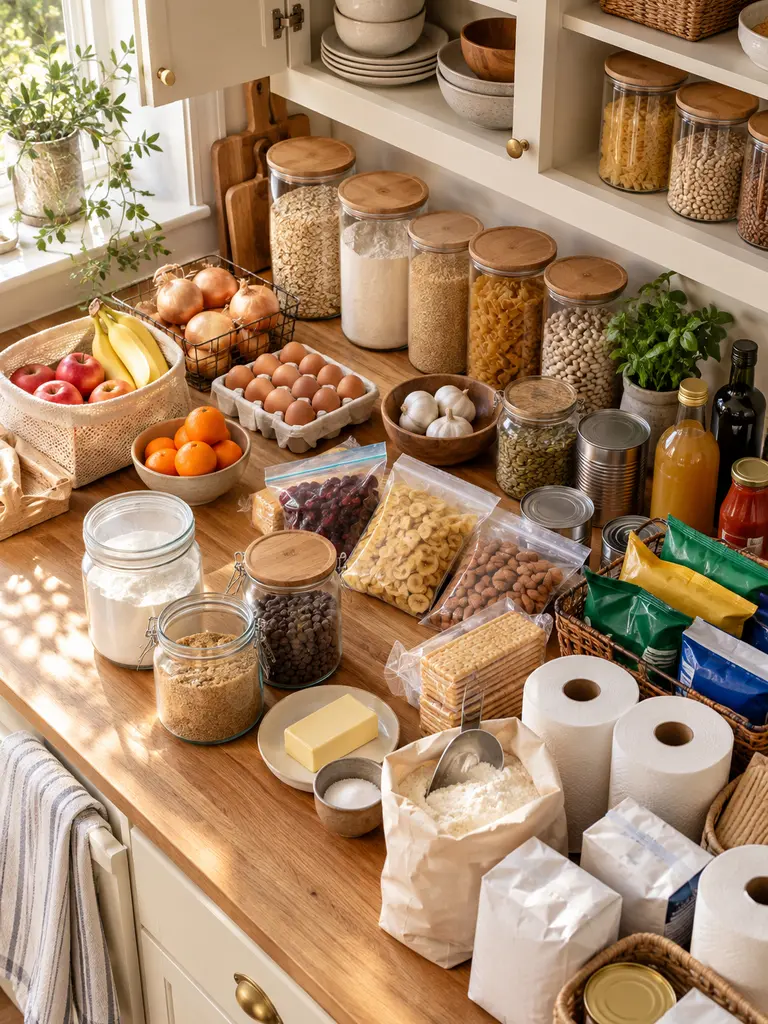
An organized kitchen starts with knowing exactly what needs a home. Empty food cabinets one at a time, group similar items on the counter, and record dry ingredients, snacks, drinks, baking supplies, and unopened backups. Remove expired products before measuring available storage.
Notice which groceries appear every week and which remain untouched for months. In my experience, this step prevents people from buying containers that do not fit their actual habits. Assign the easiest spaces to daily staples, then reserve higher or deeper areas for lighter, occasional items.
For additional ways to organize overlooked corners and daily essentials, explore these practical Small Space Storage Ideas.
Primary Grocery Cabinet

- Select a cabinet close to the main food preparation surface.
- Reserve the easiest shelf for daily staples such as cereal, rice, pasta, and spreads.
- Place heavier jars and cans on the lowest suitable shelf.
- Group smaller packets inside shallow, removable baskets.
- Keep cleaning products and household chemicals in a separate location.
A dedicated grocery cabinet reduces searching because frequently used food stays within one predictable zone. Arrange items by routine rather than package color, with breakfast supplies together and meal ingredients nearby. Leave a little open capacity for the next shopping trip instead of filling every shelf immediately.
Tiered Cabinet Shelves
Quick Tip:
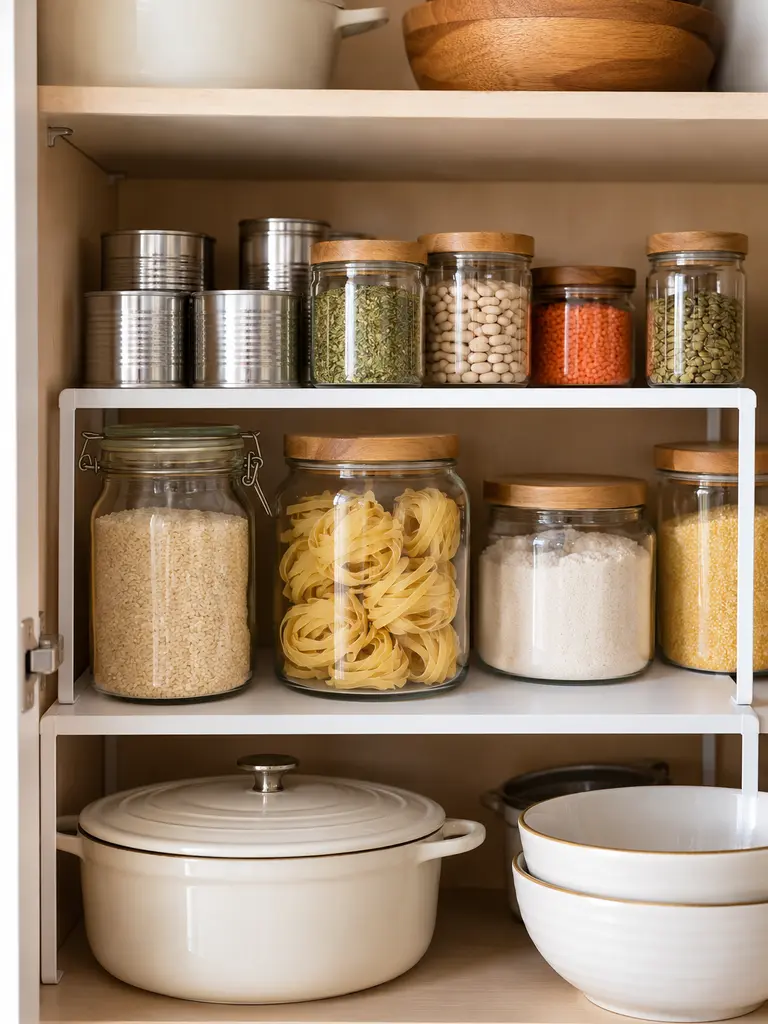
Measure the cabinet’s width, depth, and interior height before purchasing risers. Choose sturdy, washable shelves that allow the cabinet door to close fully and do not interfere with hinges.
Shelf risers reveal cans and jars that would otherwise disappear behind taller packages. Place shorter items on the raised back level and heavier products at the front or bottom. I’ve noticed that one well-fitted riser works better than several crowded organizers because every item remains visible, stable, and reachable.
Deep Drawer Pantry
BEFORE:
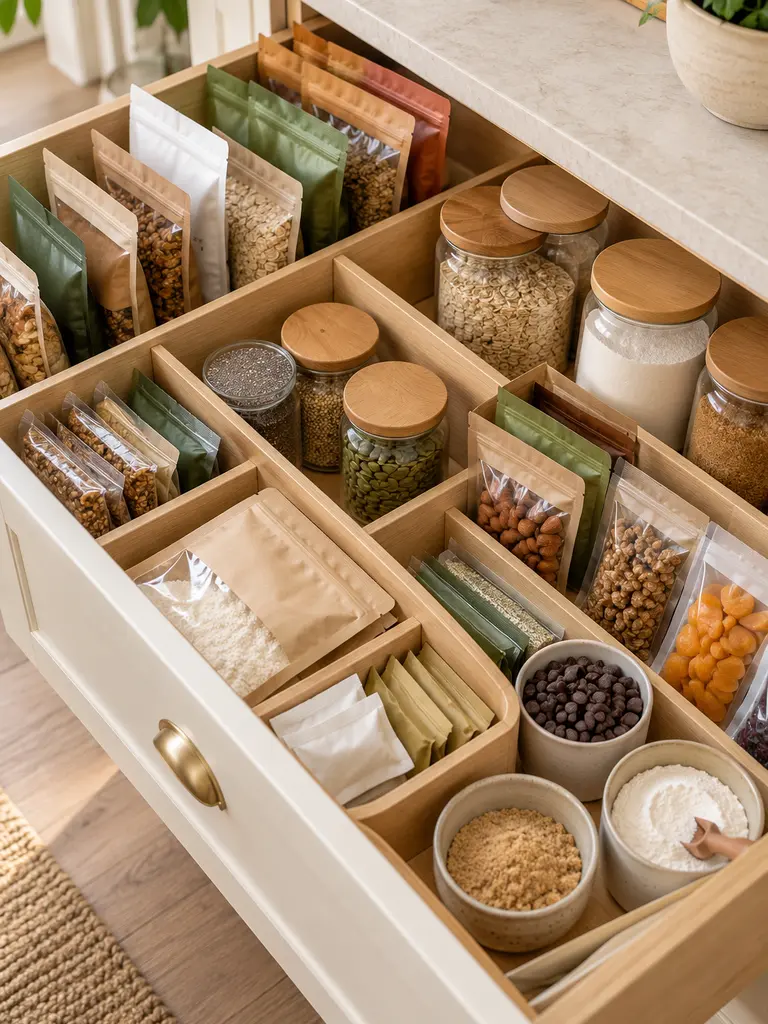
A deep drawer filled with loose packets quickly becomes difficult to search. Lightweight packages shift, overlap, and hide beneath heavier containers whenever the drawer opens.
AFTER:
Washable dividers create separate sections for grains, snacks, baking supplies, and sealed packets. Each category stays upright, visible, and easier to remove without disturbing everything around it.
Deep drawers work best for compact packages rather than tall glass containers. Measure the drawer’s usable height, arrange items with labels facing upward, and avoid overfilling the sections. Keep frequently used ingredients near the front, then wipe the drawer and inspect expiry dates during a short monthly reset.
Freestanding Pantry Hutch

- Measure the location: Confirm the cabinet will not restrict doorways, appliances, vents, or the main walkway.
- Choose stable furniture: Select a shallow unit with adjustable shelves and secure it according to the manufacturer’s instructions.
- Assign lower storage: Place heavier bottles, appliances, or sealed bulk goods inside the bottom section.
- Organize upper shelves: Use the easiest levels for everyday groceries and lightweight baskets.
- Protect food: Keep packages closed and away from direct sunlight, heat, and moisture.
A compact hutch can replace missing pantry storage while adding a finished furniture element to the kitchen. Closed lower doors conceal bulky supplies, while upper shelves keep daily staples accessible. Match the unit’s depth to the room so it increases capacity without making movement feel cramped.
If your kitchen is part of a compact rental or open-plan home, these Small Apartment Decorating Ideas can help you balance attractive furniture with practical storage.
Narrow Shelving Bay
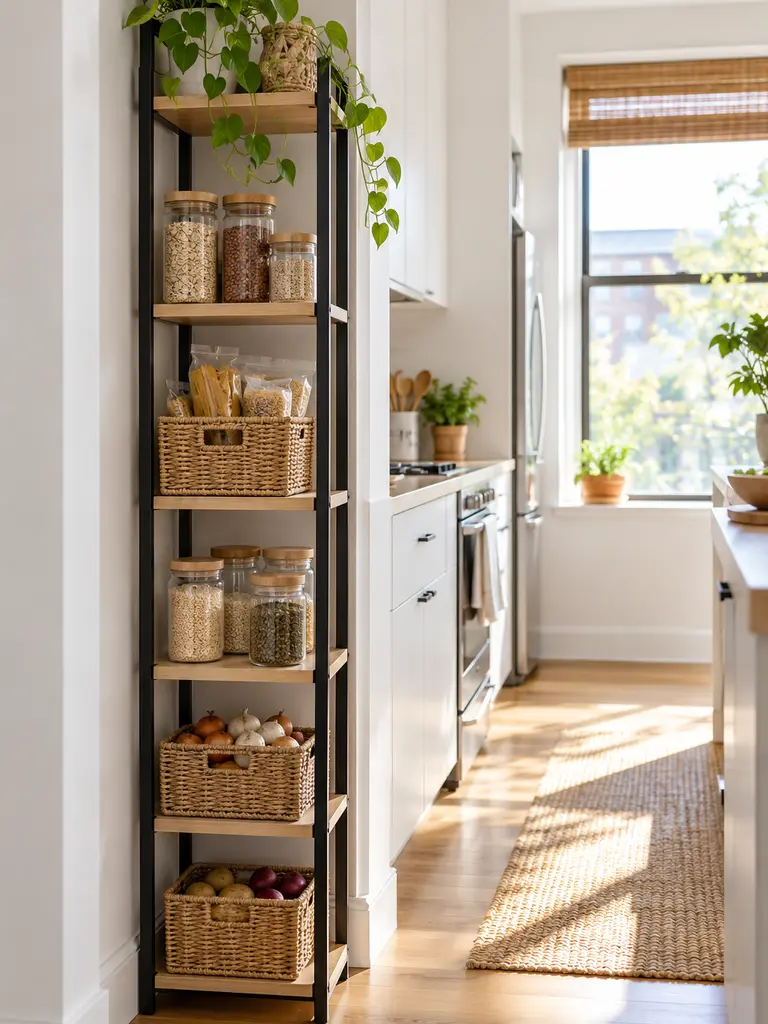
| Detail | Wide Bookcase | Narrow Kitchen Shelf |
|---|---|---|
| Floor space | Occupies a broad wall area | Uses a slim unused section |
| Storage | Encourages mixed clutter | Supports defined food categories |
| Access | Items may sit in deep rows | Packages remain easy to reach |
| Safety | Can obstruct movement | Preserves the main walkway |
A slim shelf can turn an overlooked wall section into practical food storage without dominating the kitchen. Choose a stable unit with washable surfaces, place heavy items low, and secure it when required. Use shallow bins so products remain visible, and leave ventilation space around nearby appliances.
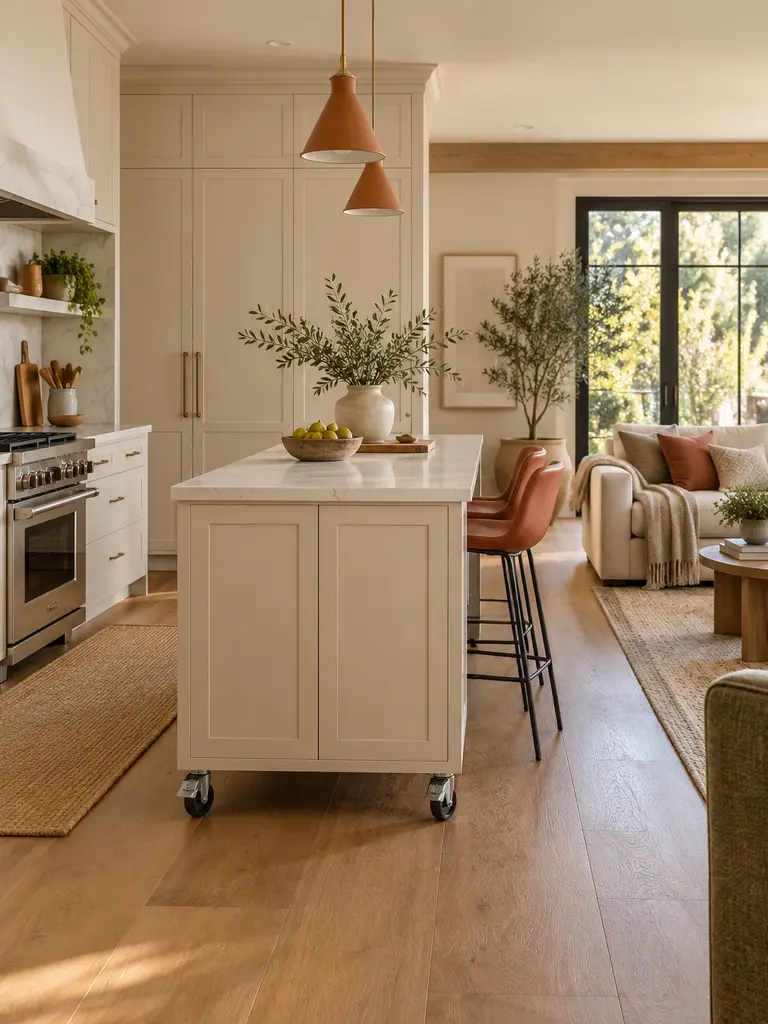
Island Storage Core
DO
- Reserve one cabinet or drawer for ingredients used during food preparation.
- Place heavier supplies on the lowest available level.
- Use fitted dividers to stop packages from sliding.
- Lock movable island wheels before opening storage.
DON’T
- Store food beside leaking plumbing or damp surfaces.
- Overload shallow drawers with heavy jars.
- Allow open doors to block the kitchen walkway.
- Mix cleaning chemicals with edible products.
An island becomes more useful when its storage supports the work happening above it. Keep flour, oils, grains, or mixing supplies near the preparation surface, depending on your routine. In my experience, clearly limiting each compartment prevents the island from becoming a collection point for unrelated kitchen clutter.
For an open-plan home, these Studio Apartment Layout Ideas show how a movable island can separate the kitchen while supporting storage and meal preparation.
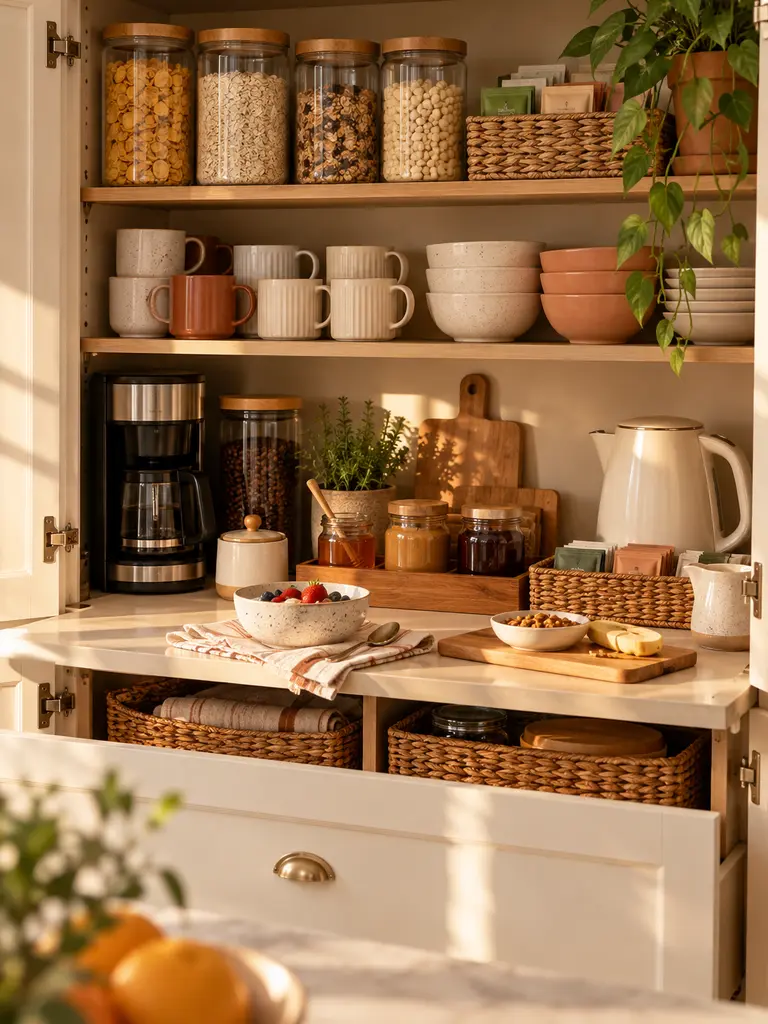
Breakfast Supply Station
Cost: Low when an existing cabinet is reorganized
Setup Time: About 30 minutes
Best For: Busy mornings and shared kitchens
Result: Faster access to everyday breakfast supplies
Morning routines feel calmer when cereal, oatmeal, spreads, tea, and coffee live in one defined area. Place adult items on the upper shelf and family-safe grab-and-go options lower down. Keep the station near bowls or mugs, but away from heat, steam, and splashes that could damage dry food.
Once breakfast supplies are contained, these seasonal kitchen decorating ideas can add autumn warmth without disrupting the organized counter.
Wall-Rail Produce Baskets
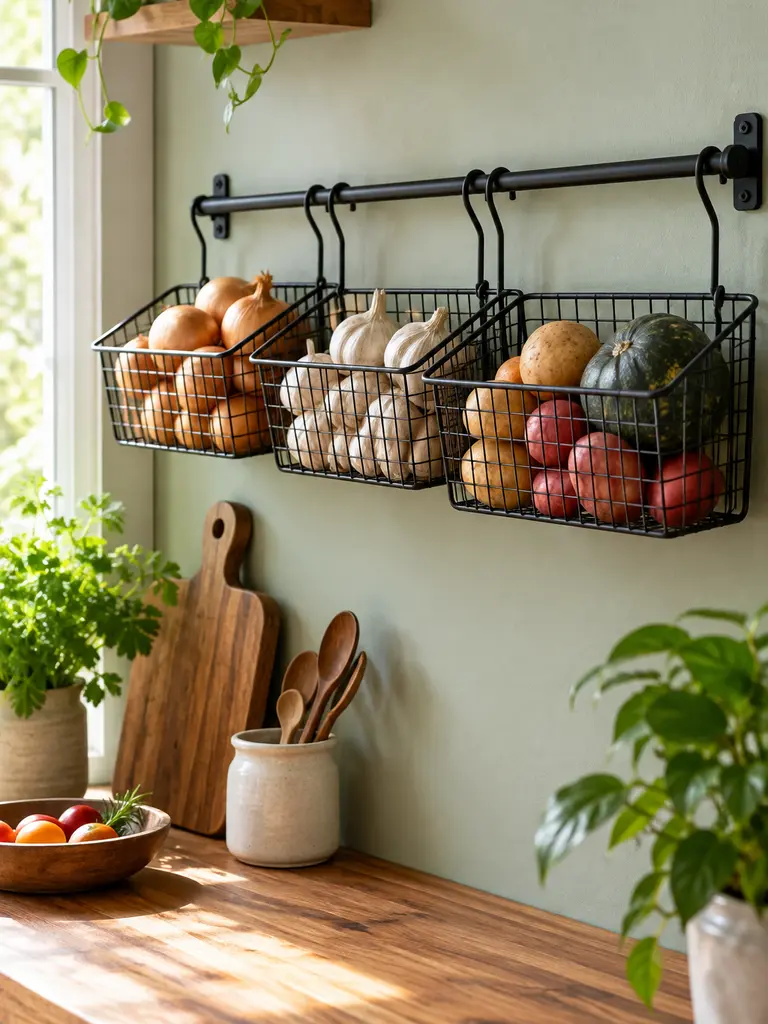
Fresh produce becomes easier to use when it stays visible instead of disappearing inside crowded cabinets. Install a manufacturer-approved rail on a suitable wall, then attach ventilated baskets that can be removed for cleaning. Keep onions, garlic, and other room-temperature produce in separate sections when appropriate.
Avoid placing the baskets above a stove, sink, radiator, or strongly sunlit window. Check the wall support and total loaded weight before filling them. I’ve seen this work well in narrow kitchens because vertical storage frees the counter while making produce condition easy to monitor.
Under-Cabinet Jar Rack
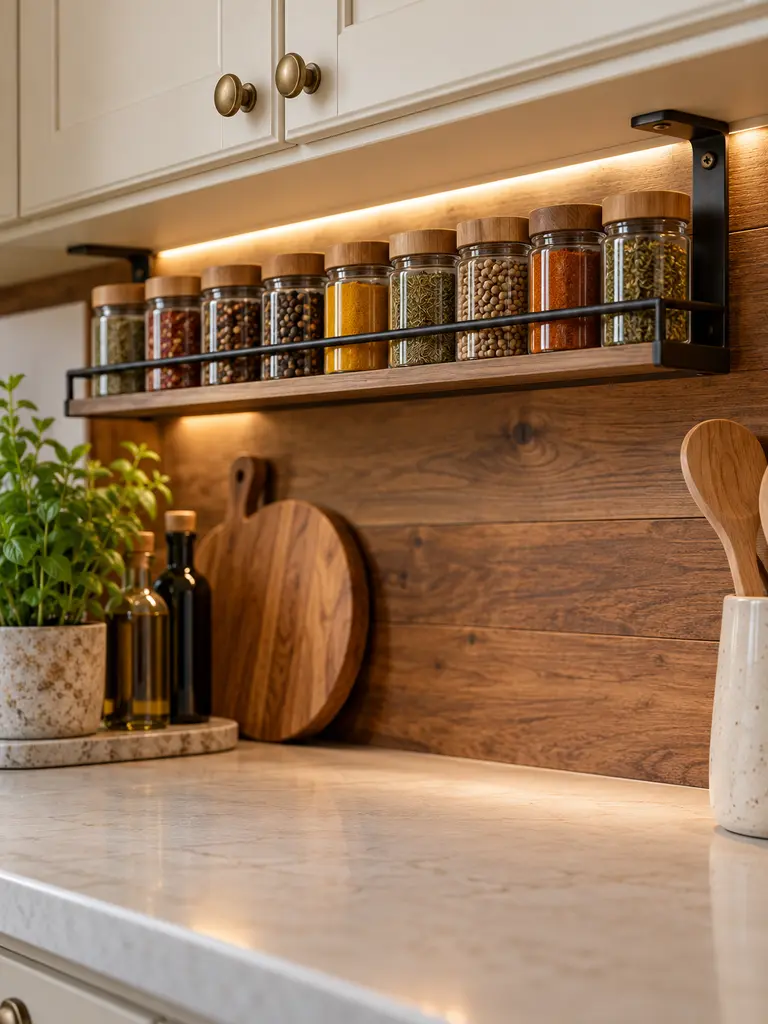
- Measure the available width, depth, and counter clearance before selecting a rack.
- Use only a manufacturer-approved mounting or removable support system.
- Store lightweight spice jars rather than heavy glass containers.
- Keep every jar away from the stove, sink, steam, and direct heat.
- Confirm cabinet doors and nearby appliances still open freely.
Unused space beneath cabinetry can hold frequently used seasonings without crowding the worktop. Arrange jars in one shallow row with labels facing forward, and avoid filling the rack beyond its rated capacity. Clean grease or dust regularly, especially if the installation sits near an active food preparation area.
Fridge-Side Grocery Shelf
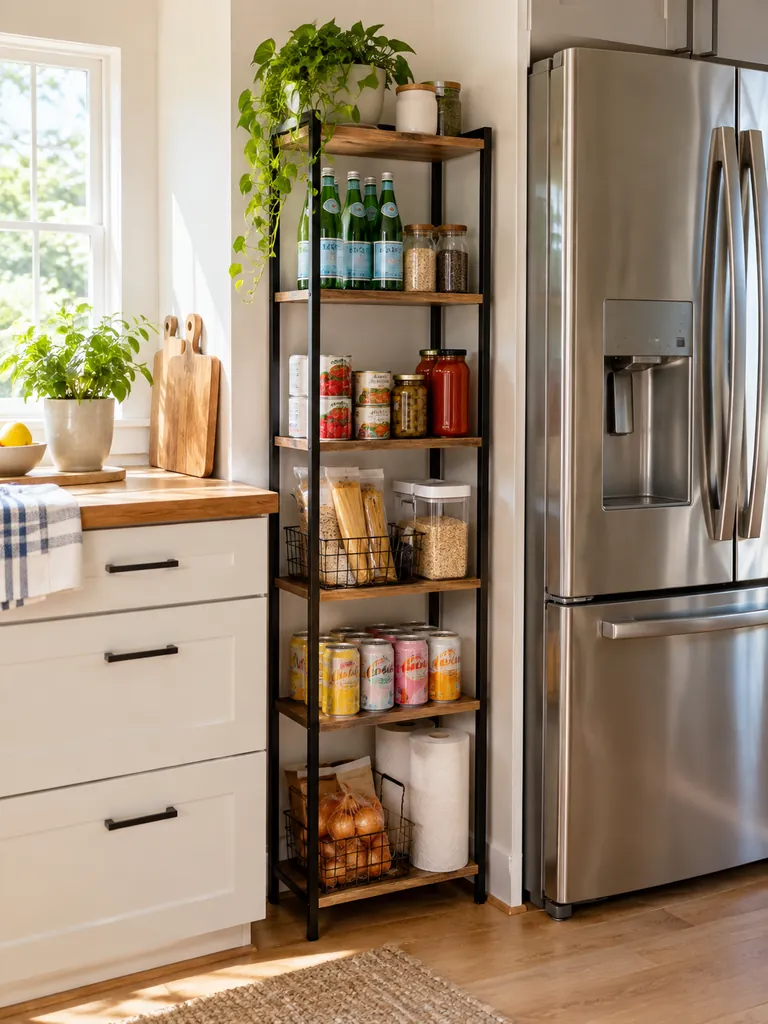
Quick Tip:
Check the refrigerator manufacturer’s required ventilation clearance before selecting a shelf. The unit should stand independently and must not press against appliance panels, electrical cords, water lines, hinges, or door handles.
A narrow shelf beside the refrigerator can hold sealed drinks, canned goods, wraps, and frequently used staples. Choose a depth that keeps the walkway comfortable and place heavier products on lower levels. Leave open space around vents, then test both refrigerator doors fully before loading the shelf.
Freezer Meal Zone
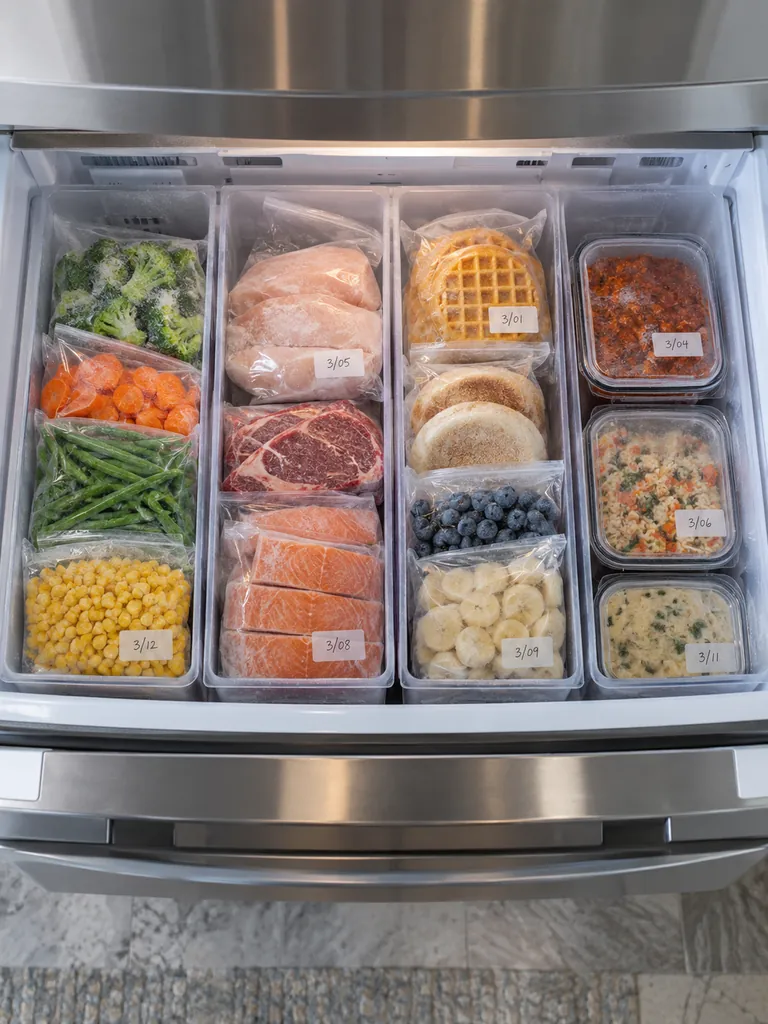
BEFORE:
Loose bags and stacked containers make frozen food difficult to identify. Older meals disappear beneath new purchases, while open packages spill or develop freezer damage.
AFTER:
Vertical categories separate vegetables, proteins, prepared meals, and breakfast items. Labels remain visible, and each section can be checked before grocery shopping.
Freezer zones reduce waste because every package has a predictable location. Use cold-safe bins, label prepared meals with names and dates, and avoid blocking vents. Place newer items behind older ones, then keep a simple inventory nearby so you can plan meals without repeatedly searching through frozen packages.
Baking Supply Drawer
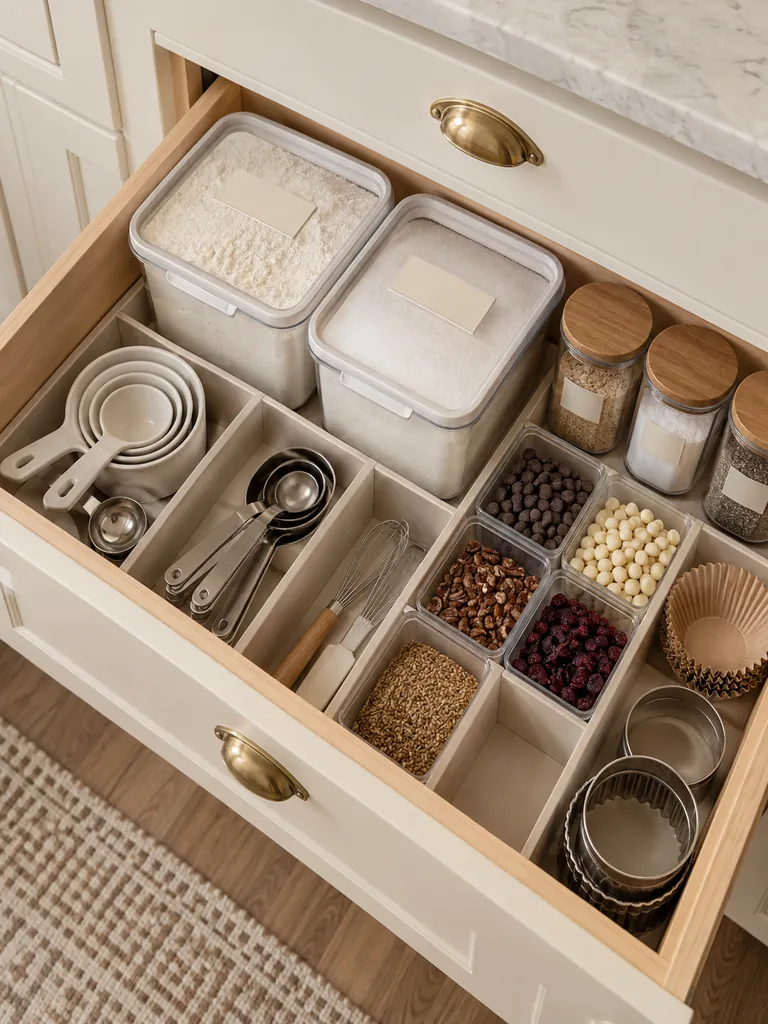
- Empty the drawer: Remove unrelated tools, crumbs, and expired ingredients before creating categories.
- Measure the interior: Check usable height and width before choosing washable containers or dividers.
- Group ingredients: Keep flour, sugar, raising agents, decorating supplies, and measuring tools in separate sections.
- Control movement: Use fitted dividers or nonslip lining to prevent packages from shifting.
- Label clearly: Mark containers with contents and relevant dates.
A dedicated baking drawer keeps related supplies near the work surface and makes quick inventory checks easier. Store ingredients in properly sealed food-safe containers, clean spills immediately, and avoid overfilling. Keep measuring cups in one visible compartment so preparation starts without searching through several cabinets.
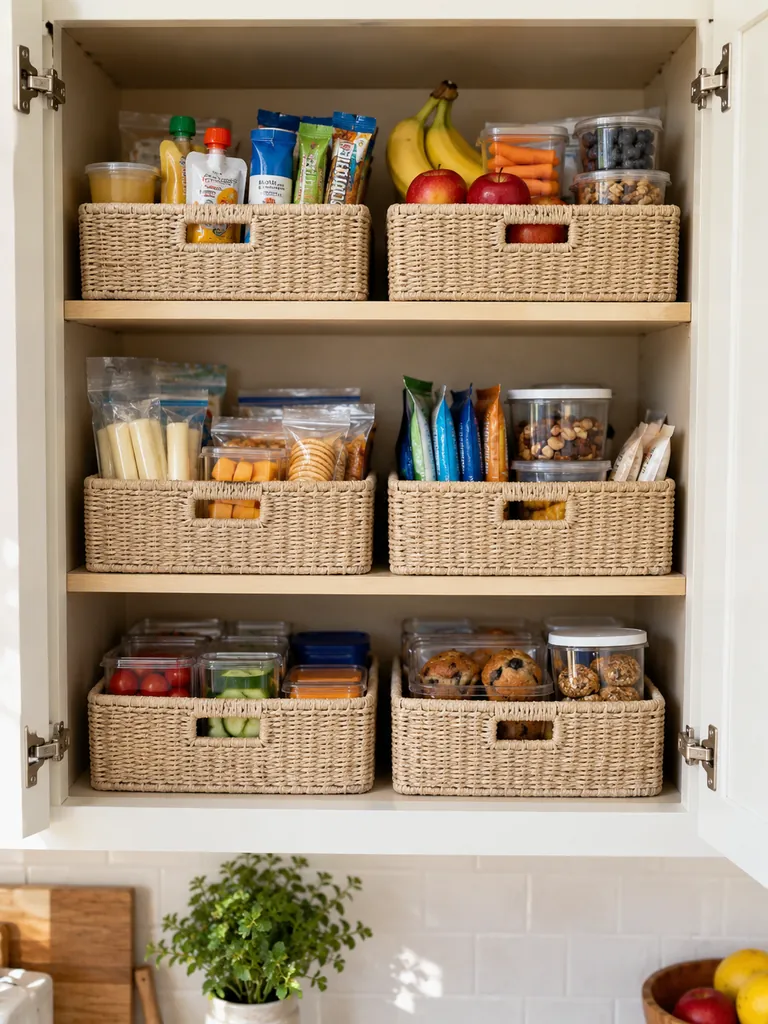
Family Snack Baskets
| Detail | Loose Snack Storage | Organized Baskets |
|---|---|---|
| Visibility | Packages hide behind each other | Categories remain easy to scan |
| Portions | Open boxes create confusion | Individual items stay contained |
| Access | Everyone searches multiple shelves | Each person uses one defined zone |
| Restocking | Duplicates are easily purchased | Low supplies become obvious |
Snack baskets simplify shared kitchens because everyone knows where suitable options belong. Assign categories such as lunchbox items, after-school snacks, or adult treats, then label them clearly. Choose washable baskets that fit the shelf depth and avoid storing temperature-sensitive food outside its required conditions.
Backstock Storage Limit
DO
- Give duplicate groceries one fixed basket, shelf, or cabinet section.
- Buy backups according to available capacity and realistic use.
- Check current supplies before every shopping trip.
- Place products with earlier dates at the front.
DON’T
- Store food beside chemicals, moisture, or excessive heat.
- Fill walkways with bulk packages.
- keep duplicates in several unrelated rooms.
- Buy discounted products without a practical use plan.
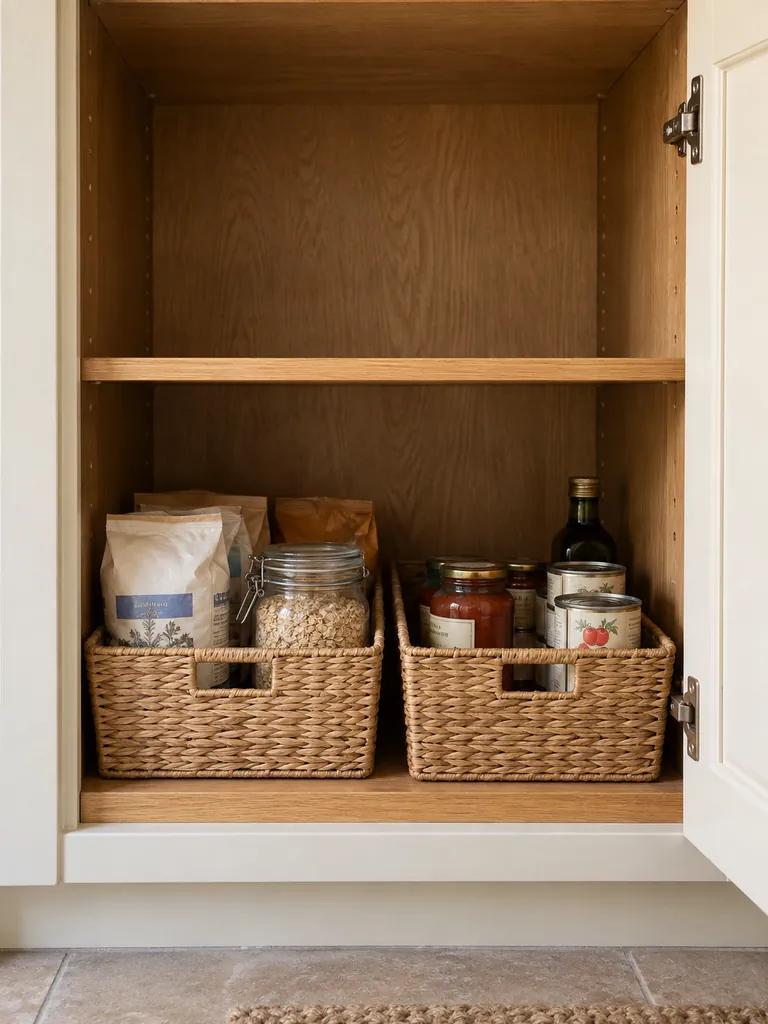
A fixed backstock boundary prevents bargain purchases from consuming the entire kitchen. Once the assigned zone is full, use existing supplies before buying more. I’ve noticed that this simple limit reduces duplicate purchases and makes weekly shopping easier because the household can see exactly what is already available.
Keeping extras under control also prevents overflow from reaching your work surfaces, while these small kitchen counter organization ideas can help you organize the everyday items that still need to stay within reach.
Weekly Cabinet Refill
Cost: Free when existing storage is used
Time: About 10 to 15 minutes
Best For: Kitchens with secondary backstock storage
Result: Daily food zones remain orderly and adequately supplied
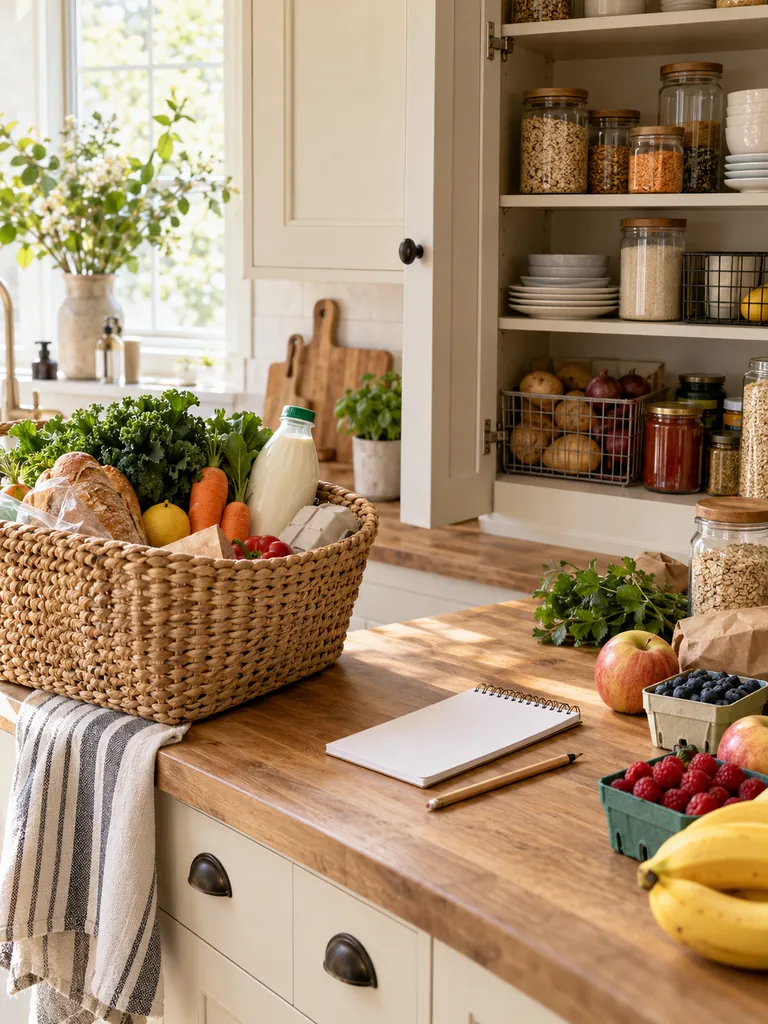
A weekly refill prevents half-empty packages and random backups from taking over the main cabinets. Choose one consistent day to move required items from secondary storage into their assigned kitchen zones. Check quantities first, combine products only when safe, and add genuinely needed supplies to the next shopping list.
First-In Food Rotation

Food rotation protects both the budget and the limited storage available in a compact kitchen. After shopping, place newer packages behind matching older products instead of pushing everything toward the front. Keep labels and relevant dates visible so the next item to use is immediately clear.
Check opened foods, cans, jars, and dry ingredients during the weekly reset. In my experience, shallow rows are easier to rotate than deep stacks that hide products. Move items nearing their dates into a visible meal-planning basket, but discard anything unsafe according to its storage guidance.
Clear Label System
- Label shelves by category, such as grains, snacks, breakfast, or baking.
- Mark decanted food containers with the product name and relevant date.
- Use readable labels that remain visible from the normal viewing angle.
- Keep original cooking, allergen, and safety information when transferring food.
- Replace damaged or outdated labels during regular cleaning.
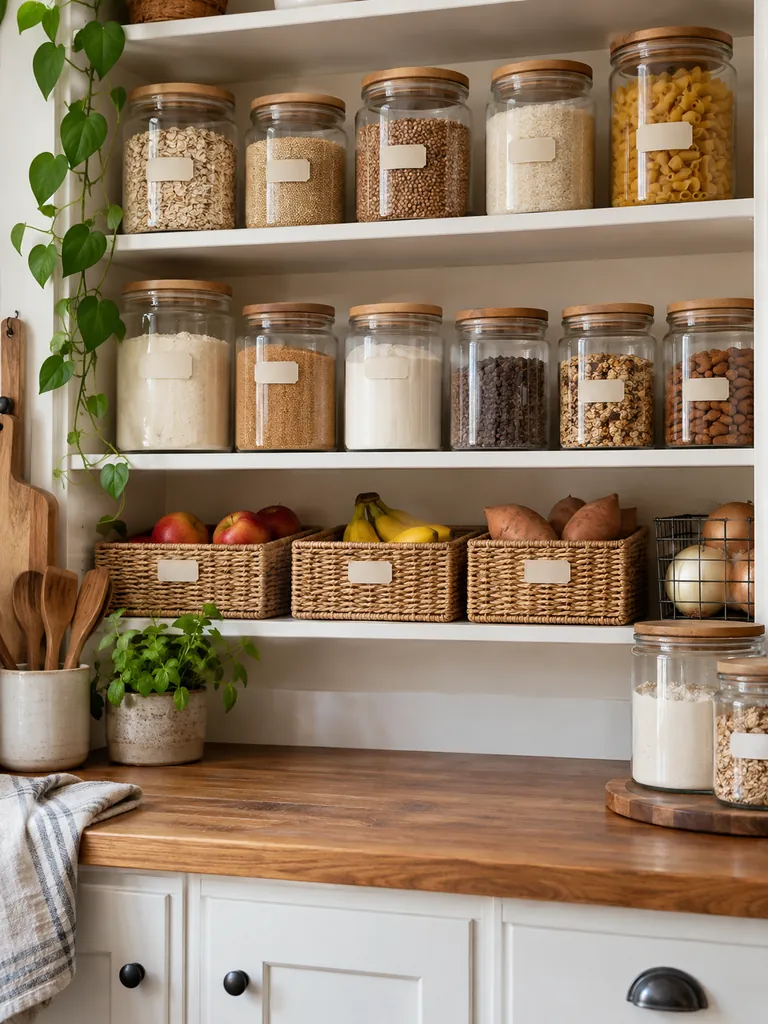
Clear labels reduce repeated searching and help every household member return groceries to the correct place. Keep the system simple enough to maintain, using broad categories rather than labeling every minor variation. Matching containers are optional, but accurate product identification and safe storage information should always remain easy to find.
Kitchen Capacity Review
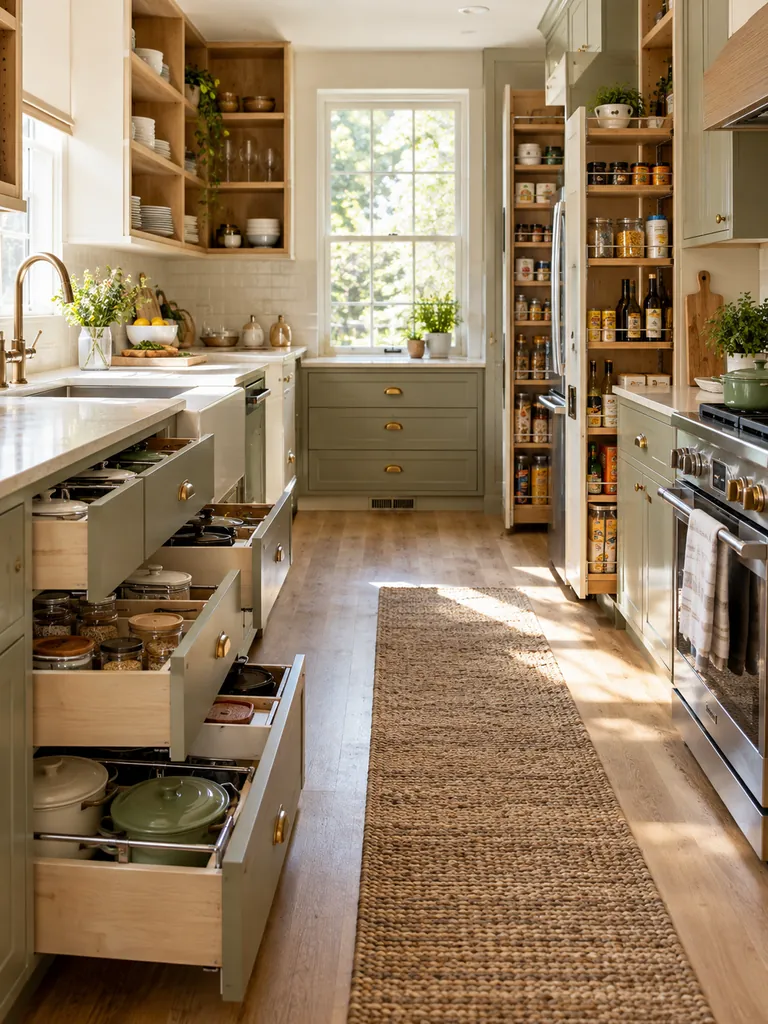
Quick Tip:
Review each food-storage zone before the main grocery trip. Remove expired products, note supplies running low, and check whether any shelf, basket, drawer, or cabinet has become difficult to access.
A monthly capacity review keeps the system responsive as household habits change. Relocate rarely used products, reduce oversized categories, and remove empty organizers that waste space. Confirm that appliances have proper ventilation and daily ingredients remain near their point of use before making additional storage purchases.
If you still need more ways to make cabinets, drawers, walls, and overlooked gaps work harder, explore these small kitchen storage ideas for practical space-saving solutions.
Conclusion
A missing pantry does not have to limit how organized or efficient your kitchen can become. These Small Kitchen Ideas Without a Pantry help turn cabinets, drawers, walls, and compact furniture into practical food-storage zones. Start with one crowded area, choose an idea that matches your routine, and adjust it as your household needs change. I’ve noticed that simple categories and consistent weekly resets often work better than complicated organizing systems. Save this post on Pinterest for your next kitchen reset, try one or more solutions, and share it with someone who needs smarter storage in a small kitchen.