
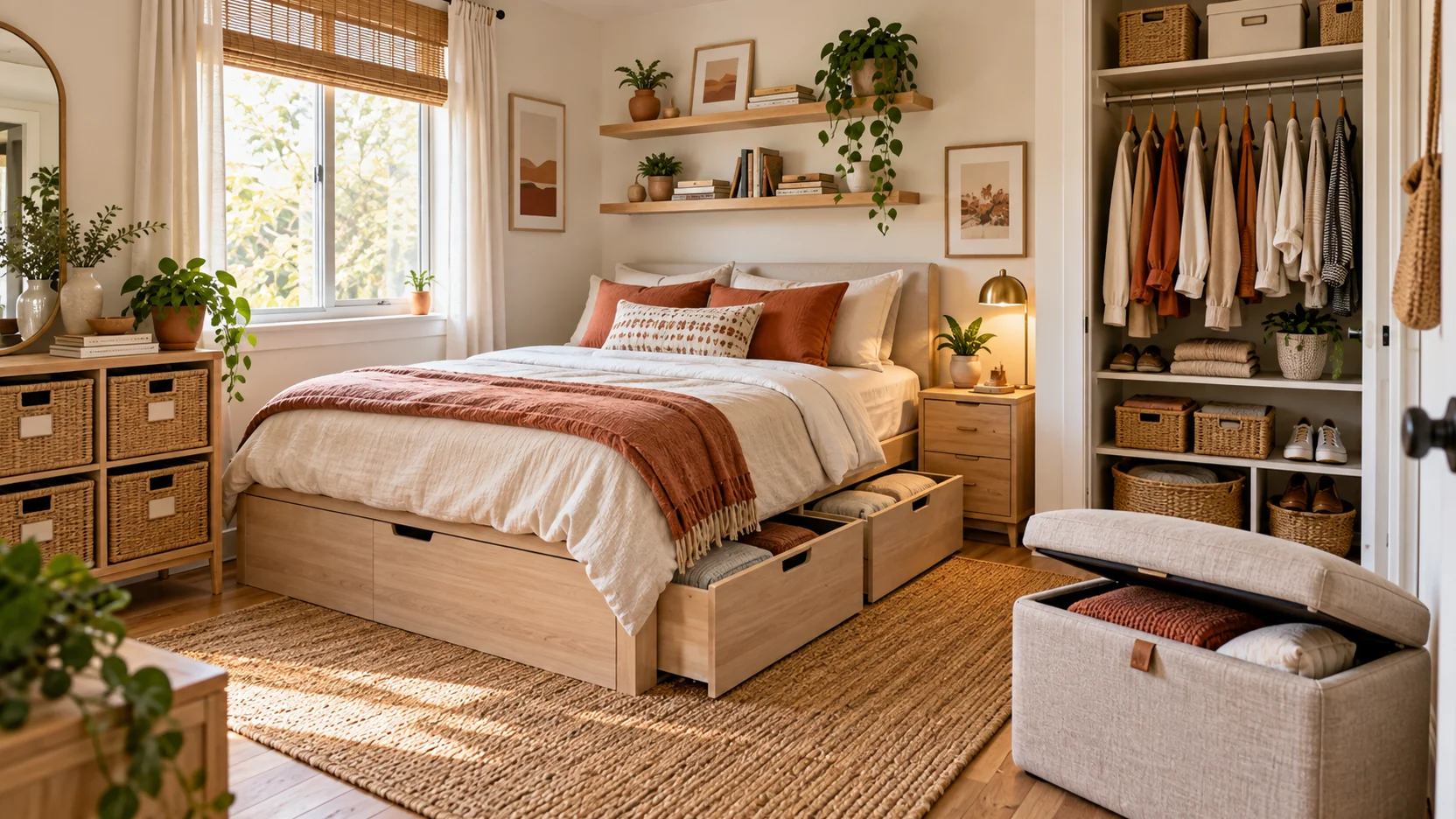
Does your small bedroom feel crowded no matter how often you tidy it? These small bedroom storage ideas will help you create more usable space without filling the room with bulky organizers or unnecessary furniture.
I’ve noticed that clutter often returns because everyday items do not have simple, accessible homes. A practical storage plan matters because it keeps floors clear, surfaces calmer, and the belongings you use most within easy reach.
This guide shows you how to assess your room, declutter thoughtfully, use overlooked areas, organize your closet, and choose multifunctional furniture. By the end, you will know how to build a storage system that fits your space, supports your routine, and stays manageable.
Table of Contents
Why Small Bedrooms Become Cluttered So Quickly
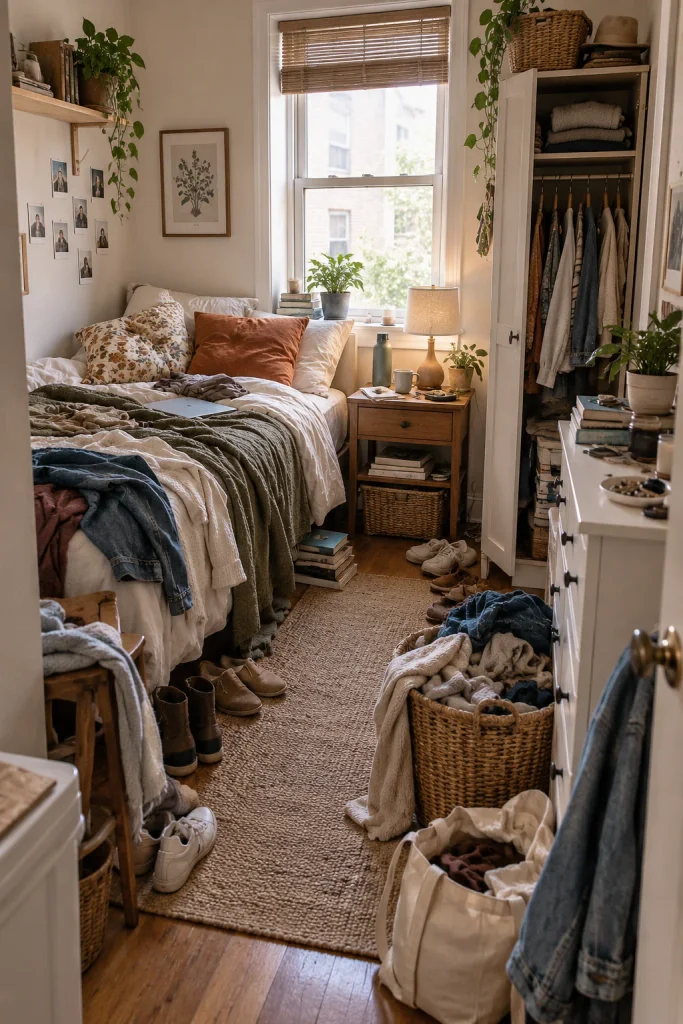
Small bedrooms become cluttered quickly because every item competes for limited floor, wall, and closet space. Clothes collect on chairs, everyday products cover nightstands, and rarely used belongings occupy the easiest storage areas. Without a clear system, even useful items can make the room feel cramped and visually busy.
Adding more baskets or furniture may create extra places to hide things, but it can also reduce walking space. Effective small bedroom storage ideas begin with understanding what causes the clutter. Identify whether the main problem is excess clothing, poor closet organization, or items without assigned homes.
Assess Your Bedroom and Set a Clear Storage Goal
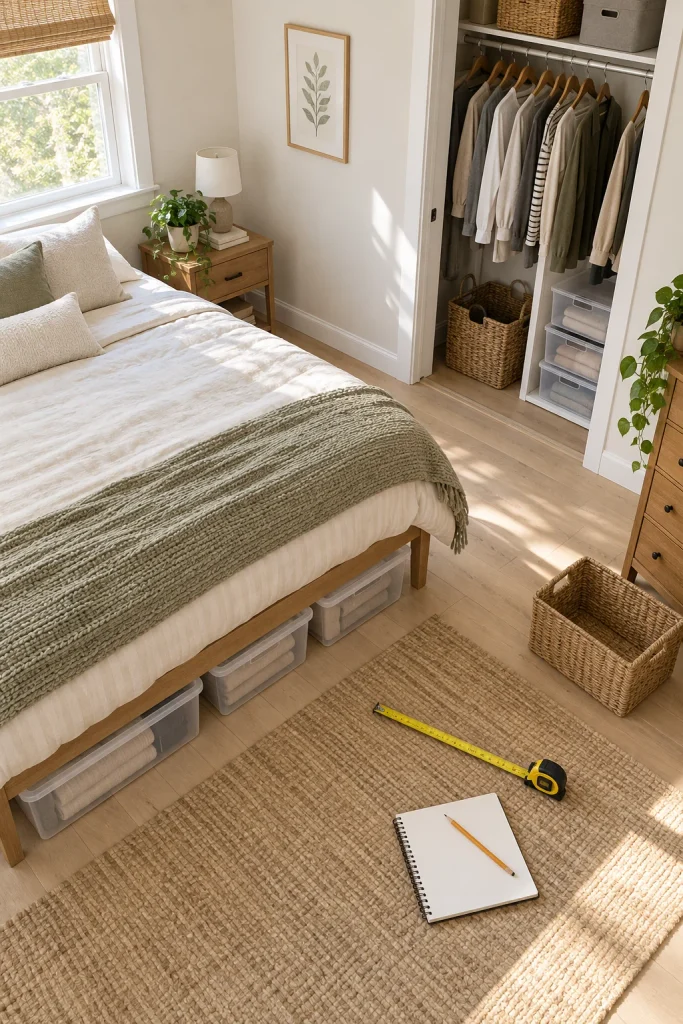
A quick bedroom assessment prevents you from buying organizers that do not fit or solve the real problem. In my experience, measuring first also reveals useful storage areas that people often overlook, including narrow corners, empty walls, and the space above wardrobes.
- Identify clutter zones: Note where clothes, shoes, books, and personal items usually collect.
- Measure available space: Record the height, width, and depth beneath the bed, inside the closet, and along empty walls.
- Sort by frequency: Separate belongings into everyday, weekly, seasonal, and rarely used groups.
- Set one clear goal: Decide whether you need more clothing storage, clearer surfaces, better closet access, or additional floor space.
Carry the same space-saving approach throughout your home with these Stylish Apartment Decorating Ideas for compact living, dining, entry, and storage zones.
Declutter Before Adding New Storage
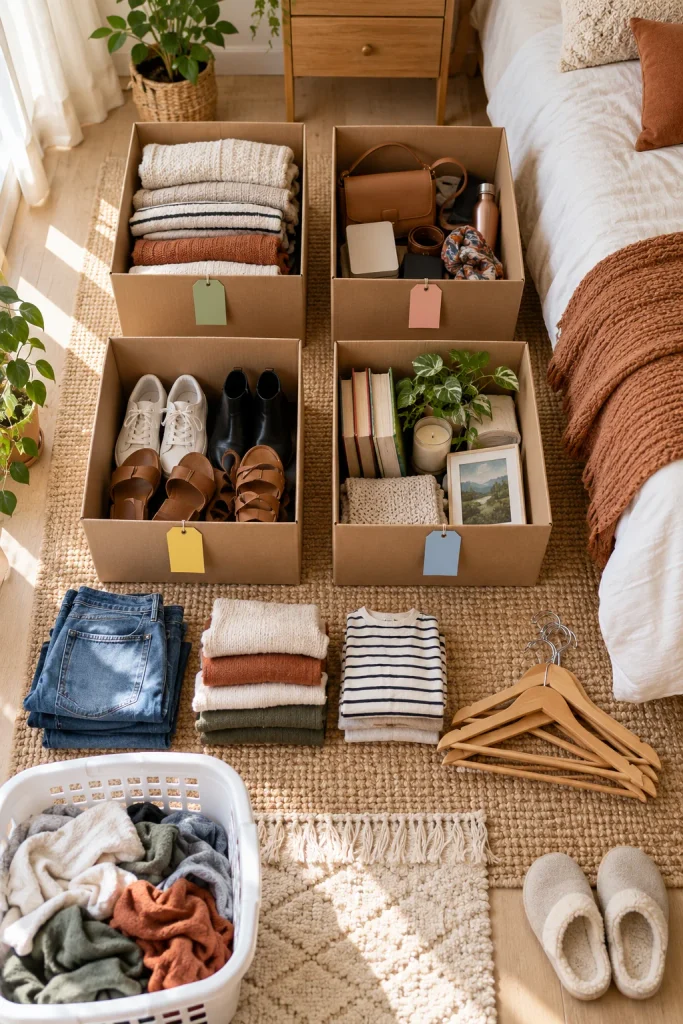
Quick Tip: Do not buy containers before deciding what deserves space in your bedroom. Empty organizers often encourage people to keep items they neither use nor need.
Work through one small area at a time, such as a drawer, shelf, or clothing rail. Place each item into one of four groups: keep, donate, relocate, or discard. Keep only belongings that serve a purpose or genuinely matter to you, then measure what remains before selecting storage products.
Use the Space Under Your Bed

Common Mistake: Many people push loose shoes, bags, and clothing beneath the bed without containers. Items become dusty, difficult to reach, and easy to forget.
The Fix: Measure the available height and depth before choosing storage. Use shallow drawers or rolling bins for regular access, and zippered bags or vacuum bags for seasonal belongings.
Assign each container one category and add a clear label to the side facing outward. Keep frequently used shoes or bedding near the edge, with seasonal items farther back. If the bed is too low, sturdy bed risers can add storage height, but check stability before placing them underneath.
Make Better Use of Vertical Wall Space
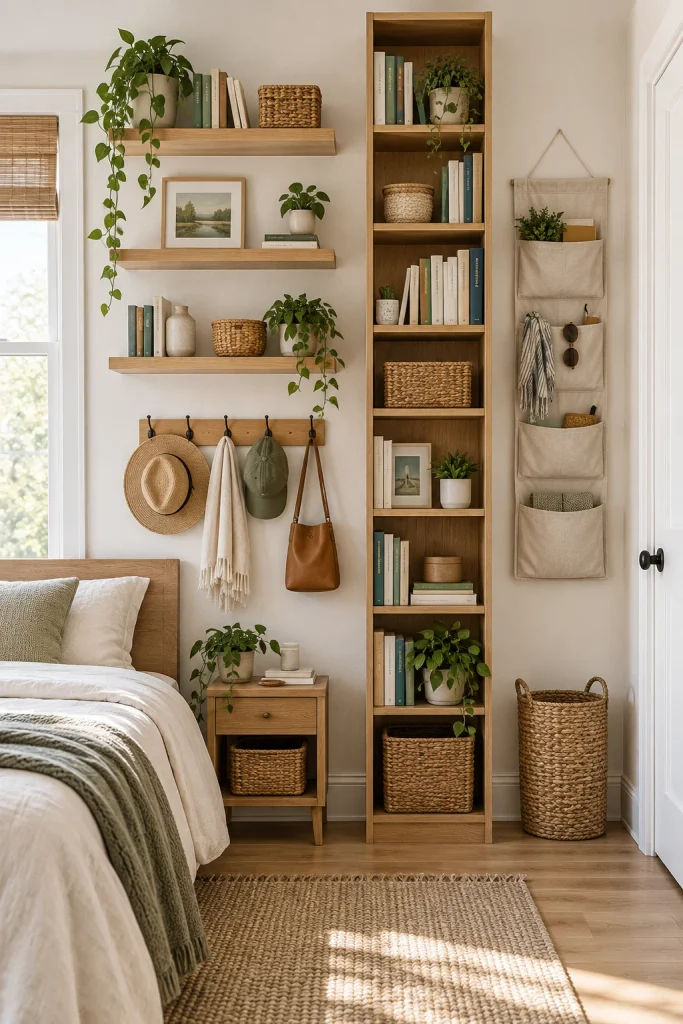
What You Need:
- Measuring tape: Check the available wall width and height before purchasing shelves.
- Stud finder: Locate secure fixing points for heavier wall storage.
- Floating shelves: Hold books, baskets, decor, and occasional items above furniture.
- Wall hooks: Provide accessible places for bags, hats, and tomorrow’s outfit.
- Tall narrow bookcase: Adds useful storage while occupying little floor space.
- Matching baskets: Keep small objects contained and reduce visual clutter.
Start with one empty wall instead of covering every surface. Position frequently used items between waist and eye level, then reserve higher shelves for lightweight or occasional belongings. Leave some open space around each storage feature so the bedroom feels organized, balanced, and comfortable rather than packed from floor to ceiling.
Well-positioned Space-saving Bedroom Shelves can organize books, accessories, and everyday essentials without taking up valuable floor space.
Organize a Small Closet for Maximum Capacity

Before: Mixed clothing hangs on bulky hangers while folded items collapse into uneven piles. Shoes cover the floor, accessories disappear at the back, and useful shelf space remains empty.
After: Clothes are grouped by type on slim hangers, shelves have defined sections, and smaller belongings sit in labeled containers. The closet floor remains clear, making every item easier to see and reach.
Some of the most effective small bedroom storage ideas begin inside the existing closet. Place everyday clothing at eye level, occasional pieces above, and shoes below. Use shelf dividers to prevent leaning piles, but avoid stacking clothes too high. A simple arrangement is easier to maintain than a complicated organizer system.
Choose Furniture That Provides Hidden Storage
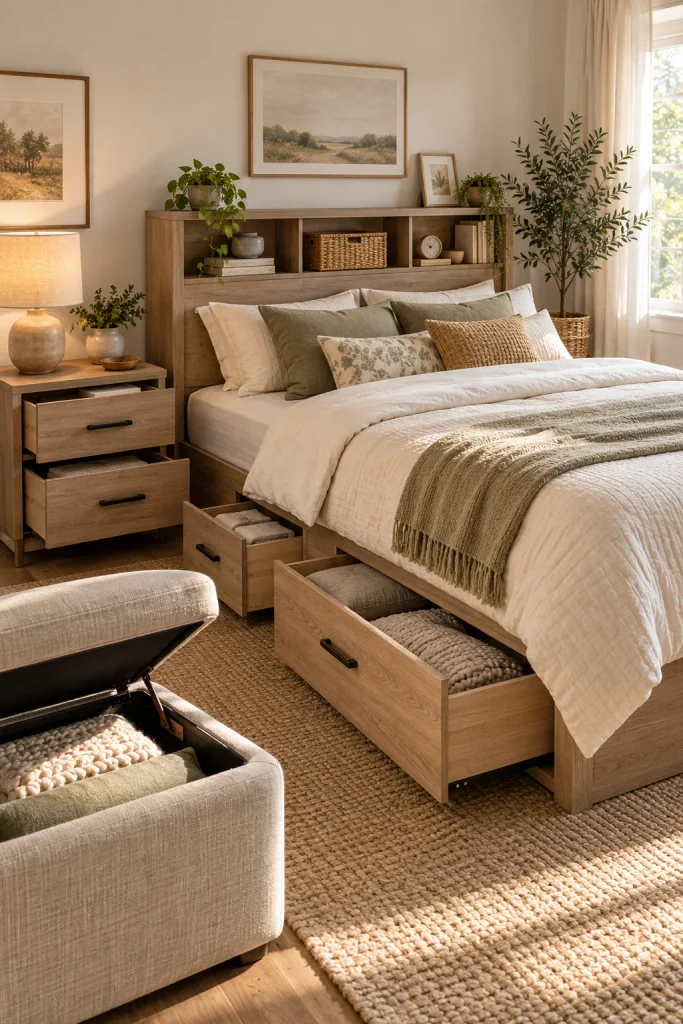
Do This:
- Choose a bed with drawers if clothing and bedding are your main storage problems.
- Use a storage ottoman for blankets, extra pillows, or less frequently used accessories.
- Select a nightstand with drawers instead of an open decorative table.
- Measure doors, walkways, and drawer clearance before ordering furniture.
Avoid This:
- Do not buy bulky furniture that restricts movement around the bed.
- Avoid open compartments if you struggle to keep small items arranged neatly.
- Do not choose several storage pieces when one multifunctional item can do the job.
- Avoid furniture that is difficult to open in the available space.
Hidden storage works best when the furniture suits your actual belongings. Decide what each piece will hold before buying it, then check how easily you can access the compartment. A useful storage bed or ottoman should reduce visible clutter without making the bedroom feel heavier, narrower, or harder to navigate.
Storage becomes more useful when furniture supports easy movement, so explore these Small Bedroom Layout Ideas before adding more organizers.
Use Doors, Corners, and Overlooked Spaces
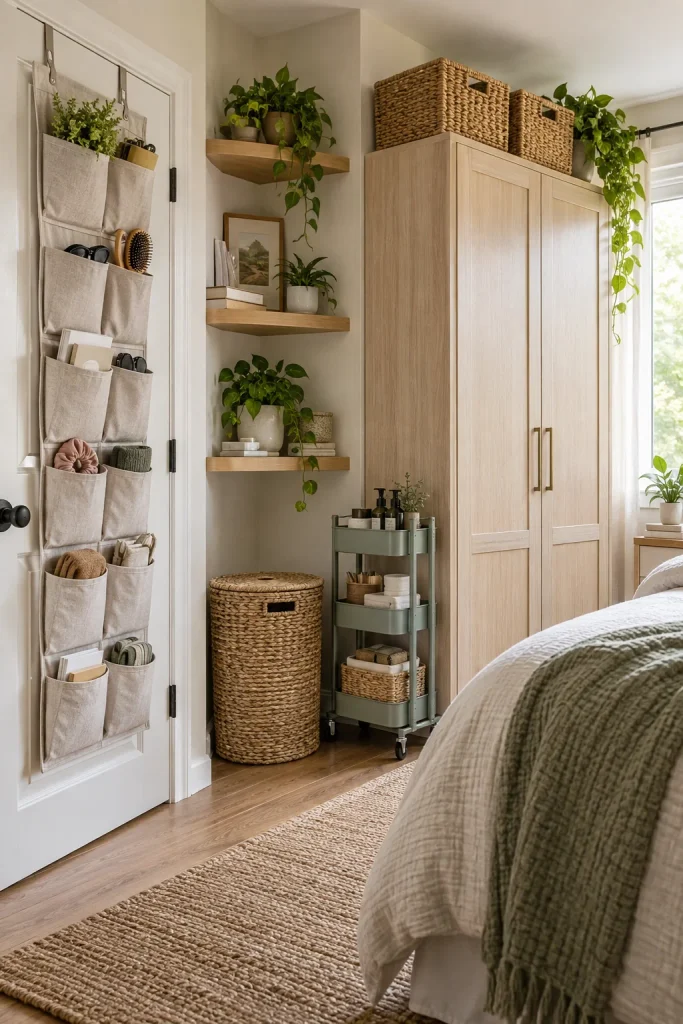
Time Needed: 30 to 60 minutes
Difficulty: Easy
Cost: Low to moderate
Best For: Shoes, accessories, bags, books, and occasional items
Overlooked areas can provide useful storage without taking space from the center of the room. Install shallow corner shelves, hang a lightweight organizer behind the door, and place labeled baskets above the wardrobe. Check that doors open fully and keep heavy belongings below shoulder height for safer, easier access.
An unused corner can also become a practical workspace with these clutter-conscious small bedroom desk ideas.
Keep Everyday Items Organized and Easy to Reach
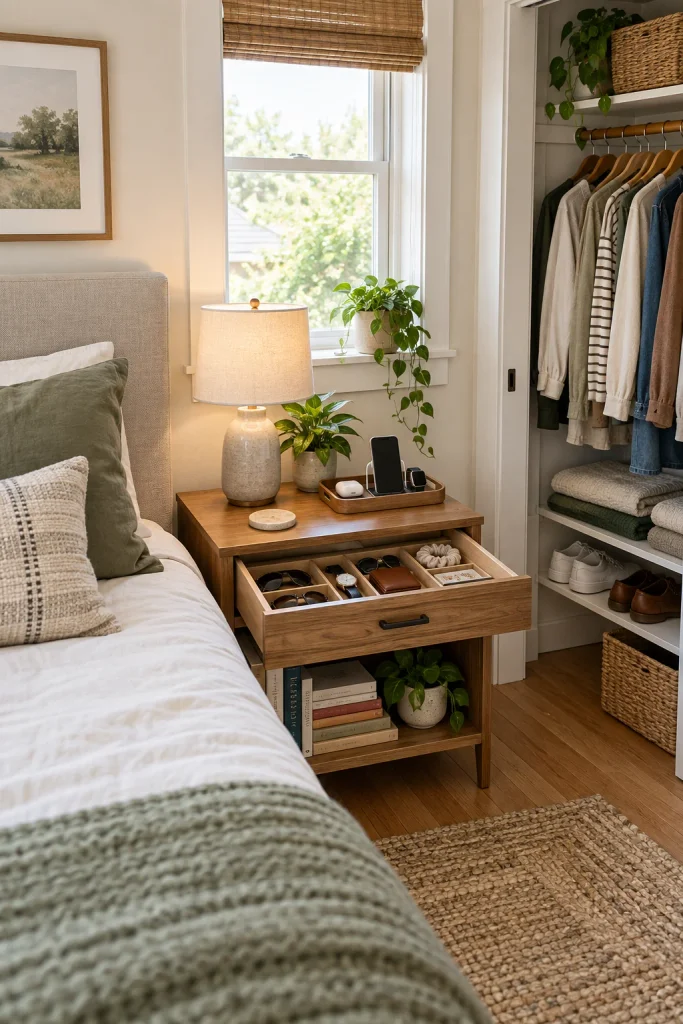
Storage becomes easier to maintain when everyday belongings have clear homes near the places where they are used. Keep sleep essentials inside the nightstand, clothing near the closet, and frequently worn accessories in a shallow tray or top drawer. This reduces unnecessary movement and prevents items from collecting on open surfaces.
Choose containers that let you retrieve and return belongings in seconds. Open trays work well for daily items, while drawers and lidded boxes suit objects used less often. I’ve noticed that complicated systems are abandoned quickly, so make each category visible, accessible, and simple enough to reset before bedtime.
These practical organization ideas for small apartments can help you extend the same easy-to-maintain system beyond the bedroom.
Common Small Bedroom Storage Mistakes to Avoid

A storage system should make your bedroom easier to use, not simply hold more belongings. The most common mistakes happen when people buy organizers too quickly, ignore room measurements, or create systems that require too much effort to maintain. Avoiding these problems keeps the room functional and visually calm.
- Do not overcrowd every available surface: Leave some shelves, walls, and floor areas open so the bedroom has visual breathing room.
- Avoid oversized storage furniture: Measure the room carefully and confirm that drawers, doors, and walkways will remain fully accessible.
- Do not mix unrelated belongings: Give each drawer, basket, or shelf one clear purpose, then label containers that are not transparent.
- Review the system regularly: Spend ten minutes each week returning misplaced items and removing anything you no longer use.
- Choose convenience over complexity: Store daily essentials within easy reach and reserve higher or hidden areas for occasional belongings.
After fixing the storage problems that make your room feel crowded, explore these small bedroom makeover ideas for stylish ways to improve its color, lighting, furniture, and overall look.
Conclusion
A small bedroom can feel calmer and more functional once every item has a clear, accessible home. By decluttering first, using vertical and hidden space, and choosing furniture carefully, you can create a system that supports your daily routine without crowding the room.
Use these small bedroom storage ideas as a practical starting point, then adjust each solution to fit your belongings and available space. I’ve seen how making this one change can completely shift the result. Save this article on Pinterest for future reference, try the steps in your own bedroom, and share it with someone who needs more space. Start with one area today.
Comments are closed.