
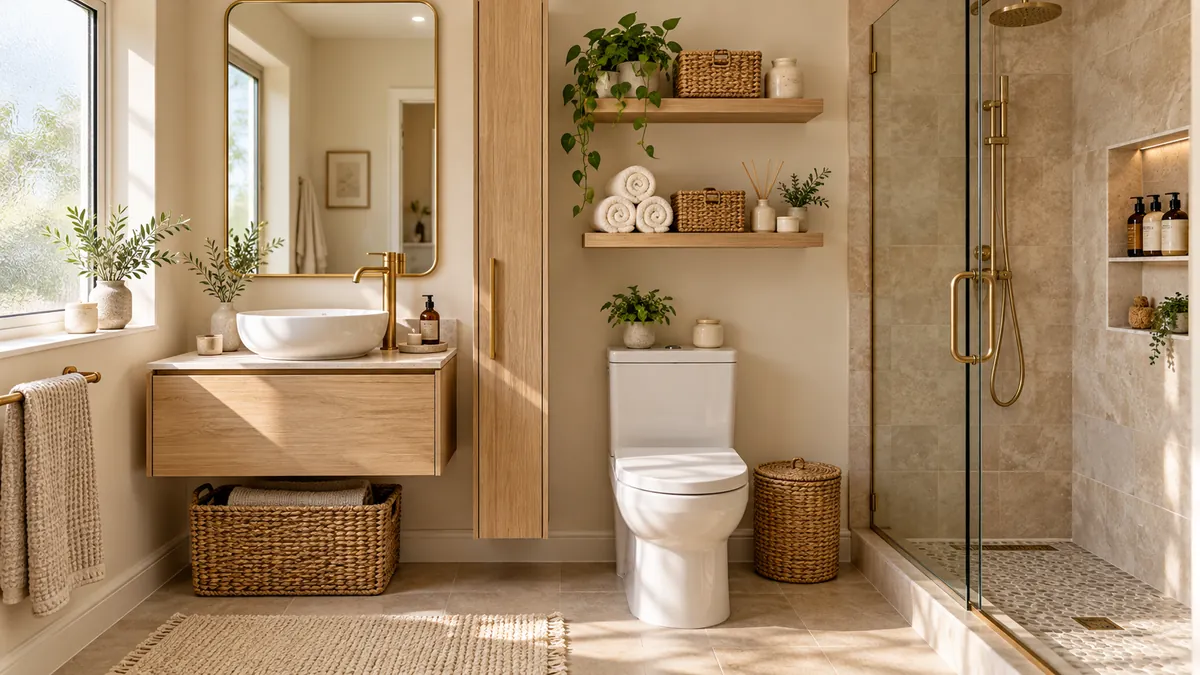
A small bathroom can feel crowded when towels, toiletries, and everyday essentials have nowhere to go. These Small Bathroom Storage Ideas will help you organize your space, reduce clutter, and create a cleaner, more comfortable bathroom without sacrificing valuable floor space.
From floating shelves and under-sink drawers to slim rolling carts, hidden cabinets, and clever shower organizers, these 25 practical ideas make use of areas you might be overlooking. Whether you have a tiny apartment bathroom, a narrow vanity, or limited cabinet storage, you will find solutions that suit different layouts and budgets.
I’ve noticed that small bathrooms feel more spacious when everyday products have dedicated places and countertops remain clear. You do not need a complete renovation to improve your bathroom. A few thoughtful storage changes can make daily routines easier while keeping the room neat, functional, and visually balanced.
For more ways to keep compact rooms organized, explore these small space storage ideas that make everyday clutter easier to manage.
Table of Contents
Over Toilet Shelves
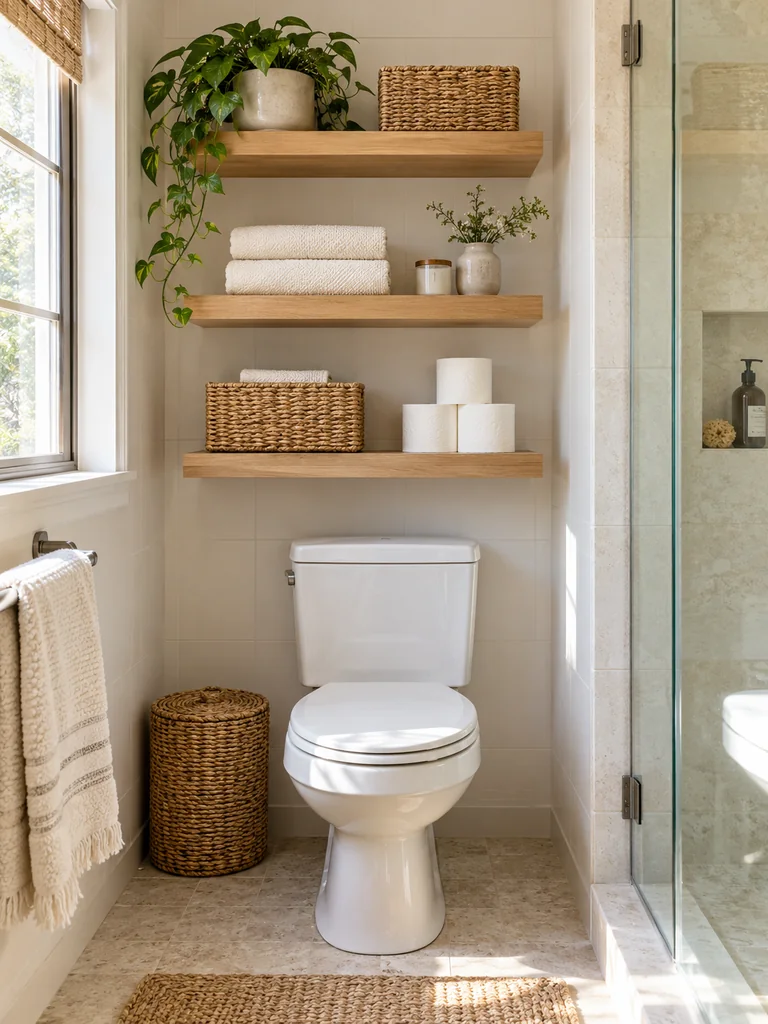
The empty wall above your toilet can provide valuable storage without taking up additional floor space. Install two or three shallow floating shelves to organize folded hand towels, spare toilet paper, and everyday bathroom essentials. Choose moisture-resistant wood or powder-coated metal to handle humid conditions.
Keep frequently used items on the lowest shelf and reserve higher shelves for lightweight baskets or decorative accessories. Leave enough clearance above the toilet tank for maintenance and comfortable use. Matching containers help create a tidy appearance, while a small ceramic vase adds warmth without overwhelming the arrangement.
Floating Wall Shelves

Floating shelves turn unused bathroom walls into practical storage areas while keeping the floor clear and easy to clean.
- Choose shallow shelves: Select shelves around 4 to 6 inches deep for narrow bathrooms where every inch matters.
- Use vertical spacing: Install two or three shelves above a suitable wall area, leaving enough room for taller toiletries.
- Group small essentials: Store skincare products, cotton pads, and grooming accessories in compact containers.
- Choose moisture-resistant materials: Sealed wood, glass, or coated metal handles bathroom humidity better than untreated materials.
- Secure shelves properly: Use suitable wall anchors and check for hidden plumbing or electrical lines before drilling.
Floating shelves provide convenient storage without the visual weight of bulky cabinets. Choose finishes that complement your vanity, mirror, or bathroom fixtures for a coordinated appearance. Keep heavier items on lower shelves and leave some open space between containers so the arrangement feels organized rather than crowded.
Under Sink Drawers

Quick Tip:
Install compact pull-out drawers beneath the bathroom sink to make toiletries and cleaning supplies easier to reach. Measure the cabinet interior carefully and choose organizers designed to fit around plumbing pipes without blocking access to shutoff valves.
Under-sink drawers make better use of deep cabinets where small products often disappear behind larger bottles. Divide the drawers into categories such as skincare, haircare, and cleaning essentials. Choose washable, moisture-resistant organizers and keep frequently used items near the front. This arrangement reduces searching and makes everyday bathroom routines more convenient.
Slim Rolling Cart

Before:
A narrow gap beside the bathroom vanity sits unused while toiletries, spare towels, and cleaning products crowd the countertop. Everyday essentials become difficult to organize, and the bathroom feels cluttered despite having available space.
After:
A slim three-tier rolling cart fits neatly into the gap, holding organized toiletries, folded washcloths, and small storage baskets. Its wheels allow easy access to supplies without permanently occupying the bathroom walkway.
A narrow rolling cart creates flexible storage without requiring wall installation or major bathroom changes. Choose a moisture-resistant model with locking wheels and raised shelf edges to prevent items from slipping. Measure the available gap carefully, including clearance for movement, and avoid placing the cart where it blocks cabinet doors.
Mirror Storage Cabinet
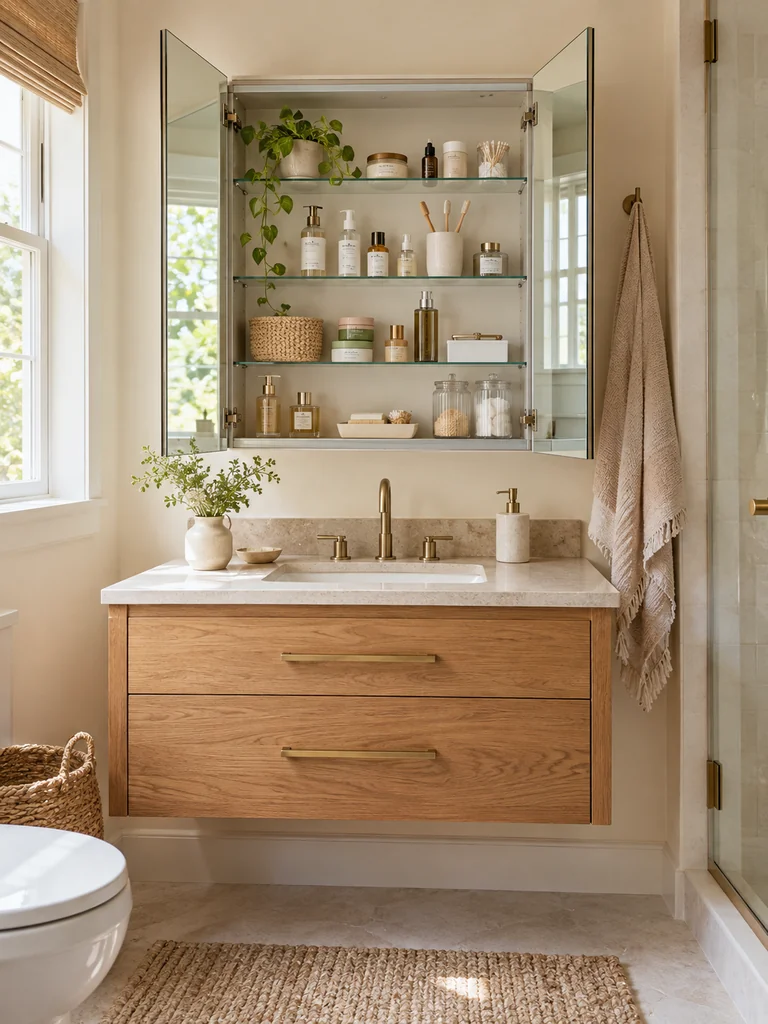
1. Measure the wall: Check the available width and height above your vanity, allowing clearance for faucets and nearby fixtures.
2. Choose a shallow cabinet: Select a mirrored storage cabinet with adjustable interior shelves and a depth suitable for your bathroom.
3. Organize by frequency: Keep daily skincare and dental products on accessible shelves, with occasional-use supplies stored higher.
4. Use small containers: Group cotton pads, grooming tools, and other loose essentials in washable organizers.
5. Install securely: Follow the manufacturer’s mounting instructions and use appropriate fixings for your wall type.
A mirrored cabinet combines two everyday bathroom functions without requiring additional floor space. Its concealed shelves keep toiletries organized while maintaining a clean appearance around the vanity. Choose a moisture-resistant finish and check that the door opens fully without hitting nearby walls, lighting fixtures, or other bathroom accessories.
For more ways to make a compact bathroom feel brighter and more spacious, explore these small apartment bathroom ideas featuring oversized mirrors, floating vanities, and stylish space-saving designs.
Over Door Organizer

| Storage Feature | Standard Wall Hooks | Over Door Organizer |
|---|---|---|
| Storage capacity | Holds a few hanging items | Provides multiple pockets or baskets |
| Best for | Towels and bathrobes | Toiletries, brushes, and spare supplies |
| Installation | May require drilling | Usually hangs over the door |
| Organization | Items hang together | Separate compartments keep categories organized |
An over-door organizer makes use of vertical space that often goes unnoticed in compact bathrooms. Choose a slim, moisture-resistant design with secure hooks and lightweight compartments. Store frequently used products at comfortable reaching heights, and check that the organizer allows the door to close properly without scratching the frame.
Recessed Shower Niche
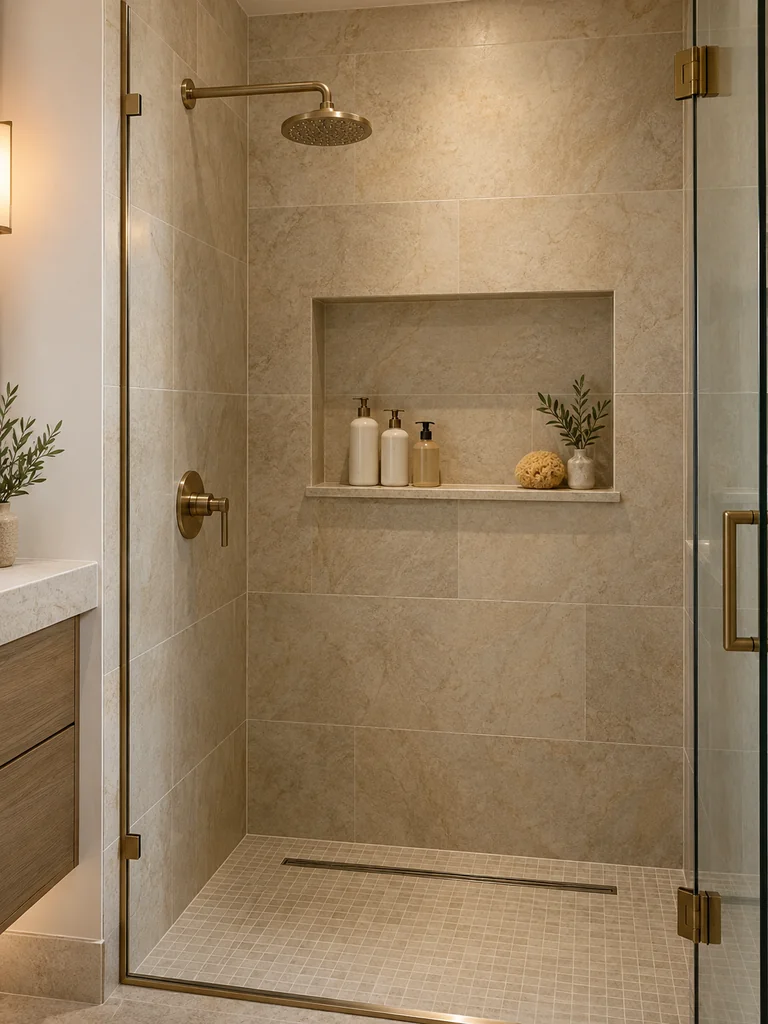
A recessed shower niche creates built-in storage for shampoo, conditioner, and body wash without adding bulky shelves to the shower area.
Do:
- Position the niche where bottles remain easy to reach.
- Choose waterproof tile finishes that complement the shower walls.
- Include a slight shelf slope to help water drain.
- Use a qualified installer to maintain proper waterproofing.
Don’t:
- Cut into structural framing without professional assessment.
- Install a niche without a suitable waterproofing system.
- Choose a depth that cannot accommodate everyday bottles.
- Overfill the niche with unnecessary products.
A recessed niche keeps shower essentials organized while preserving valuable elbow room. It works particularly well during a bathroom renovation when the wall is already being prepared for tiling. Choose a location away from direct water spray where practical, and make sure the finished shelves are easy to clean.
Corner Shower Shelves
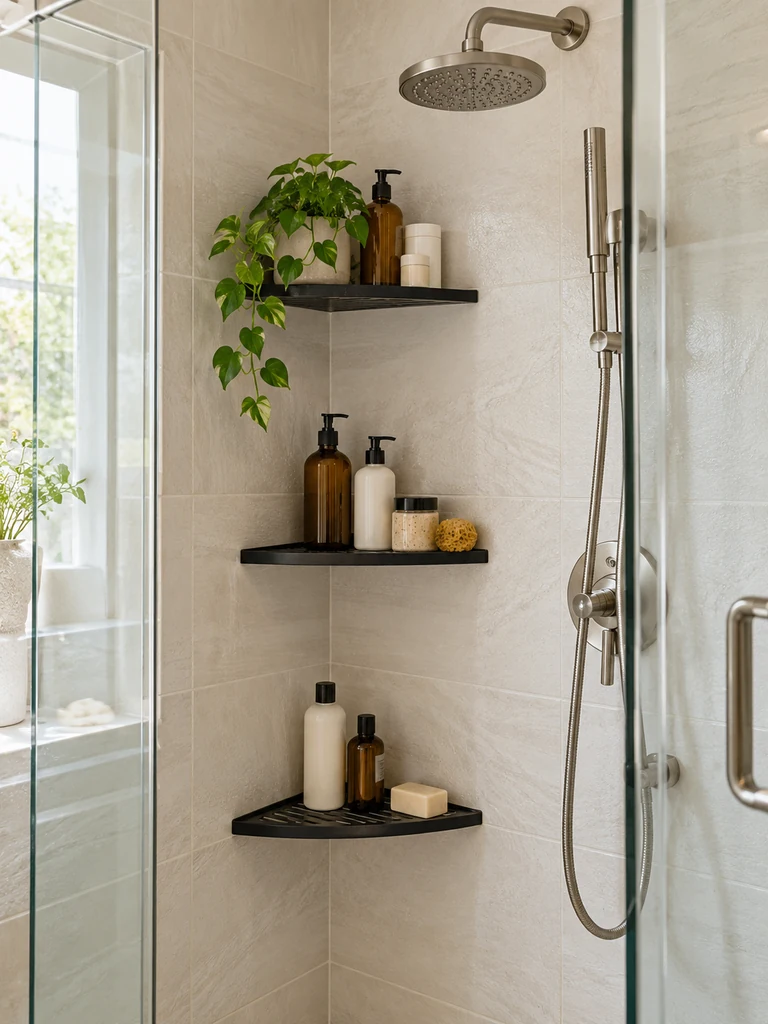
Best For: Compact showers with limited wall space
Materials: Rust-resistant stainless steel, tempered glass, or waterproof composite
Installation: Wall-mounted, adhesive, or tension-mounted systems
Storage: Shampoo, conditioner, body wash, and small shower accessories
Unused shower corners can hold everyday essentials without narrowing the main standing area. Choose triangular shelves with drainage openings to prevent water from collecting beneath bottles. Install them at comfortable reaching heights and follow the manufacturer’s weight limits. Avoid overcrowding the shelves so products remain accessible and surfaces are easier to clean.
Vanity Drawer Dividers

A cluttered vanity drawer can make even the smallest morning routine frustrating. Adjustable dividers create dedicated compartments for makeup, toothbrush accessories, hair ties, and grooming tools. Start by removing everything from the drawer, discarding expired products, and grouping the remaining items by their everyday purpose and frequency of use.
Choose washable dividers that fit the drawer’s interior dimensions without wasting space. Place frequently used products near the front and reserve smaller compartments for loose accessories. I’ve noticed that keeping similar items together makes drawers easier to maintain. Avoid stacking products so everything stays visible and accessible.
For more ways to keep everyday toiletries and grooming essentials neatly arranged, explore these small bathroom organization ideas that help reduce clutter without installing extra cabinets.
Wall Mounted Baskets
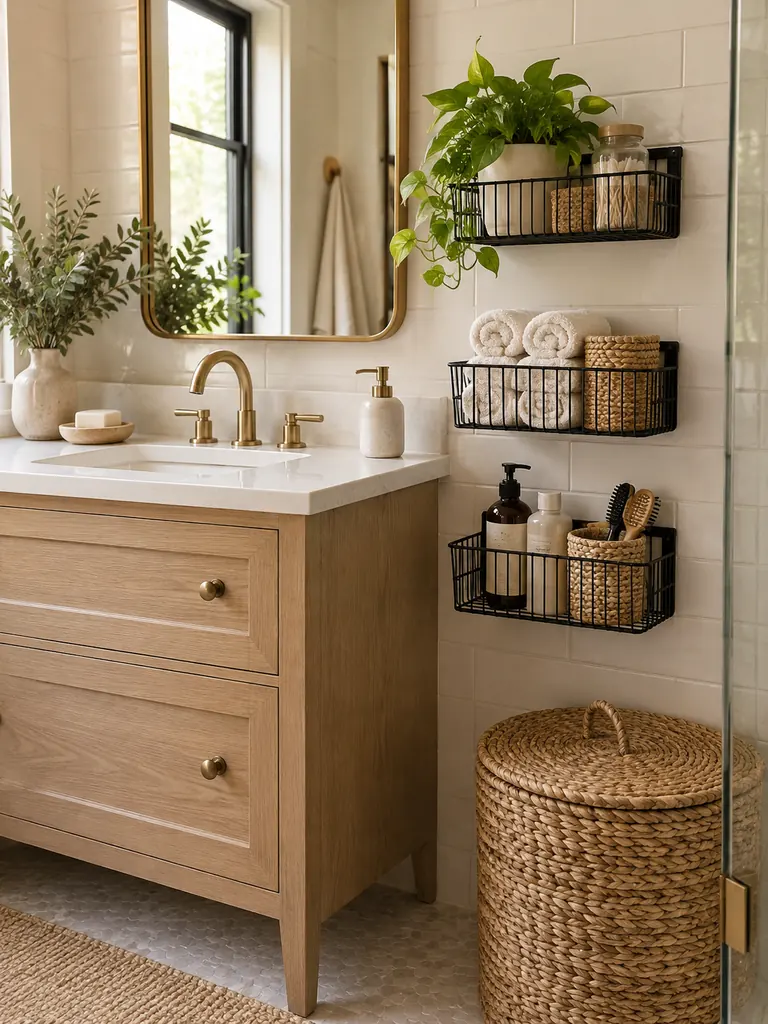
Wall-mounted baskets create accessible storage for bathroom essentials without occupying valuable floor or countertop space.
- Choose shallow metal or moisture-resistant woven baskets that fit comfortably along an empty bathroom wall.
- Install two or three baskets vertically to organize rolled hand towels, spare toiletries, and everyday supplies.
- Keep frequently used items in the lowest basket so they remain easy to reach.
- Use suitable wall anchors and follow the manufacturer’s weight limits, especially when storing heavier products.
- Match basket finishes with nearby fixtures to maintain a coordinated bathroom appearance.
Wall baskets work particularly well beside a vanity or near the bathroom entrance, where essentials need to remain visible and accessible. Choose baskets with open fronts for easy access and avoid filling them beyond their capacity. Leaving some space between items helps the arrangement look organized rather than overcrowded.
Behind Door Hooks
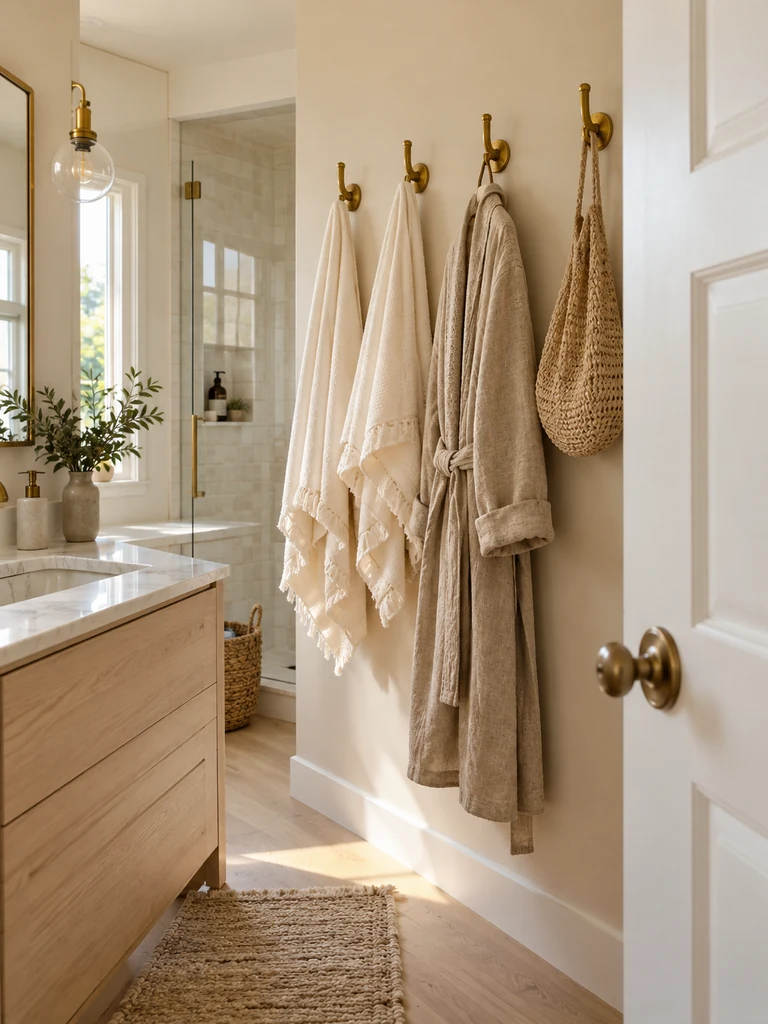
Quick Tip:
Install a short row of moisture-resistant hooks behind the bathroom door to hold towels, bathrobes, and lightweight accessories. Position the hooks so hanging items do not interfere with the door handle, wall, or nearby fixtures when the door opens.
Behind-door hooks provide convenient storage in an area that often remains unused. Choose sturdy hooks with smooth edges to protect fabrics, and space them far enough apart for towels to dry properly. For rental bathrooms, removable hooks may work for lightweight items, provided the surface and adhesive are suitable.
Narrow Storage Ladder

Before:
Extra towels and bathroom accessories occupy the vanity or sit in baskets on the floor. A standard storage cabinet feels too bulky for the narrow space beside the shower or sink.
After:
A slim storage ladder stands neatly against an available wall, with folded towels arranged across its rungs. Small hanging baskets hold lightweight accessories, keeping essentials organized without introducing a large piece of furniture.
A narrow ladder brings vertical storage into compact bathrooms while maintaining an open appearance. Choose a moisture-resistant finish and secure the ladder against tipping according to the manufacturer’s instructions. Keep heavier items near the bottom, avoid overcrowding the rungs, and maintain enough clearance for comfortable movement.
Under Vanity Baskets
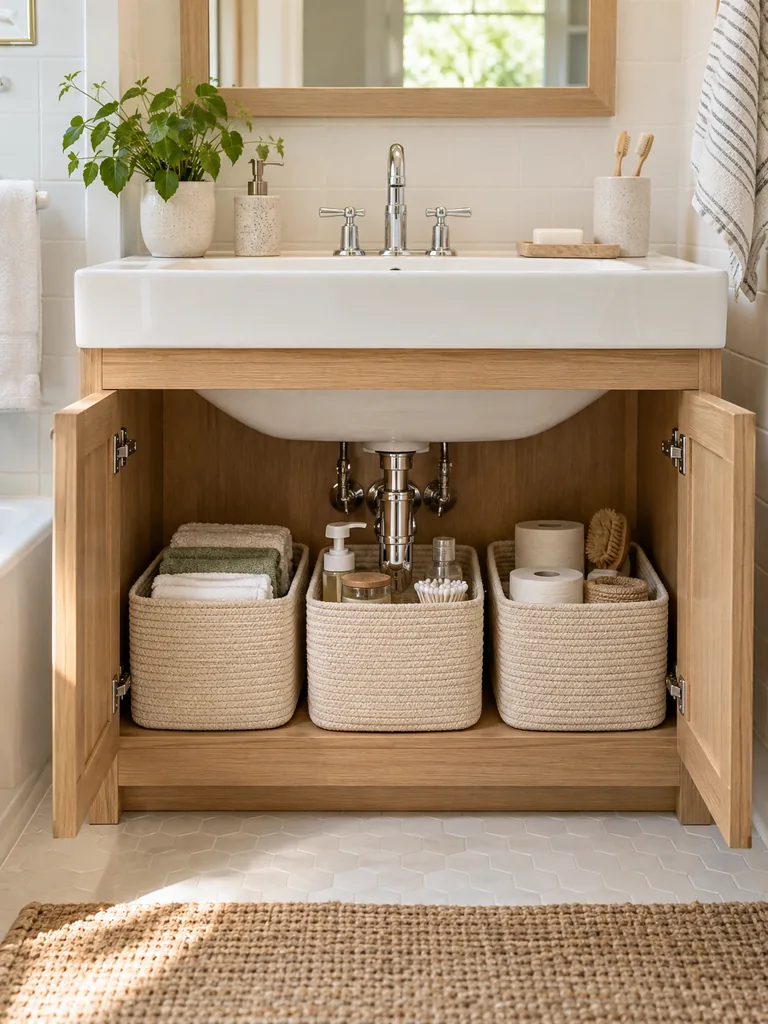
1. Measure the available space: Check the width, depth, and height beneath your vanity, including plumbing clearance and cabinet hinges.
2. Choose matching baskets: Select washable plastic, coated wire, or moisture-resistant woven baskets that fit comfortably without overcrowding.
3. Separate everyday essentials: Assign individual baskets to spare toiletries, cleaning supplies, and folded washcloths.
4. Arrange by frequency: Keep frequently used products toward the front and occasional-use supplies farther back.
5. Check accessibility: Make sure each basket slides out easily without catching on pipes or cabinet doors.
Under-vanity baskets make deep storage areas easier to manage by keeping related products together. Choose open-top designs for quick access and avoid stacking containers too high. Store cleaning chemicals securely, away from children and incompatible products. A simple basket system also makes cabinet cleaning easier because supplies can be removed together.
Magnetic Cabinet Storage

Small metal grooming tools can clutter bathroom drawers when they do not have a dedicated storage spot.
| Storage Detail | Traditional Drawer Storage | Magnetic Cabinet Storage |
|---|---|---|
| Placement | Tools lie inside compartments | Metal tools attach to a mounted strip |
| Accessibility | Requires searching through items | Frequently used tools remain visible |
| Space usage | Occupies drawer space | Uses the inside of a cabinet door |
| Best for | Mixed grooming accessories | Tweezers, nail clippers, and metal tools |
A compact magnetic strip inside a vanity cabinet keeps compatible metal accessories organized without occupying additional drawer space. Choose a rust-resistant strip with secure mounting and enough clearance for the cabinet door to close. Keep sharp tools away from children, and avoid placing magnets near sensitive electronic devices.
Toilet Side Cabinet

A narrow cabinet beside the toilet can provide discreet storage in bathrooms where standard furniture will not fit.
Do:
- Measure the gap between the toilet and nearby wall before choosing a cabinet.
- Select a slim, moisture-resistant design with enclosed shelves.
- Store spare toilet paper, cleaning cloths, and lightweight supplies inside.
- Choose a cabinet with removable shelves for easier cleaning.
Don’t:
- Block access to plumbing connections or shutoff valves.
- Position furniture where it interferes with comfortable toilet use.
- Store heavy products on an unstable cabinet.
- Choose untreated materials that may deteriorate in humid conditions.
A toilet-side cabinet makes use of narrow floor space that often remains empty. Enclosed shelves keep supplies out of sight while protecting them from splashes and dust. Choose a design that complements the vanity finish, and secure taller freestanding cabinets against tipping when recommended by the manufacturer.
Built In Wall Storage
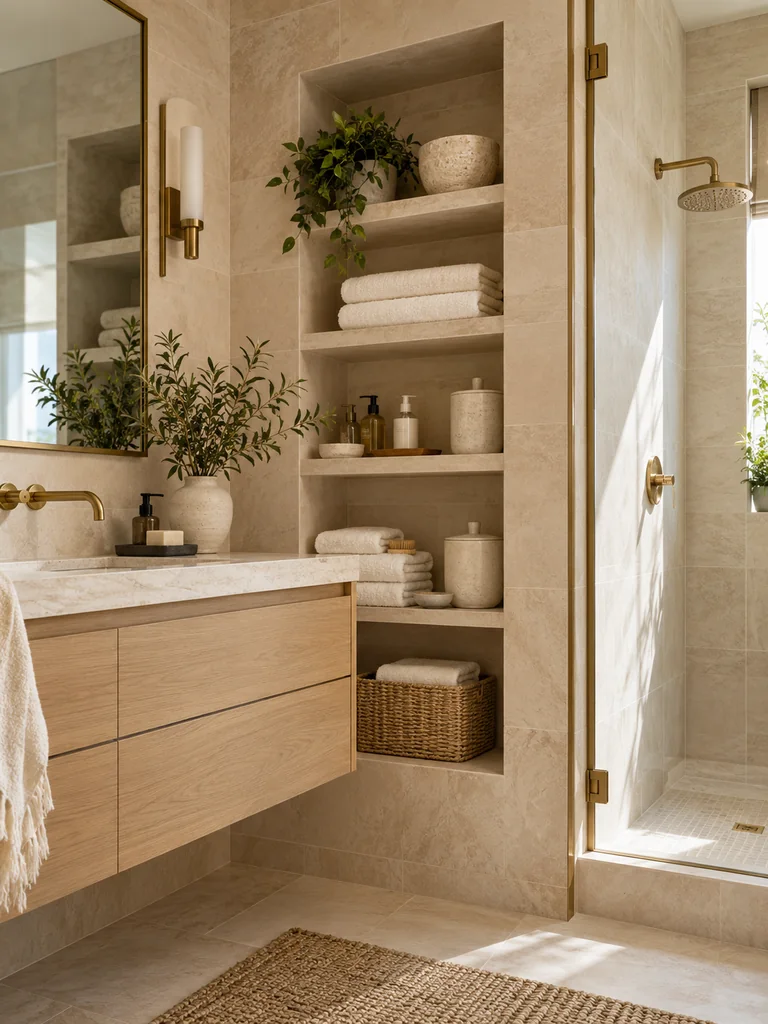
Best For: Bathroom renovations and compact layouts
Materials: Moisture-resistant cabinetry, waterproof panels, or tiled shelving
Installation: Professional installation recommended
Storage: Towels, toiletries, and everyday bathroom essentials
Built-in wall storage creates a streamlined appearance by integrating shelves or cabinets into the bathroom layout. It works particularly well during renovations when wall construction can be assessed safely. Choose shallow compartments that preserve walking space, and confirm that plumbing, electrical lines, structural framing, and waterproofing requirements are addressed before installation.
Stackable Storage Bins

Deep bathroom cabinets often waste vertical space when toiletries and spare supplies are arranged in a single layer. Stackable storage bins create separate levels for items such as extra soap, skincare products, washcloths, and unopened bathroom essentials. Choose transparent or open-front containers so you can identify contents without moving every bin.
Measure the cabinet height before purchasing and leave enough clearance to remove containers comfortably. Place heavier products in the bottom bins and lighter supplies above. Keep frequently used items at accessible heights, and avoid stacking beyond the manufacturer’s recommendations. A consistent container size helps the arrangement remain neat.
If you’re organizing other compact areas in your home, these small apartment storage ideas offer practical ways to use limited space without adding bulky furniture.
Towel Bar Shelves

Towel bar shelves combine folded towel storage with a convenient hanging area, making better use of limited bathroom wall space.
- Choose a compact design: Look for a wall-mounted shelf with an integrated towel bar beneath it.
- Check the available width: Measure the wall beside the shower or vanity to ensure comfortable clearance.
- Organize folded towels: Keep two or three neatly folded towels on the upper shelf.
- Allow proper drying: Hang one frequently used towel on the bar without bunching the fabric.
- Install securely: Use suitable fixings and follow the manufacturer’s recommended weight capacity.
A towel bar shelf keeps clean towels accessible while providing a separate place for a towel currently in use. Choose rust-resistant metal or sealed wood to handle bathroom humidity. Position the shelf away from direct splashes where possible, and leave enough airflow around hanging towels to support drying.
Shower Door Storage
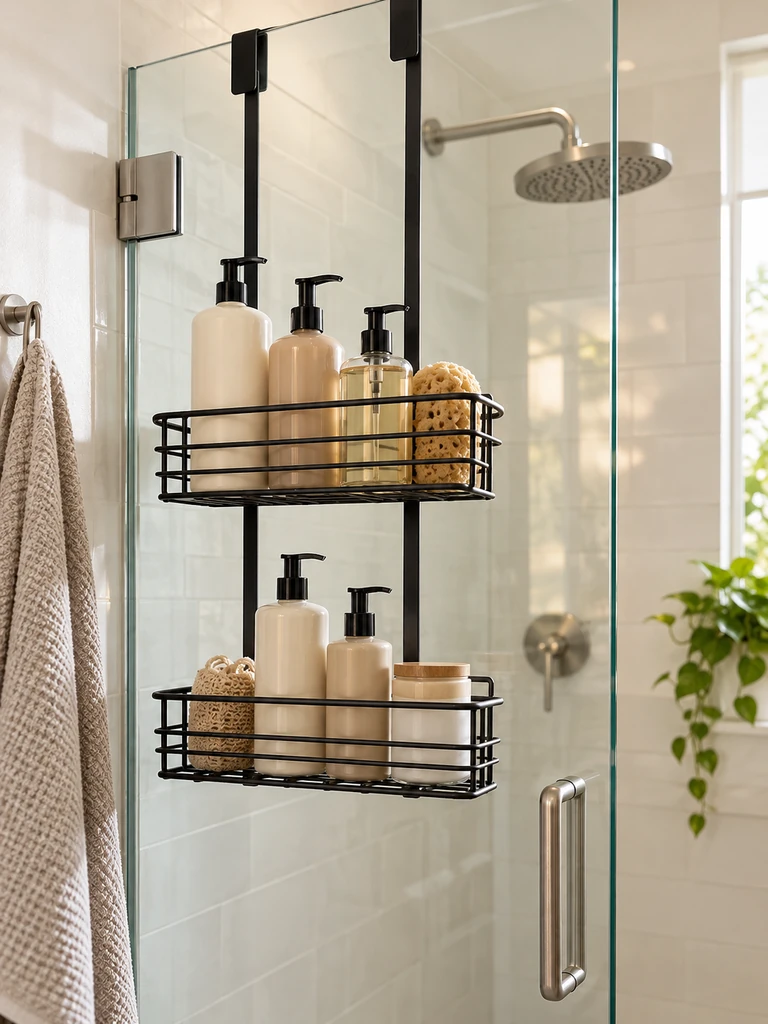
Quick Tip:
Choose a lightweight, rust-resistant organizer designed specifically for your shower door or enclosure. Check the door’s thickness and weight limits before installation, and make sure the organizer does not interfere with hinges, seals, or normal door movement.
Shower door storage keeps frequently used bottles and accessories accessible without installing additional wall shelves. Look for designs with drainage openings and secure hooks that protect glass surfaces. Keep heavier products on lower levels, avoid overloading the organizer, and confirm that the shower door opens and closes smoothly.
Countertop Tiered Tray

A crowded bathroom countertop leaves little room for everyday routines, especially when skincare bottles, perfume, and grooming accessories spread across the vanity. Small products become difficult to find, and water collects around containers.
A compact two-tier tray creates separate levels for frequently used essentials. Taller bottles sit on the lower tier, while smaller skincare containers and lightweight accessories occupy the upper level. The surrounding countertop remains clearer and easier to wipe down.
Choose a moisture-resistant tray with a stable base and enough clearance beneath nearby mirrors or cabinets. Keep daily products within easy reach, but avoid displaying every item you own. A coordinated selection of containers helps the arrangement feel intentional while maintaining space for handwashing and grooming.
Pull Out Cabinet Organizer
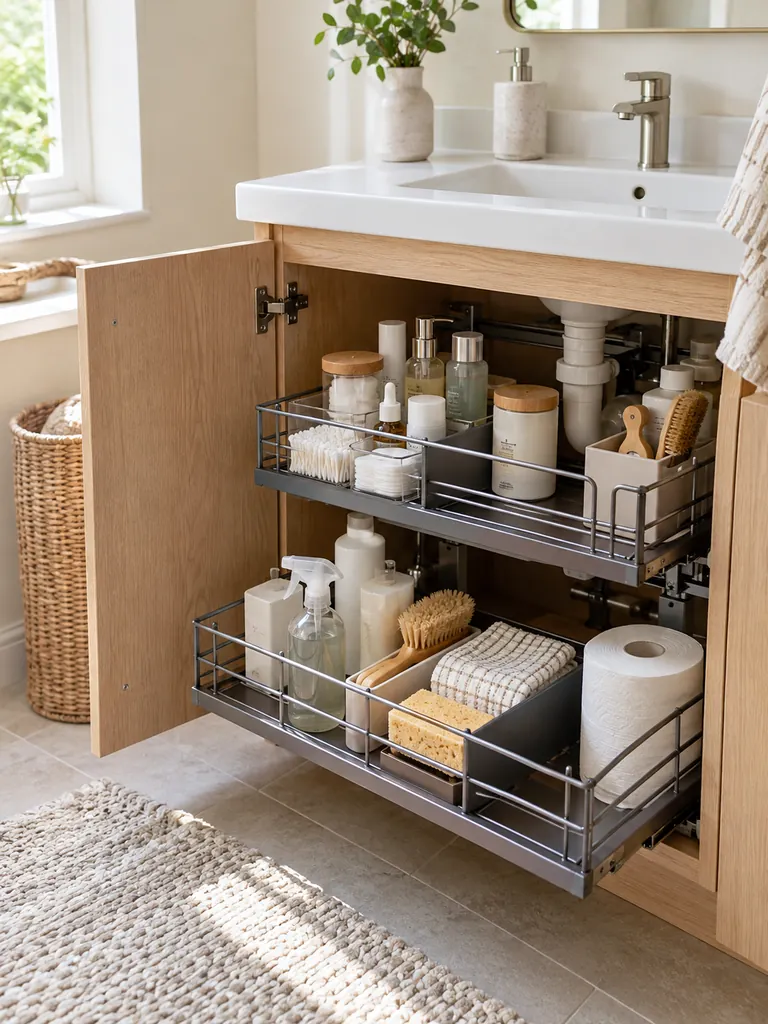
A deep vanity cabinet can become much easier to use when supplies slide forward instead of remaining hidden at the back.
- Choose a pull-out organizer that fits the cabinet’s interior width, depth, and height.
- Measure around plumbing pipes, hinges, and other obstructions before installation.
- Select a model with smooth sliding tracks and raised edges to keep bottles secure.
- Group everyday toiletries in the front section and occasional-use supplies behind them.
- Check the organizer’s weight capacity and keep heavier products on lower levels.
Pull-out organizers make bathroom supplies easier to reach without requiring a larger vanity. They are particularly useful for deep cabinets where smaller products often disappear behind cleaning bottles. Choose washable materials that tolerate humidity, and make sure the sliding mechanism does not obstruct plumbing access or cabinet doors.
Floating Corner Cabinet
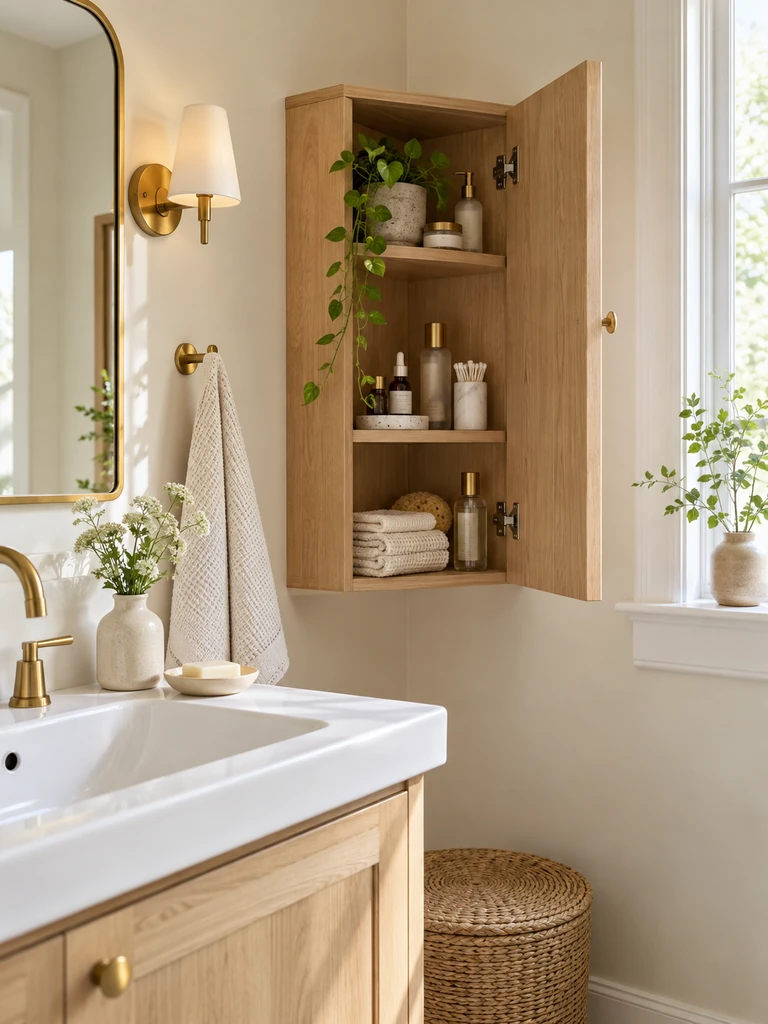
Best For: Small bathrooms with unused wall corners
Materials: Moisture-resistant MDF, sealed wood, or powder-coated metal
Installation: Wall-mounted with suitable anchors
Storage: Skincare products, spare toiletries, and folded washcloths
An unused bathroom corner can accommodate a compact floating cabinet without sacrificing valuable floor space. Choose a shallow design with a door to keep everyday supplies concealed and protected from splashes. Install it at a comfortable height, check for hidden plumbing or electrical lines, and follow the manufacturer’s weight limits.
Hidden Laundry Hamper
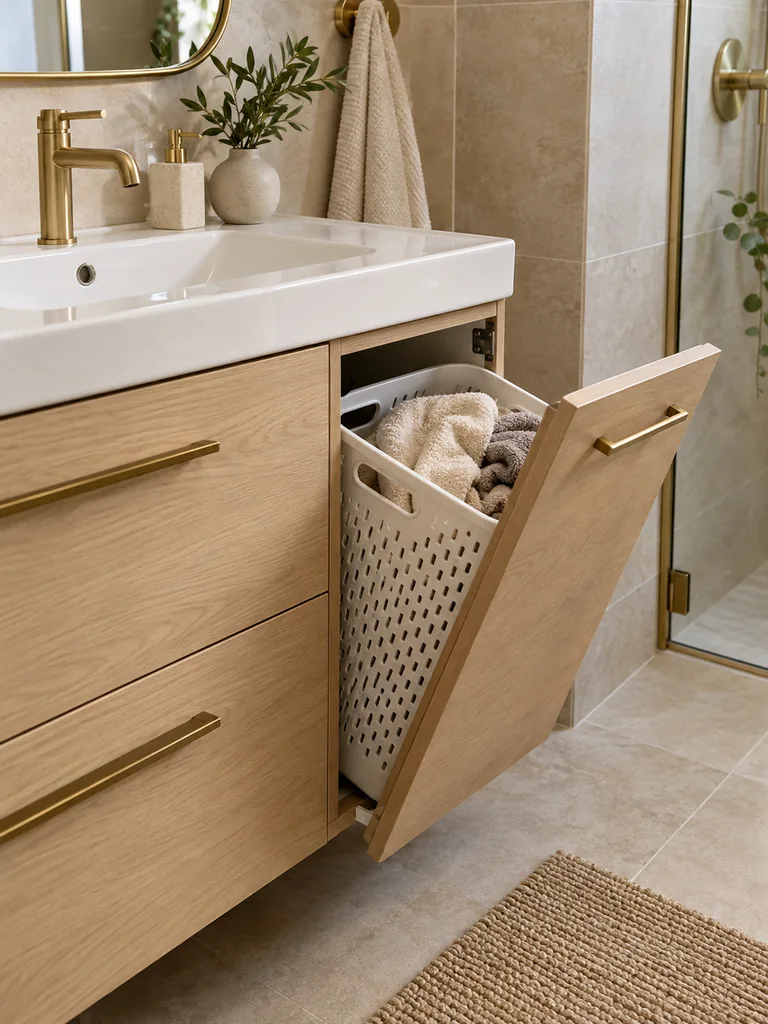
A laundry hamper does not need to occupy the bathroom floor or interrupt the room’s clean appearance. A narrow tilt-out hamper inside a suitable vanity cabinet keeps used towels and clothing concealed while making laundry collection convenient. Choose a removable, ventilated liner that can be washed regularly.
Before installation, measure the cabinet carefully and check that the hamper opens without hitting the toilet or nearby furniture. Avoid storing damp towels in an enclosed compartment for long periods, as trapped moisture can encourage unpleasant odors and mildew. Empty the hamper frequently and allow the interior to dry.
Vertical Towel Organizer

Keeping towels organized becomes easier when each one has a dedicated place instead of being stacked across the vanity or bathroom floor.
- Choose a vertical rack: Select a wall-mounted organizer with separate compartments for rolled or folded towels.
- Measure towel sizes: Make sure the compartments comfortably accommodate your everyday bath and hand towels.
- Arrange by category: Keep bath towels together and reserve a separate section for smaller hand towels.
- Position thoughtfully: Install the rack near the shower or vanity without blocking doors or walking paths.
- Allow airflow: Store only fully dry towels and avoid packing compartments too tightly.
A vertical towel organizer makes use of wall height while keeping clean linens accessible. Choose a moisture-resistant finish that complements nearby fixtures, and secure the rack with appropriate wall fixings. Rolled towels can create a tidy appearance, but leave enough room to remove each towel without disturbing the others.
Bathroom Storage Zones
Quick Tip:
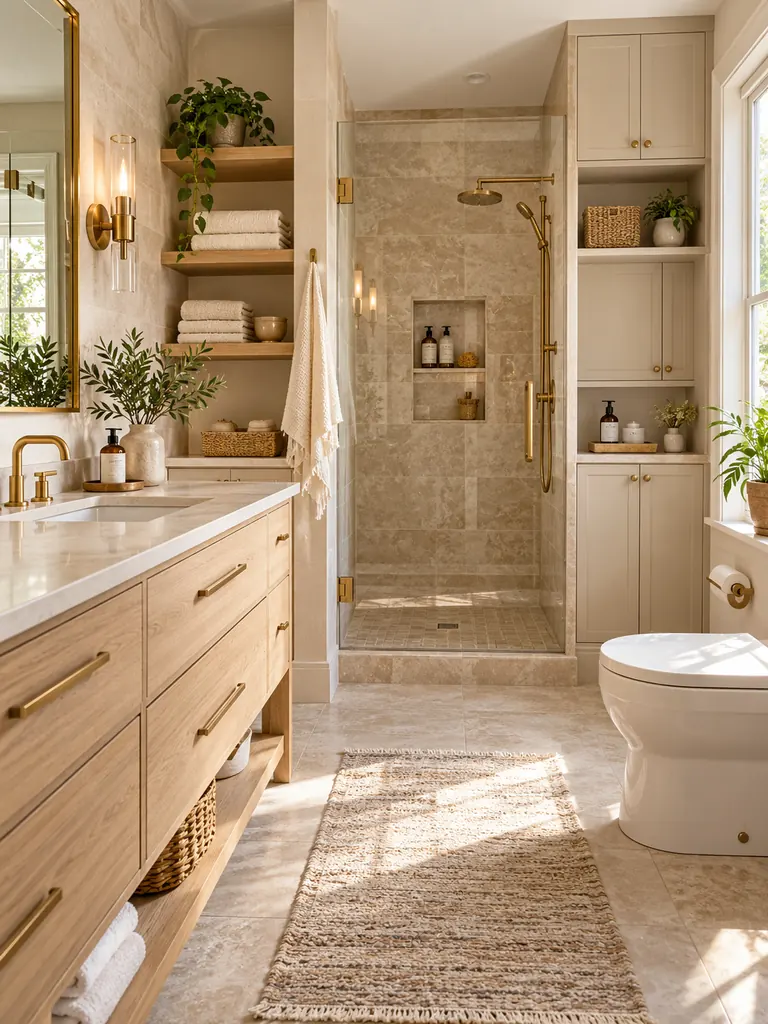
Divide your bathroom into practical storage zones based on daily activities, including skincare, showering, grooming, and cleaning. Keep frequently used products close to where you need them, while storing backup supplies in cabinets or higher shelves.
Organizing supplies by purpose makes a small bathroom easier to maintain without purchasing additional furniture. Assign each drawer, shelf, or basket a clear function, and avoid mixing unrelated products. Review your storage zones regularly to remove empty containers, expired toiletries, and unnecessary duplicates before clutter begins building again.
You can apply the same approach throughout your home with these small apartment organization ideas that help keep everyday essentials in order.
Conclusion
An organized bathroom does not need extra square footage or expensive renovations. These Small Bathroom Storage Ideas show how unused walls, narrow gaps, cabinet interiors, and overlooked corners can become practical storage areas without making the room feel crowded.
The most effective changes often start with simple solutions, such as adding drawer dividers, installing floating shelves, or organizing toiletries into dedicated baskets. Choose ideas that suit your bathroom layout, budget, and daily routine.
Save this post on Pinterest for future inspiration, try one or two ideas this week, and share it with someone who wants a tidier, more comfortable bathroom.