
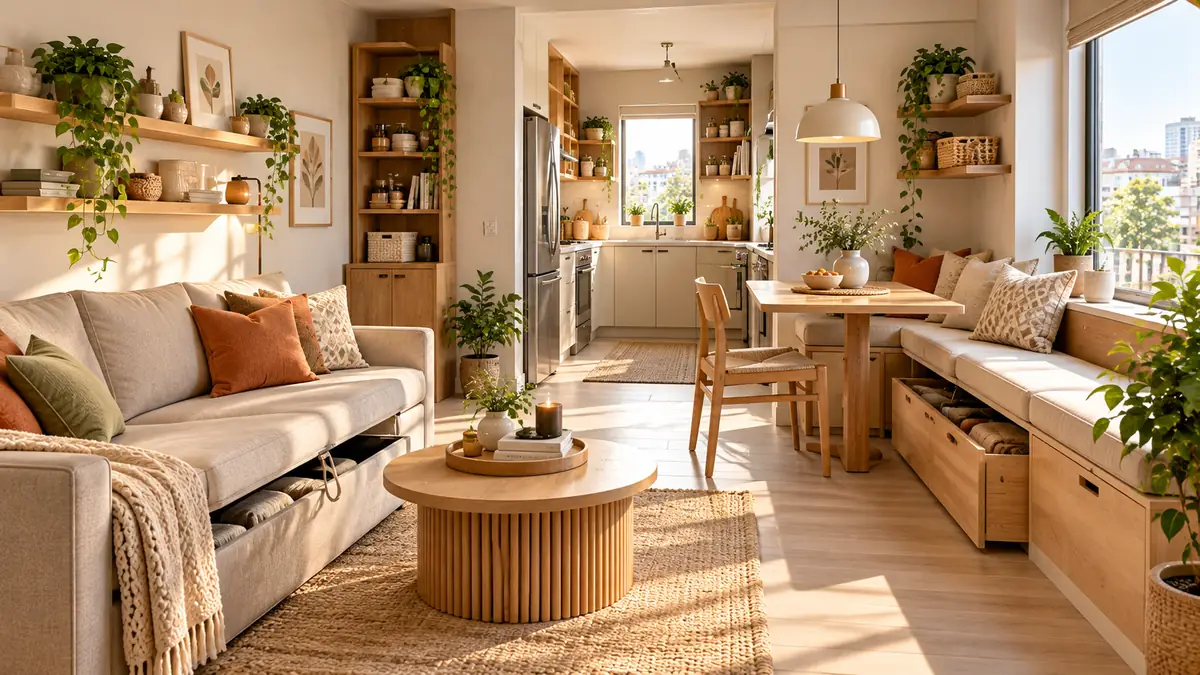
Small apartments often have more storage potential than their square footage suggests. These Tiny Apartment Storage Ideas focus on overlooked corners, narrow gaps, furniture edges, and vertical areas that can hold everyday belongings without making your rooms feel crowded.
From the entryway and living room to the kitchen, bathroom, laundry area, and balcony, each solution is designed to make limited space work more intentionally. In my experience, compact homes stay organized more easily when storage sits close to where items are actually used. Instead of filling your apartment with extra cabinets and containers, these 15 ideas will help you find practical storage opportunities within the space you already have.
Table of Contents
Entryway Corner Cabinet
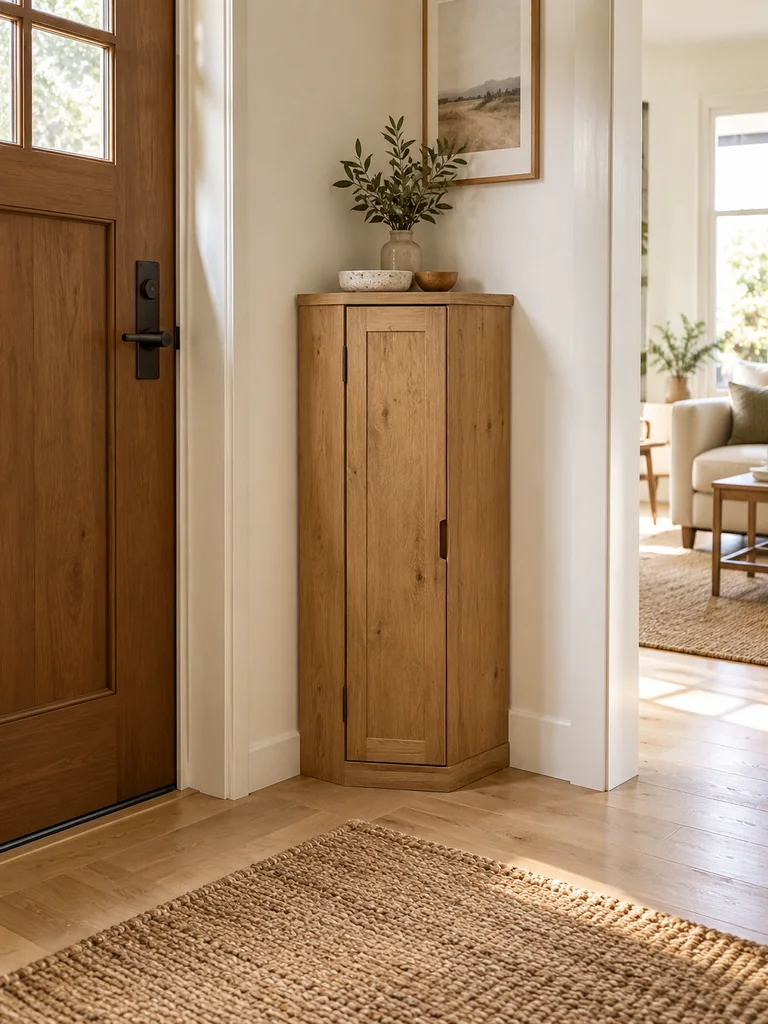
A neglected entry corner can hold more than it seems when the furniture follows the available footprint. Choose a narrow corner cabinet with closed doors for shoes, reusable bags, pet supplies, or other items that tend to collect near the entrance.
Keep frequently used belongings between waist and eye level, while occasional items can sit higher or lower. In my experience, closed storage works especially well near an apartment entrance because it reduces visual clutter immediately. Check the door swing and walking clearance before choosing the cabinet depth.
Sofa Arm Caddy

- Choose a structured fabric or felt caddy that stays flat against the sofa arm rather than hanging loosely.
- Use separate pockets for the remote, reading glasses, charging cable, and current book.
- Keep bulky items elsewhere so the organizer does not pull or distort the sofa arm.
- Match the caddy closely to the upholstery for a quieter, less cluttered appearance.
- Remove unused items during your regular room reset instead of allowing the pockets to become catchalls.
Small everyday objects are often responsible for surprisingly visible living room clutter. A sofa arm caddy gives frequently used essentials a defined home without adding another table or storage unit. It works particularly well beside compact sofas where there is not enough floor space for a full-size side table.
Behind-Sofa Drawers

Quick Tip:
Measure the gap behind the sofa before buying anything, including the baseboard and sofa lean. Choose low rolling drawers with recessed handles so they can slide out without requiring additional clearance.
That narrow strip behind a sofa often goes unused even in apartments where every inch matters. Shallow drawers can hold spare throws, board games, seasonal textiles, or less-used accessories while remaining hidden from normal view. Keep heavier belongings toward the bottom and avoid filling the space so tightly that retrieval becomes frustrating.
For more ways to use overlooked gaps throughout your home, explore these small space storage ideas designed to keep everyday clutter easier to control.
Radiator-Side Shelf

BEFORE:
The narrow area beside a radiator often becomes dead space or collects random items on the floor. Poorly positioned furniture may also interfere with heat circulation and make the corner difficult to clean.
AFTER:
A slim freestanding shelf beside, not directly above or against, the radiator creates useful vertical storage while maintaining safe clearance. Small books, baskets, or lightweight household essentials gain a defined place without blocking the heat source.
Always follow the radiator manufacturer’s clearance requirements because safe spacing varies by heating system. Choose a stable shelf that fits completely outside the required clearance zone. A narrow design can reclaim an awkward corner, but storage should never interfere with valves, airflow, maintenance access, or other heat-sensitive areas.
Window-Side Storage Bench
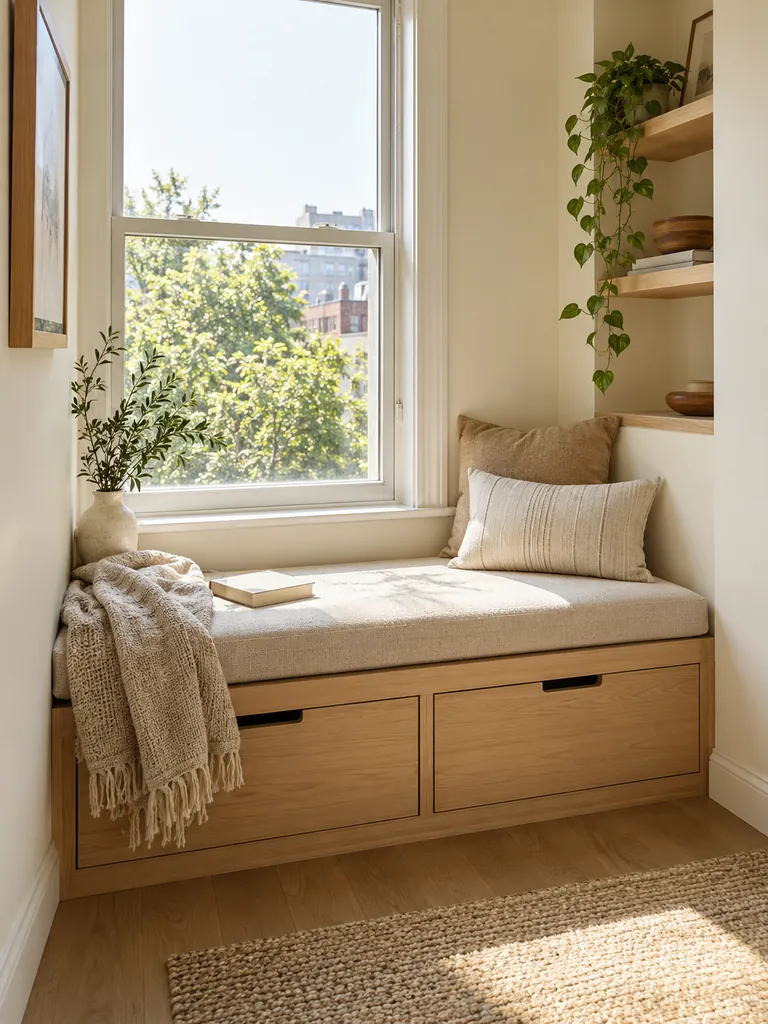
- Measure the available wall width and confirm that the bench will not block a radiator, outlet, vent, or opening window.
- Choose a shallow bench with lift-up or drawer storage underneath.
- Divide the interior with small bins for throws, spare linens, books, or hobby supplies.
- Add one fitted seat cushion rather than several bulky pillows.
- Keep window handles and curtains completely accessible.
A window-side bench combines hidden storage with a useful place to sit, which is valuable when a tiny apartment cannot comfortably hold both separate seating and another cabinet. I’ve noticed that divided interiors stay tidier than one large compartment because smaller items are less likely to disappear beneath bulky belongings.
During the holidays, explore these small apartment Christmas decor ideas for festive window decorations and space-saving touches that keep your home cozy without adding clutter.
Desk-End Shelving
| Feature | Standard Bookcase | Desk-End Shelving |
|---|---|---|
| Floor space | Requires separate footprint | Uses the desk edge |
| Accessibility | May sit away from workspace | Keeps supplies nearby |
| Visual bulk | Can dominate a small wall | Stays compact |
| Best use | Larger collections | Daily work essentials |
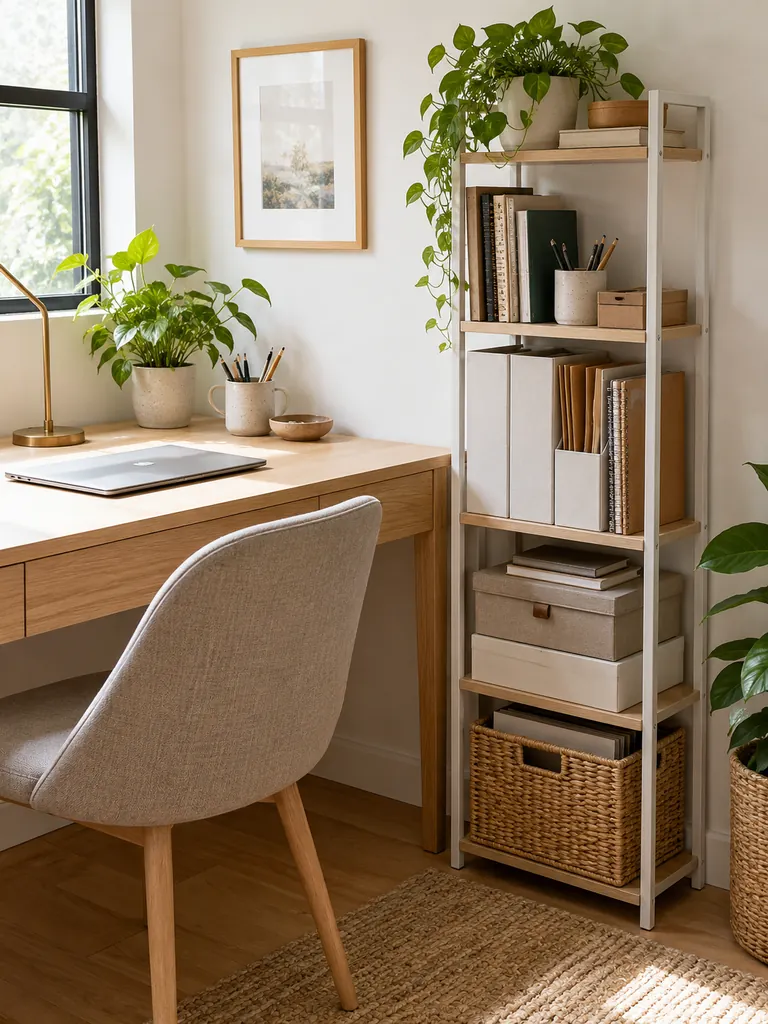
A narrow shelving unit fitted beside the short end of a desk can turn an overlooked edge into practical vertical storage. Use the lower shelves for files or heavier supplies and upper levels for lighter items. Keeping the shelf depth close to the desktop depth also creates a cleaner, more intentional furniture arrangement.
If your desk shares space with your bedroom and living area, explore these studio apartment storage ideas for more ways to organize an open-plan home without filling it with extra furniture.
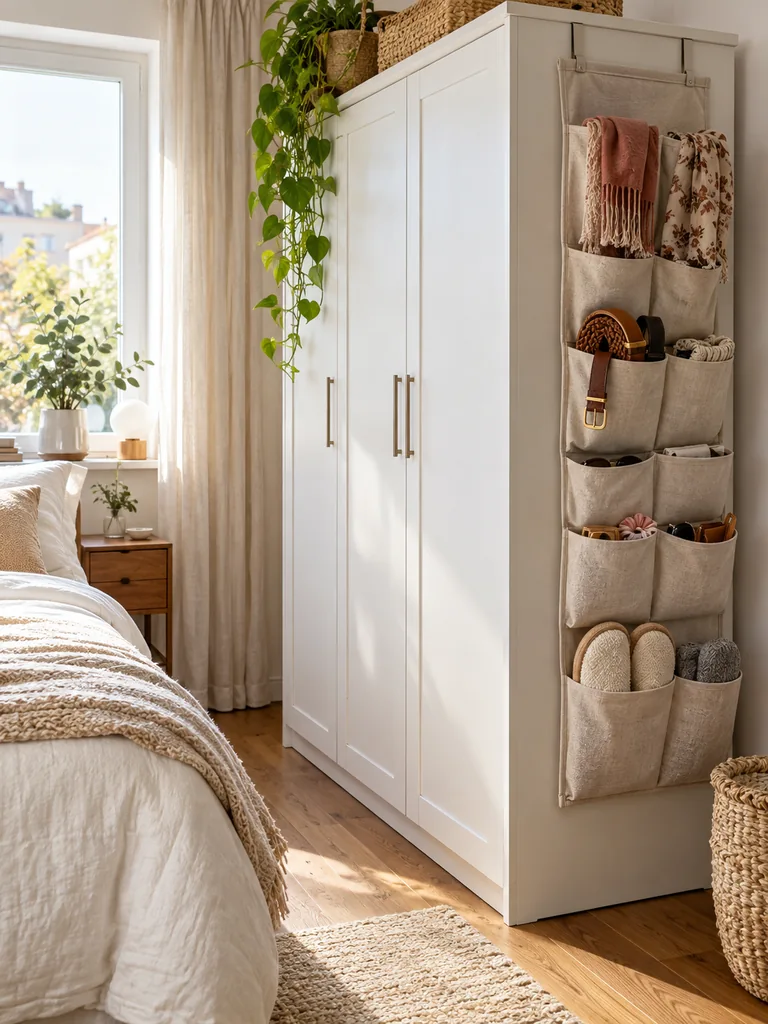
Wardrobe Side Pockets
DO:
- Choose slim fabric pockets that sit flat against the wardrobe side.
- Store lightweight accessories such as scarves, belts, slippers, or small bags.
- Keep frequently used items in the easiest pockets to reach.
- Secure the organizer properly so it does not shift when items are removed.
DON’T:
- Fill pockets with heavy bottles or bulky belongings.
- Cover wardrobe doors, hinges, or nearby switches.
- Let individual pockets become mixed-item junk zones.
- Choose an organizer wider than the wardrobe side panel.
The exposed side of a wardrobe can provide useful storage without requiring another piece of furniture. Shallow pockets work best because they organize small belongings while preserving walking space. Keep each pocket assigned to one category, and periodically remove items that have migrated there simply because the pocket was convenient.
Bed Corner Cubby
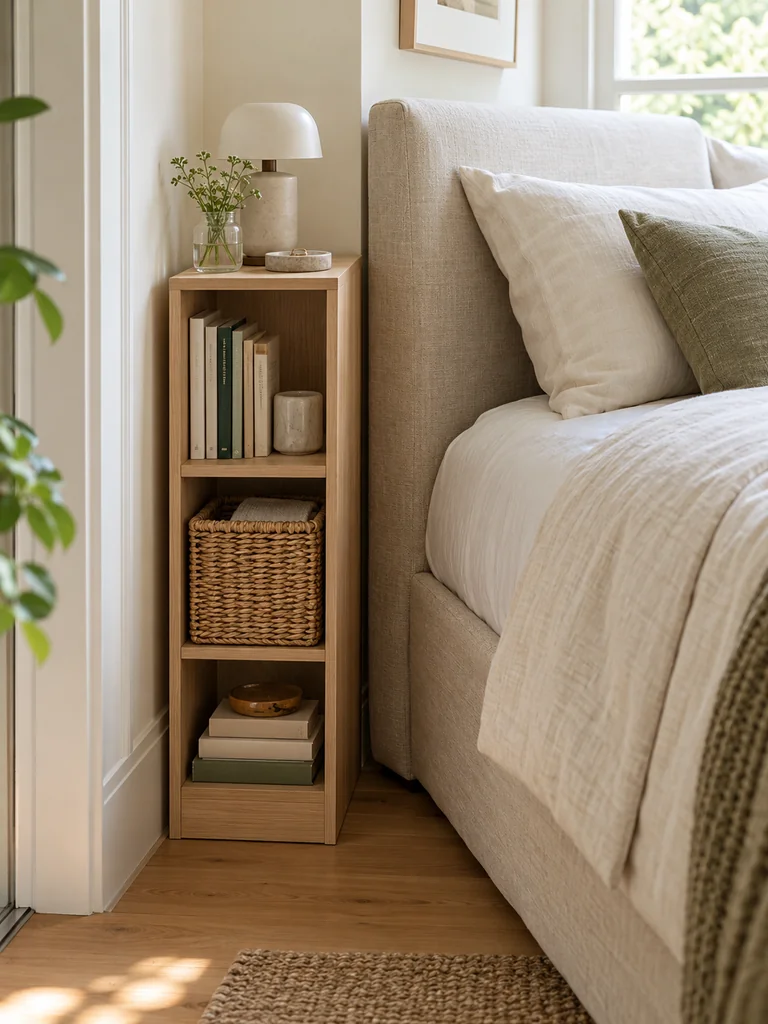
Best For: Books, bedtime accessories, small electronics
Works In: Studio apartments and compact bedrooms
Difficulty: Beginner to moderate
Result: Useful storage from an awkward bedside corner
An unused corner beside the bed can become functional without squeezing in a conventional nightstand. Choose a narrow cubby that fits the exact gap and keeps frequently used belongings within reach. Open compartments are useful for books, while a small basket can conceal chargers, personal accessories, and other visually distracting items.
Floating Nightstand Drawer

A floating drawer keeps the bedside essentials you actually need close at hand while leaving the floor completely visible. Mount it at a comfortable height beside the mattress, then reserve the drawer for glasses, chargers, medication-free personal items, or other small necessities rather than turning it into general bedroom storage.
The open floor underneath makes cleaning easier and can help a compact sleeping area feel less crowded. Choose a shallow unit with enough surface space for a lamp or phone without projecting unnecessarily into the walkway. Wall construction matters, so use mounting hardware appropriate for the wall and expected load.
Kitchen End Cabinet
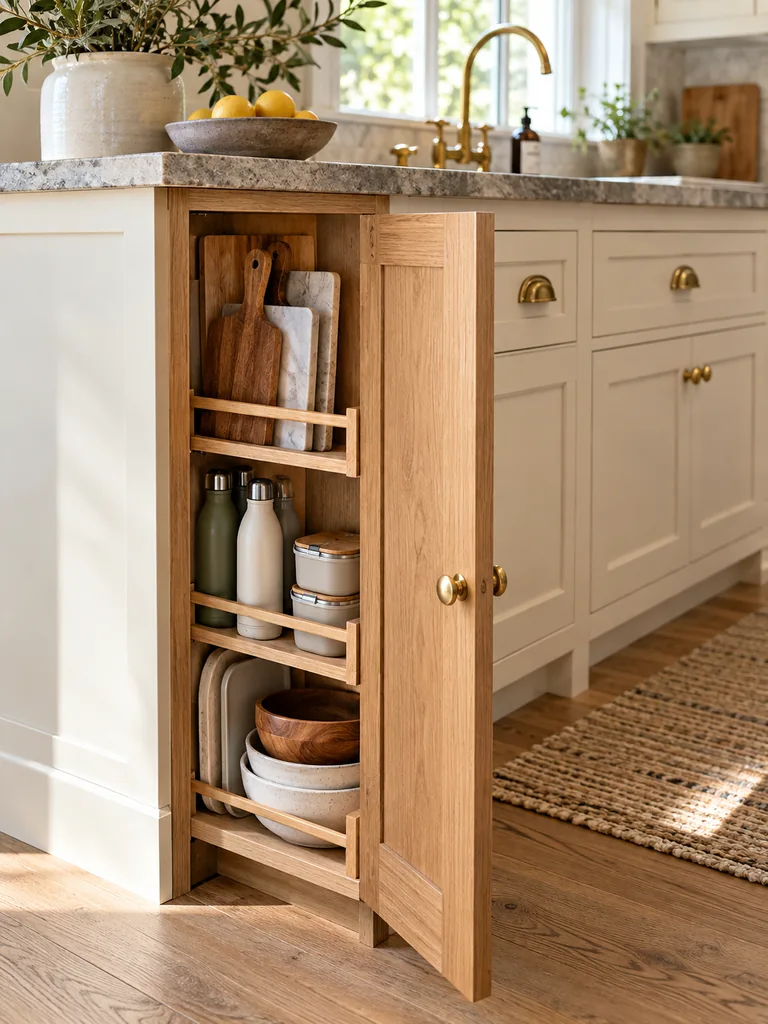
- Fit a shallow cabinet against the exposed end of an existing kitchen cabinet or counter run.
- Use narrow shelves for cutting boards, reusable bottles, lunch containers, or small serving pieces.
- Keep heavier items on the lowest shelf to improve stability.
- Choose closed doors when the end panel faces the living area.
- Match the surrounding cabinetry where possible for a built-in appearance.
An exposed cabinet end can become valuable storage without reducing the main kitchen walkway. The key is keeping the unit shallow and assigning it specific categories instead of filling it randomly. For renters, a slim freestanding alternative can provide similar function without requiring permanent changes to existing cabinetry.
For more ways to organize cabinets, counters, and unused kitchen areas, explore these small kitchen storage ideas for making limited space work harder.
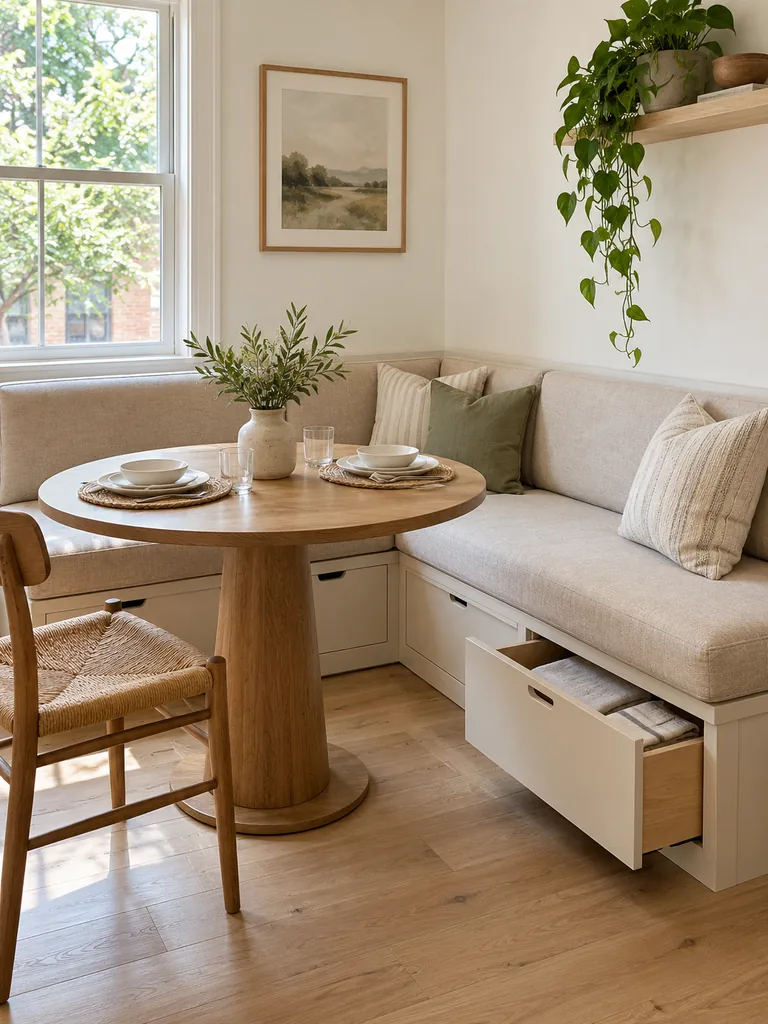
Dining Corner Banquette
Quick Tip:
Choose a banquette with drawers when possible because they are easier to access than a hinged seat beneath a dining table. Before buying, measure the table position and leave enough room for comfortable entry and exit.
A corner banquette can replace multiple dining chairs while creating concealed storage underneath the seat. Reserve the compartments for table linens, serving pieces, occasional appliances, or other items that do not need constant access. Keeping daily dining essentials elsewhere prevents people from repeatedly moving cushions or furniture during normal meals.
For more furniture and storage solutions that preserve valuable floor space, explore these small apartment storage ideas designed for compact homes.
Bathroom Corner Tower
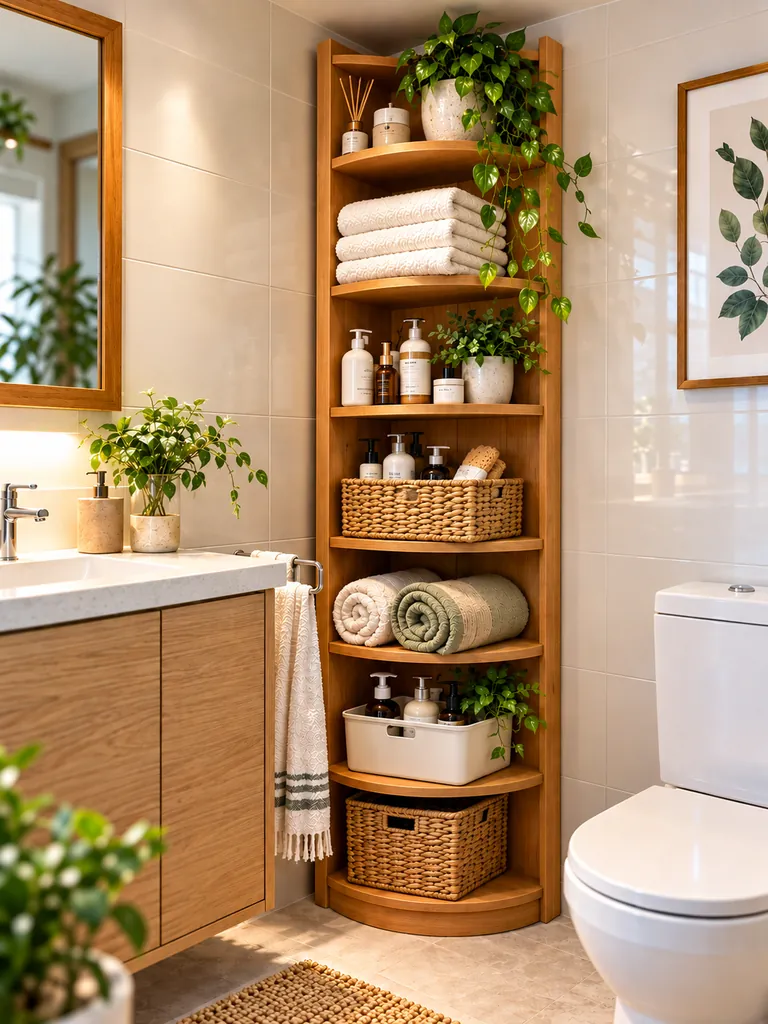
BEFORE:
Toiletries, spare paper goods, and folded towels compete for limited vanity space. An empty bathroom corner remains unused because a standard cabinet would project too far into the room.
AFTER:
A narrow vertical tower uses the corner upward instead of outward. Frequently used toiletries stay around eye level, towels occupy larger lower shelves, and less-used supplies can sit in labeled containers above.
Bathrooms benefit from vertical storage only when it does not interfere with movement or create difficult-to-clean gaps. Choose moisture-resistant materials and leave ventilation around stored textiles. A tall, shallow unit can provide several useful storage levels while keeping the floor footprint small enough for a compact apartment bathroom.
Shower Corner Caddy
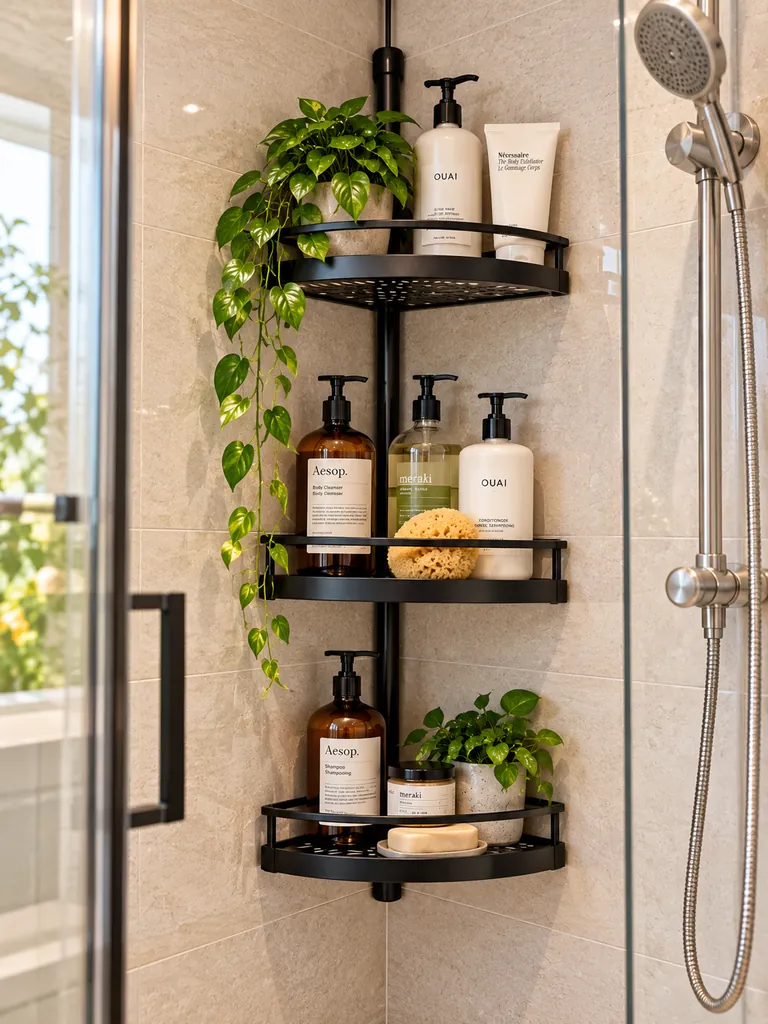
- Measure the shower corner and choose a caddy that does not reduce comfortable standing space.
- Select rust-resistant, quick-draining materials suited to regular moisture exposure.
- Place daily shampoo, cleanser, and soap at easy reach.
- Keep heavier bottles on lower shelves for better stability.
- Remove empty containers during your weekly bathroom reset.
A well-planned shower caddy keeps bottles off the floor and tub edges, making the area easier to clean and visually calmer. Avoid overcrowding every tier. Store only products currently in use, allow water to drain freely, and check tension-mounted or adhesive systems regularly so the organizer remains secure.
Laundry Gap Shelves

| Feature | Wide Laundry Cabinet | Gap Shelving |
|---|---|---|
| Space needed | Larger wall area | Narrow vertical gap |
| Storage access | Behind cabinet doors | Quick open access |
| Best for | Bulk supplies | Daily laundry essentials |
| Visual weight | More substantial | Slim and compact |
Even a narrow gap beside a washer can become useful when storage grows vertically rather than spreading across the floor. Fit shallow shelves only where appliance clearance allows, then organize detergent, stain supplies, clothespins, and cleaning accessories in small categories. Keep manufacturer-required ventilation, hoses, outlets, and service access completely unobstructed.
Balcony Storage Seat
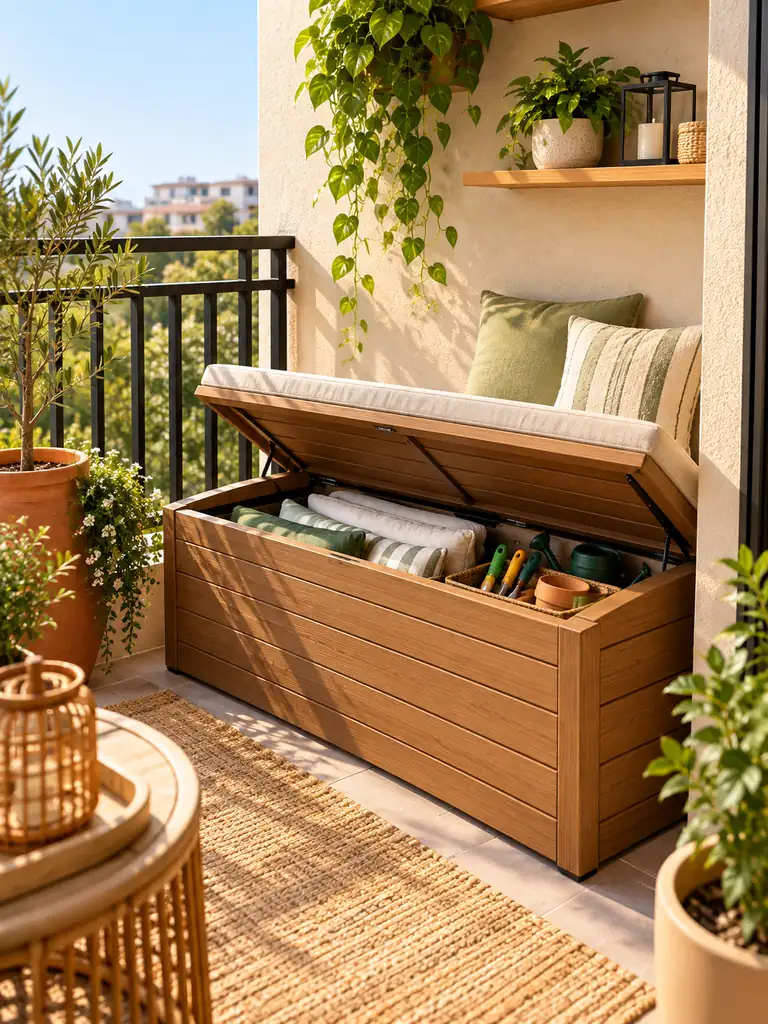
DO:
- Choose a weather-resistant box designed for covered or exposed outdoor conditions.
- Check the balcony rules and permitted load before adding substantial furniture.
- Store only moisture-tolerant items inside unless the compartment is reliably waterproof.
- Leave drainage points and access routes unobstructed.
DON’T:
- Block balcony doors, drains, or emergency access.
- Overload the box with unnecessarily heavy belongings.
- Assume an indoor storage bench can withstand outdoor moisture.
- Let the lid interfere with railings or nearby furniture.
A compact storage seat gives a tiny balcony two functions within one footprint. It can hold outdoor cushions, gardening accessories, or lightweight seasonal supplies while providing occasional seating. Choose dimensions that preserve comfortable movement, and prioritize safety and weather resistance over maximizing capacity in such a limited outdoor area.
Conclusion
Making a tiny apartment feel organized does not require filling every available inch with storage. The most useful Tiny Apartment Storage Ideas turn overlooked areas into practical homes for belongings while protecting the open space you need for comfortable daily living. I’ve noticed that solving just one clutter-prone corner can make an entire room easier to maintain. Start with the area that frustrates you most, then choose another idea only when you need it. Save this post on Pinterest for later, try your favorite solutions, and share it with someone who could use more storage in a small home.