
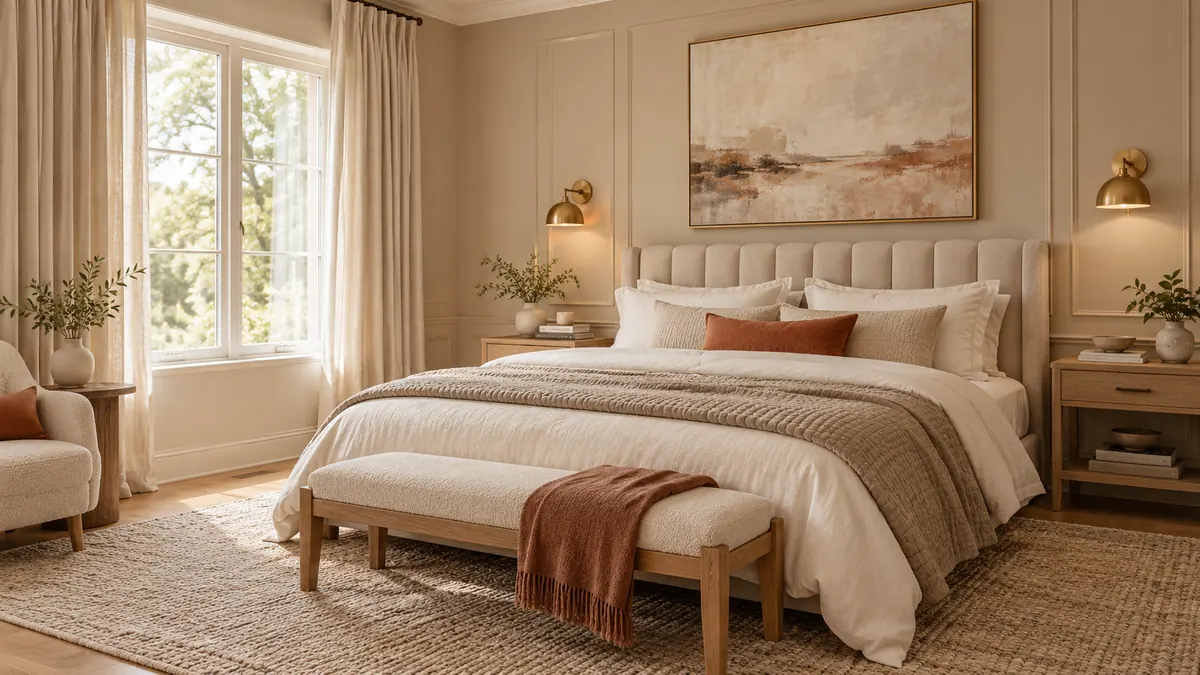
A small bedroom can feel completely different when a few high-impact details are chosen with purpose. These Small Bedroom Makeover Ideas focus on color, lighting, furniture, textiles, walls, and finishing touches that refresh the room without relying on a major renovation.
You will find approachable updates ranging from statement headboards and two-tone paint to layered bedding, oversized mirrors, wall sconces, and carefully edited decor. In my experience, smaller bedrooms respond especially well to focused changes because every visible element carries more weight. The goal is not to fill every empty surface, but to create a bedroom that feels polished, comfortable, visually balanced, and personal while still protecting valuable breathing room.
Table of Contents
Statement Headboard Wall
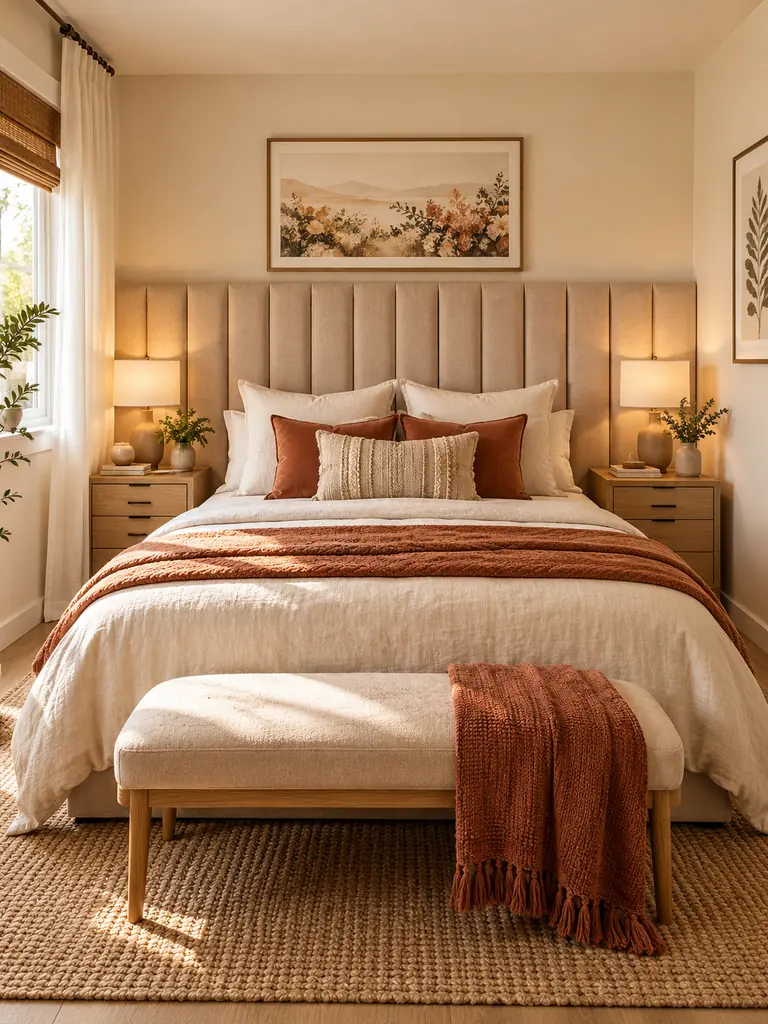
A strong headboard wall gives a compact bedroom an immediate focal point without filling the room with extra furniture. Extend an upholstered headboard, wood paneling, or painted feature across most of the bed wall so the eye reads one intentional composition instead of several disconnected decorative pieces.
Keep surrounding surfaces quieter so the feature remains visually balanced. In my experience, one confident focal wall often makes a small bedroom feel more finished than several smaller upgrades. Choose a material with shallow depth, coordinate it with the bedding, and leave enough breathing room around nearby furniture.
Two-Tone Paint

- Keep the lighter shade across most of the wall to maintain an open, airy appearance.
- Apply the deeper color to the lower third or half for a grounded effect.
- Use warm cream with muted terracotta, dusty sage, taupe, or soft clay for an approachable palette.
- Keep the dividing line consistent around visible walls for a deliberate finish.
- Test both colors beside the bed during daylight and evening lighting before painting the entire room.
Two-tone walls can introduce noticeable character without requiring new furniture or expensive architectural details. The horizontal color break also gives you control over the room’s proportions. For a calmer result, choose two shades with similar undertones rather than pairing colors that create an overly sharp contrast.
Ceiling Color Wash
Quick Tip:
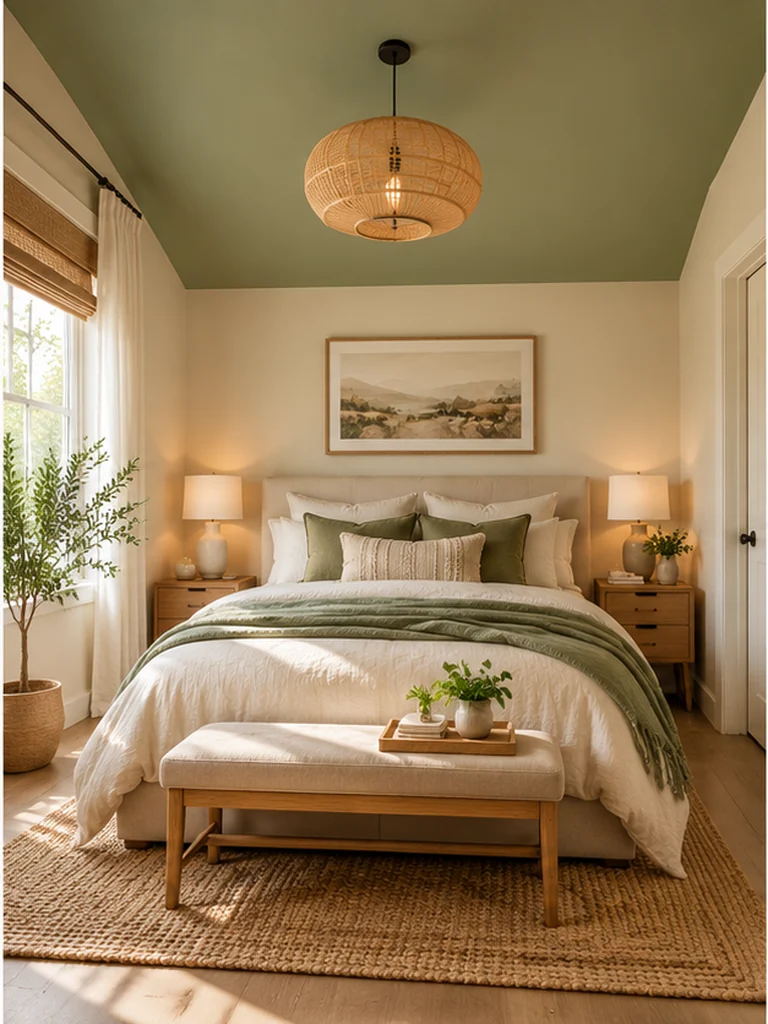
Choose a ceiling shade related to the wall color rather than an unrelated dark tone. Soft clay, warm beige, dusty blush, or muted sage can add character while keeping the overall palette connected.
The ceiling is often ignored during a bedroom makeover, yet a gentle color wash can make the entire scheme feel more intentional. Carrying a softened accent overhead draws attention upward without adding physical clutter. Keep bedding and major furniture relatively restrained so the ceiling feels integrated rather than visually heavy.
Oversized Art Focus
BEFORE:
Several small frames compete for attention above the bed, leaving the wall visually busy and fragmented. The collection may also make a narrow room feel more crowded than intended.
AFTER:
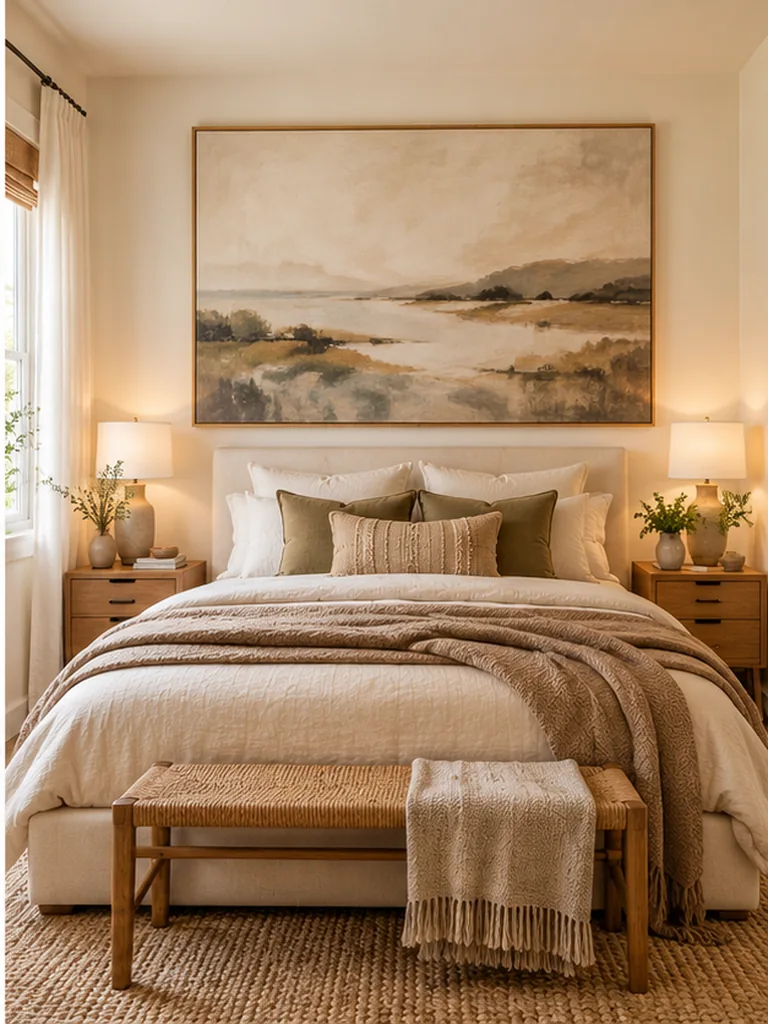
One oversized artwork creates a clear focal point with fewer visual breaks. A simple frame and restrained palette connect the piece to the bedding and surrounding furniture without overwhelming the wall.
Large-scale art works best when its proportions relate to the furniture beneath it. Aim for a piece noticeably narrower than the bed or dresser, then center it carefully. Abstract landscapes, botanical prints, or textured neutral artwork can introduce personality while keeping the overall bedroom composition calm and visually organized.
Wall Molding Detail
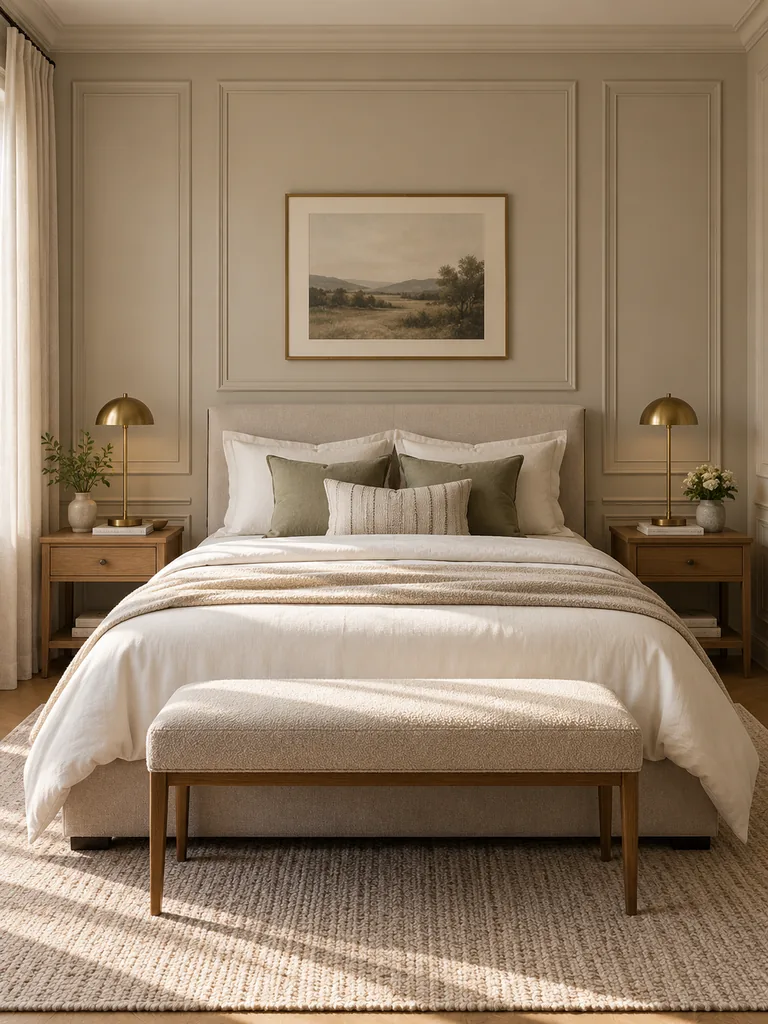
- Decide which wall needs definition, usually the bed wall rather than every surface.
- Mark simple rectangular molding panels with painter’s tape before attaching anything.
- Keep panel spacing consistent around the bed, outlets, and nearby furniture.
- Paint the molding and wall the same color for a subtle architectural finish.
- Choose renter-friendly removable molding when permanent installation is not appropriate.
Wall molding adds dimension through shadow and structure instead of relying on extra decor. In a compact bedroom, simple panels usually feel calmer than intricate patterns. Keeping the molding and background the same color also reduces visual fragmentation, allowing the architectural detail to appear intentional without making the room feel overly decorated.
Wallpaper Bed Nook

| Detail | Full-Room Wallpaper | Bed Nook Wallpaper |
|---|---|---|
| Coverage | Every wall | Bed zone only |
| Visual intensity | Higher | More controlled |
| Installation | More involved | Smaller project |
| Best effect | Immersive pattern | Defined focal area |
A wallpapered bed nook creates a strong visual destination while limiting pattern to one intentional area. Choose small botanicals, soft stripes, muted geometrics, or textured-look designs that coordinate with the bedding. Peel-and-stick options can suit renters, but always check the manufacturer’s surface requirements before applying them to painted walls.
If you’re decorating a rented bedroom, explore this guide to renter friendly apartment decor for practical advice on testing removable wallpaper, protecting painted walls, and avoiding unnecessary damage.
Curtain Wall Effect

DO:
- Hang curtains close to the ceiling to emphasize vertical height.
- Extend the rod or track beyond the window edges where space allows.
- Choose linen-look or softly textured fabric for visual warmth.
- Let panels fall neatly toward the floor without excessive pooling.
DON’T:
- Stop curtains awkwardly halfway down the wall.
- Choose bulky fabric that overwhelms a narrow bedroom.
- Block radiators, vents, or frequently used furniture.
- Crowd the window with unnecessary decorative layers.
Full-height curtains can make a small bedroom feel more polished by turning an ordinary window into part of the room’s architecture. A wider curtain span also softens awkward wall proportions. Keep the fabric close to the wall color when you want a calmer, more continuous backdrop around the bed.
Layered Bed Styling

Best For: Creating a finished focal point
Works In: Small bedrooms with simple furniture
Difficulty: Beginner
Result: Softer, more intentional bed styling
The bed occupies substantial visual space in a compact room, so thoughtful layering can change the whole look without requiring construction. Start with crisp sheets, add a lightweight coverlet, then finish with one folded throw and a controlled number of pillows. Mixing linen, cotton, and subtle texture creates depth without clutter.
For a warmer seasonal update, explore these fall bedroom decor ideas for cozy colors, layered textures, and simple autumn details.
Contrasting Bed Frame
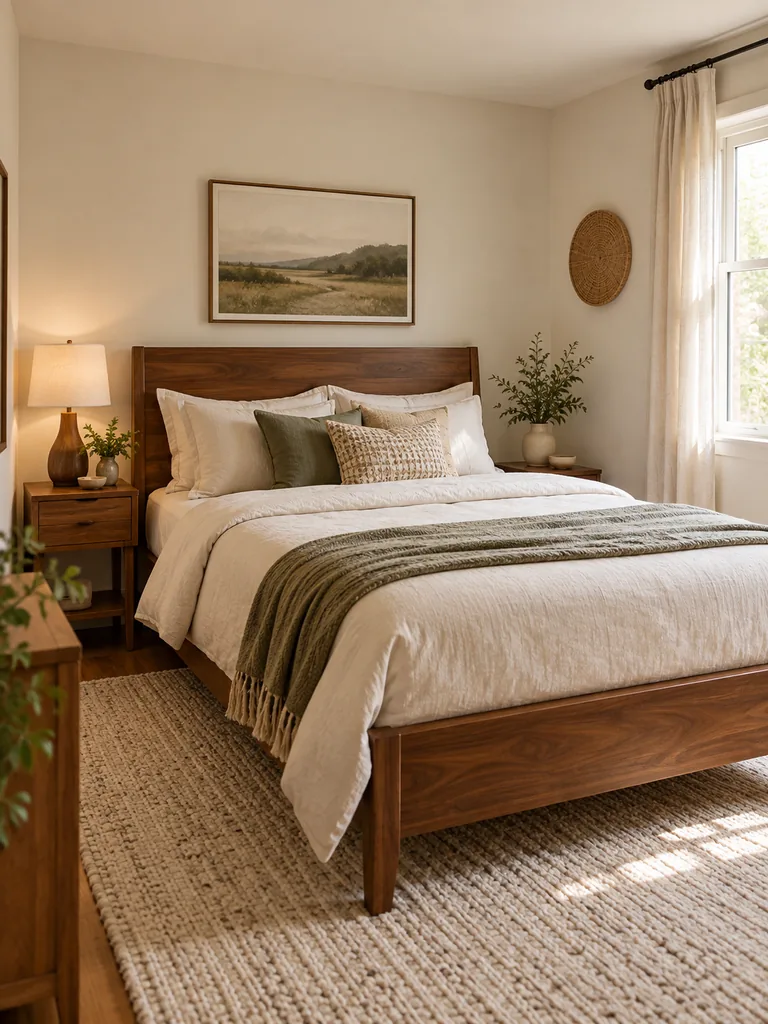
A bed frame that gently contrasts with the surrounding walls can give the room definition without relying on excessive accessories. Against warm cream walls, consider medium oak, walnut, muted black metal, or an upholstered frame in earthy taupe. The goal is distinction, not an aggressive color clash.
Keep the remaining large furniture pieces visually quieter so the bed remains the main anchor. I’ve noticed that contrast works particularly well when repeated once elsewhere, such as through a lamp, frame, or small wooden accent. That repetition makes the makeover feel connected rather than assembled from unrelated pieces.
Matching Nightstand Pair
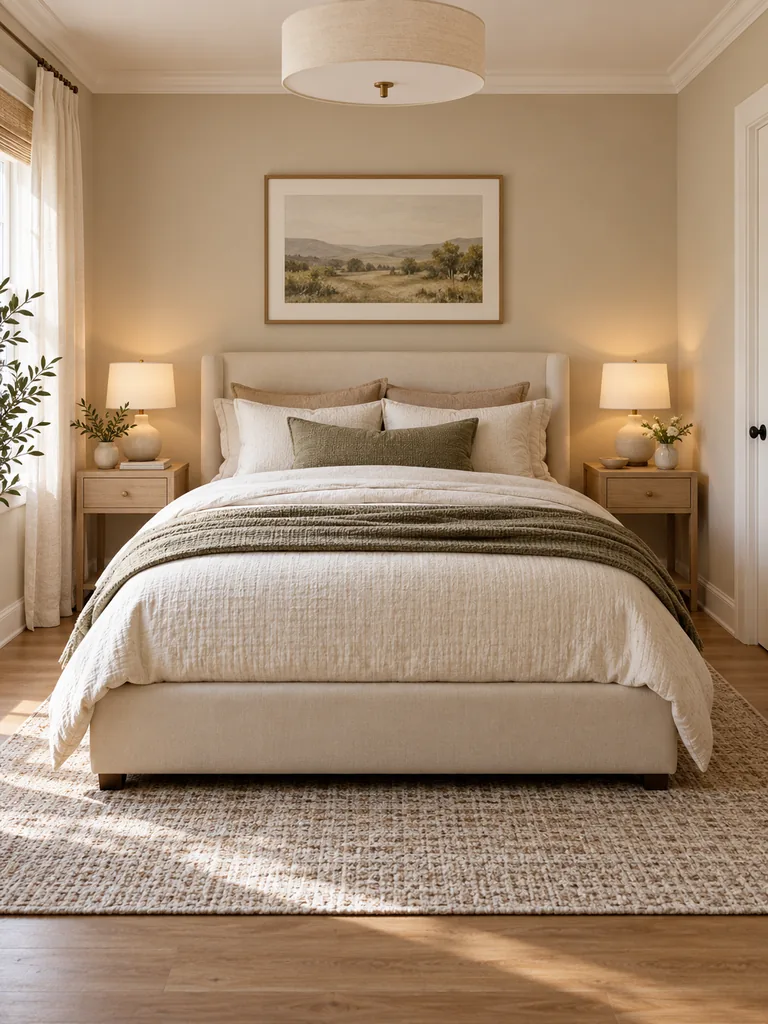
- Choose compact nightstands with enough surface area for only the essentials, such as a lamp, phone, and small book.
- Match the height closely to the top of the mattress for comfortable everyday reach.
- Pick slim legs or floating designs when you want more visible floor underneath.
- Use drawers to conceal chargers, glasses, and other small bedside items.
- Keep styling similar on both sides without making each surface perfectly identical.
Matching nightstands can bring visual order to a small bedroom because they frame the bed as one balanced composition. Prioritize proportion over storage capacity so the pieces do not squeeze the walkway. When space is especially tight, two narrow matching tables often look calmer than one oversized bedside cabinet.
If bedside clutter is only part of the problem, explore these small bedroom storage ideas for practical ways to organize a compact room without making it feel crowded.
Pendant Bedside Lights
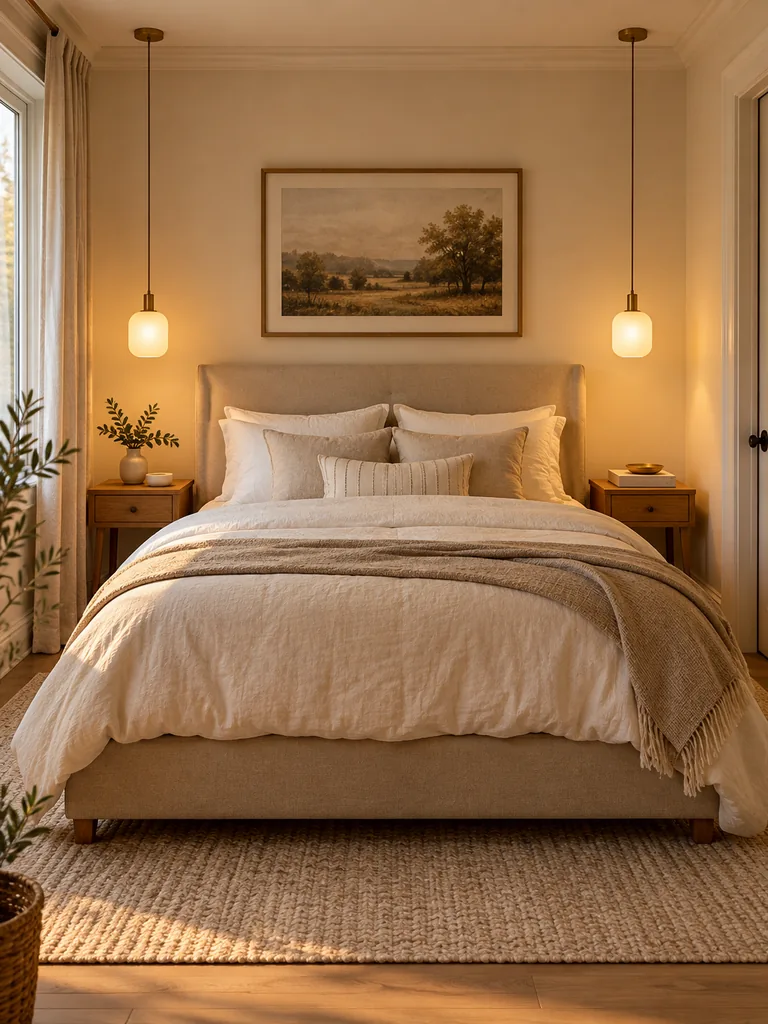
Quick Tip:
Position each pendant where it provides useful bedside light without hanging directly in the path of someone getting into bed. Before installation, test the approximate height with a temporary reference and confirm that switches remain easy to reach.
Suspended bedside lighting clears valuable nightstand space while drawing the eye upward. Choose compact shades in frosted glass, woven fiber, or understated metal that complement the room’s palette. Keep cords and mounting points visually tidy, and use warm bulbs to create comfortable evening light rather than harsh overhead-style brightness.
Sculptural Wall Sconces
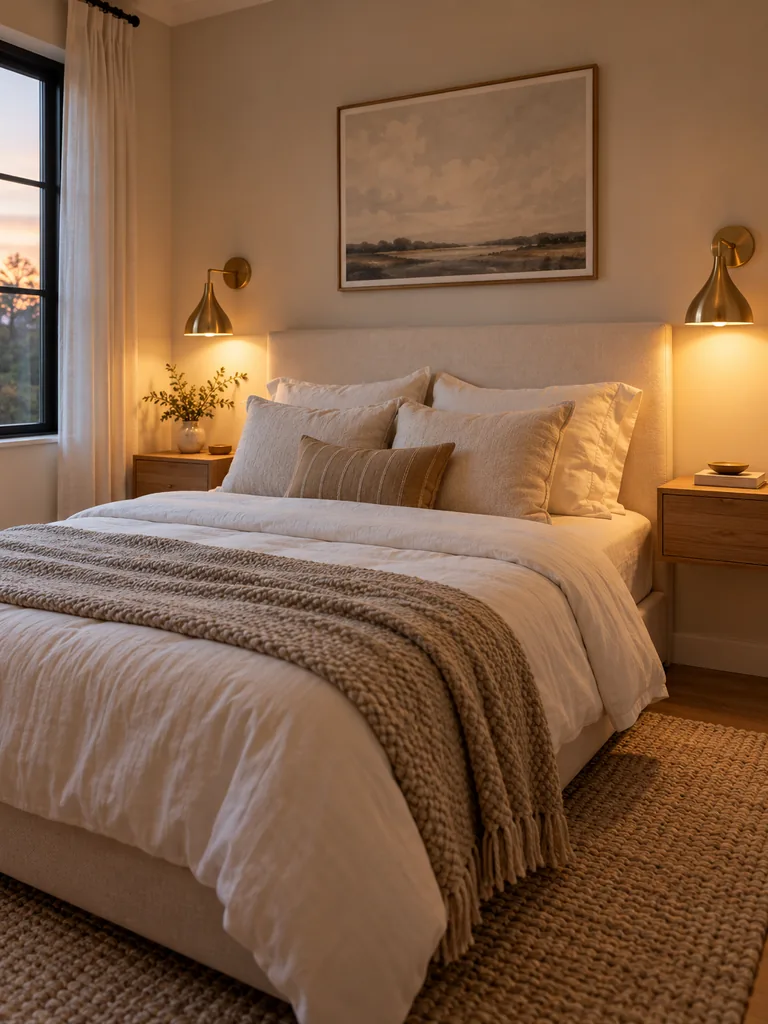
BEFORE:
Bulky table lamps consume much of the available nightstand surface and make a narrow bedside area feel crowded. Decorative objects compete with lamp bases, cords, and everyday essentials.
AFTER:
Wall-mounted sconces free the tabletop while adding a deliberate design detail above or beside the bed. Adjustable arms can direct light toward reading areas without requiring additional furniture.
Sconces work especially well when their scale suits the bed rather than dominating the wall. Choose simple sculptural forms that look attractive even when switched off. Hardwired fixtures provide a clean finish, while renter-friendly plug-in versions can offer a similar effect with less permanent installation.
Oversized Mirror Moment
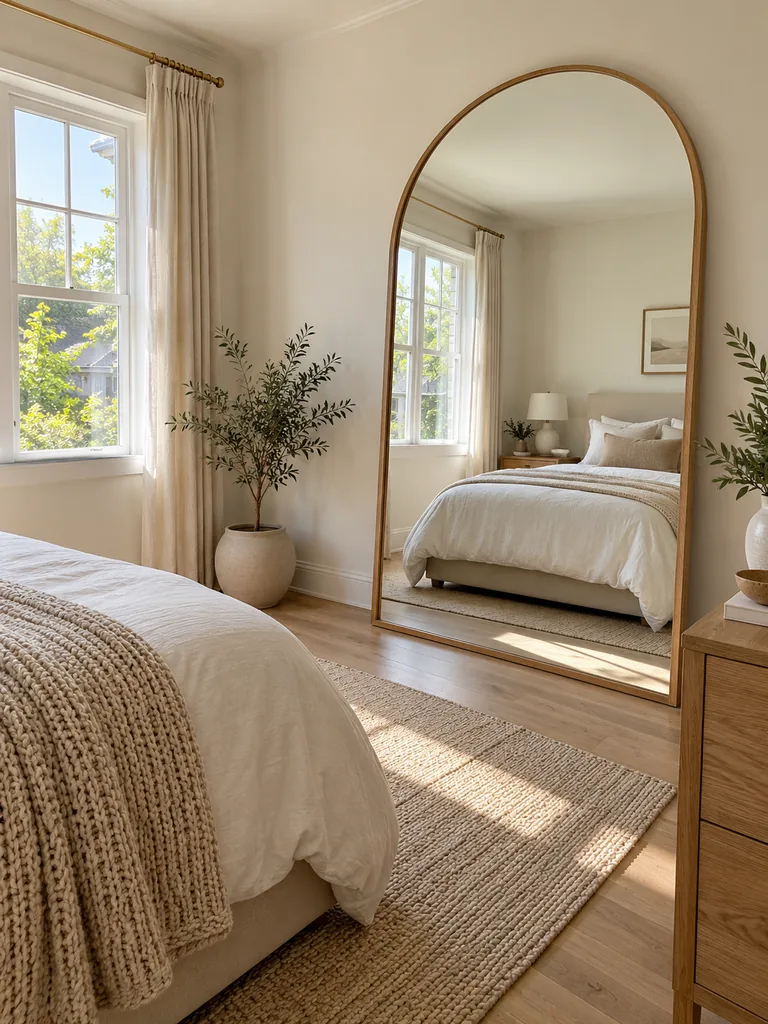
- Choose one large mirror instead of scattering several small reflective pieces around the bedroom.
- Position it where it can reflect natural window light without creating uncomfortable glare.
- Select a slim wood, brass, or muted black frame that complements existing furniture.
- Secure leaning or wall-mounted mirrors properly, especially in narrow walking areas.
- Keep surrounding decor minimal so the reflection does not multiply visual clutter.
A generously scaled mirror can make a compact bedroom feel brighter while creating a strong decorative feature of its own. Place it where the reflection captures an attractive, uncluttered part of the room. In my experience, mirror placement matters more than adding multiple reflective surfaces simply to make a room appear larger.
Warm Wood Accents

| Detail | Cool Mixed Finishes | Warm Wood Accents |
|---|---|---|
| Overall feel | Visually disconnected | Warm and cohesive |
| Best pieces | Mixed furniture | Frame, stool, nightstand |
| Pairing | Multiple undertones | Cream, clay, taupe |
| Visual effect | More contrast | Softer continuity |
Warm oak, walnut, or medium-toned wood can give a freshly updated bedroom depth without requiring many decorative objects. Repeat the chosen wood tone in two or three visible places rather than matching every item exactly. Natural grain also introduces subtle texture, which helps neutral bedrooms feel considered rather than flat.
For more inspiration on combining natural wood, soft textures, and calming colors, explore these cozy small bedroom ideas to create a warm and peaceful retreat.
Textured Accent Chair
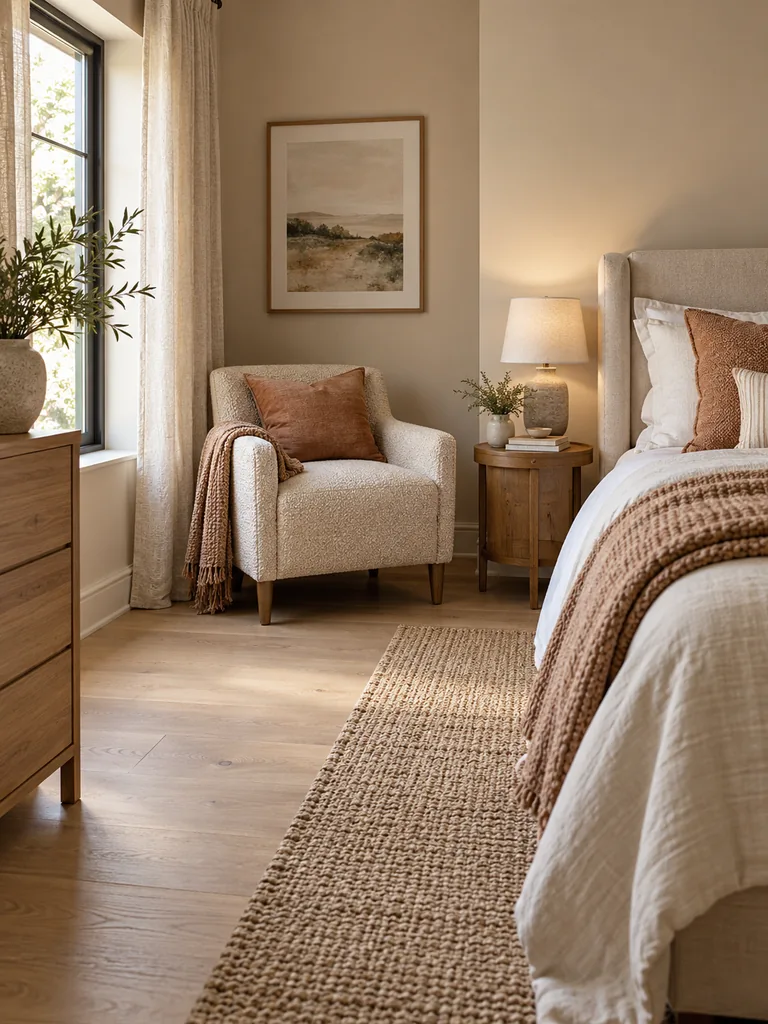
DO:
- Choose a compact chair with a narrow frame and comfortable seat.
- Position it where doors, drawers, and walking paths remain fully accessible.
- Select boucle, woven fabric, or textured linen for subtle visual depth.
- Use the chair for a clear purpose, such as reading or getting dressed.
DON’T:
- Squeeze a chair into a corner simply to fill empty space.
- Choose oversized arms that consume valuable floor area.
- Turn the seat into permanent clothing storage.
- Add a separate footstool unless the room comfortably allows it.
A small accent chair can make a bedroom feel more complete while adding useful seating beyond the bed. Texture gives the piece presence without requiring a loud color or pattern. If floor space is limited, prioritize compact proportions and resist adding surrounding furniture that would turn a simple seating spot into a crowded zone.
Statement Area Rug
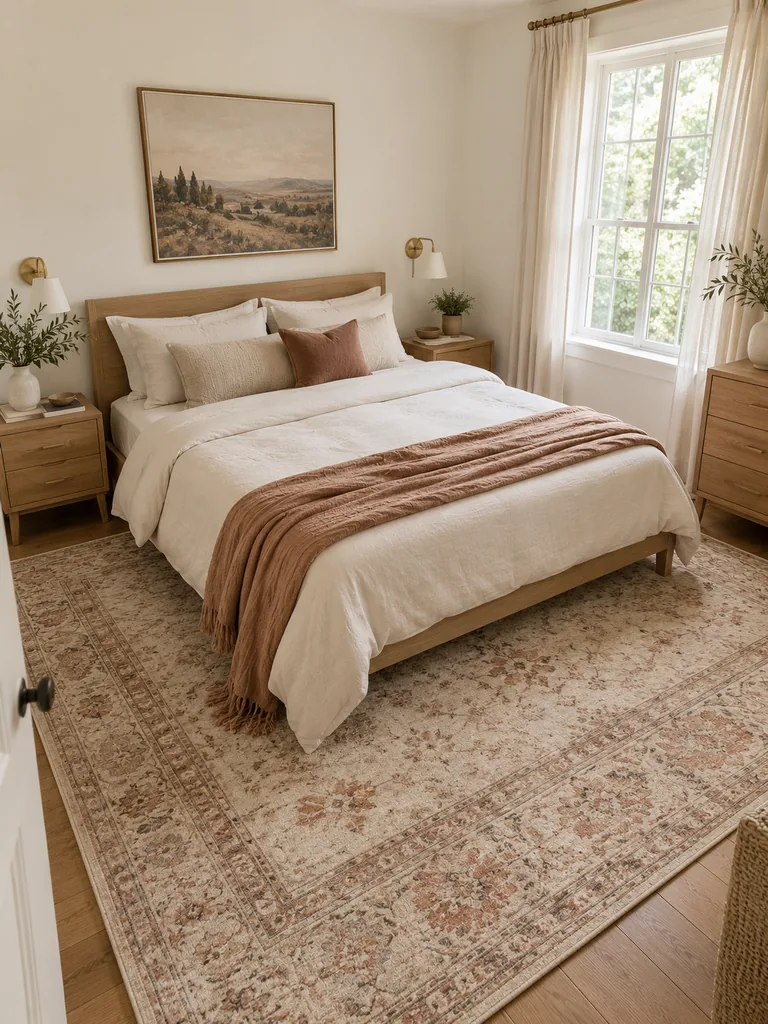
Best For: Defining the bed zone
Works In: Bedrooms with hard flooring or low-pile carpet
Difficulty: Beginner
Result: A softer, more grounded room
A well-sized rug can visually connect the bed and surrounding furniture while introducing pattern, texture, or controlled color. Choose a design that extends visibly beyond the sides of the bed rather than disappearing underneath it. Low-contrast geometrics, faded vintage patterns, and textured neutrals create impact without making a compact floor feel busy.
Window Seat Refresh
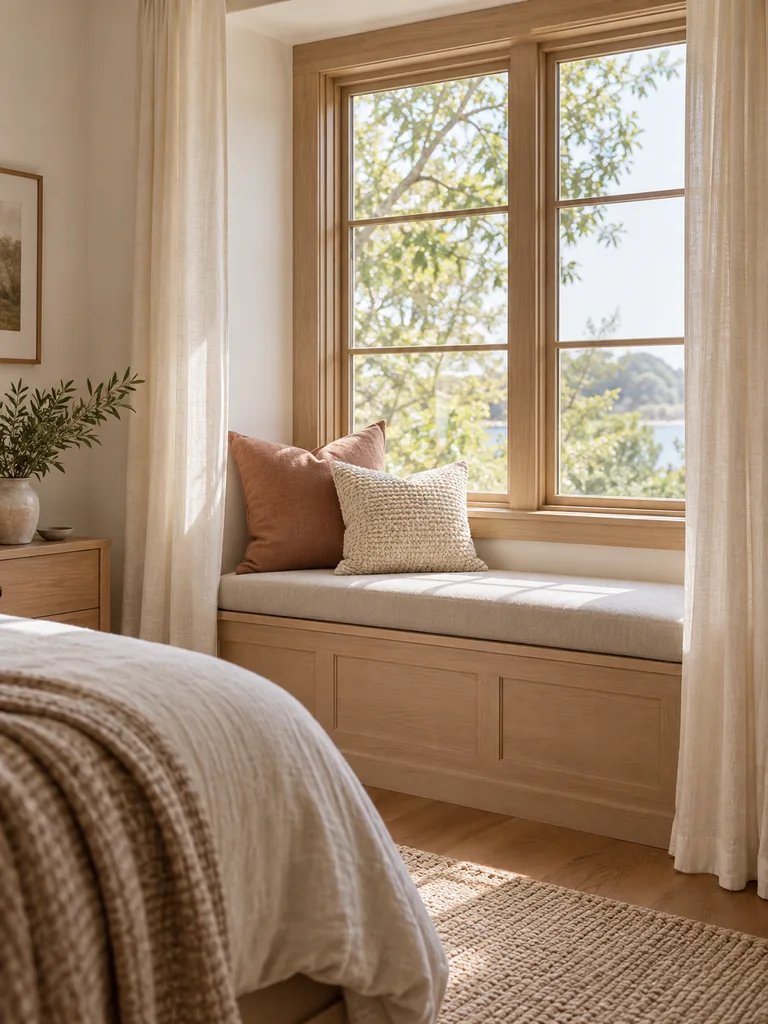
An existing window seat can become a polished feature with a fitted cushion, one or two supportive pillows, and a fabric that connects with the bedroom palette. Keep the styling restrained so the surface remains genuinely usable. Cotton, linen blends, and subtle woven textures suit an everyday seating area well.
Pay attention to what surrounds the seat as much as the cushion itself. Keep window handles accessible, avoid blocking heating or ventilation, and remove unnecessary objects from the ledge. I’ve noticed that a simple, usable window seat often looks more inviting than one covered with decorative pillows and throws.
When the holidays arrive, this cozy corner can take on a seasonal look with these apartment Christmas decor ideas, using simple greenery, festive textiles, window accents, and warm details that work beautifully in compact homes.
Floating Vanity Corner
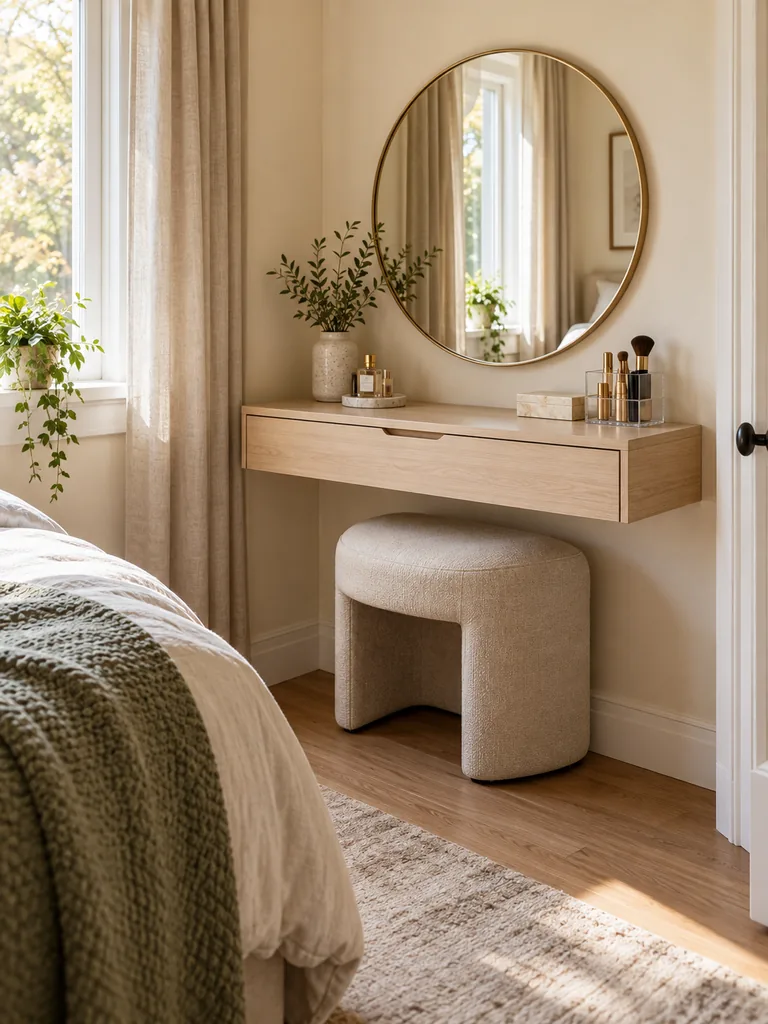
- Mount a shallow vanity surface where it will not narrow an important walkway.
- Pair it with a compact stool that can tuck completely underneath when not in use.
- Add one wall-mounted mirror instead of placing a bulky mirror on the surface.
- Keep daily cosmetics in a slim drawer or small divided organizer.
- Use a wall sconce or nearby natural light rather than crowding the vanity with a large lamp.
A floating vanity can give an unused bedroom corner a clear function while keeping more floor visible underneath. Match its finish to another element already in the room for continuity. Limiting the surface to daily essentials also prevents this small makeover feature from becoming another clutter collection point.
Picture Ledge Display
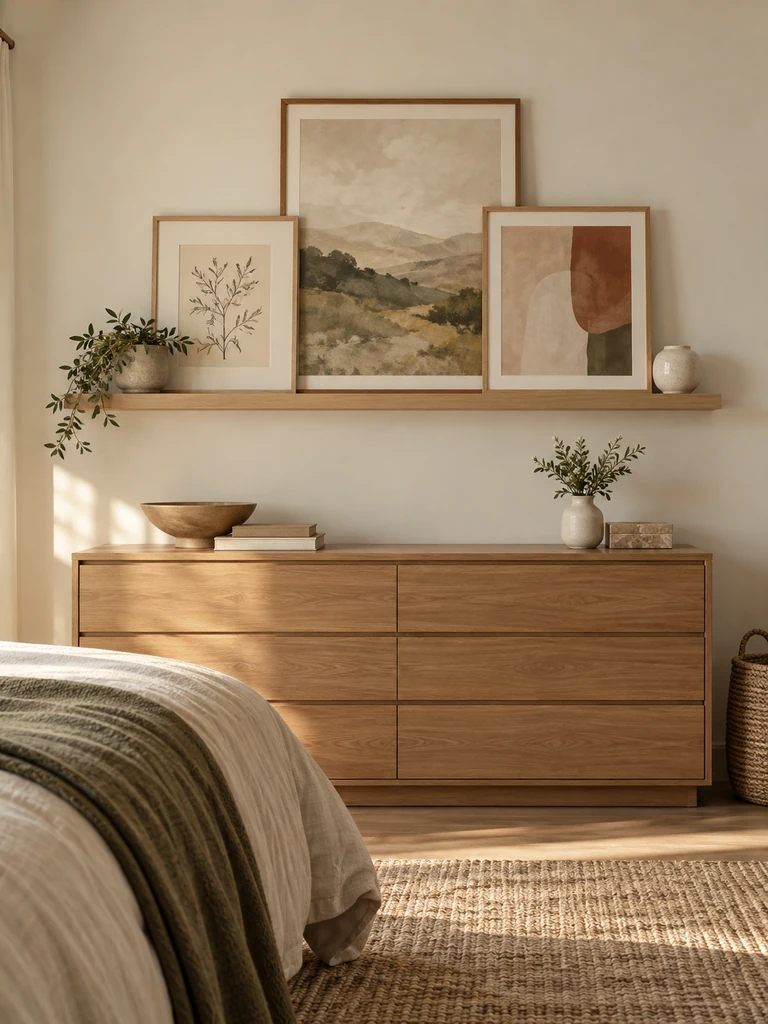
Cost: Low to moderate
Time: About one hour after planning
Skill Level: Beginner
Best For: Changeable artwork and small decorative pieces
A slim picture ledge gives you flexibility to refresh bedroom art without creating a wall full of separate mounting points. Layer two or three frames with different heights, leaving visible wall space around the arrangement. Keep objects lightweight and avoid overfilling the ledge, especially when it sits above furniture or near the bed.
Minimal Gallery Wall
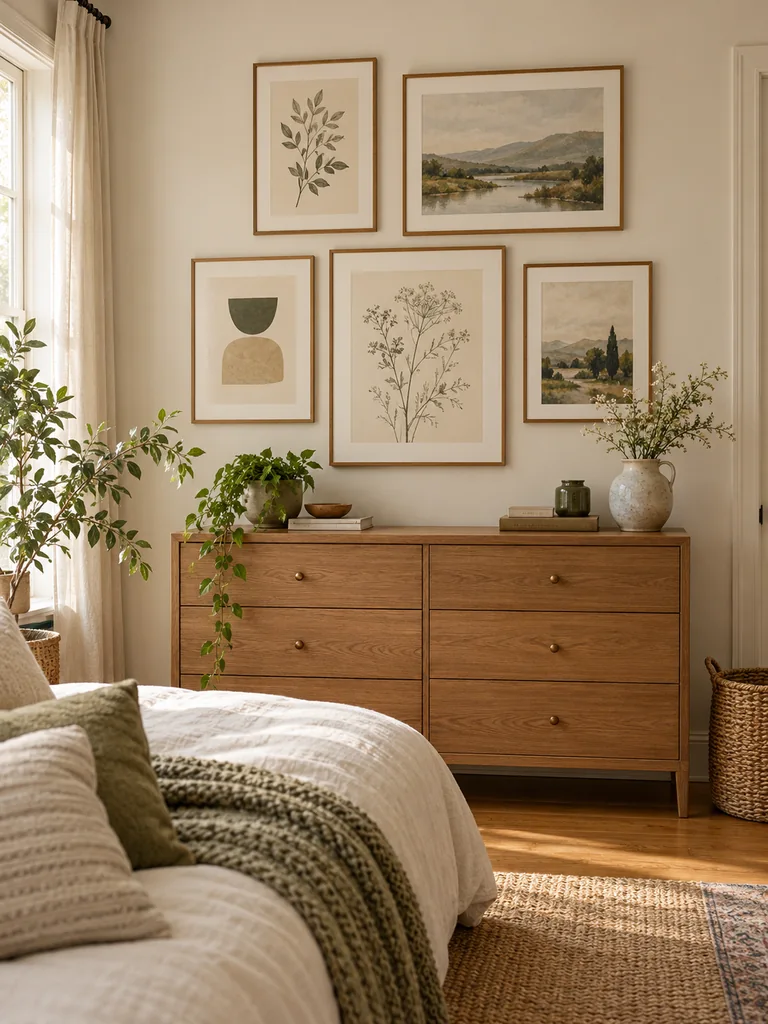
A restrained gallery wall can introduce personality without making a compact bedroom feel visually restless. Start with three to five coordinated pieces rather than filling the entire wall. Similar frame finishes and generous spacing help separate each image while allowing the collection to read as one deliberate feature.
Choose artwork that shares a subtle connection through color, subject, or style. Botanical sketches, abstract shapes, personal photography, and muted landscapes can work together when the palette stays controlled. Lay the arrangement on the floor first, then transfer measurements to the wall to avoid unnecessary holes and awkward spacing.
If you enjoy creative wall styling, explore these small bedroom aesthetic ideas featuring personalized photo displays, statement mirrors, and trendy decorative accents.
Soft Lighting Layers
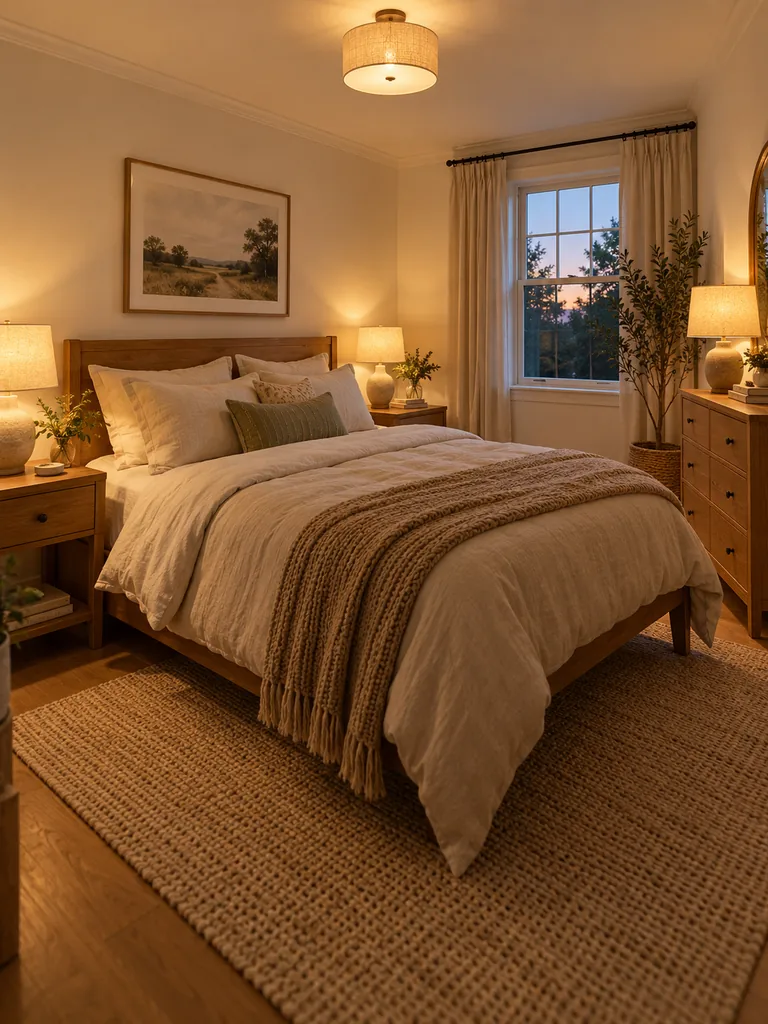
- Start with a warm overhead fixture for general illumination rather than relying on a harsh cool bulb.
- Add bedside lighting at a comfortable height for reading and evening routines.
- Use one subtle accent source, such as a small dresser lamp, where another layer is genuinely useful.
- Choose similar bulb temperatures so different fixtures do not create conflicting tones.
- Keep cords controlled and switches easy to reach from their intended use areas.
Lighting can change how every color, fabric, and finish in a bedroom appears after sunset. Several gentle sources give you more control than one bright ceiling fixture. Prioritize functional placement first, then use warm illumination to highlight the makeover details you have already introduced throughout the room.
For a cozy holiday update, explore these Christmas decor ideas for small spaces for clever ways to bring warm lights, compact greenery, and festive details into a bedroom without making it feel crowded.
Monochrome Color Scheme
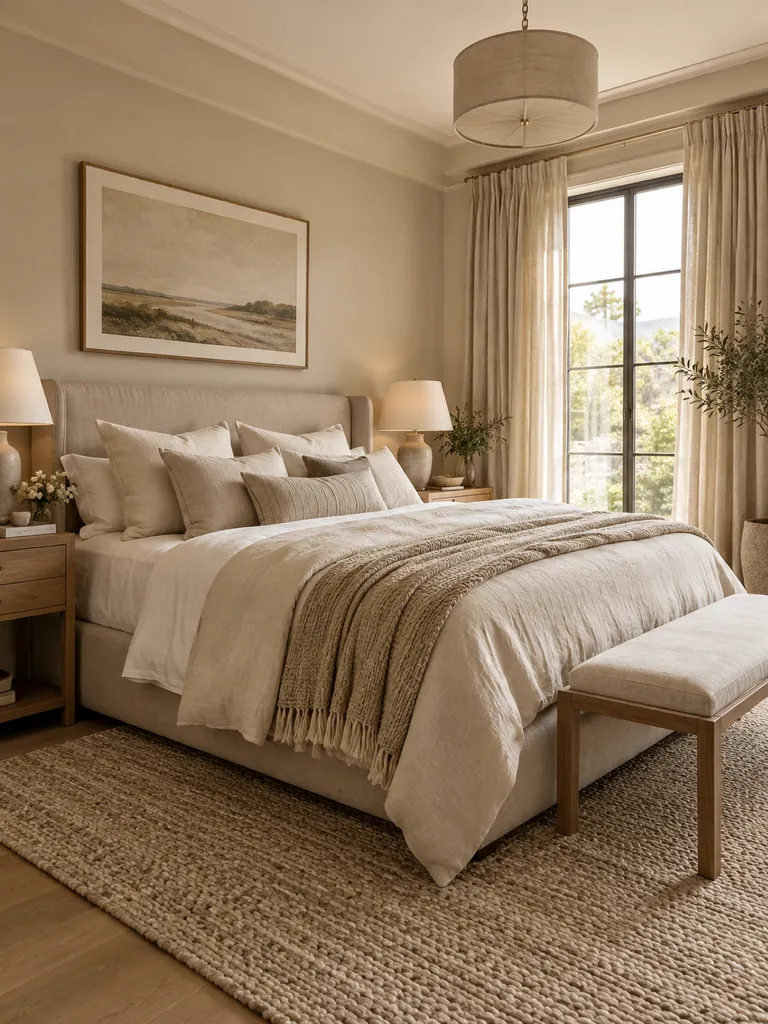
DO:
- Choose one main color family and use lighter and deeper versions across the room.
- Add texture through linen, wool, wood, or woven materials to prevent flatness.
- Keep large surfaces within closely related tones for visual continuity.
- Introduce small neutral accents where the palette needs breathing room.
DON’T:
- Match every object to one identical shade.
- Depend on color alone while ignoring material and texture.
- Mix noticeably conflicting undertones.
- Add unrelated accent colors throughout the room.
A monochrome palette can reduce visual interruptions, helping a compact bedroom feel more connected from wall to wall. The strongest schemes still contain variation. Layering several tones and tactile materials creates enough depth to keep the room interesting while preserving the calm, unified effect that makes this approach work.
Painted Door Accent
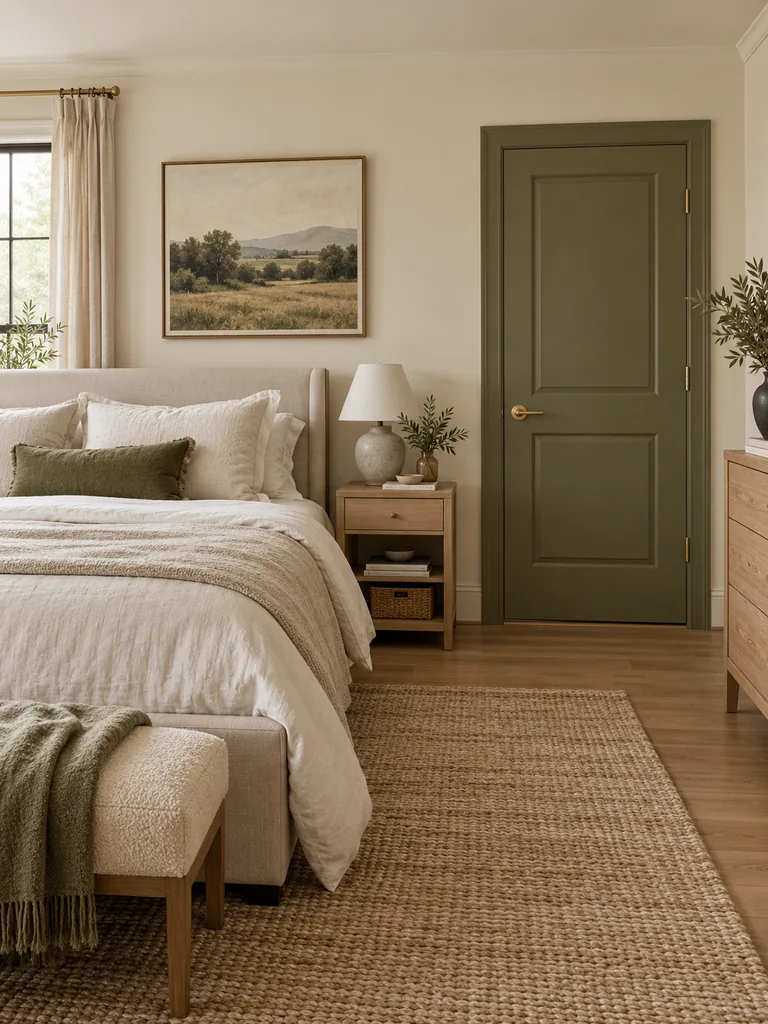
Best For: Low-cost visual refresh
Works In: Neutral and rental-friendly bedrooms where painting is allowed
Difficulty: Beginner
Result: A stronger color focal point without using extra floor space
An interior door can become part of the bedroom design instead of disappearing into the wall. Paint it muted olive, dusty clay, warm taupe, or another shade pulled from the bedding. Keep the surrounding trim simple, and repeat the door color once through a small textile or artwork for a connected finish.
Hotel-Style Bedding

Crisp, well-layered bedding can give the largest surface in a small bedroom a noticeably more polished appearance. Begin with fitted sheets and a smooth duvet, then add two sleeping pillows, a limited number of decorative cushions, and one neatly folded throw near the foot of the bed.
Keep the palette restrained so the layers create softness rather than visual noise. White, cream, oatmeal, and muted taupe work particularly well when subtle texture provides the variation. Choose washable materials suited to everyday use, because a bedroom makeover works best when the finished setup remains practical to maintain.
During the holiday season, you can build on that layered bed with these Christmas bedroom decor ideas, using festive quilts, plaid pillows, soft textures, greenery, and warm lighting for a cozy seasonal refresh.
Finishing Decor Edit

- Remove decorative pieces that compete with the room’s strongest focal point.
- Keep nightstands and dressers partially clear instead of filling every available surface.
- Repeat two or three materials, such as warm wood, ceramic, and woven fabric, for visual consistency.
- Group smaller objects together rather than scattering them across different surfaces.
- Step into the doorway and remove anything that makes the first view feel unnecessarily busy.
The final edit often determines whether a bedroom makeover feels polished or overcrowded. I’ve noticed that removing one unnecessary object can improve a small room more than adding another accessory. Keep pieces that support the palette, function, or atmosphere, then allow intentional empty space to become part of the finished design.
If clothing and everyday belongings still need a practical home, explore these no closet bedroom storage ideas for organizing a room without built-in wardrobe space.
Conclusion
A memorable bedroom makeover often comes from a few thoughtful changes rather than replacing everything at once. These Small Bedroom Makeover Ideas show how color, lighting, texture, furniture, and careful styling can give a compact room stronger character without overwhelming it. I’ve noticed that choosing one clear focal point first makes the remaining design decisions much easier. Start with the update that would have the biggest impact in your room, then build gradually around it. Save this post on Pinterest for future inspiration, try your favorite ideas, and share it with someone planning their own bedroom refresh.