
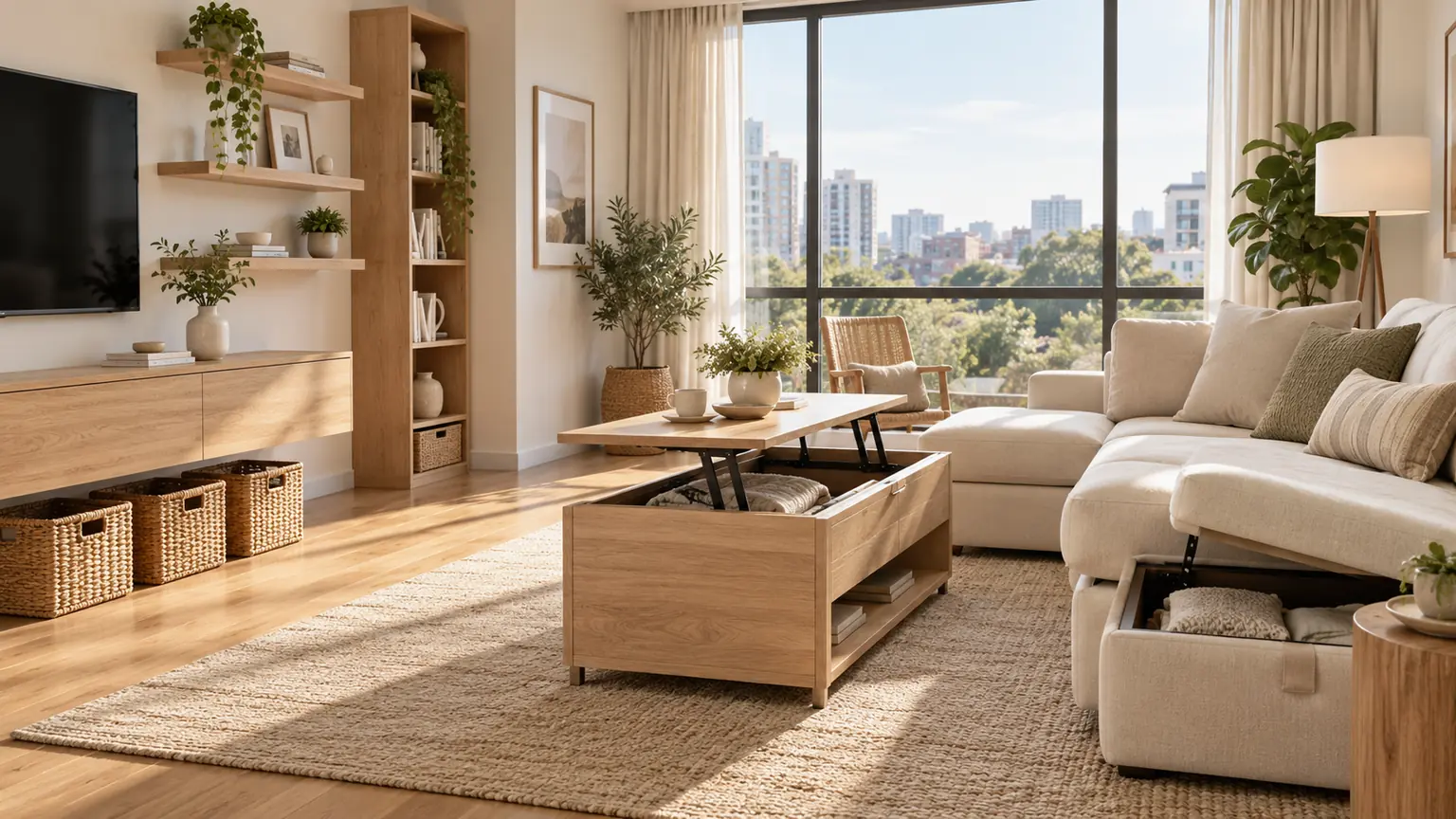
Running out of room does not mean you need more bulky furniture. These small apartment storage ideas use hidden compartments, overlooked walls, narrow gaps, and vertical space to organize your home while keeping it open and comfortable.
From under-bed drawers and storage ottomans to kitchen rails and over-door organizers, every solution has a practical purpose. You will learn what to measure, where each option works best, and how to avoid creating new clutter while trying to contain the old.
In my experience, the most successful storage choices fit naturally into daily routines. After exploring these ideas, you will be ready to choose compact solutions that make your belongings easier to find and your apartment noticeably calmer.
Table of Contents
Under-Bed Storage Drawers
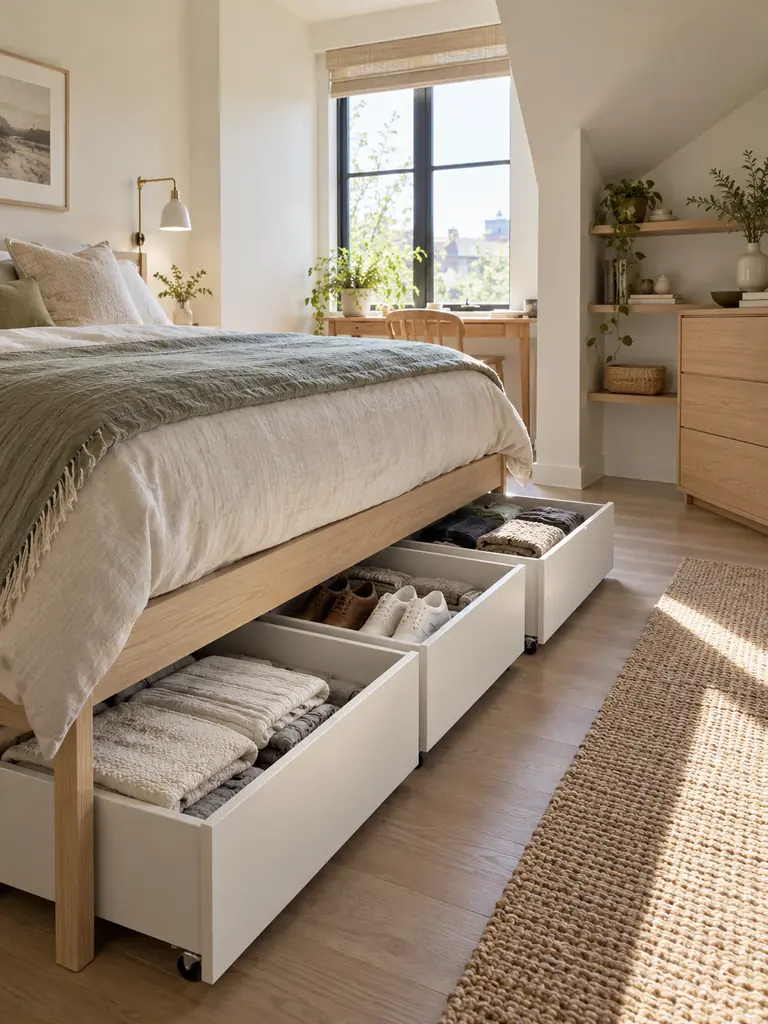
Empty space beneath your bed can hold more than expected without changing the room’s footprint. Choose low-profile drawers with wheels for frequent access, or lidded containers for seasonal belongings. Measure the bed’s width, length, and clearance before ordering anything online so every container fits properly.
Keep categories separate so storage stays usable rather than becoming a hidden clutter zone. Place shoes in divided bins, bedding in breathable bags, and rarely worn clothes in labeled boxes. In my experience, transparent containers make small apartment storage ideas easier to maintain because contents remain visible.
For more ways to organize a compact sleeping area, explore these Small Bedroom Storage Ideas that keep clutter under control.
Lift-Up Storage Bed

- A lift-up base provides generous hidden storage without requiring extra clearance for side drawers.
- Measure the mattress size, ceiling height, and available lifting space before selecting a frame.
- Store lightweight bedding near the opening and heavier suitcases closer to the base for safer access.
- Use zippered fabric bags to separate categories and protect textiles from dust.
- Check the lifting mechanism, weight limit, and warranty before purchasing, especially for daily use.
A storage bed works best for belongings you need monthly or seasonally rather than every day. Avoid filling the compartment with loose objects that shift or become difficult to reach. Group similar items, label every bag, and leave a small open area near the handle for comfortable lifting.
Storage Headboard Shelves
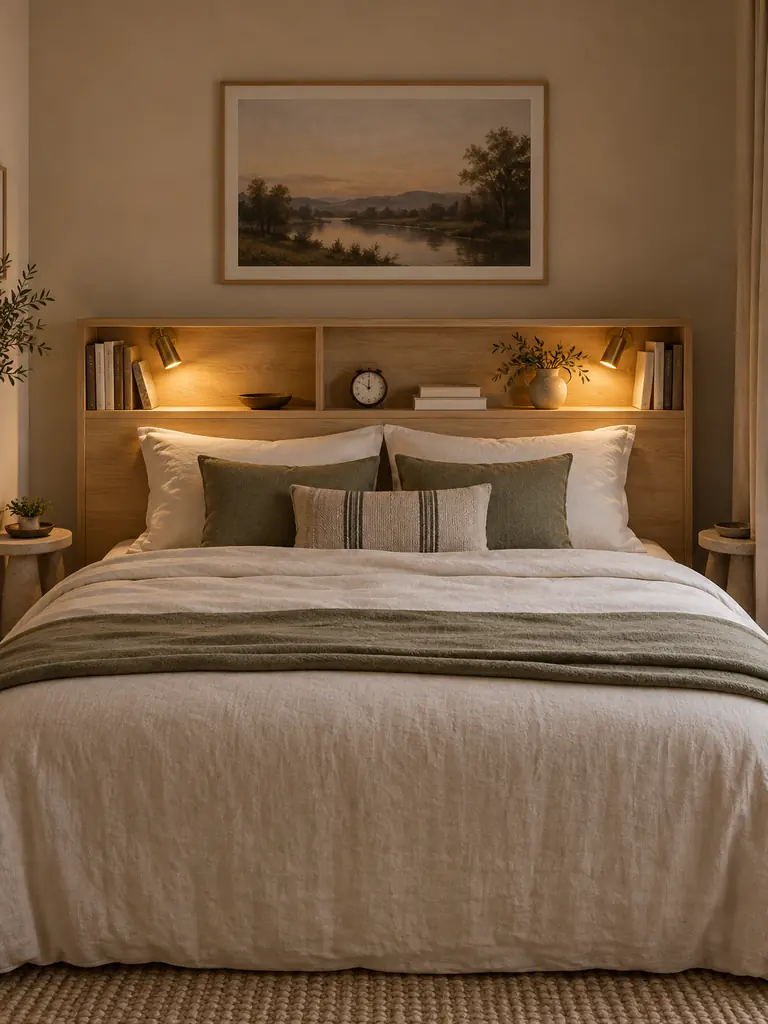
Quick Tip:
Choose a headboard no deeper than necessary for books, a phone, and a small lamp. Secure tall units to the wall according to the manufacturer’s instructions, especially in rentals where freestanding furniture may shift.
Headboard shelves can replace one or both nightstands, leaving more floor space beside the bed. Route charging cables through built-in openings or adhesive cable clips, and keep heavy objects on lower shelves. Limit the display to daily essentials so the sleeping area remains calm, practical, and visually balanced.
Hidden Storage Ottoman
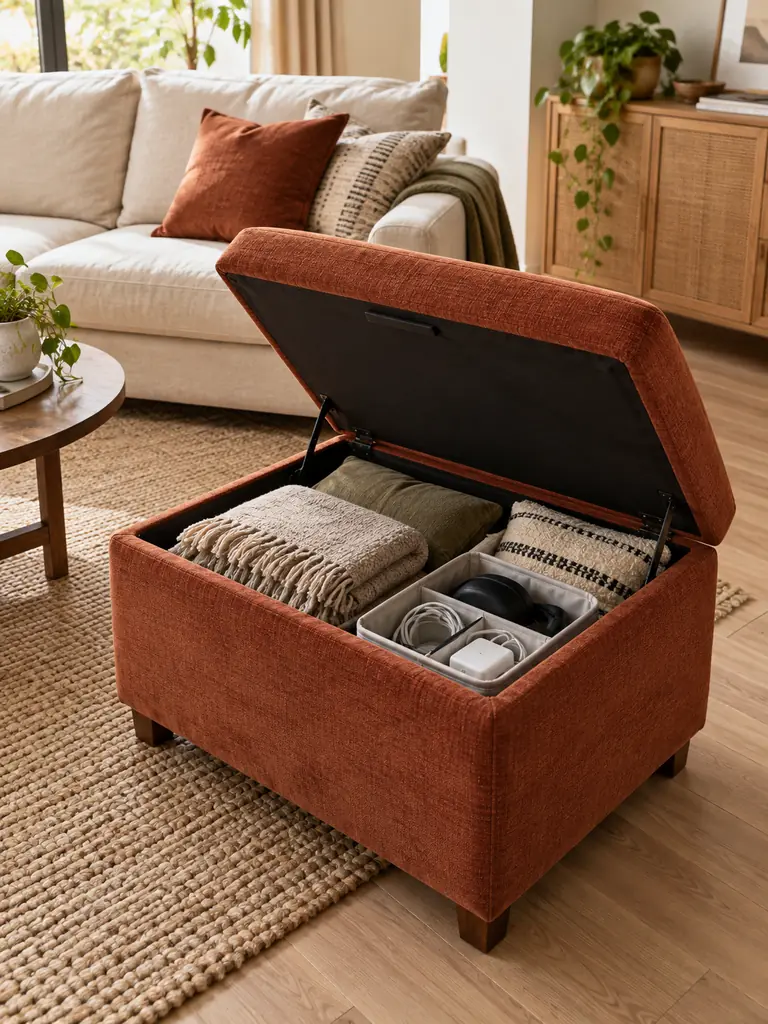
Before:
Blankets, remote controls, chargers, and small accessories collect on the sofa or nearby floor. Adding a separate cabinet would reduce walking space and make the room feel tighter.
After:
A compact storage ottoman contains loose belongings while serving as seating or a footrest. Its upholstered surface brings softness into the room without introducing another visually heavy piece of furniture.
Choose an ottoman with sturdy hinges, a removable washable cover, and enough internal depth for the intended items. Store soft belongings such as throws or spare cushions inside, and avoid exceeding the stated weight limit. A rectangular model usually fits more neatly against a wall or sofa.
Lift-Top Coffee Table
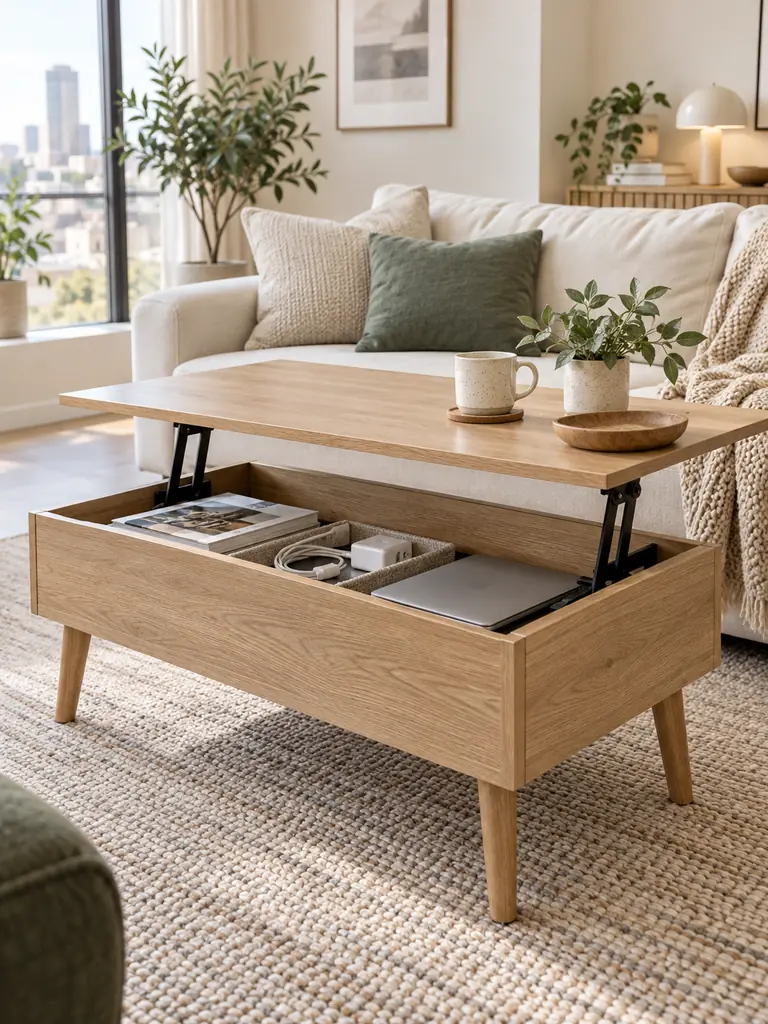
- Measure the seating area and leave at least 18 inches between the table and sofa for comfortable movement.
- Choose a lightweight design with hidden compartments and a smooth, stable lifting mechanism.
- Divide the interior with small trays for remotes, cables, stationery, and frequently used accessories.
- Test the raised surface height to confirm it works comfortably for eating or laptop use.
- Close the top after use to restore a clean, open appearance.
Lift-top tables are most useful when their compartments hold everyday living room items rather than forgotten clutter. Keep heavier objects near the center and check the hinge weight limit before leaning on the raised surface. A slim rectangular or round-edged design will preserve safer, clearer walking paths.
Slim Entryway Console
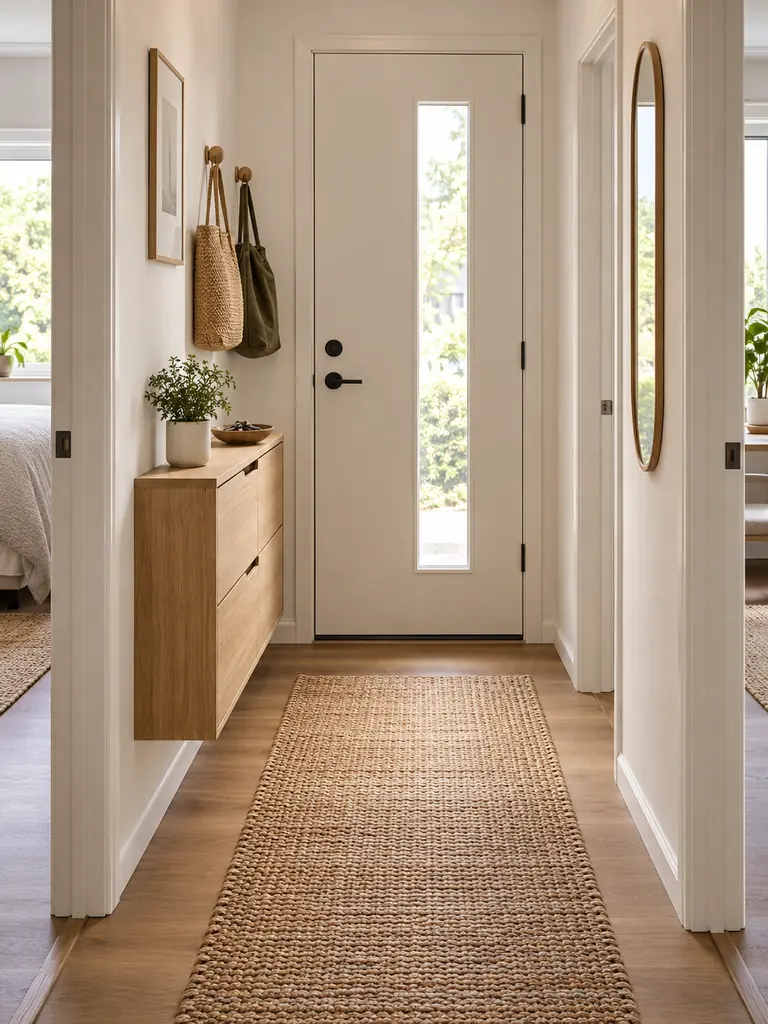
| Standard Console | Slim Console |
|---|---|
| Often 14 to 18 inches deep | Usually 6 to 10 inches deep |
| Reduces narrow walking space | Keeps the entrance open |
| Displays clutter on an open top | Conceals items behind doors |
| May include bulky legs | Wall-mounted options free the floor |
A shallow console creates a clear landing zone without dominating the entrance. Measure door swing and walkway width before choosing one, then assign separate spaces for shoes, mail, keys, and bags. Mount narrow furniture securely to the wall, and keep its top mostly clear for easier daily arrivals.
During the holiday season, that same compact entry area can become part of your festive styling. Explore these apartment Christmas decor ideas for renter-friendly ways to decorate entryways, living spaces, kitchens, bedrooms, and more without overwhelming limited room.
Floating Wall Shelves
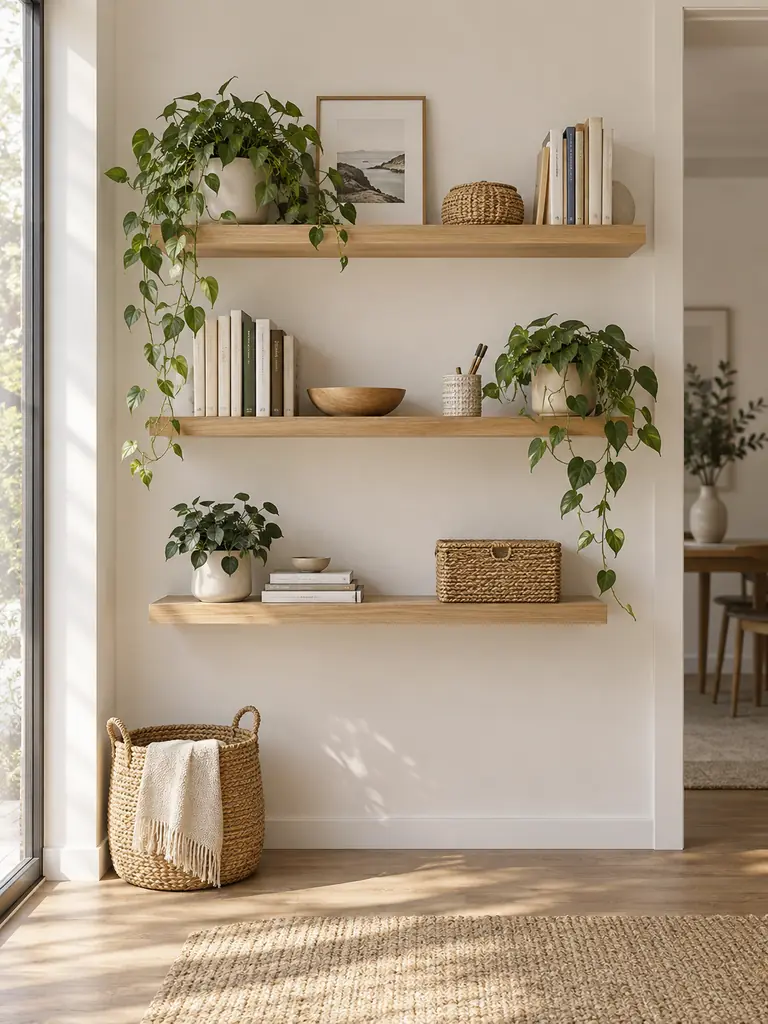
Do:
- Turn an unused wall into practical storage with two or three shallow shelves.
- Mount shelves into studs or use anchors rated for the wall type and expected weight.
- Place heavier objects on lower shelves and lightweight decor higher up.
- Group small items inside matching baskets to reduce visual clutter.
Don’t:
- Install deep shelves where they could interfere with doors, seating, or walking paths.
- Overload shelves beyond the manufacturer’s stated weight capacity.
- Cover every wall with storage, because the apartment still needs visual breathing room.
- Place fragile objects above beds, sofas, or frequently used chairs.
Floating shelves work best when they support a specific purpose, such as books above a desk or toiletries beside a mirror. Measure the wall and map each shelf with painter’s tape before drilling. Keep spacing consistent, and leave some open surface so the arrangement feels organized rather than crowded.
Tall Narrow Bookcase
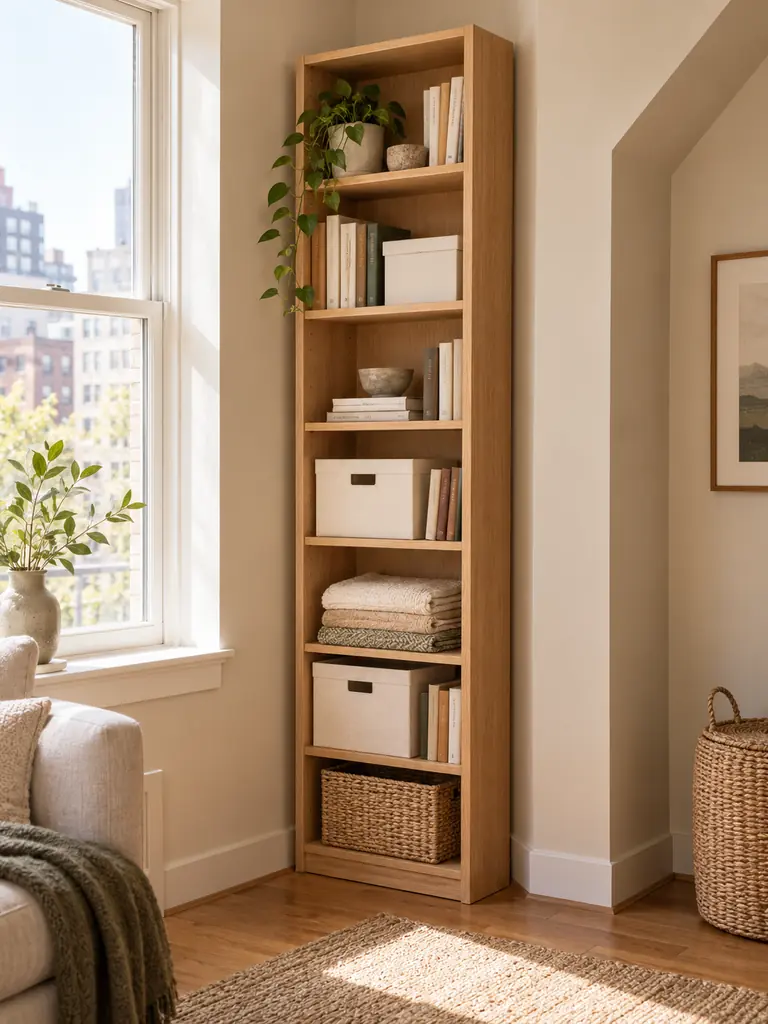
Cost: Moderate
Difficulty: Easy
Best For: Living rooms, bedrooms, home offices, and awkward wall sections
Result: More storage capacity without occupying a wide section of floor
Height provides valuable capacity when floor space is limited. Select a bookcase that is shallow enough for the room and secure it to the wall with appropriate anti-tip hardware. Store heavier items on lower shelves, daily essentials at eye level, and lightweight labeled boxes near the top.
If your entire home shares one open room, these studio apartment storage ideas offer more ways to organize sleeping, living, kitchen, and entry areas while protecting valuable floor space.
Over-Door Pocket Organizer

The back of a door can organize dozens of small belongings without claiming floor or shelf space. Choose clear pockets for toiletries and accessories, or deeper fabric compartments for shoes and cleaning supplies. Measure the door before buying and confirm that it can still close easily.
Place lighter items near the top and heavier products in lower pockets to reduce pulling on the door. Keep frequently used belongings at eye level, and label unclear compartments. Avoid storing leaking bottles, sharp tools, or excessive weight that could damage hinges or scratch nearby walls.
For compact bathrooms, these small bathroom storage ideas offer more ways to organize toiletries, towels, and everyday essentials using doors, walls, and overlooked corners.
Wall Hooks and Peg Rails
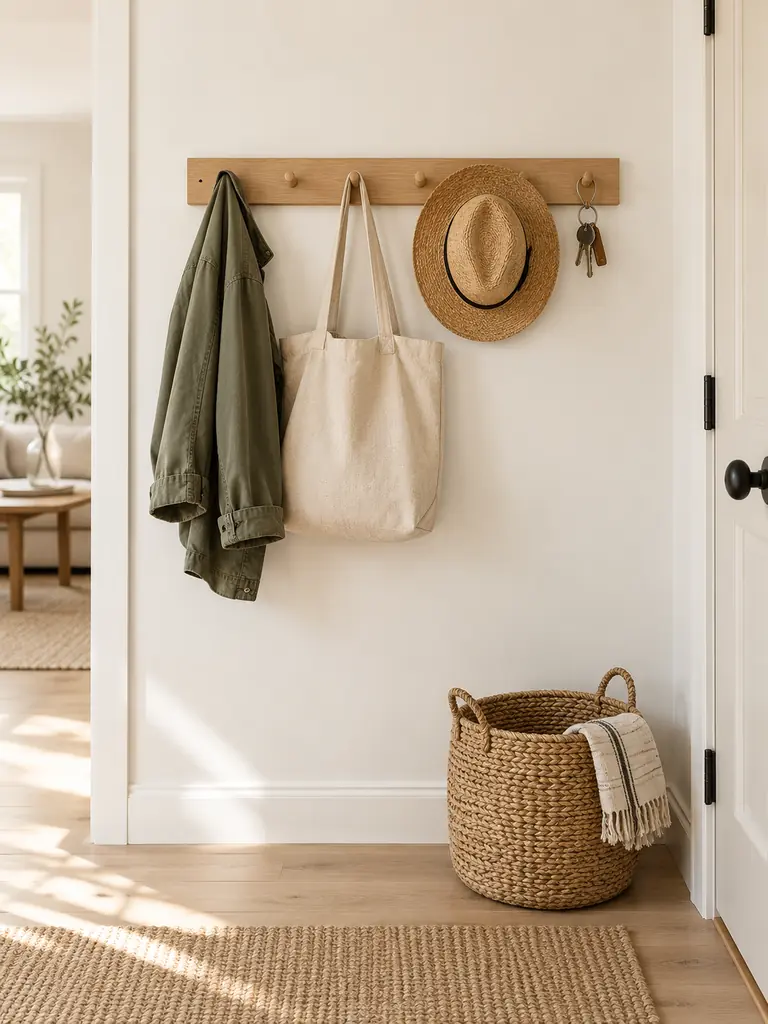
Image Description: Compact apartment entry wall fitted with a light oak peg rail holding a jacket, tote bag, hat, and keys. Soft morning daylight, warm white walls, woven basket below, natural wood textures, open floor space, minimal Scandinavian styling, and a straight-on Pinterest interior photograph.
- Blank walls can hold coats, bags, hats, towels, or kitchen tools without adding floor furniture.
- Install a continuous peg rail for a cleaner appearance and more flexible hanging positions.
- Match screws and anchors to the wall material and the expected weight of stored items.
- Position everyday belongings between waist and eye level so they remain easy to reach.
- Leave several hooks empty to prevent the arrangement from looking crowded.
Hooks work best when each one has an assigned purpose. Keep heavy bags near secure mounting points and place lighter accessories toward the ends of a rail. I’ve noticed that limiting each hook to one item makes an open storage area feel calmer and easier to reset.
If you’re renting, explore this guide to renter friendly apartment decor before installing wall hooks or peg rails to learn how to protect painted surfaces, choose suitable mounting methods, and avoid unnecessary damage.
Slim Rolling Cart

Quick Tip:
Measure the narrow gap and nearby doorway before buying a cart. Select locking wheels if it will hold bottles, electronics, or anything that could spill or fall while moving.
A slim cart can support different rooms as your storage needs change. Use removable containers to separate categories, place heavier supplies on the bottom tier, and reserve the top for frequently used items. Keep the handle and wheels accessible so the cart remains genuinely movable rather than becoming fixed clutter.
Stackable Closet Bins
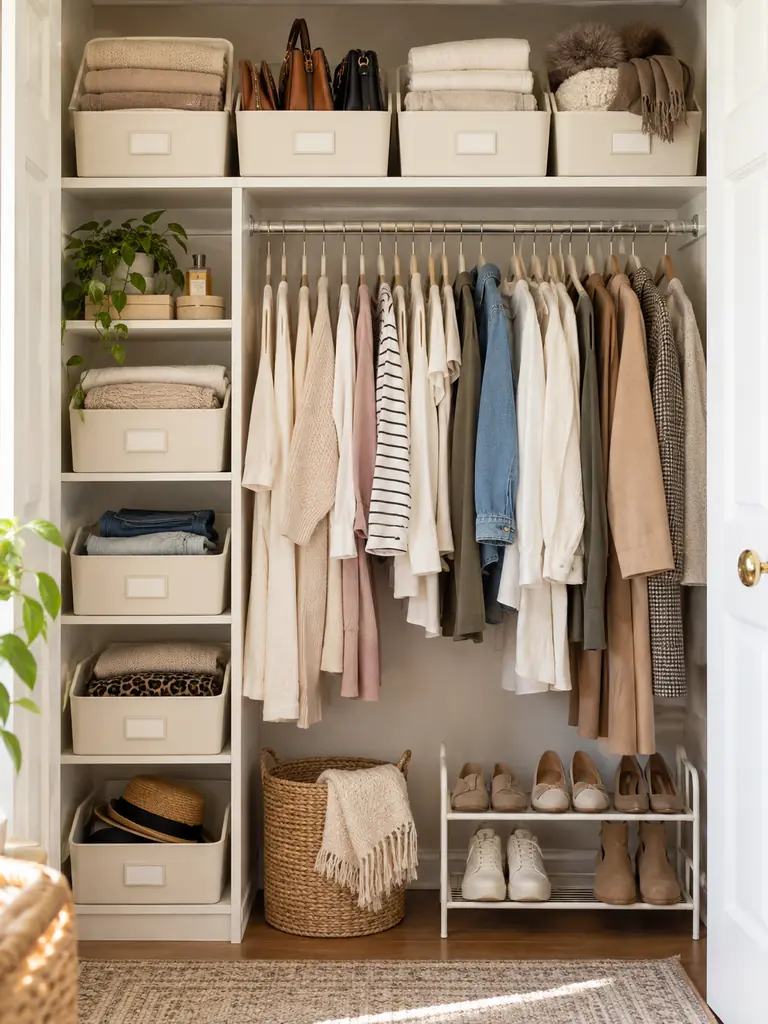
Before:
Clothing and accessories form unstable piles across closet shelves. Empty vertical space remains unused, while items at the bottom become difficult to see or retrieve.
After:
Stackable bins divide the shelf height into manageable storage zones. Clear labels and separate categories make belongings easier to find without disturbing everything around them.
Measure shelf width, depth, and height before selecting containers, then confirm that stacked bins remain accessible. Place seasonal belongings higher and frequently used clothing at eye level. Choose open-front bins for daily items and lidded boxes for long-term storage, but avoid building stacks that feel unstable or difficult to lift.
Hanging Closet Organizer
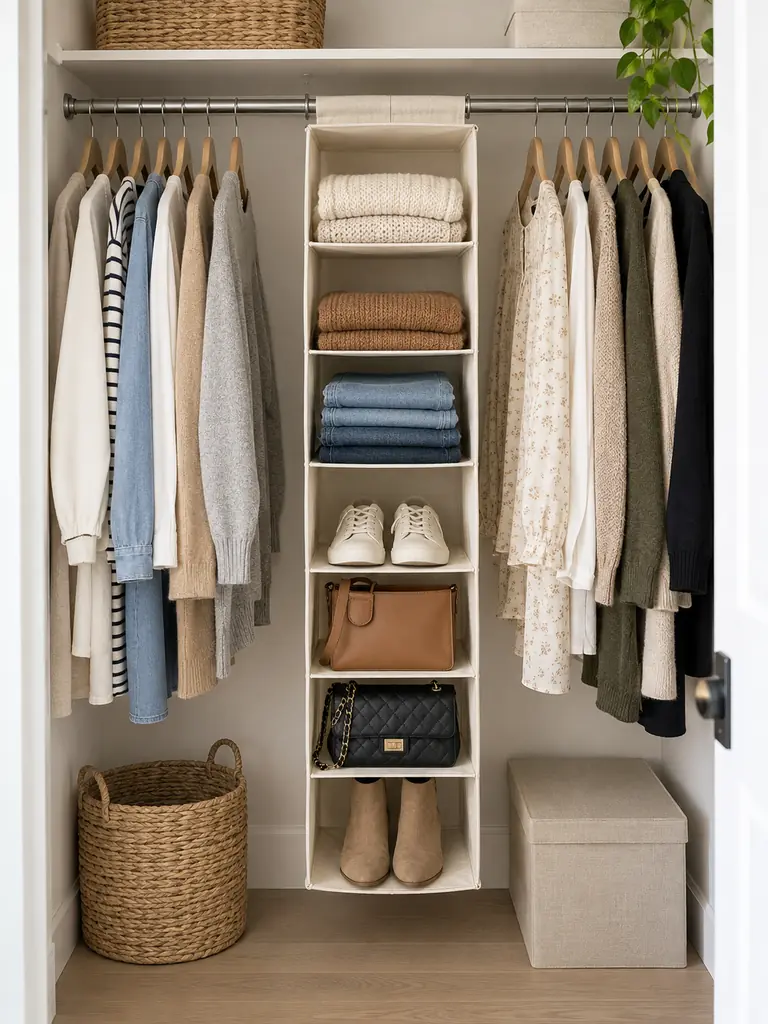
- Start by measuring the closet rod height and available width beside hanging clothes.
- Choose a reinforced organizer with compartments sized for folded garments, shoes, or accessories.
- Place heavier items in lower sections to reduce sagging and keep the organizer balanced.
- Assign one clothing category to each compartment and avoid packing items too tightly.
- Check the rod’s weight capacity before adding the organizer and its contents.
Hanging compartments create shelves without drilling or installing permanent fittings, making them especially useful for renters. Fold clothing consistently so each stack stays visible and easy to remove. Avoid storing damp items or overloading individual sections, because excess weight can distort the fabric and place unnecessary strain on the closet rod.
If your apartment bedroom has no built-in wardrobe, these No Closet Bedroom Storage Ideas will help you organize clothes without overcrowding the room.
Compact Corner Shelves

| Wide Shelving Unit | Compact Corner Shelves |
|---|---|
| Occupies a long wall section | Fits within an unused corner |
| May interrupt walking paths | Keeps central floor space open |
| Encourages broad, crowded displays | Supports small organized categories |
| Can visually dominate the room | Draws the eye upward |
Among the most practical small apartment storage ideas, corner shelves make awkward layouts more useful without widening the furniture footprint. Select a stable unit that fits closely against both walls, secure tall shelving with anti-tip hardware, and keep heavier belongings near the bottom. Leave some shelves partly open for visual balance.
Vertical Kitchen Rails
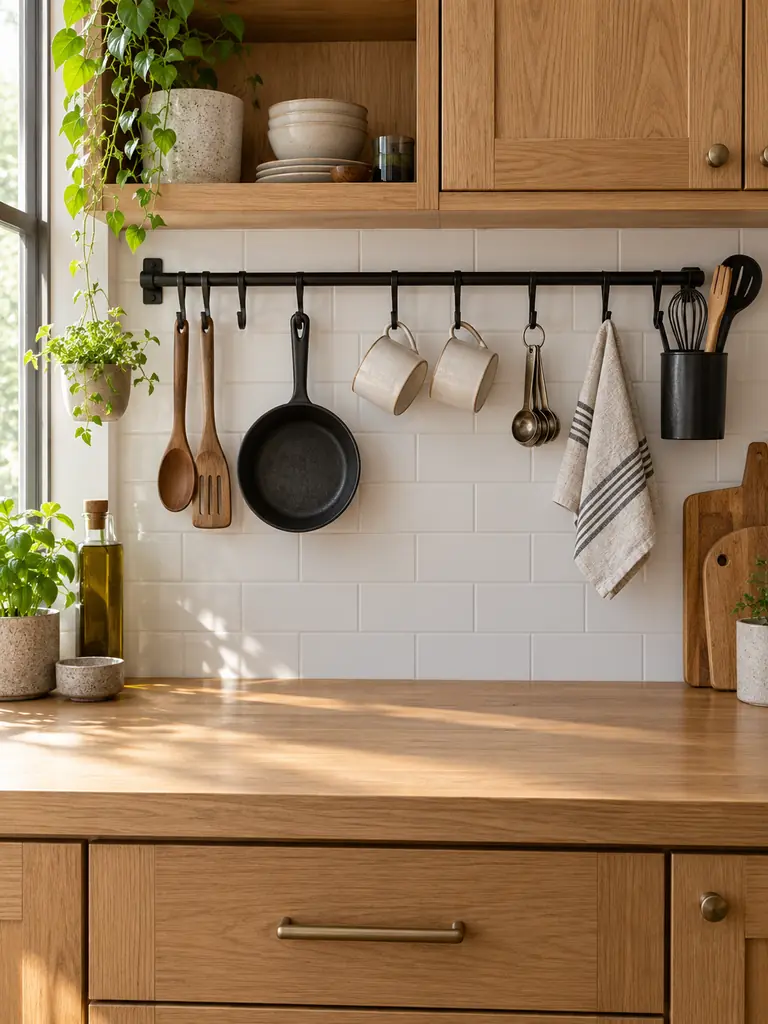
Do:
- Install rails on an open backsplash or unused cabinet side within comfortable reach.
- Group similar tools together so cooking items are easy to locate.
- Use matching hooks and small hanging containers for a cleaner appearance.
- Confirm that fasteners suit the wall surface and expected load.
Don’t:
- Mount frequently used tools above an active stovetop where grease and heat collect.
- Hang sharp utensils where children or pets can reach them.
- Overfill the rail until items overlap or become difficult to remove.
- Drill into tiled walls without checking for pipes, wiring, and landlord restrictions.
Kitchen rails free counters and drawers by placing everyday tools on a narrow vertical surface. Keep only regularly used items visible and store occasional equipment elsewhere. I’ve seen this work best when the rail matches nearby hardware and every hook has a clear purpose, preventing useful storage from becoming visual clutter.
For more ways to organize a compact cooking space, explore these small kitchen organization ideas that help simplify breakfast preparation and everyday kitchen routines.
Bathroom Ladder Shelf
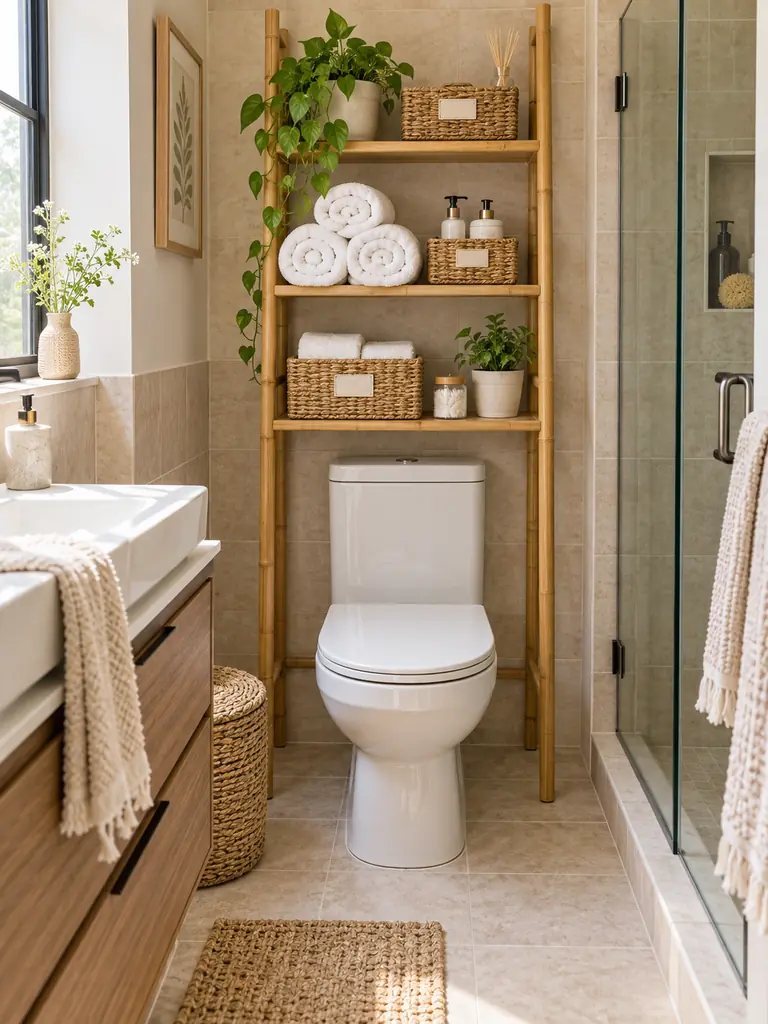
Cost: Low to moderate
Difficulty: Easy
Best For: Bathrooms with limited cabinets and unused vertical space
Result: Accessible storage without reducing the walking area
A ladder shelf adds several storage levels while maintaining an open, lightweight appearance. Measure around the toilet lid, plumbing, and wall fixtures before choosing one. Store daily toiletries in washable baskets, keep towels on open shelves, and secure the unit to the wall if the design could tip or shift.
For more practical ways to improve storage, lighting, and style, explore these Beautiful Bathroom Decor Ideas.
Decorative Storage Baskets
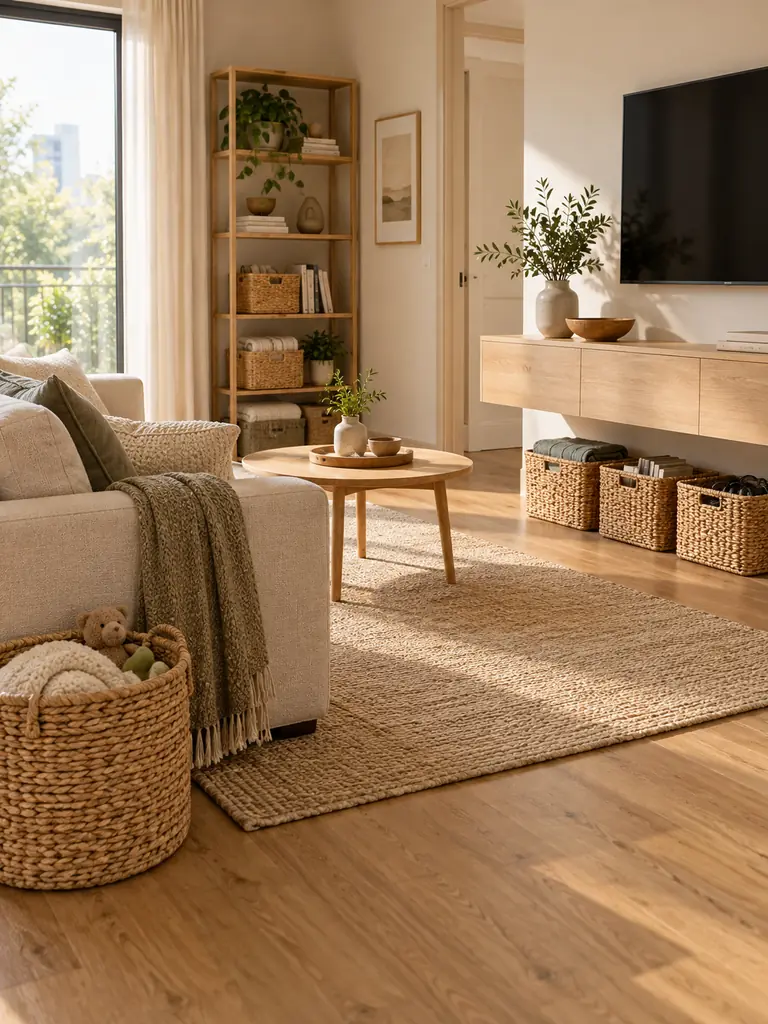
Decorative baskets hide visual clutter while adding warmth and texture to open shelving, beneath consoles, or beside a sofa. Choose rectangular shapes for shelves and soft-sided floor baskets for blankets or toys. Match colors and materials across the room to create a more orderly appearance.
Assign each basket one category and add discreet labels where contents are not obvious. Frequently used items should remain easy to reach, while occasional belongings can sit higher. Measure every shelf opening before buying, and avoid oversized baskets that extend into walkways or make furniture feel heavier.
For more practical ways to organize toiletries, towels, and everyday bathroom essentials, explore these small bathroom organization ideas that help keep compact bathrooms tidy without extra cabinets.
Conclusion
Limited space feels far more manageable when every storage choice serves a clear purpose. These small apartment storage ideas help you use walls, doors, corners, furniture, and hidden areas without making your rooms feel crowded.
Start with one problem area, measure carefully, and choose the solution that fits your daily habits. I’ve seen how small changes like these can completely shift the way a space feels. Save this post on Pinterest for future reference, try one or more ideas in your apartment, and share it with someone who needs practical storage inspiration. Choose one area today and make it work harder.
2 thoughts on “17 Small Apartment Storage Ideas That Don’t Add Bulk”