
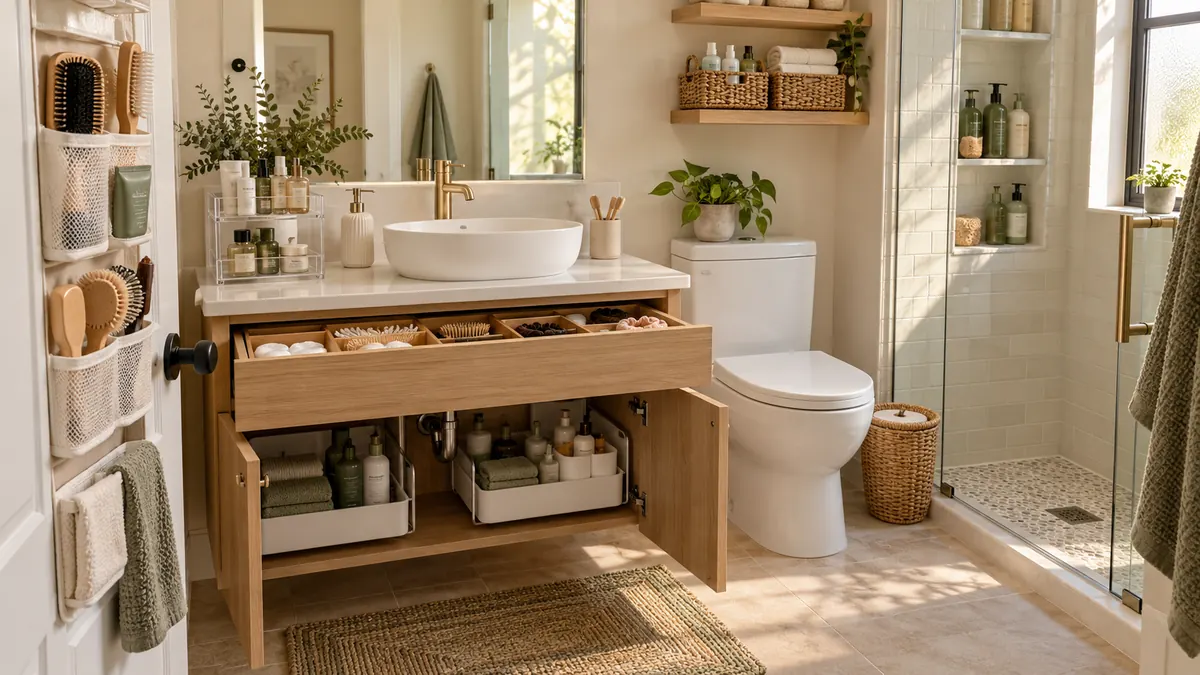
Tired of crowded bathroom counters, messy drawers, and toiletries that never seem to stay organized? These Small Bathroom Organization Ideas will help you create a cleaner, calmer space without installing extra cabinets or sacrificing precious floor space.
Even a tiny bathroom can feel more functional when everyday essentials have designated places. I’ve noticed that clutter often builds up because frequently used products get mixed with backups, cleaning supplies, and items we rarely need.
From clever drawer dividers and compact countertop organizers to simple towel systems and shower organization tricks, these 19 practical ideas make the most of your existing space. You’ll discover affordable, renter-friendly options alongside easy organizing habits that help keep your bathroom tidy, accessible, and comfortable throughout the week.
Table of Contents
Skincare Routine Organizer
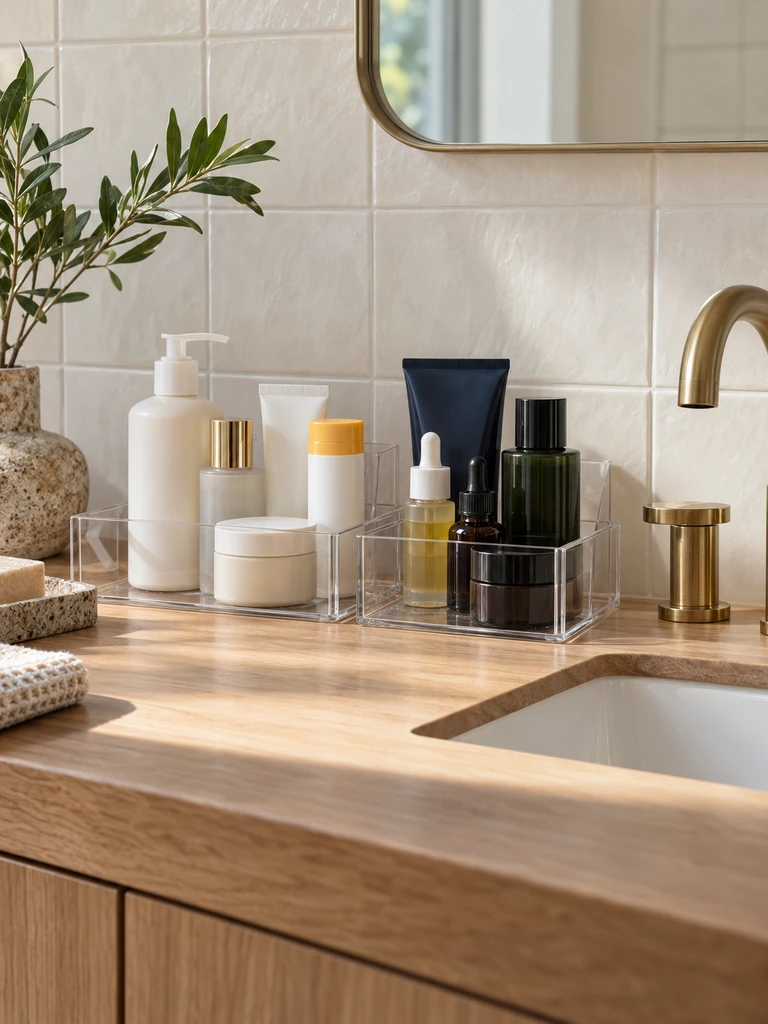
A dedicated skincare organizer makes morning and evening routines easier without overcrowding your bathroom countertop. Separate everyday products into two compact groups, keeping morning essentials such as cleanser, moisturizer, and sunscreen together. Place nighttime products in another section so you can find what you need without searching through multiple bottles.
Choose a moisture-resistant organizer with compartments that fit your existing vanity space. Keep frequently used products accessible and store occasional treatments in a drawer. Avoid placing skincare near direct sunlight or excessive humidity, especially when product labels recommend cooler storage. Review your collection regularly and remove expired items.
Drawer Compartment Organizers

Messy bathroom drawers become easier to manage when every small item has its own compartment.
- Measure your drawer: Check its width, depth, and height before purchasing organizers.
- Separate daily essentials: Give toothbrush accessories, hair ties, cotton pads, and grooming tools individual sections.
- Choose adjustable dividers: Expandable or modular organizers accommodate different drawer sizes.
- Keep frequently used items accessible: Position daily products near the front and occasional accessories toward the back.
- Clean before organizing: Remove expired products and wipe drawer surfaces before arranging everything.
Clear acrylic dividers work well for visibility, while washable plastic organizers are practical in humid bathrooms. Avoid filling every compartment completely because crowded sections quickly become difficult to maintain. Leave a little space for frequently used items, and review the drawer monthly to remove unnecessary products.
Under-Sink Pull-Out Bins
Quick Tip:
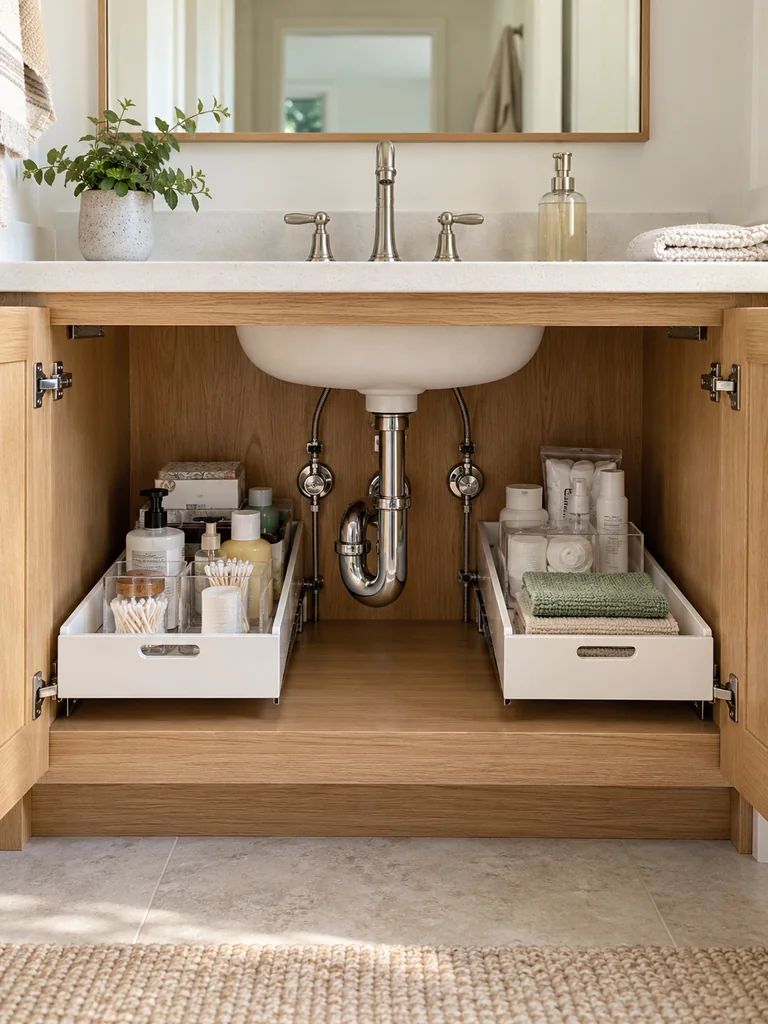
Choose shallow pull-out bins that fit around existing plumbing rather than forcing a full-width organizer into the cabinet. Measure the available space and check that the bins slide forward without hitting pipes, hinges, or cabinet doors.
Under-sink bins help separate cleaning supplies, spare toiletries, and bathroom essentials without installing additional cabinets. Choose moisture-resistant containers with easy-grip handles and keep frequently used products toward the front. Leave plumbing connections accessible, avoid blocking shutoff valves, and check occasionally for leaks or trapped moisture.
For more ways to maximize limited bathroom space, explore these small bathroom storage ideas featuring practical solutions for organizing toiletries, towels, and everyday essentials.
Over-Toilet Storage Baskets

Before:
Extra toilet paper, folded hand towels, and backup toiletries end up scattered across the bathroom. Small essentials collect on the toilet tank or crowd the vanity, making the space feel disorganized. Finding replacement supplies becomes frustrating.
After:
Lightweight baskets placed on an existing, securely mounted shelf above the toilet keep supplies grouped and accessible. Each basket holds a specific category, creating a tidier arrangement without additional cabinets. The toilet tank stays clear.
Choose shallow, moisture-resistant baskets that fit securely within the shelf’s edges. Store heavier products elsewhere and reserve overhead storage for lightweight supplies. Keep baskets away from flushing mechanisms and allow enough clearance for comfortable use. Neutral woven-look plastic or washable fabric baskets create a coordinated appearance.
Shower Product Zones

A crowded shower feels easier to manage when every product has a designated location.
- Remove unused products: Take out empty bottles, expired items, and products you rarely use.
- Group by routine: Separate shampoo and conditioner from body wash, shaving supplies, and occasional treatments.
- Assign existing storage spaces: Arrange each category on your current shower shelves or caddy.
- Keep essentials accessible: Position frequently used bottles within comfortable reach without blocking fixtures.
- Maintain drainage: Leave space between containers so water can drain and surfaces can dry.
Grouping shower products by purpose reduces searching and helps prevent duplicate purchases. Keep bottles upright and avoid overcrowding shelves, especially around slippery surfaces. A quick weekly check makes it easier to remove empty containers, wipe away residue, and maintain a clean shower without purchasing additional storage furniture.
Adhesive Wall Pockets
| Feature | Ordinary Countertop Storage | Adhesive Wall Pockets |
|---|---|---|
| Space usage | Occupies valuable counter space | Uses suitable unused wall space |
| Accessibility | Items may become mixed together | Small essentials stay separated |
| Cleaning | Requires moving containers | Keeps more countertop space clear |
| Installation | No installation required | Requires a compatible, prepared surface |
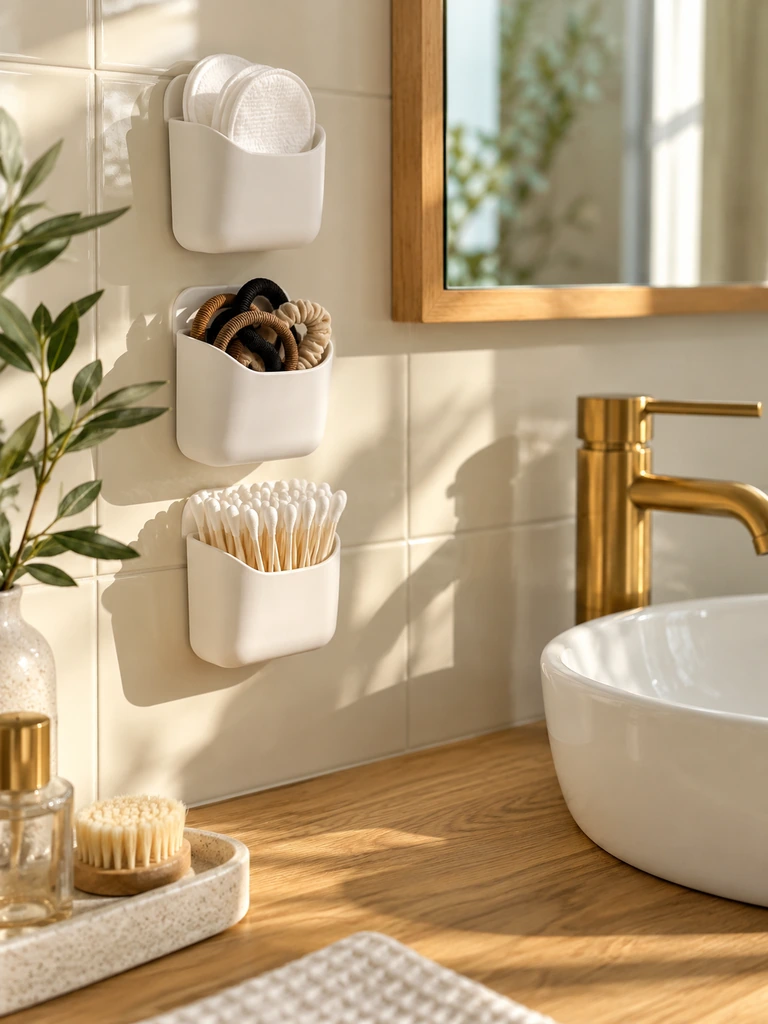
Adhesive wall pockets can organize lightweight items such as hair ties, cotton rounds, and small grooming accessories. Install them on clean, dry, compatible surfaces away from direct shower spray. Follow the manufacturer’s weight limits and curing instructions, and avoid delicate painted walls where removal could damage the finish.
Towel Rolling System
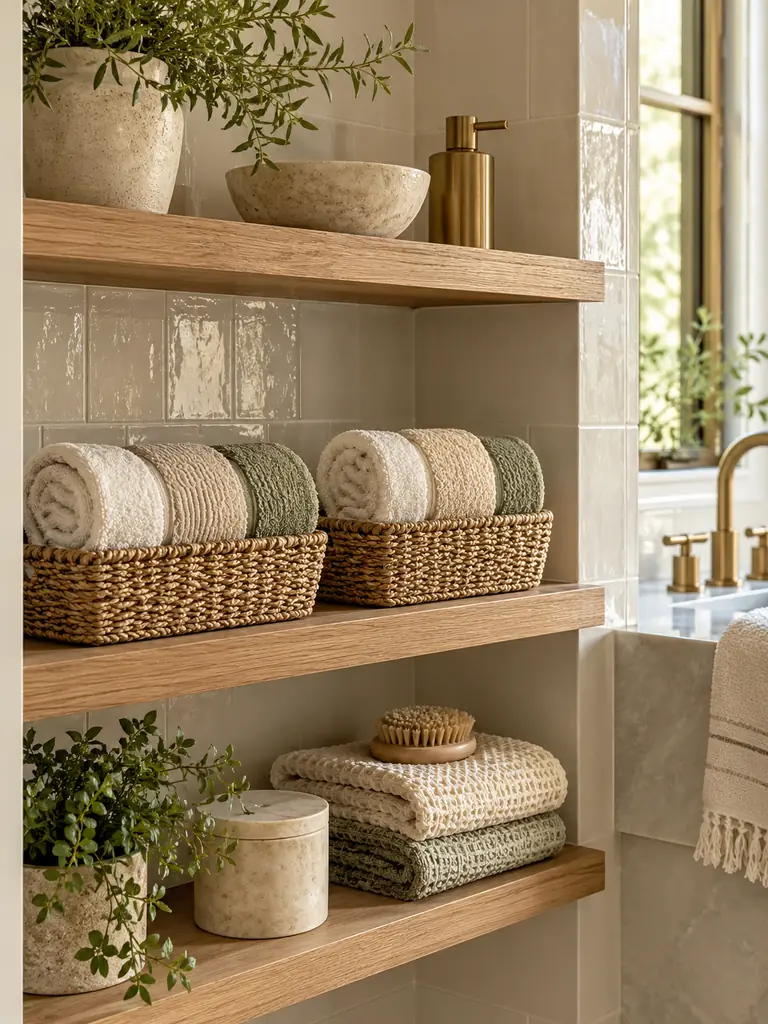
Rolled towels can make crowded bathroom shelves easier to organize while keeping everyday linens within reach.
Do:
- Roll clean, completely dry towels into compact, even bundles.
- Separate bath towels, hand towels, and washcloths by size.
- Arrange rolled towels in breathable baskets or existing open shelves.
- Keep frequently used towels at a comfortable reaching height.
Don’t:
- Roll damp towels before they have dried completely.
- Pack towels tightly into containers without ventilation.
- Store clean towels beside leaking plumbing or wet surfaces.
- Keep more towels in the bathroom than your household regularly needs.
Rolling works especially well for washcloths and hand towels stored in shallow baskets. Larger bath towels may fit better when folded, depending on shelf dimensions. Keep a small supply accessible and store extras elsewhere. This approach helps maintain tidy linen storage without adding another cabinet.
Back-of-Door Storage

Cost: Low to moderate, depending on the organizer.
Time Needed: Approximately 10 to 20 minutes.
Best For: Bathrooms with limited drawer and countertop space.
Result: Frequently used accessories stay organized without occupying additional floor space.
The back of a bathroom door offers useful storage space for lightweight accessories. Choose a slim over-door organizer with shallow pockets for hairbrushes, grooming products, and spare washcloths. Measure door clearance before installation, protect contact points from scratches, and check that the organizer doesn’t interfere with closing or ventilation.
For more clever ways to organize a compact home, explore these small apartment storage ideas that make better use of unused spaces without adding bulky furniture.
Magnetic Grooming Strip
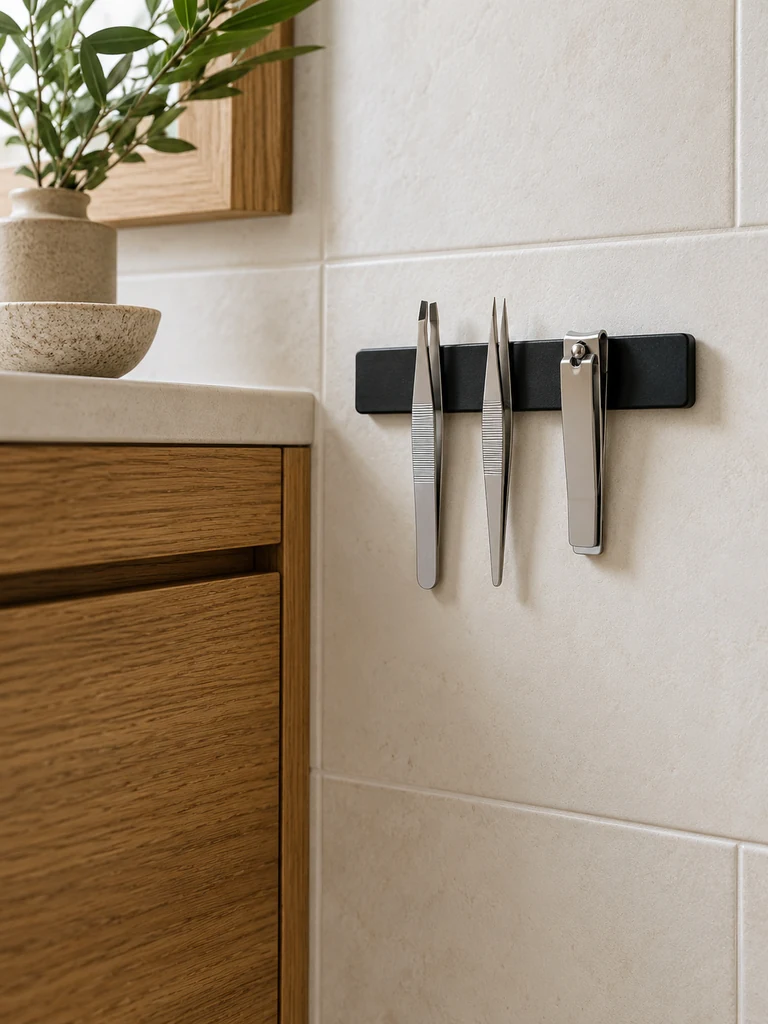
Small metal grooming tools can disappear into crowded drawers, making a magnetic strip a useful organizing solution.
Choose a rust-resistant magnetic strip designed for bathroom use and install it in a dry location away from direct water exposure. Use it to organize suitable metal tweezers, nail clippers, and other lightweight grooming accessories. Test each item’s magnetic hold before relying on the strip, since not all stainless steel tools are magnetic.
Position sharp tools away from children and avoid placing the strip where someone might brush against exposed edges. Clean and dry tools before returning them to prevent moisture buildup. For rented bathrooms, check whether the mounting method is permitted and suitable for the wall surface.
Clear Toiletry Containers

Finding everyday bathroom essentials becomes much easier when small supplies are visible and neatly separated.
- Group similar products: Keep cotton rounds, cotton swabs, hair accessories, and dental supplies in separate containers.
- Choose compact sizes: Select containers that fit existing drawers, shelves, or vanity surfaces without overcrowding.
- Use secure lids: Protect clean supplies from splashes, dust, and bathroom moisture.
- Keep labels simple: Add small labels when multiple containers hold similar-looking products.
- Avoid unnecessary decanting: Leave skincare and liquid toiletries in their original packaging to preserve important product information.
Transparent acrylic or glass containers create a tidy arrangement while making supplies easy to identify. Place frequently used items near the front and store backups elsewhere. Choose lightweight, shatter-resistant containers for areas where they might fall, especially around sinks and tiled floors. Clean containers regularly and replace any damaged lids.
Stacked Countertop Organizers
Quick Tip:
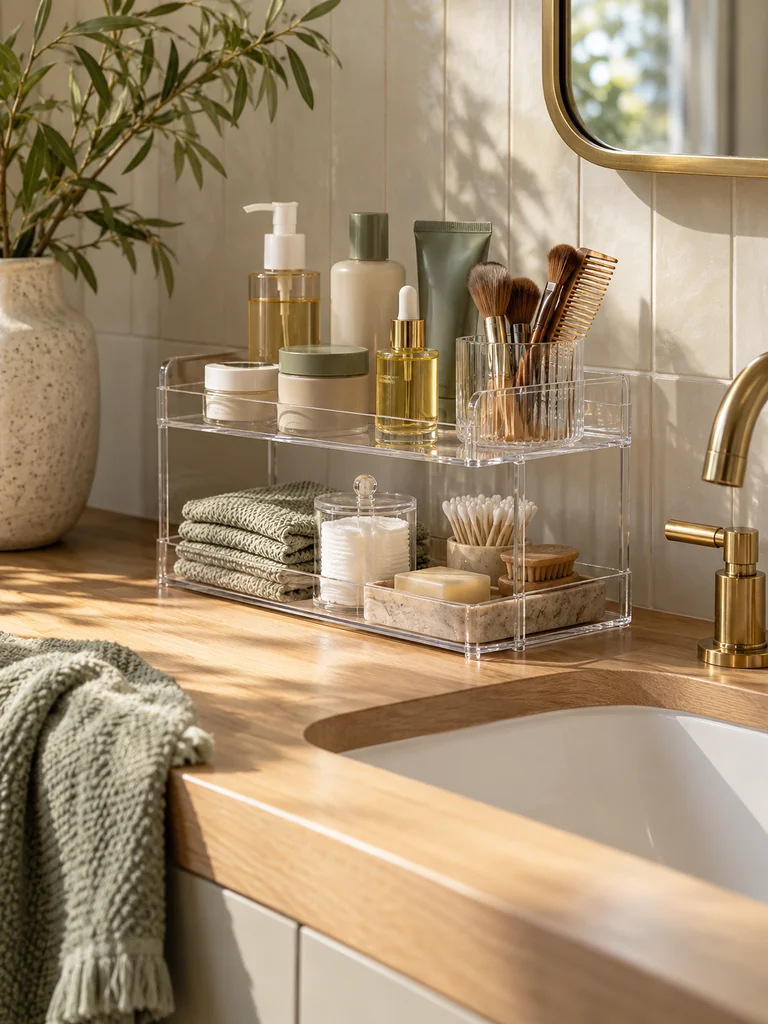
Choose a compact two-tier organizer with enough clearance between levels for your everyday products. Place heavier bottles on the bottom tier and lightweight accessories above to keep the setup stable.
Vertical countertop organizers make better use of limited vanity space without requiring extra cabinets. Arrange frequently used skincare products on the lower level and smaller accessories above. Keep the organizer away from sink edges and electrical outlets, and select moisture-resistant materials that are easy to wipe clean.
Hair Tool Storage Station

Before:
Hair dryers, straighteners, and curling tools compete for space inside an already crowded vanity drawer. Tangled cords make it difficult to find the right appliance, while recently used hot tools can create safety concerns when stored carelessly.
After:
Each styling tool has a designated location in a heat-resistant holder or existing drawer compartment. Cords stay neatly separated, and everyday styling accessories remain easy to reach. The vanity looks more organized without additional furniture.
Choose storage specifically rated for the temperatures your tools may reach. Unplug appliances after use and allow them to cool completely unless their holder is designed for hot-tool storage. Keep electrical equipment away from sinks, wet countertops, and shower areas. Never wrap cords tightly around hot appliances.
Bathroom Cleaning Caddy

A portable cleaning caddy keeps everyday bathroom supplies together, so quick cleanups don’t turn into a search through crowded cabinets.
- Choose a compact caddy: Select a moisture-resistant container with a sturdy handle and separate compartments.
- Group cleaning essentials: Arrange bathroom-safe cleaners, microfiber cloths, sponges, and a small cleaning brush.
- Keep products upright: Store bottles securely in their original labeled containers to prevent leaks.
- Assign a storage spot: Place the caddy in an existing accessible storage area, away from children and pets.
- Check supplies regularly: Replace worn cloths and remove empty containers during your weekly cleaning routine.
A dedicated caddy makes wiping sinks, cleaning mirrors, and maintaining bathroom surfaces more convenient. Choose products appropriate for each material, and never mix cleaning chemicals. After use, dry the caddy and its contents before storing them. This simple system keeps cleaning essentials organized without requiring additional storage furniture.
Medicine Sorting System

| Feature | Mixed Bathroom Storage | Organized Medicine System |
|---|---|---|
| Accessibility | Difficult to locate specific products | Clearly grouped and labeled supplies |
| Expiration checks | Expired items may go unnoticed | Easier to review expiration dates |
| Packaging | Instructions can become separated | Original packaging stays intact |
| Storage conditions | Bathroom humidity may affect products | Suitable dry storage protects medicines |
Keeping medications organized requires more than arranging attractive containers. Most medicines should be stored in a cool, dry location outside humid bathrooms unless their labels specify otherwise. Use a secure, child-resistant storage area, retain original packaging, and check expiration dates regularly. Follow pharmacist guidance for disposal and special storage requirements.
Vertical Makeup Organizer
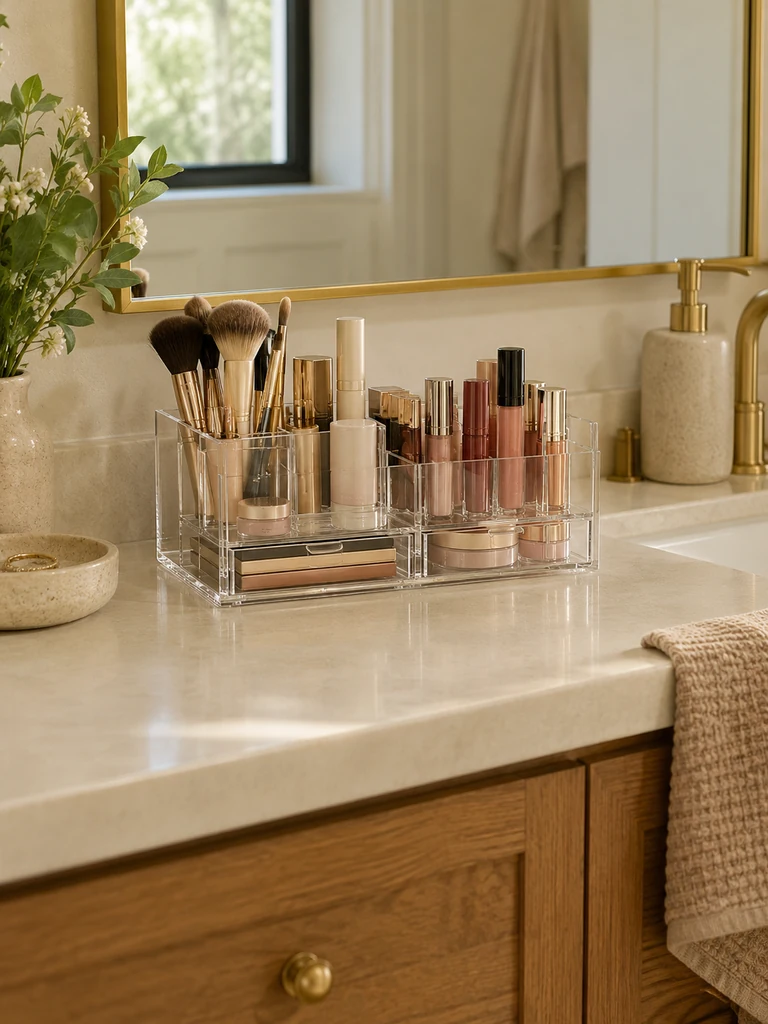
A crowded makeup collection becomes easier to manage when products are arranged by category and frequency of use.
Do:
- Choose a compact, washable organizer with separate vertical compartments.
- Group brushes, lip products, and everyday cosmetics by type.
- Keep frequently used products within easy reach.
- Clean makeup tools and organizer surfaces regularly.
Don’t:
- Overfill compartments with products you rarely use.
- Store makeup directly beside splashing sinks.
- Keep expired cosmetics or products with changed textures or odors.
- Place tall, unstable organizers near countertop edges.
Vertical makeup organizers help free up drawer space while keeping daily essentials visible. Choose moisture-resistant acrylic or plastic with a stable base, and measure the available countertop area before buying. For better product longevity, store temperature-sensitive cosmetics in a cooler, drier location outside the bathroom when recommended.
Toilet Paper Storage Basket

Cost: Low, using an existing basket or affordable moisture-resistant container.
Time Needed: Approximately 5 to 10 minutes.
Best For: Small bathrooms with limited built-in storage.
Result: Spare toilet paper stays organized, accessible, and protected from floor clutter.
Running out of toilet paper becomes less inconvenient when spare rolls have a dedicated storage spot. Choose a compact, washable basket that fits beside the toilet without restricting movement. Keep unused rolls in their packaging or a covered container if moisture is a concern. Restock the basket during your weekly bathroom check.
Travel Toiletry Kit Station

Travel-sized toiletries often end up scattered across bathroom drawers, creating unnecessary clutter between trips. A dedicated travel kit keeps these smaller products together and ready for packing. Choose a compact, water-resistant pouch with separate compartments for toothbrush accessories, skincare samples, and other travel essentials. Store it in an existing drawer or shelf.
Check the kit after each trip, discard expired products, and clean reusable containers before refilling them. Keep liquids securely closed and clearly identified, especially when transferring products into travel bottles. Storing the pouch outside humid bathroom conditions can help protect its contents between trips.
Minimal Sink Counter Setup
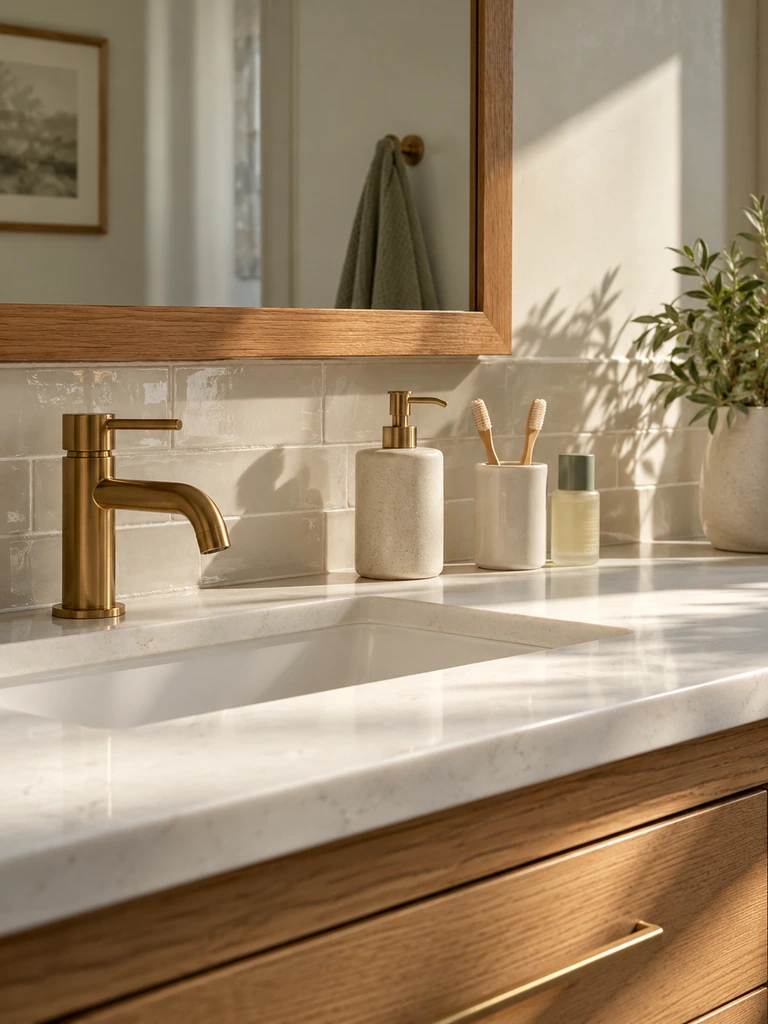
An overcrowded sink area makes daily routines slower and leaves less room for cleaning. A minimal countertop arrangement keeps only the products you genuinely use every day.
- Keep daily essentials visible: Limit the counter to hand soap, a toothbrush holder, and one or two frequently used products.
- Move occasional products: Store face masks, backup toiletries, and extra skincare items in existing drawers.
- Choose compact accessories: Use a slim soap dispenser and a toothbrush holder that fits comfortably beside the sink.
- Protect surfaces: Place wet accessories on washable, moisture-resistant trays or holders with proper drainage.
- Maintain clear space: Leave enough room around the faucet for comfortable handwashing and cleaning.
A simplified sink setup reduces visual clutter and makes wiping the vanity much easier. Choose accessories with coordinated finishes, such as warm white ceramic or clear acrylic, for a cohesive appearance. Review countertop items weekly and return anything unnecessary to its designated storage location.
Weekly Bathroom Reset
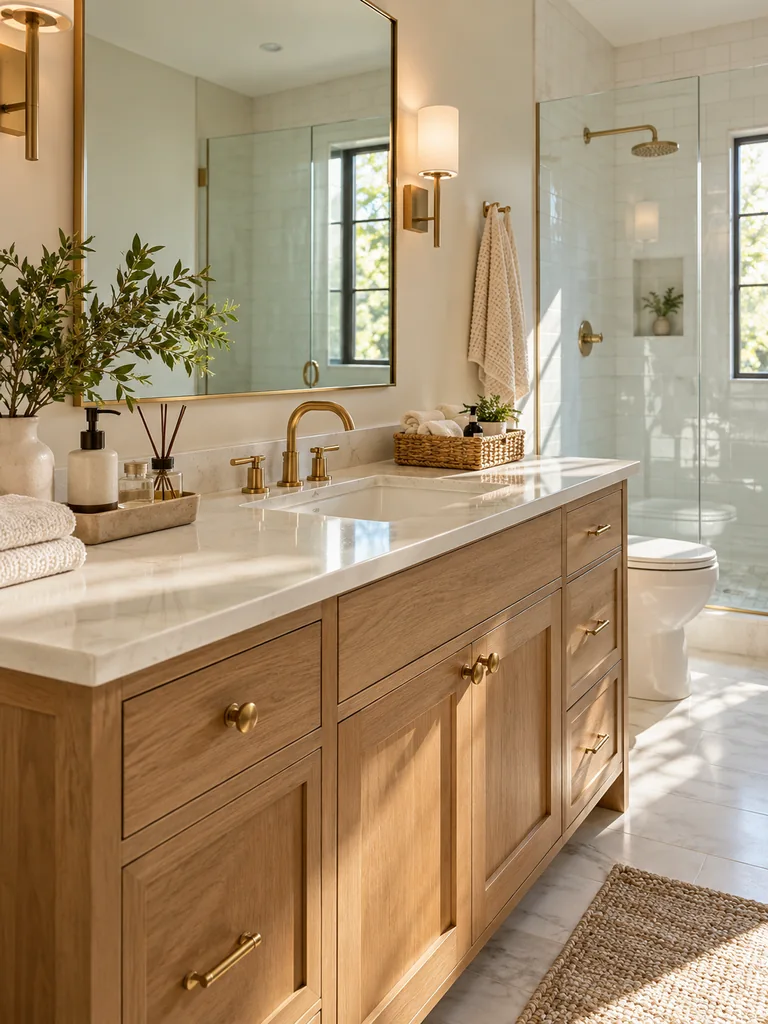
Cost: Free, using your existing cleaning supplies and organizers.
Time Needed: Approximately 10 to 15 minutes each week.
Skill Level: Beginner, with no installation or special equipment required.
Result: A cleaner, more organized bathroom with less everyday clutter.
A weekly bathroom reset helps prevent small messes from becoming overwhelming. Return misplaced toiletries to their designated spots, remove empty packaging, and wipe organizers and frequently touched surfaces. Check towel supplies, replace finished products, and discard expired cosmetics. Keep this routine simple so maintaining an organized bathroom feels manageable.
Conclusion
An organized bathroom doesn’t require expensive renovations, additional cabinets, or a complete makeover. Sometimes, a few thoughtful changes are enough to make everyday routines easier and your space feel more inviting.
These Small Bathroom Organization Ideas help you maximize existing storage, reduce countertop clutter, and give everyday essentials a proper home. Start with one troublesome area, whether it’s an overflowing drawer, crowded shower, or messy sink.
Save this article on Pinterest so you can revisit your favorite solutions, try one or two ideas this week, and share it with someone struggling with limited bathroom space. Small organizing habits can lead to a calmer, more functional bathroom!