
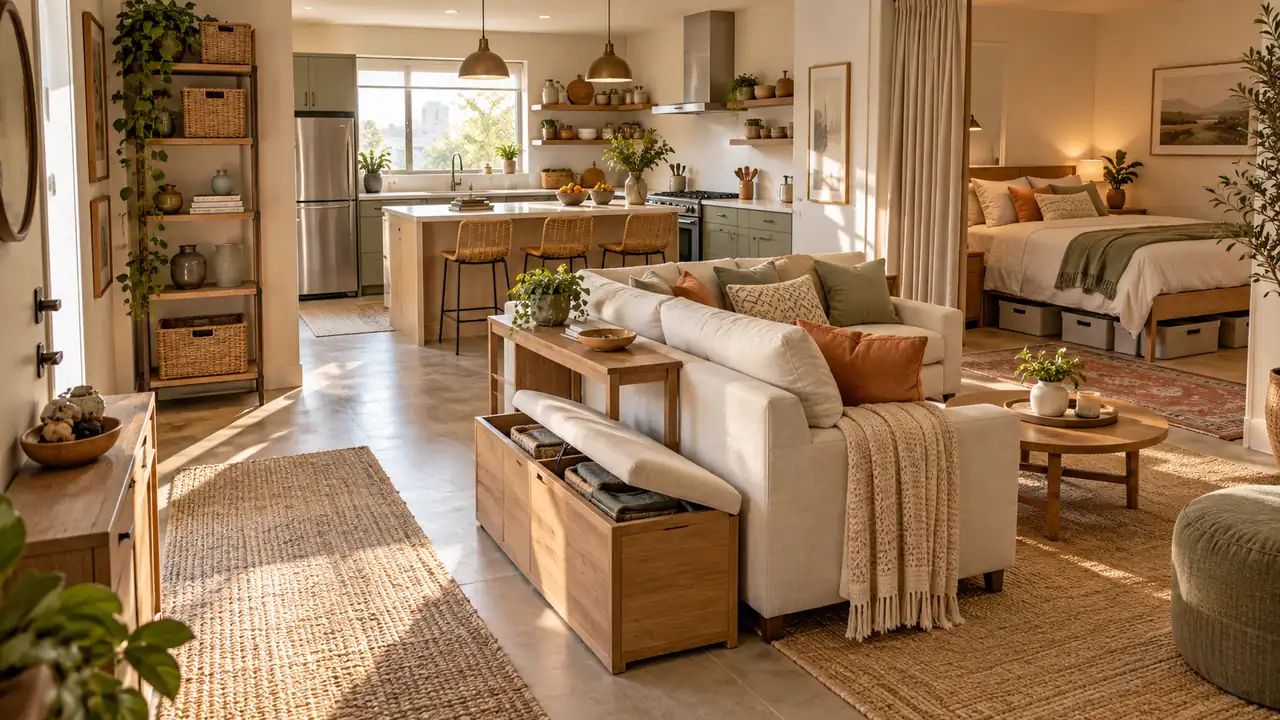
A small home should feel comfortable, not packed from wall to wall.
These Small Apartment Organization Ideas help you create order while protecting the open space that makes each room easier to enjoy.
You will find practical ways to control everyday clutter, use overlooked areas, and give important belongings clear homes. From a simple entry drop zone to hidden furniture storage and weekly resets, every solution supports real routines rather than creating more containers to manage. In my experience, compact homes stay organized longer when storage limits are clear and frequently used items remain easy to return. Start with the areas causing the most frustration, then build a calmer system one useful change at a time.
Table of Contents
Apartment Clutter Audit
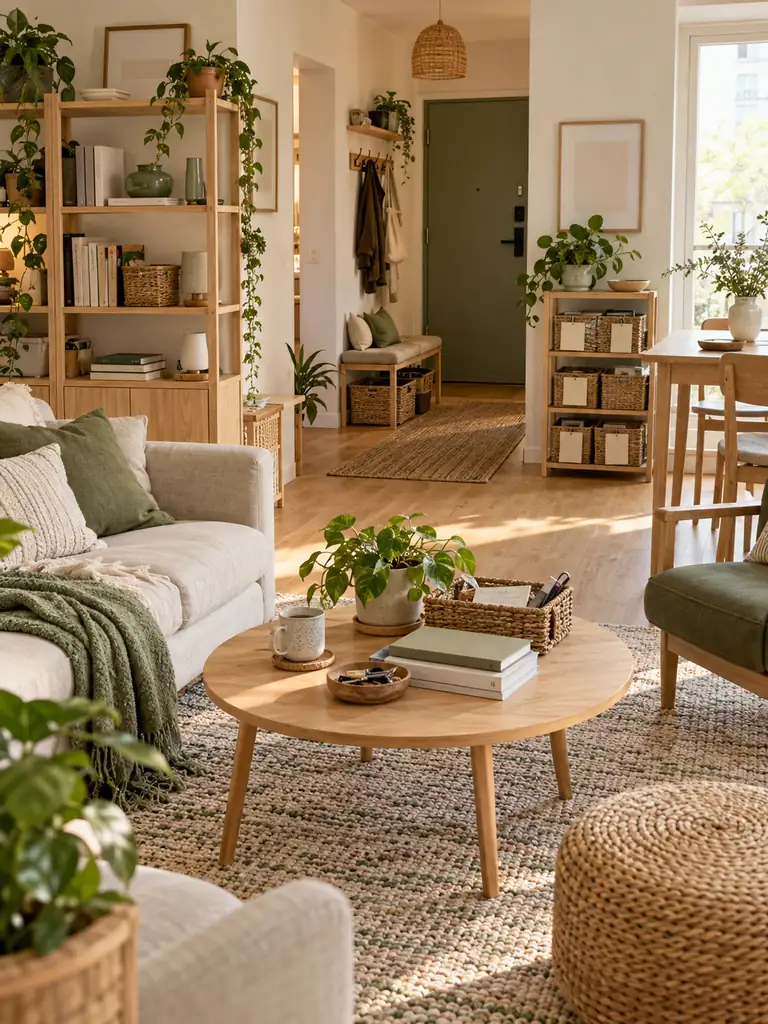
Clutter feels especially intense in a small apartment because every crowded surface remains visible from several areas. Before purchasing baskets or shelving, inspect counters, tables, floors, cabinets, and furniture tops. Note which objects repeatedly appear and which storage zones overflow despite regular tidying.
Sort your findings into four groups: daily essentials, occasional items, duplicates, and belongings without a home. In my experience, this simple audit prevents people from buying organizers that merely hide excess possessions. You will know exactly what needs relocating, reducing, or storing more efficiently.
Daily Drop Zone
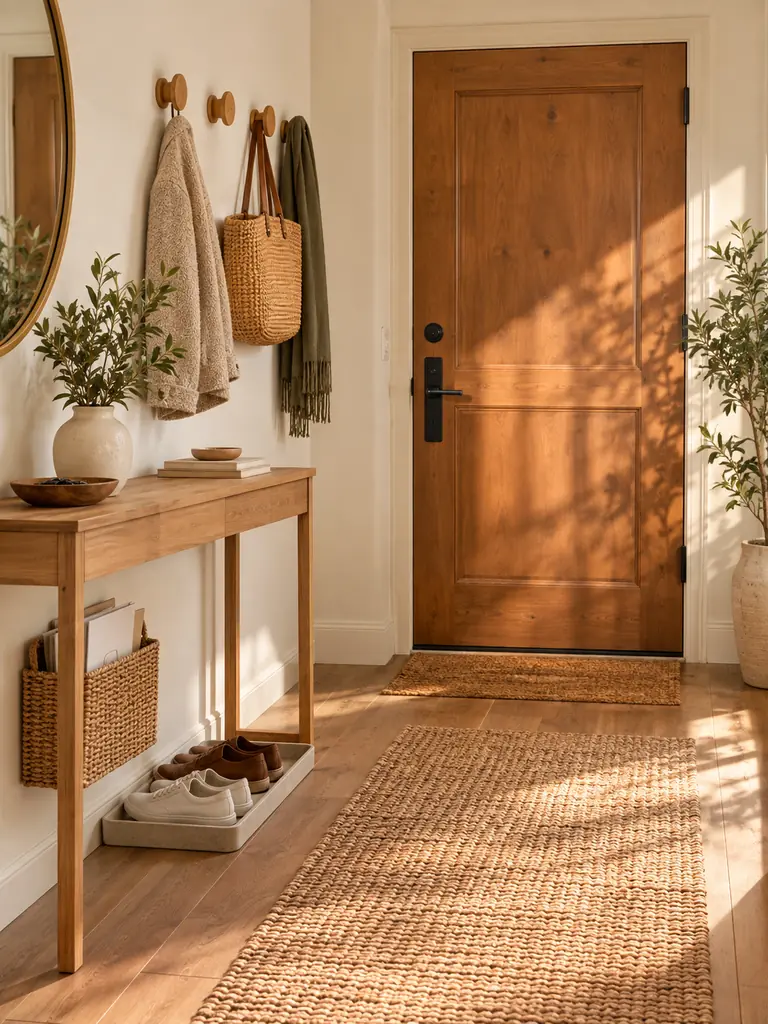
- Stop entrance clutter before it travels farther by choosing one small landing area near the door.
- Place a shallow bowl on a slim console for keys, earbuds, and sunglasses.
- Add one hook per regular bag or jacket, keeping the floor and nearby chairs clear.
- Use a washable tray for daily shoes and limit it to the pairs currently in rotation.
- Sort incoming mail into action, filing, and recycling slots instead of creating one mixed pile.
A successful drop zone requires only one motion for each item, so avoid boxes with awkward lids or crowded hooks. Keep the setup close to your natural route and reset it each evening. The result is a calmer entrance and fewer frantic searches before leaving home.
One-In One-Out Rule

Quick Tip:
Keep a small donation bag inside your closet or utility area. Whenever you buy clothing, decor, cookware, or another duplicate item, place one comparable piece inside the bag and remove it from the apartment once the bag becomes full.
Limited storage stays manageable when new purchases do not continually increase the total number of possessions. Apply the rule by category so a new sweater replaces clothing rather than an unrelated kitchen item. This habit protects your available space and encourages more thoughtful buying without demanding a major decluttering session.
Daily Relocation Tote
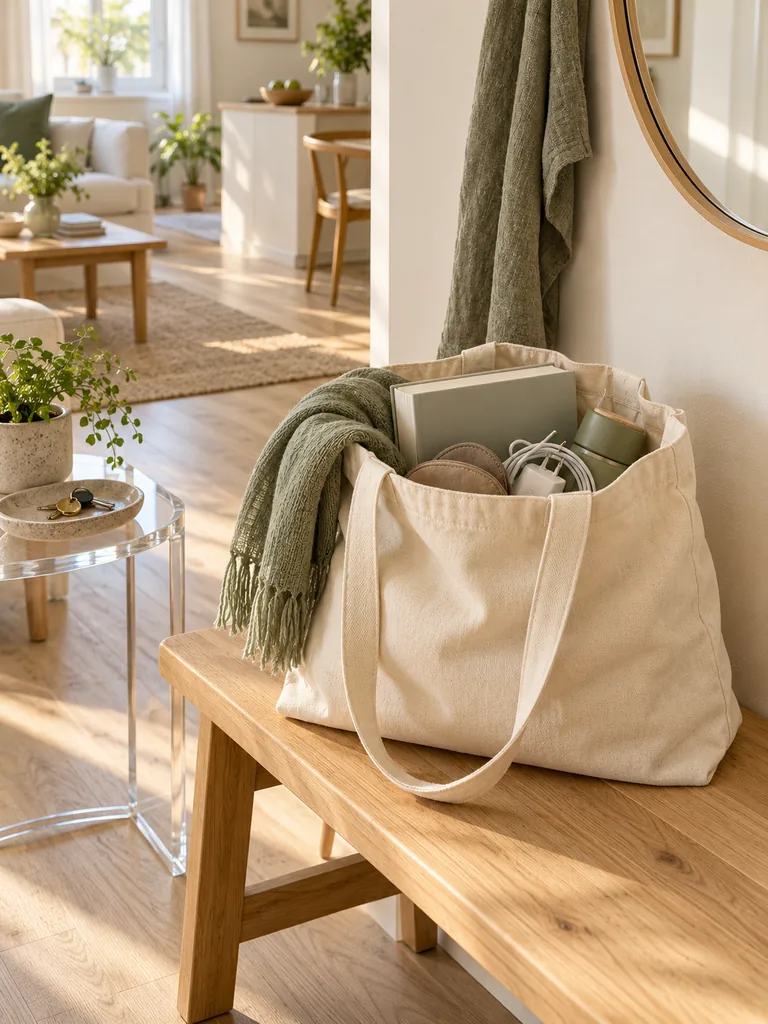
BEFORE:
Books, chargers, clothing, and small accessories gradually move into the wrong rooms. By evening, tables and chairs appear cluttered even though most items already have assigned storage.
AFTER:
A lightweight handled tote temporarily collects misplaced belongings during the day. One quick evening round returns everything to its correct room before the tote goes back to its designated spot.
A relocation tote makes daily tidying faster without becoming permanent storage. Choose a lightweight design that is easy to carry and small enough to fill within one day. Empty it every evening, because leaving items inside for several days will simply create another hidden clutter zone.
Vertical Storage Column
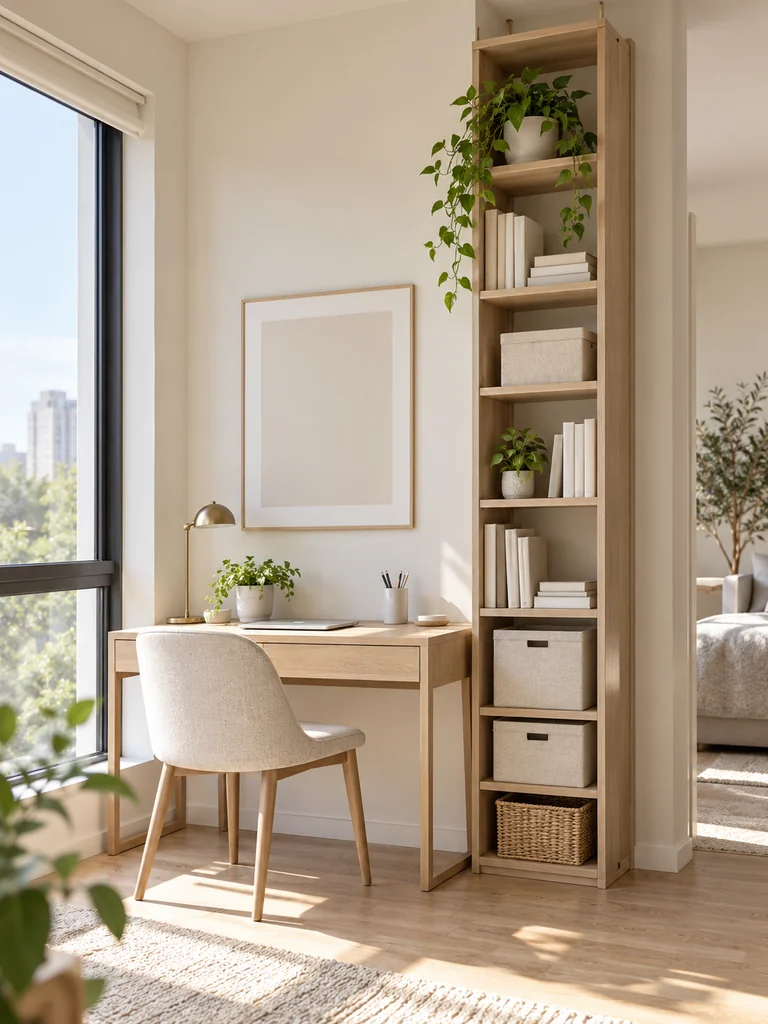
- Look upward before adding wider furniture, especially beside desks, sofas, kitchen counters, or bathroom vanities.
- Measure the available height, width, and nearby door clearance before selecting a narrow shelving unit.
- Store frequently used belongings between waist and eye level for comfortable access.
- Place lighter, occasional-use items on upper shelves and secure tall furniture according to the manufacturer’s instructions.
- Leave some shelves partly open so the arrangement does not appear visually overloaded.
Height can provide valuable capacity without swallowing limited walking space. I’ve noticed that one well-planned storage column usually feels calmer than several small organizers scattered around a room. Repeat matching containers on selected shelves, maintain safe weight limits, and avoid stacking possessions all the way to the ceiling.
For more ways to use overlooked areas without filling the floor, explore these practical small space storage ideas.
Under-Bed Storage Grid
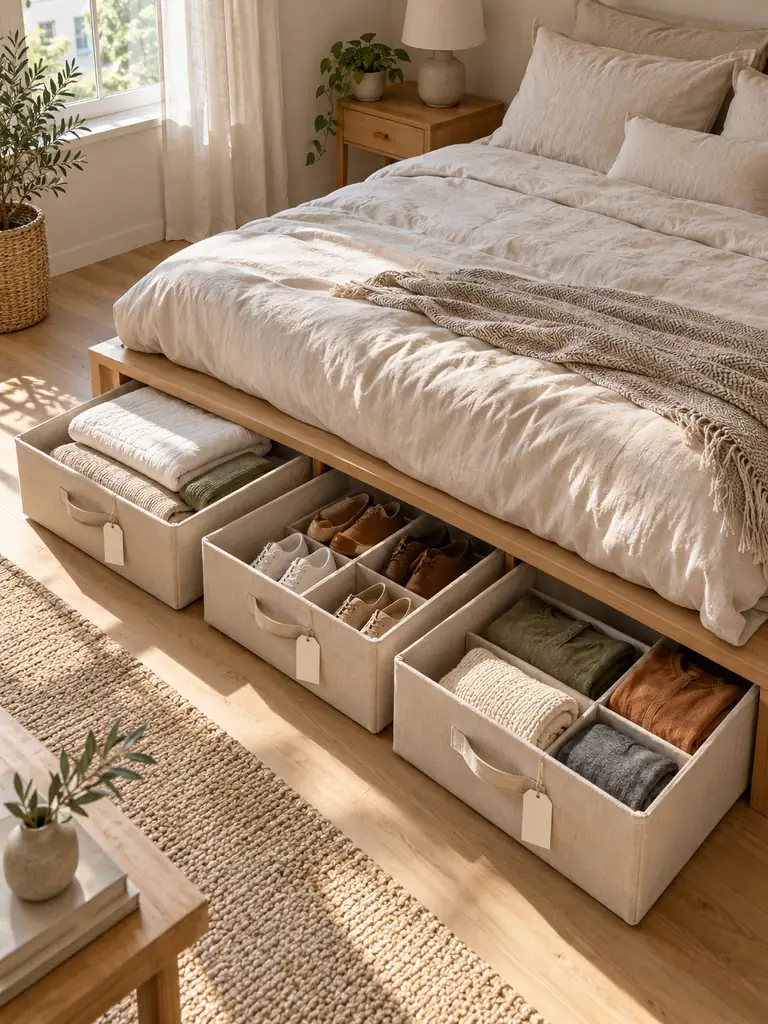
| Storage Detail | Loose Storage | Organized Grid |
|---|---|---|
| Categories | Mixed together | Separated by purpose |
| Access | Difficult to search | Easy to slide out |
| Protection | Items collect dust | Contents stay covered |
| Capacity | Space is wasted | Full depth is used |
The area beneath a bed can hold plenty without making the bedroom feel crowded, but only if every container has a defined purpose. Assign separate cases to seasonal clothes, spare bedding, shoes, or guest supplies. Measure clearance carefully and choose covered containers that slide out without scraping the floor.
Sofa-Back Console
DO
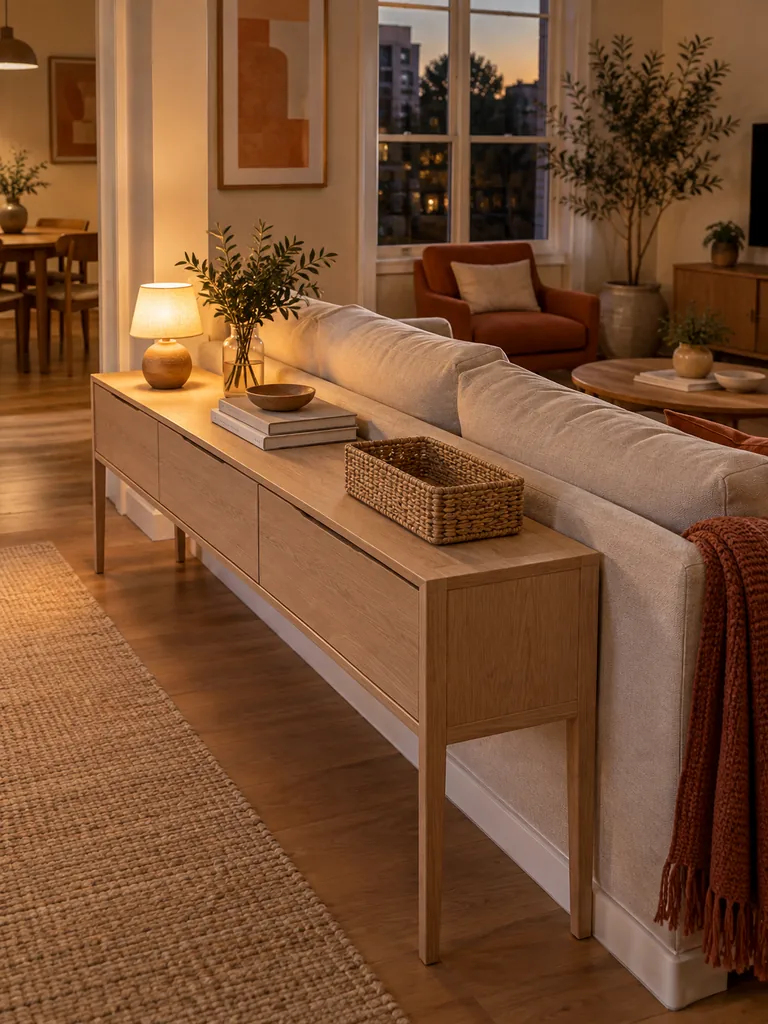
- Measure the sofa length and nearby walkway before choosing a console.
- Select a shallow design that remains lower than or level with the sofa back.
- Group chargers, remotes, and small electronics inside divided containers.
- Leave part of the surface open for a lamp or frequently used book.
DON’T
- Choose a unit that narrows the main walking route.
- Allow charging cables to trail across the floor.
- Stack books or decorations above a safe, stable height.
- Turn the console into an unplanned drop zone.
A slim console creates useful storage while giving a floating sofa a more finished boundary. Closed drawers work best for visual clutter, while one open shelf can hold baskets or reading material. Keep the arrangement restrained so the furniture improves organization without making the living area feel boxed in.
Divided Storage Bench
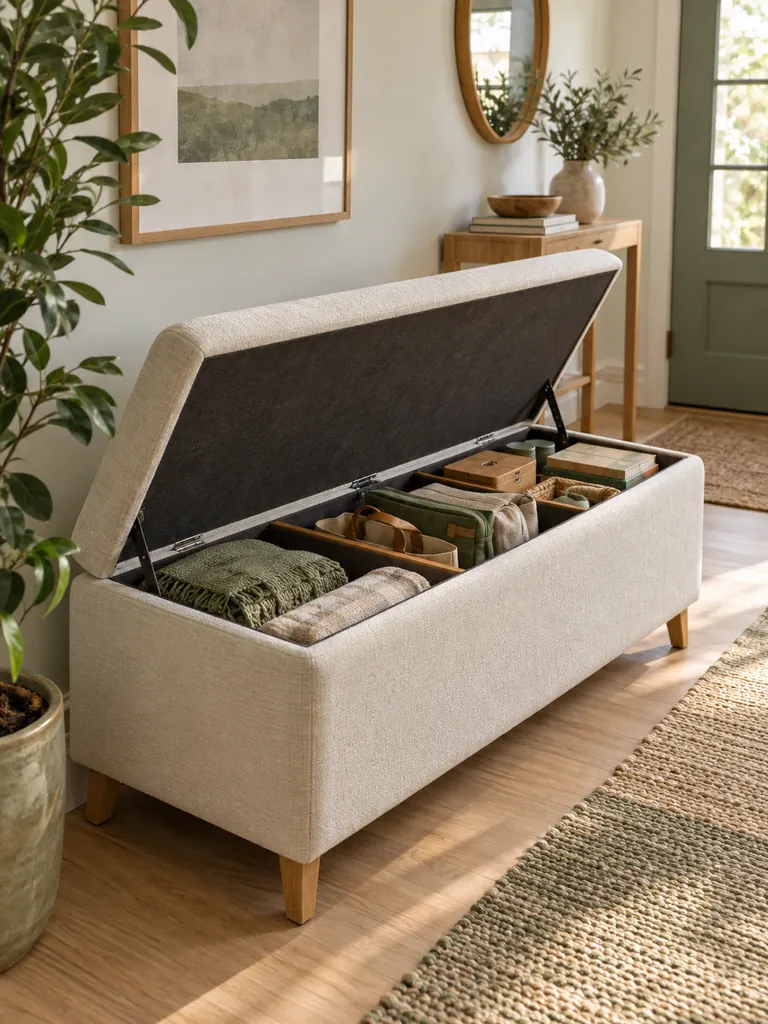
Cost: Moderate, depending on size and material
Best For: Blankets, bags, games, and occasional-use supplies
Setup Time: About 20 minutes with removable compartments
Result: Organized hidden storage with practical extra seating
A compact storage bench provides more structured capacity than one deep, undivided compartment. Add removable bins so blankets, electronics, games, and guest supplies remain separated. Place it near the entry, beneath a window, or at the bed’s foot, but measure the walkway first and confirm the lid opens safely.
Door-Mounted Organizer

An unused door can hold an impressive amount without taking a single inch of floor space. Choose a slim organizer with padded hooks, then confirm the door closes freely. Assign its pockets to one category, such as shoes, cleaning products, accessories, or pantry supplies.
Keep heavier items in the lowest pockets to reduce swinging and strain on the door. Avoid overfilling compartments or storing leaking products above eye level. In my experience, clear or labeled pockets work best because every item remains visible and easy to return after use.
Closet Shelf Dividers
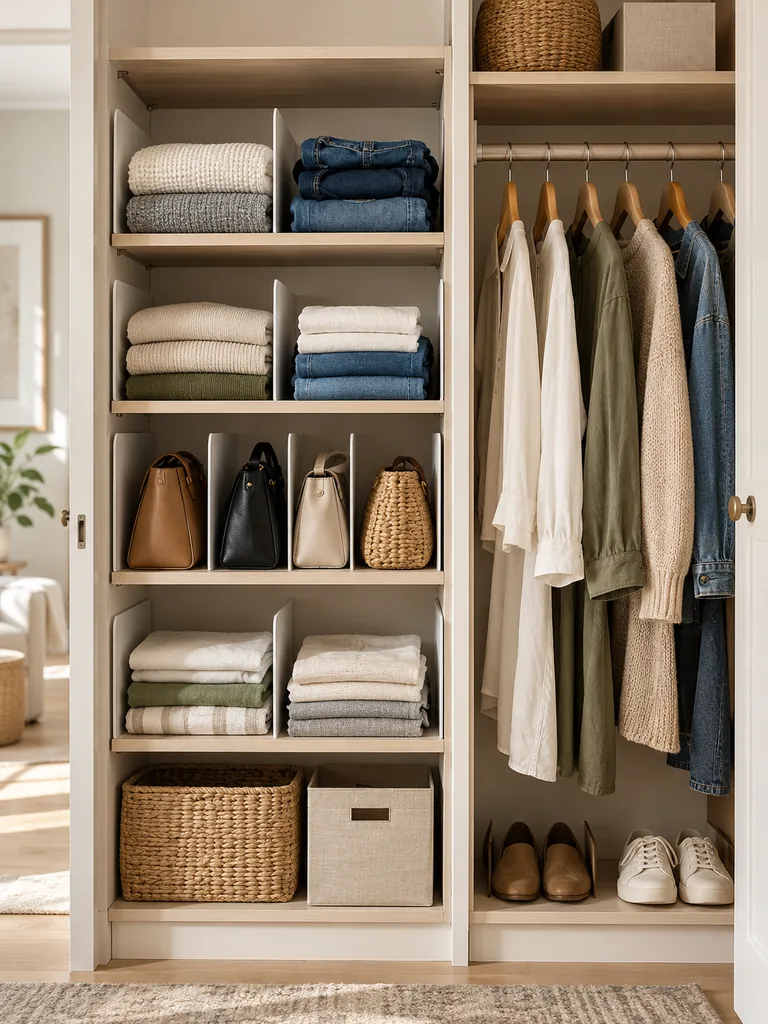
- Unstable clothing piles waste space fast, so separate each category with adjustable shelf dividers.
- Give sweaters, jeans, linens, and bags their own sections instead of mixing unrelated belongings.
- Keep each stack short enough that removing one item does not disturb everything beside it.
- Place occasional-use pieces higher and reserve eye-level shelves for weekly essentials.
- Measure shelf thickness and depth before purchasing dividers to ensure a secure fit.
Dividers create firm boundaries, making overcrowding visible before piles spread across the entire closet. Fold items to a consistent width and leave a little space within every section. The system works best when each category has a fixed capacity, preventing shelves from becoming compressed and difficult to maintain.
Matching Basket Categories

Quick Tip:
Choose matching outer baskets for a calm appearance, but label every container by function. Before purchasing a full set, test one basket to confirm it fits the shelf and remains comfortable to lift when filled.
Visual consistency can make exposed storage feel intentional without hiding how the system works. Assign one basket to cables, another to craft supplies, and another to personal accessories. Avoid broad labels such as “miscellaneous” because they invite unrelated clutter. Clear category names make daily cleanup faster and discourage overfilling.
Rolling Utility Cart
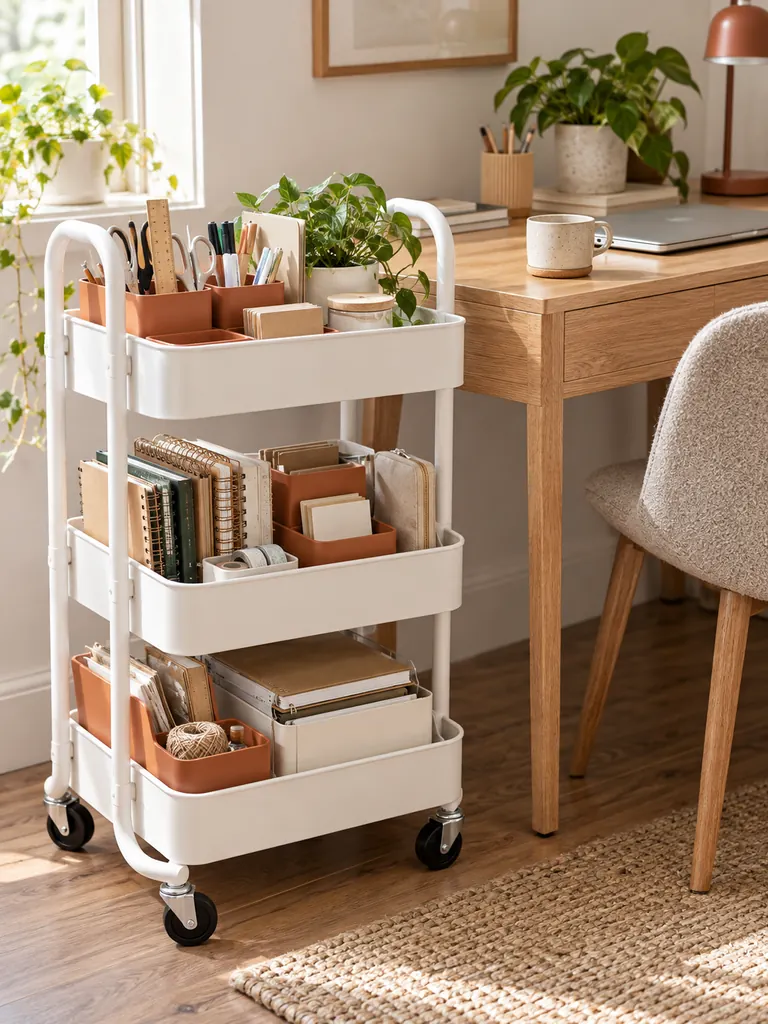
BEFORE:
Frequently used supplies occupy several counters, shelves, or cabinets because they move between different activities. Finding everything requires repeated trips, while valuable surfaces remain crowded throughout the day.
AFTER:
A slim rolling cart keeps one complete category together and moves exactly where it is needed. After use, the cart returns to a designated corner without leaving supplies behind.
Mobility makes a cart useful for cleaning products, office materials, crafts, toiletries, or pantry essentials. Choose locking wheels and shallow containers that stop smaller items from tipping during movement. Keep the top tier for daily supplies and avoid loading the cart so heavily that steering becomes difficult or unsafe.
Wall-Mounted Workstation
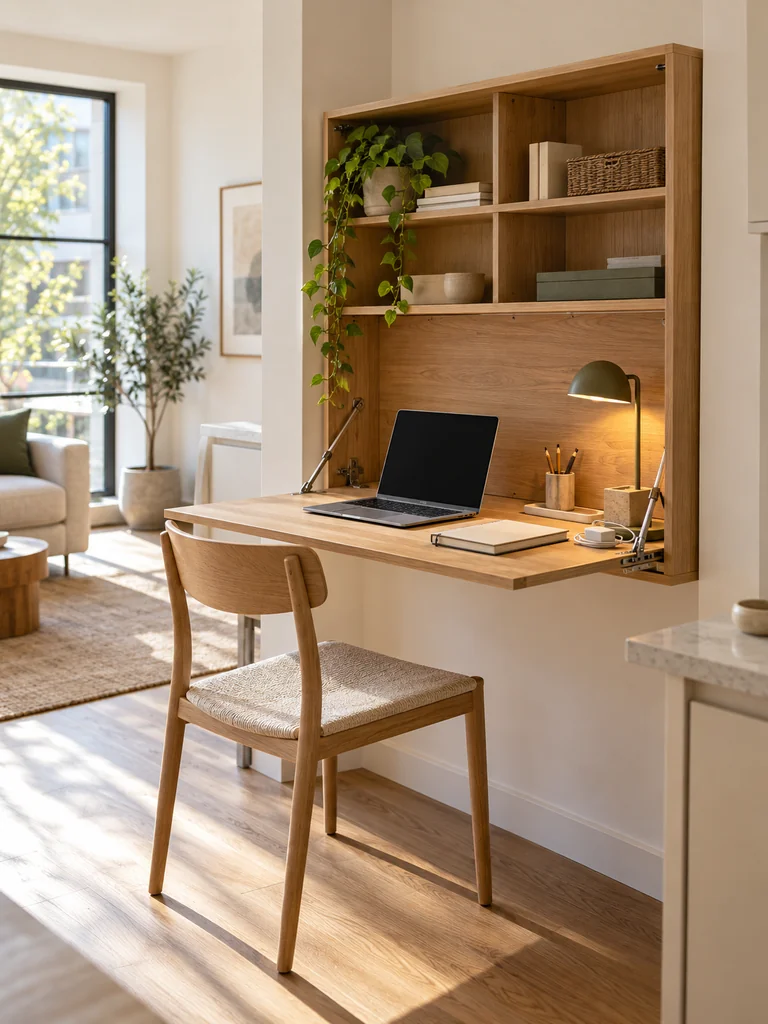
- Measure the wall, chair clearance, outlet position, and walking route before selecting a folding desk.
- Choose a surface deep enough for your laptop and essential tools, but shallow enough to close without obstruction.
- Store paperwork and chargers inside nearby wall pockets or compact compartments.
- Use a lightweight chair that can serve another area when the workstation is closed.
- Return every supply after work so the desk folds away completely.
A folding workstation separates working hours from relaxation without permanently consuming valuable floor space. Secure it to a suitable wall according to the manufacturer’s instructions and respect its weight limit. Keep only current work materials nearby, since excessive supplies can prevent the desk from closing and weaken its space-saving purpose.
A folding workstation becomes even more useful when combined with these flexible studio apartment layout ideas for clearly defined zones.
Furniture Storage Zones
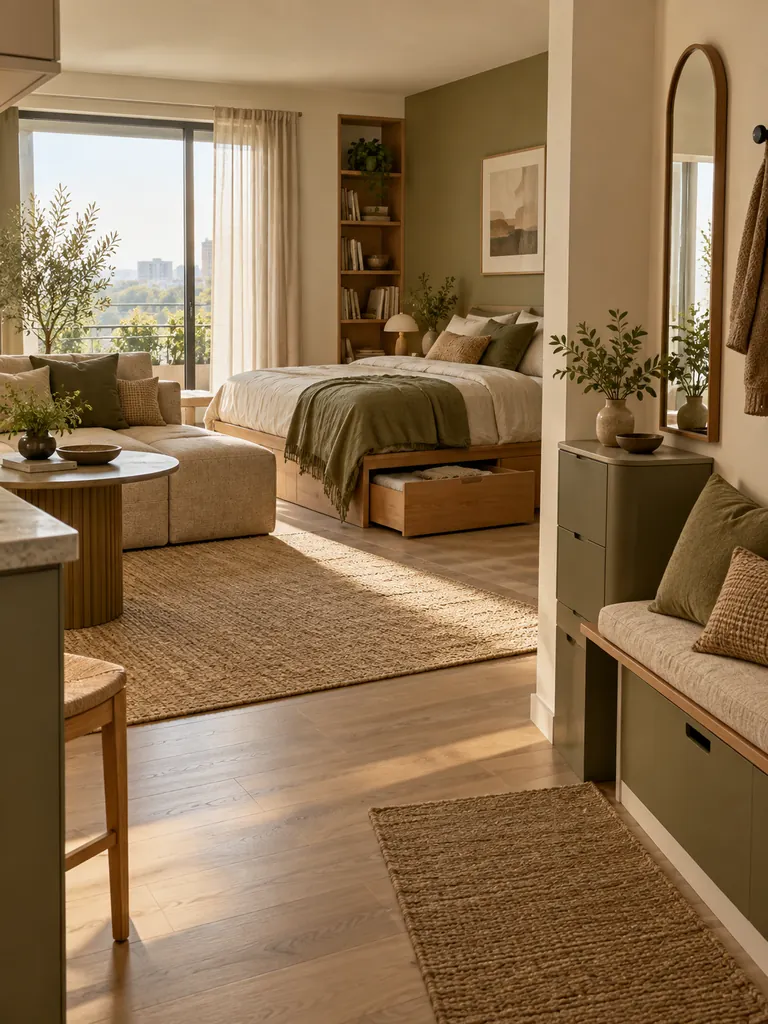
| Feature | Separate Furniture | Storage Furniture |
|---|---|---|
| Floor Use | Requires extra pieces | Combines two functions |
| Visual Weight | Can appear crowded | Creates a cleaner layout |
| Organization | Storage is scattered | Categories stay consolidated |
| Best Choice | Spacious rooms | Compact apartments |
Built-in compartments reduce the need for extra cabinets, baskets, and shelving, but every hidden area still needs a clear purpose. Assign bedding to the bed, shoes to an entry bench, and living room supplies to an ottoman. Measure usable interior space before buying because bulky frames do not always provide practical capacity.
Choose functional pieces that also support these stylish small apartment decorating ideas without making the home feel crowded.
Refill Supply Limit
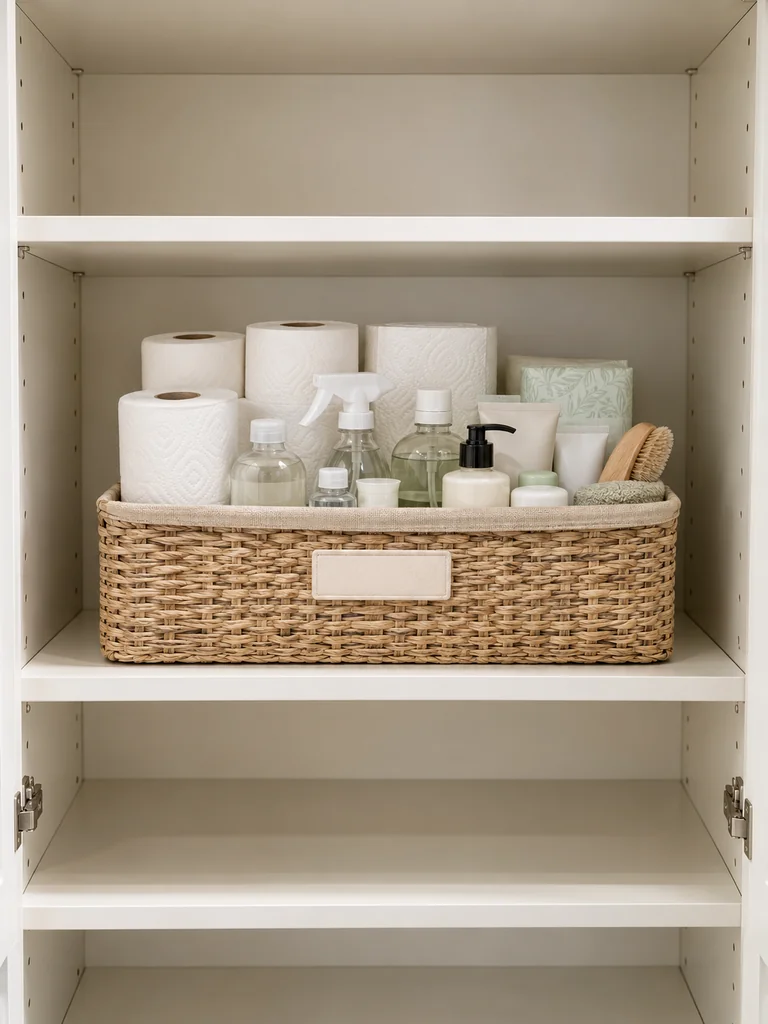
DO
- Assign one shelf, bin, or cabinet section to household refills.
- Check the zone before purchasing discounted multipacks.
- Store older products in front so they are used first.
- Choose quantities that match available space and normal consumption.
DON’T
- Spread duplicate supplies across unrelated rooms.
- Buy large packs without measuring their storage footprint.
- Remove safety labels from cleaning or personal-care products.
- Stack refills where plumbing, ventilation, or access becomes blocked.
Bulk buying saves little when excess stock overwhelms a compact home or expires before use. A fixed boundary makes the available capacity obvious and discourages unnecessary duplicates. Review quantities before shopping, keep a simple list of genuine backups, and resist treating every empty corner as additional refill storage.
Paperwork Control Station
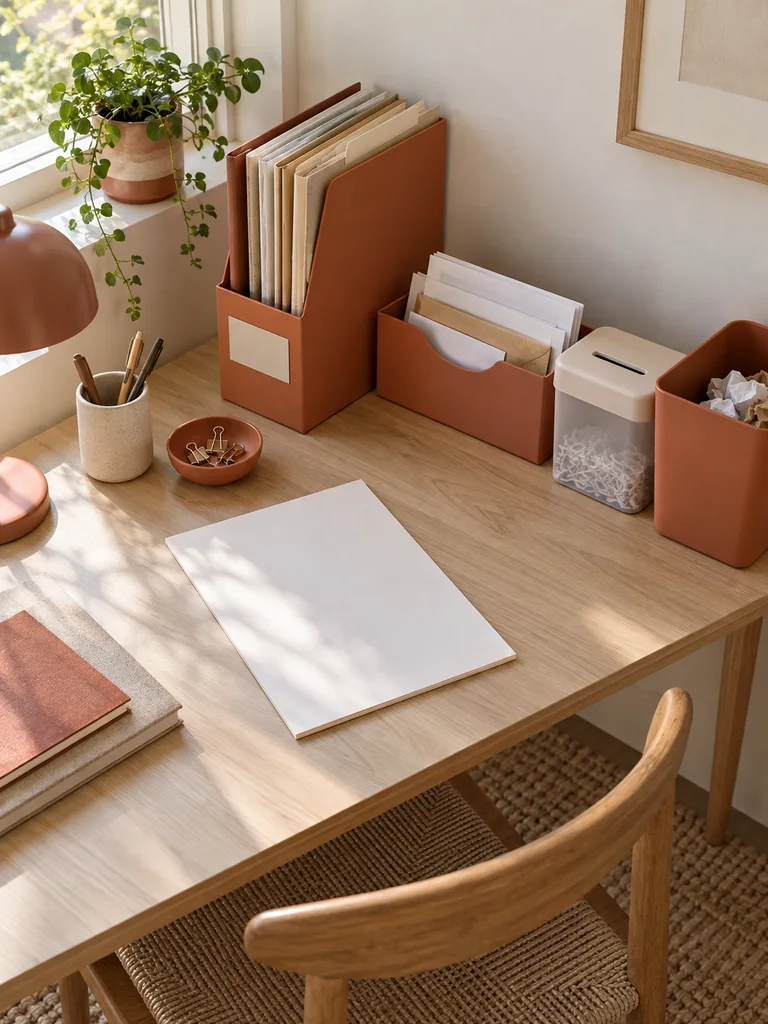
Cost: Low with a compact file box or desktop sorter
Time: About 30 minutes for the initial setup
Best For: Mail, receipts, bills, warranties, and action items
Result: Clear surfaces and faster document retrieval
Paper piles grow quietly and make even an organized apartment feel unfinished. Create separate sections for action, filing, shredding, and receipts, then process them on a fixed day. Keep important originals in appropriate secure storage, recycle envelopes immediately, and avoid saving documents that are already available safely online.
Clear Counter Routine
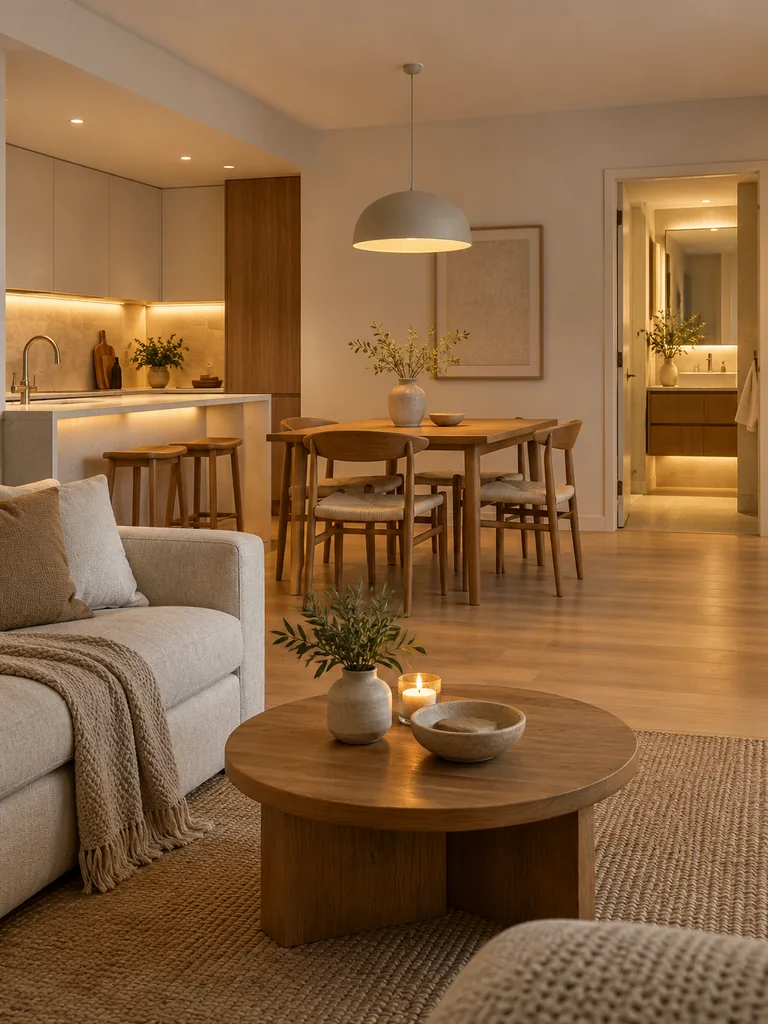
Open surfaces make a compact home feel calmer, but they remain clear only when everyday objects have convenient homes. At the end of each day, return dishes, toiletries, appliances, chargers, and work supplies to their assigned storage zones instead of shifting them between counters.
Focus first on the kitchen, bathroom vanity, dining table, and coffee table because these areas influence how tidy the entire apartment appears. I’ve noticed that a five-minute reset feels manageable when storage locations are nearby. Leave only useful objects that genuinely earn permanent counter space.
Bathroom counters can become cluttered with everyday toiletries, so explore these small bathroom storage ideas to keep essentials organized while making better use of limited space.
Weekly Apartment Reset
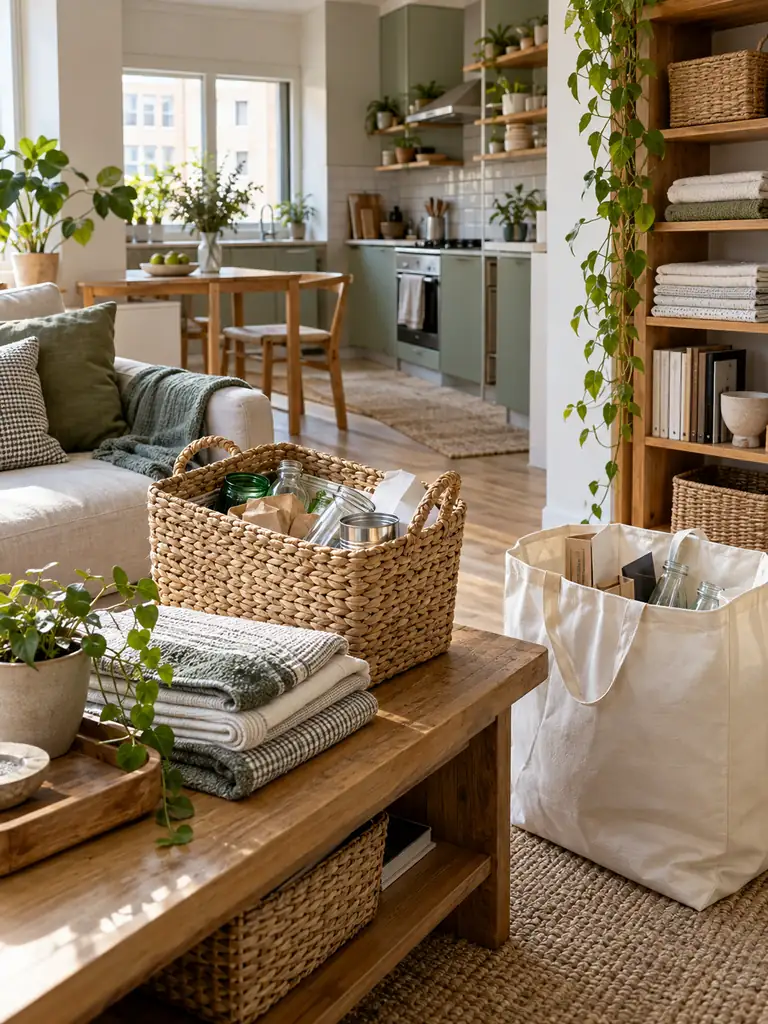
- Small problems stay manageable when the reset happens before clutter becomes deeply established.
- Empty the room return basket and put every misplaced item back in its assigned home.
- Remove rubbish, recycling, expired supplies, and obvious donation items from the apartment.
- Restock daily essentials from existing backups instead of opening new packages randomly.
- Straighten baskets, drawers, shelves, and visible surfaces that started overflowing during the week.
Choose one repeatable time and keep the routine short enough to maintain consistently. Work from the entrance through each room in the same order, carrying a rubbish bag and return basket. This simple rhythm restores the organization system, reveals storage pressure early, and prepares the apartment for the coming week.
Storage Capacity Review

Quick Tip:
Review one storage zone at a time rather than emptying the entire apartment. Keep a donation bag nearby and photograph complicated shelves before reorganizing them, making it easier to compare the improved arrangement.
Even good organization systems need adjustment as routines and possessions change. Check for forgotten items, unused containers, blocked access, and categories that regularly overflow. Reduce unnecessary belongings before adding capacity, then relocate frequently used items closer to where they are needed. Storage should support daily life, not preserve everything indefinitely.
If your review reveals unused walls, furniture gaps, or overlooked vertical space, explore these studio apartment storage ideas for practical ways to create more storage without making an open-plan home feel crowded.
Conclusion
An organized apartment does not need to contain more shelves, bins, or bulky furniture. It needs thoughtful boundaries and storage that supports your daily habits. These Small Apartment Organization Ideas can help you reduce visual clutter, recover open surfaces, and make each room easier to maintain. I’ve seen how one small adjustment, such as a return basket or fixed refill limit, can improve an entire routine. Save this post on Pinterest, choose one or two ideas to try this week, and share it with someone whose compact home needs a calmer reset. Start small, stay consistent, and let every item earn its place.