
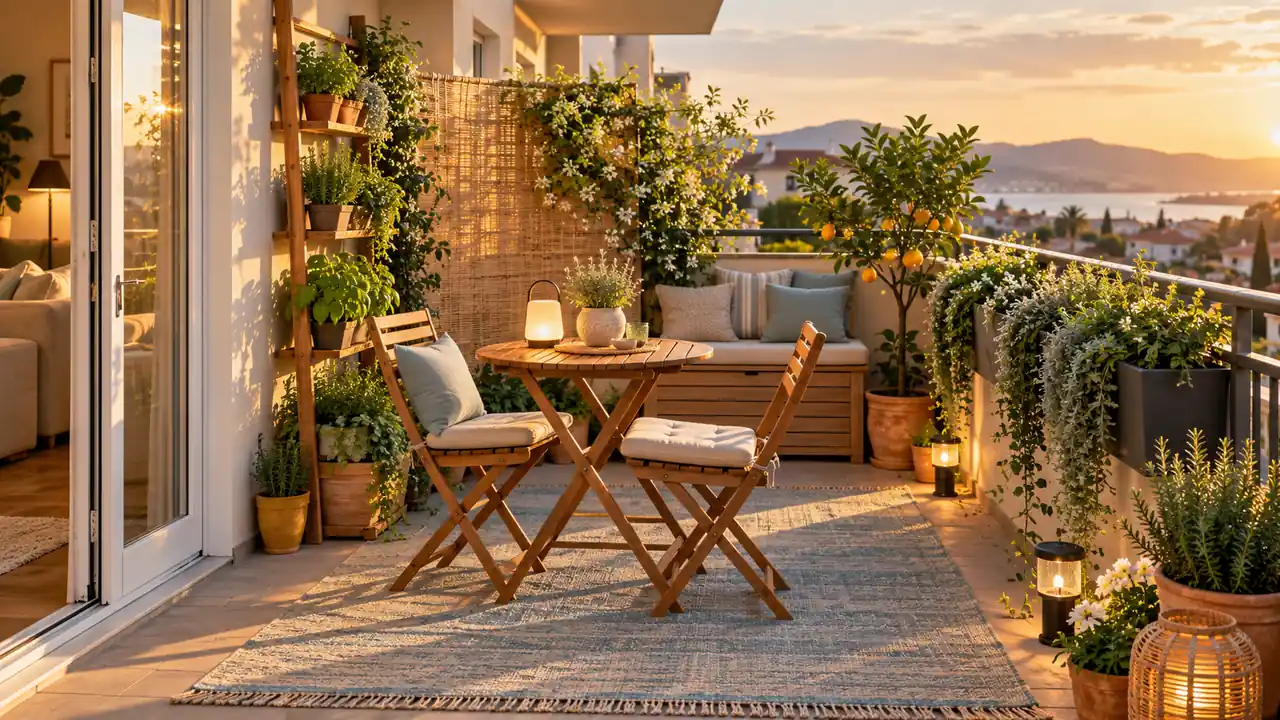
Even the smallest balcony can become a refreshing place to slow down, enjoy breakfast, or read outdoors. These Small Apartment Balcony Ideas will help you use every corner without crowding the doorway, blocking drainage, or choosing furniture that cannot handle changing weather.
The article covers flexible seating, privacy screens, compact plants, portable lighting, outdoor textiles, and practical storage. Each idea is designed to balance visual appeal with safety and daily convenience. In my experience, a balcony feels most inviting when every item is easy to use, clean, secure, and store. With a few carefully selected pieces, you can create a breezy retreat that feels connected, comfortable, and ready for quiet moments throughout the day.
Table of Contents
Balcony Condition Survey

A relaxing balcony begins with details that are easy to overlook. Measure the usable floor, railing height, doorway swing, and clear walking route before selecting furniture. Locate drainage outlets, utility access, and areas where rainwater commonly collects so new pieces do not create maintenance problems.
Next, observe sunlight and wind at different times of day, then review your lease or building rules. In my experience, this quick survey prevents unstable furniture, struggling plants, and blocked doors. Record every measurement on a simple sketch and carry it while shopping for outdoor pieces.
Renters can also explore these Renter Friendly Decorating Ideas before choosing removable screens, lighting, planters, or other temporary additions.
Coastal Color Wash
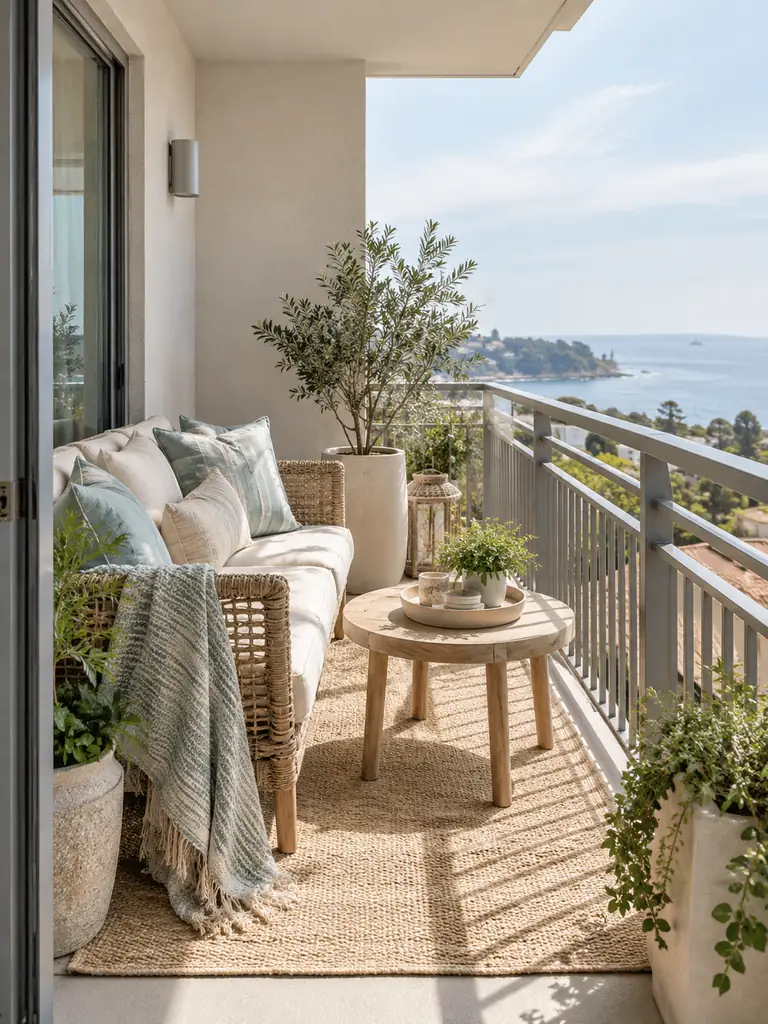
- A light coastal palette can make even a narrow balcony feel open. Begin with warm white or sandy beige as the foundation.
- Add misty blue through cushions, planters, or a small outdoor rug.
- Introduce pale sea-glass green in one or two restrained accents.
- Repeat natural wood or woven textures to keep the palette warm.
- Test fabrics in direct sunlight because some colors appear much brighter outdoors.
The strongest Small Apartment Balcony Ideas use color to connect separate pieces without creating visual clutter. Limit the scheme to two foundation shades and one gentle accent, then repeat each color at least twice. This approach makes budget furniture, planters, and textiles appear coordinated rather than randomly collected.
For more ways to continue this light, connected palette indoors, explore these Small Apartment Decorating Ideas.
Folding Bistro Corner
Quick Tip:
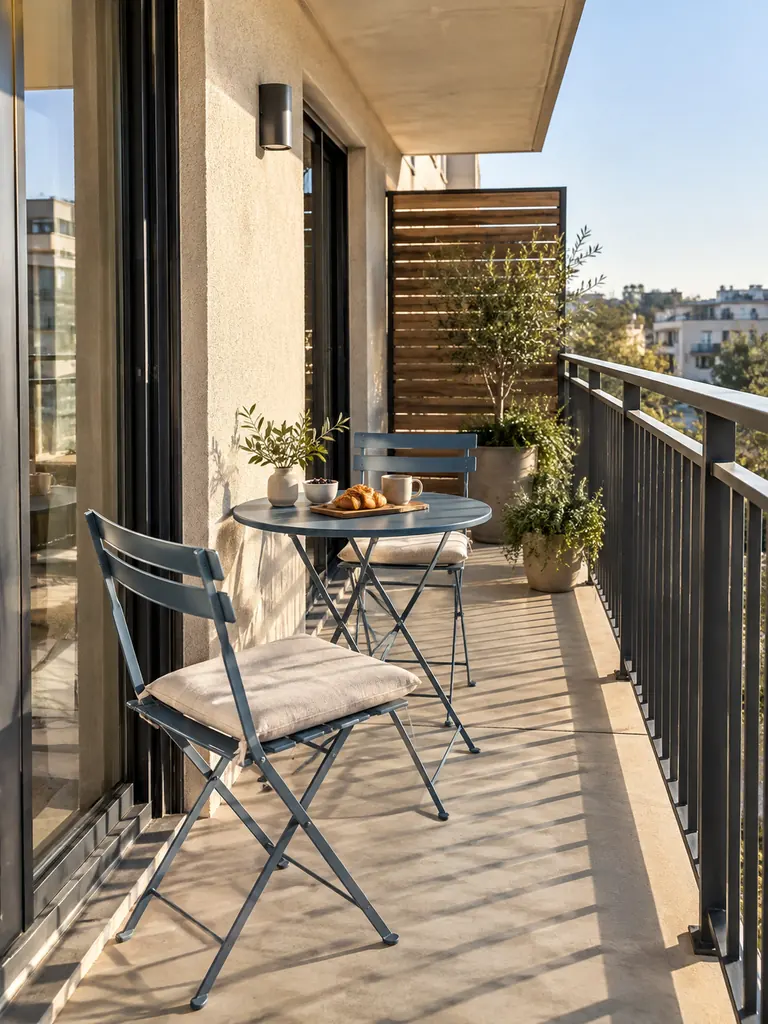
Open the balcony door fully before deciding where the table should stand. Leave enough clearance to unfold both chairs, sit comfortably, and move between the seating area and entrance without turning furniture sideways.
A folding bistro set creates a practical place for coffee or meals without permanently consuming the balcony. Choose weather-resistant materials, check each locking mechanism, and add protective feet beneath the legs. Fold the set after use whenever extra movement space or easier cleaning is more valuable than constant seating.
Railing Breakfast Shelf
BEFORE:
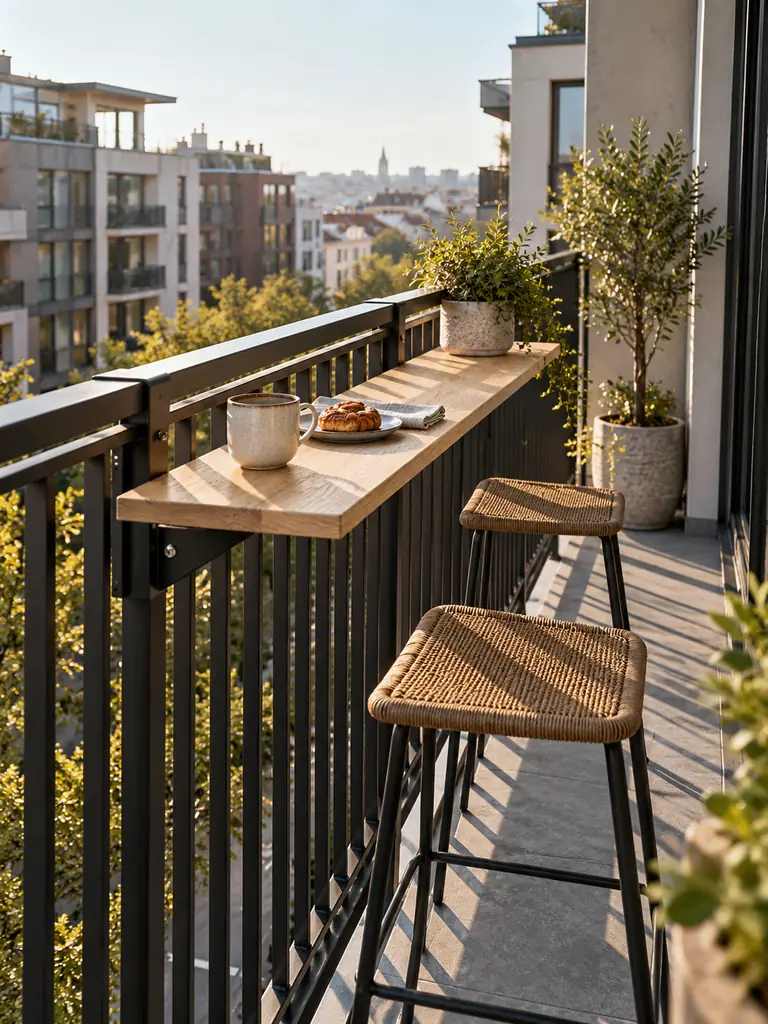
A full table occupies valuable floor space and leaves little room for comfortable movement. Drinks and plates may end up balanced on unstable stools, railing tops, or planter edges.
AFTER:
A properly approved railing shelf creates a narrow breakfast surface without adding furniture legs. Its removable structure keeps the floor clearer while providing a defined place for cups and small plates.
A railing shelf must suit the exact railing shape, material, and weight restrictions. Confirm building approval, keep every object inside the balcony boundary, and remove loose items during strong wind. Choose a design with raised edges and secure brackets, then inspect all connections regularly for movement or weather damage.
Built-In Bench Illusion

- Measure the available wall. Leave clear space around the balcony door, drainage outlets, and utilities.
- Choose weather-resistant modules. Use low storage cubes rated for covered outdoor conditions and suitable weight loads.
- Align the units. Position them tightly together on a level surface without blocking water flow.
- Add one fitted cushion. Select quick-drying outdoor fabric and nonslip backing.
- Secure loose components. Follow building rules and prepare to move cushions indoors during severe weather.
A continuous cushion visually connects separate modules, making the arrangement resemble a fitted bench. Keep storage contents lightweight and protected inside sealed containers. I’ve seen this work especially well on long, narrow balconies where several individual chairs would interrupt movement and create a more crowded appearance.
Floor Cushion Lounge

| Feature | Standard Chairs | Floor Cushions |
|---|---|---|
| Storage need | Require permanent floor space | Stack or move indoors easily |
| Seating style | Upright and structured | Relaxed and flexible |
| Best use | Regular dining | Casual conversation or reading |
| Weather care | Depends on frame material | Requires dry indoor storage |
Low seating creates a relaxed atmosphere while keeping the upper sightline open. Select firm outdoor cushions with washable, water-resistant covers and place them on a clean, dry rug or deck tile surface. Add one stable low table, preserve the main walkway, and bring every textile indoors before rain or strong wind.
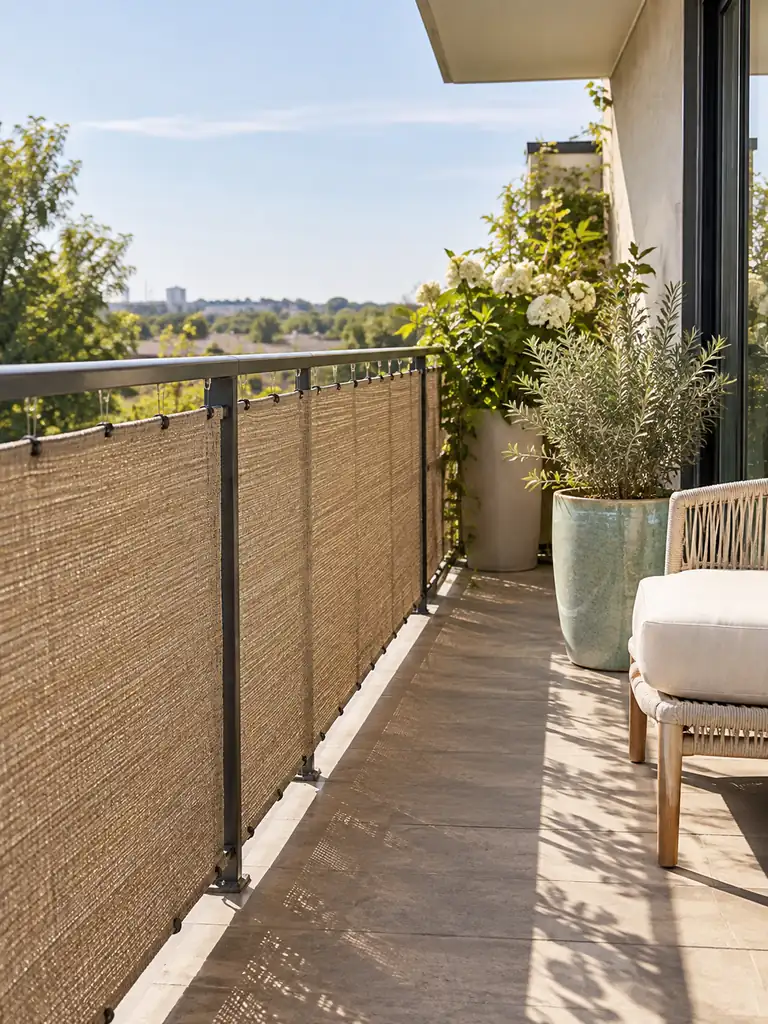
Woven Privacy Screen
DO
- Create privacy with a breathable screen approved by the building or landlord.
- Attach every edge securely inside the balcony railing.
- Choose UV-resistant material that allows controlled airflow.
- Inspect ties and fasteners after strong wind or heavy rain.
DON’T
- Extend fabric beyond the railing or into a neighboring property.
- Cover drainage openings, utilities, or emergency access points.
- Use heavy materials that increase wind pressure.
- Assume permanent attachments are allowed without written confirmation.
A woven screen softens exposed views while adding natural texture to the balcony. Choose a color that relates to the flooring or furniture, and avoid covering every open section if airflow becomes restricted. Secure attachments matter more than appearance, especially on upper floors where loose materials can become dangerous.
Slatted Corner Divider
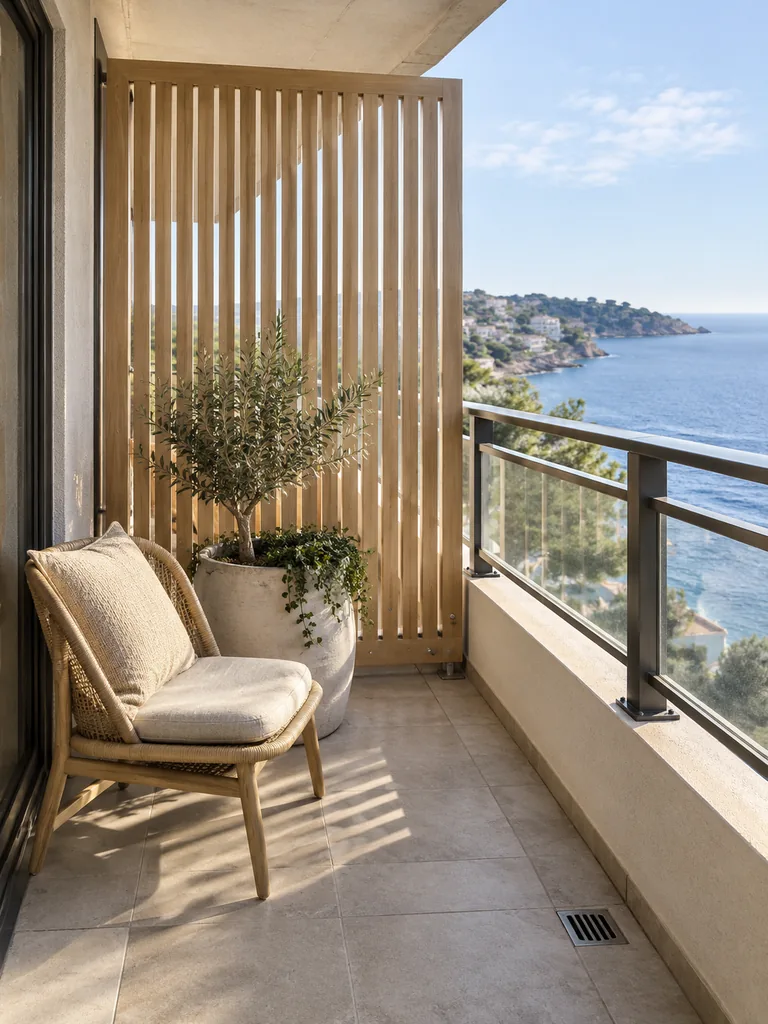
Cost: Moderate
Best For: Exposed balcony corners
Material: Outdoor-rated wood, composite, or coated metal
Result: Greater visual privacy with continued airflow
An open slatted divider creates a softer boundary without turning the balcony into a closed box. Select a freestanding design with a properly weighted base, keeping it below permitted height limits. Position it away from drains and doors, then confirm stability whenever furniture moves or seasonal wind conditions change.
Vertical Herb Ladder
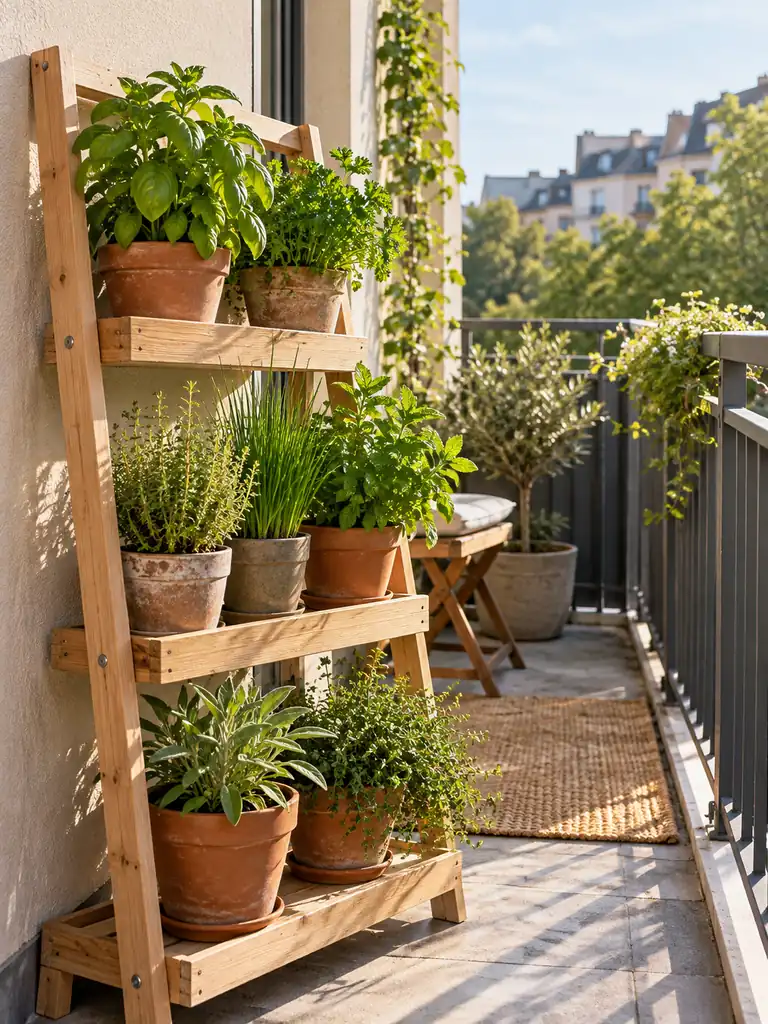
Fresh herbs can make a compact balcony feel useful as well as relaxing. Choose a stable tiered planter designed for outdoor conditions, then position it where each level receives suitable sunlight. Secure the structure according to building rules and keep the heaviest containers on the lowest tier.
Grow herbs with similar watering needs together, using containers with drainage trays that prevent runoff below. Basil, parsley, chives, thyme, and mint can suit containers, depending on climate and light. Harvest regularly, remove unhealthy growth, and rotate pots when upper shelves shade those below.
Pocket Wall Garden

- Blank vertical space can hold greenery without sacrificing the floor. Use removable pockets only when the wall surface and building rules permit them.
- Choose shallow-rooted plants suited to the balcony’s actual sunlight and wind exposure.
- Select breathable, outdoor-rated pockets with controlled drainage.
- Place moisture protection between the planter and any vulnerable wall surface.
- Keep the filled weight within the support system’s stated limit.
A pocket garden works best when plant care remains simple and water cannot stain walls or neighboring balconies. Group varieties with similar moisture requirements, place thirsty plants on lower levels, and check the backing regularly. A freestanding pocket frame is safer where drilling or adhesive supports are not permitted.
Cascading Railing Planters

Quick Tip:
Keep every planter and trailing stem inside the balcony boundary. Use containers specifically designed for your railing type, then add secondary safety fasteners if permitted by the manufacturer and building management.
Trailing greenery adds softness at eye level without occupying the seating area. Select lightweight containers, suitable potting mix, and plants that tolerate the site’s sunlight and wind. Inspect brackets regularly, trim growth before it reaches neighboring spaces, and use drainage trays to prevent water from falling onto areas below.
Potted Grass Border
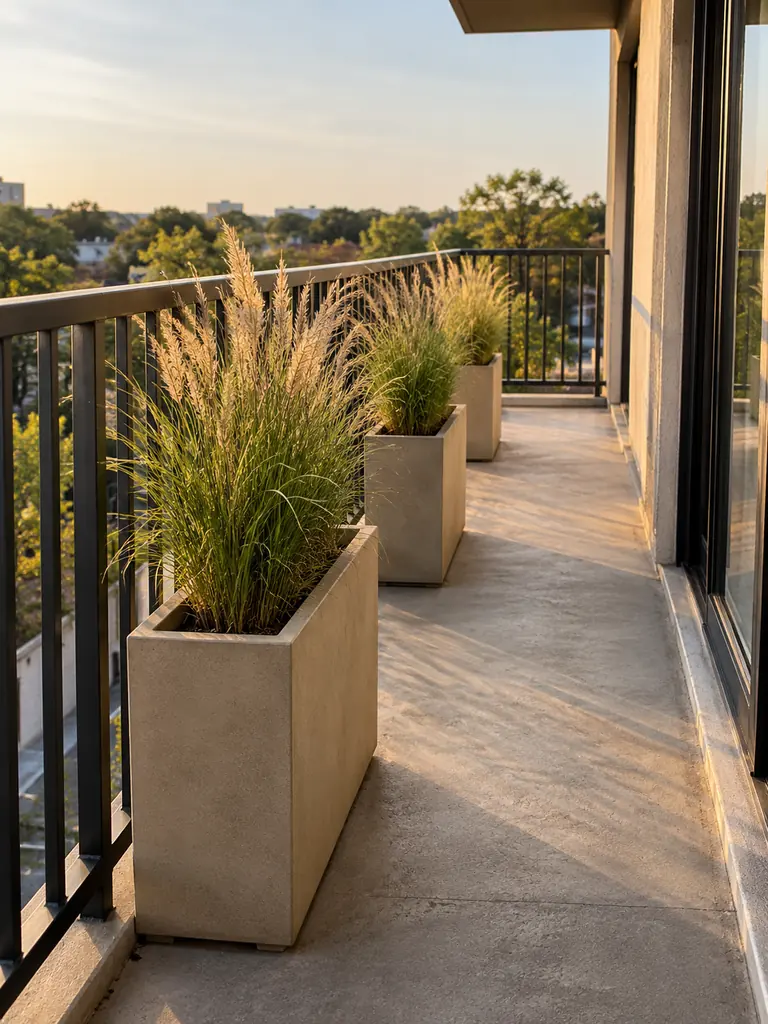
BEFORE:
An exposed balcony edge can feel harsh and visually disconnected from the seating area. Several unrelated pots may also create a cluttered line that becomes difficult to clean around.
AFTER:
Matching narrow containers filled with ornamental grasses form a softer, repeated border. Their upright growth adds privacy and movement while keeping the arrangement visually organized.
Ornamental grasses respond dramatically to wind, so choose compact varieties suitable for containers and local conditions. Use stable planters with drainage, keep foliage inside the railing, and avoid species classified as invasive in your area. Grouping three matching pots usually appears calmer than mixing several unrelated container styles.
Compact Citrus Accent

- Check the climate. Select a dwarf citrus variety that can tolerate local temperatures and the balcony’s available sunlight.
- Choose a stable planter. Use a container with sufficient depth, drainage holes, and a protected saucer.
- Position it carefully. Keep the tree away from strong wind, railing edges, and crowded walkways.
- Monitor moisture. Water according to the plant’s needs without allowing runoff below.
- Feed and prune responsibly. Follow variety-specific guidance to maintain manageable growth.
A compact citrus tree creates a strong natural focal point without requiring several small plants. I’ve noticed that one healthy specimen often appears calmer than a crowded collection. Rotate the container for balanced light, protect it during unsuitable weather, and confirm the balcony can safely support the combined weight.
Pebble Tray Garden
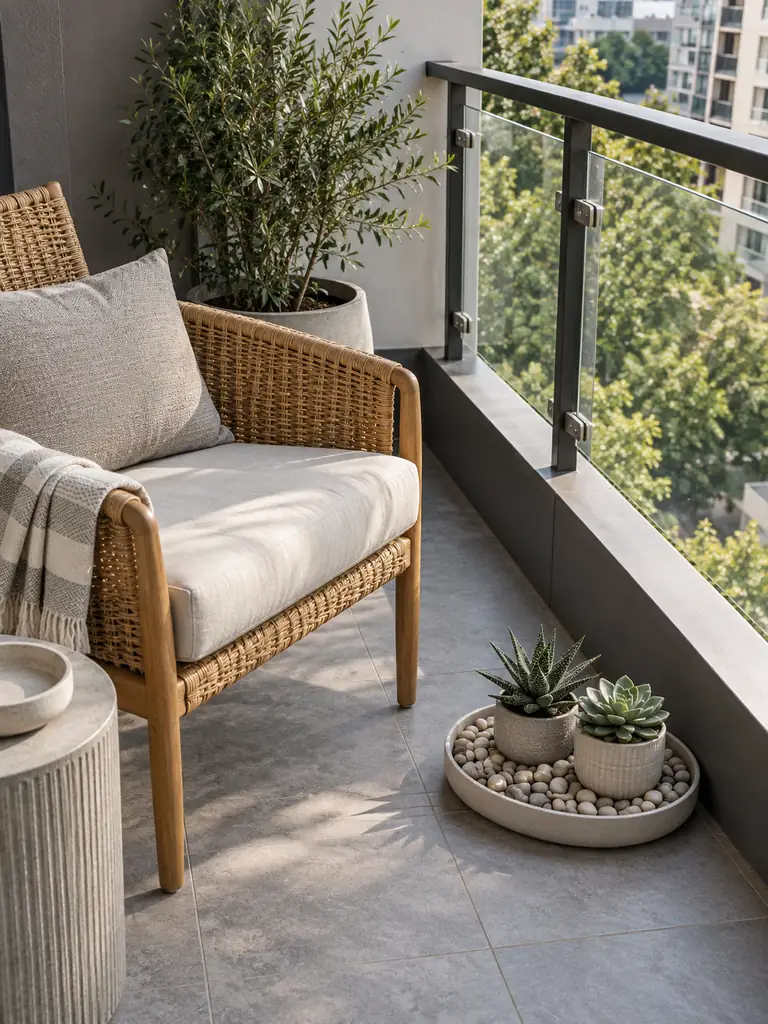
| Feature | Loose Floor Stones | Contained Pebble Tray |
|---|---|---|
| Cleaning | Difficult to sweep around | Easy to lift and clean |
| Drainage | May block floor outlets | Remains contained above flooring |
| Arrangement | Can spread under furniture | Keeps stones in one defined area |
| Flexibility | Time-consuming to relocate | Moves as one portable display |
A shallow pebble tray introduces garden texture without permanently covering the balcony floor. Choose a weather-resistant container with raised edges, then combine smooth stones with one or two compact potted plants. Keep the display water-free to discourage insects, and position it away from drains, doors, and active walking paths.
Outdoor Rug Zone
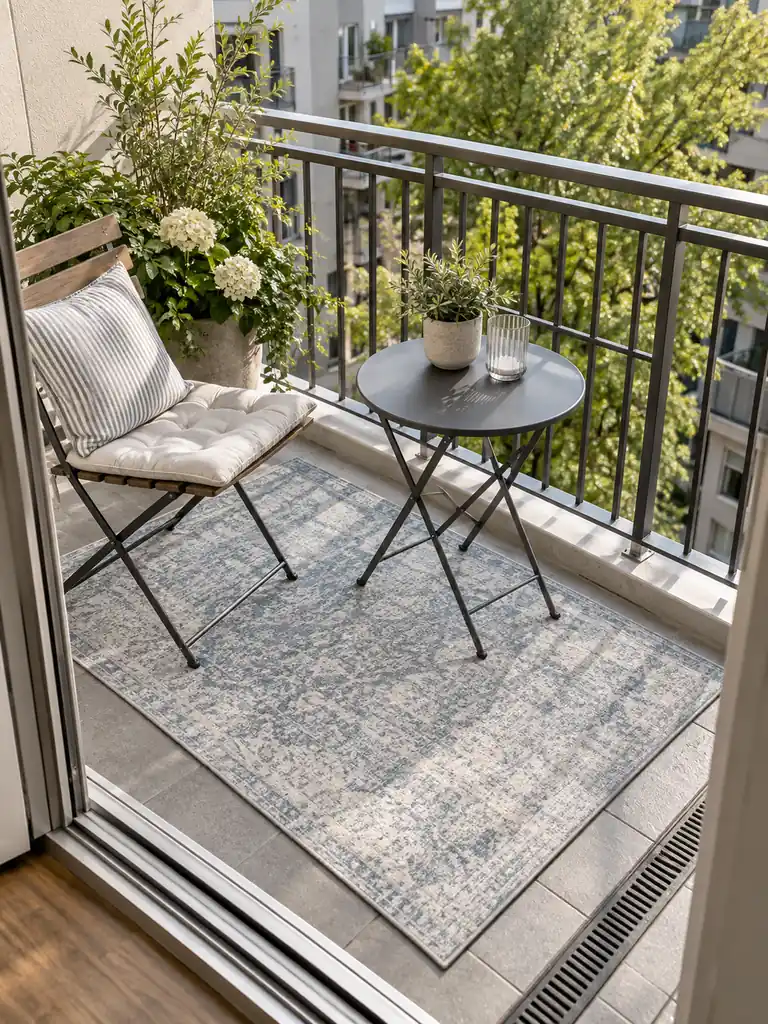
DO
- Define the seating area with a rug sized to fit completely within the usable floor.
- Choose quick-drying, mildew-resistant material intended for outdoor use.
- Secure the edges with an appropriate nonslip layer.
- Lift and dry the rug after heavy rain.
DON’T
- Cover drainage outlets or door tracks.
- Allow curled corners to create tripping hazards.
- Place absorbent indoor rugs outside.
- Leave damp material against vulnerable flooring.
A weather-resistant rug brings color and comfort to hard balcony flooring while visually connecting the furniture. Select a pattern that works with the coastal palette and hides minor outdoor marks. Check beneath it regularly for trapped moisture or debris, particularly after rain, watering plants, or cleaning the space.
Clip-On Shade Panel

Cost: Low to moderate
Best For: Balconies with intense direct sunlight
Installation: Removable, building-approved attachment
Result: Adjustable shade without a permanent overhead structure
A compact shade panel can make midday seating more comfortable while preserving flexibility. Choose outdoor-rated fabric and hardware designed for the exact support, then confirm wind limits before installation. Retract or remove the panel during strong weather, and never attach it to an unstable railing, pipe, or shared structure.
Rechargeable Table Glow
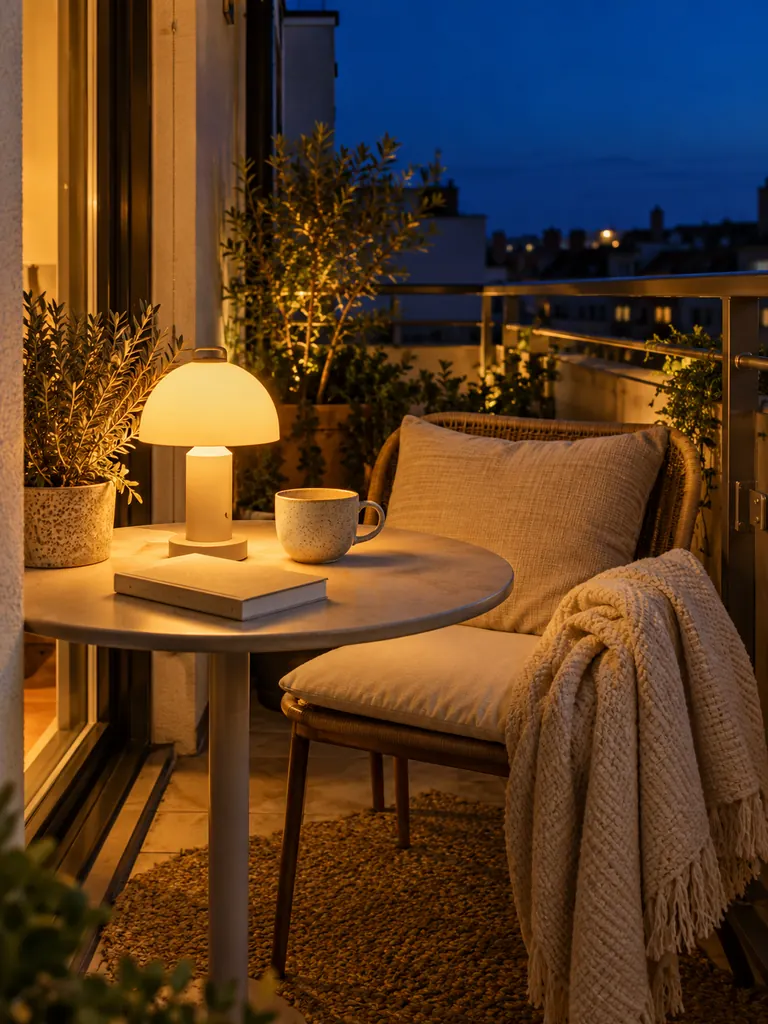
Evening light changes how long a balcony remains useful after sunset. Place a compact outdoor-rated rechargeable lamp on a stable table, selecting a warm glow that illuminates drinks, books, and nearby seating without shining directly into neighboring homes or windows.
Check the product’s outdoor rating, charging instructions, and expected battery life before use. Bring the lamp indoors during severe weather unless it is specifically approved for those conditions. A weighted base reduces accidental movement, while adjustable brightness lets the same light support quiet reading or relaxed conversation.
Solar Floor Markers
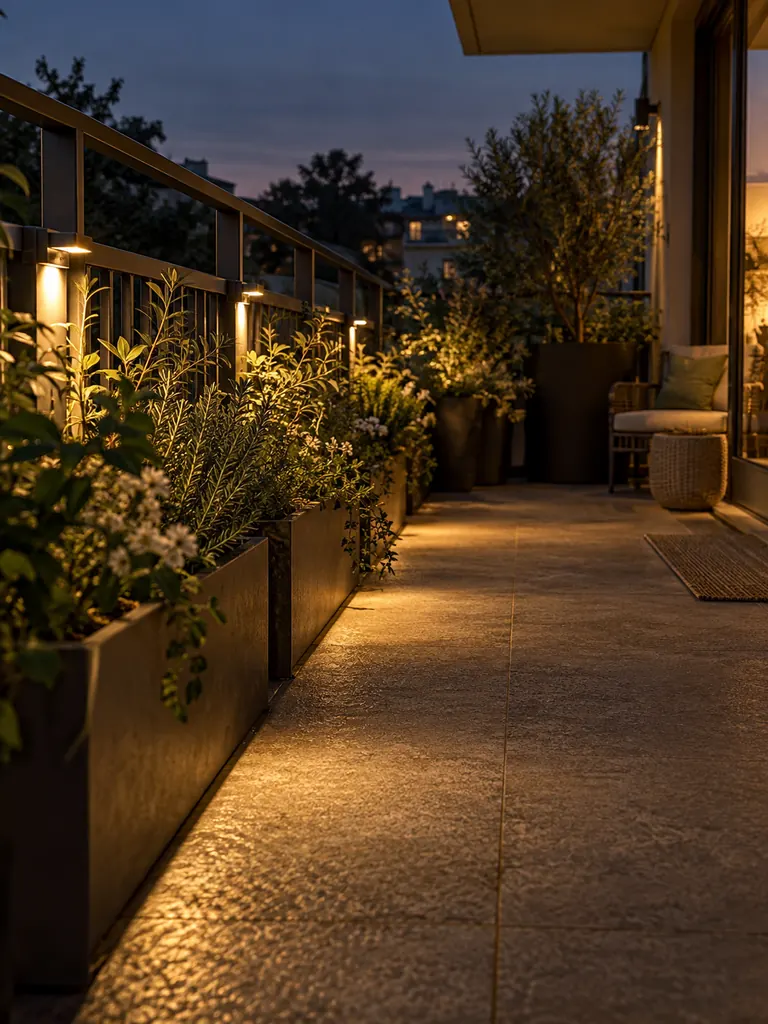
- A subtle row of light can define the balcony edge without making the space overly bright. Choose low-output solar markers intended for outdoor use.
- Position each light inside the railing and away from the main walking route.
- Place solar panels where they receive enough direct daylight to charge.
- Test the nighttime angle to prevent glare entering nearby windows.
- Secure every marker against wind according to the manufacturer’s instructions.
Low solar markers improve evening visibility around planters and furniture without creating loose power cords. Use only a few fixtures, spaced consistently, and keep them clear of drains. Clean the panels regularly because dust reduces charging performance, then remove any light that becomes damaged, unstable, or excessively bright.
Morning Coffee Station
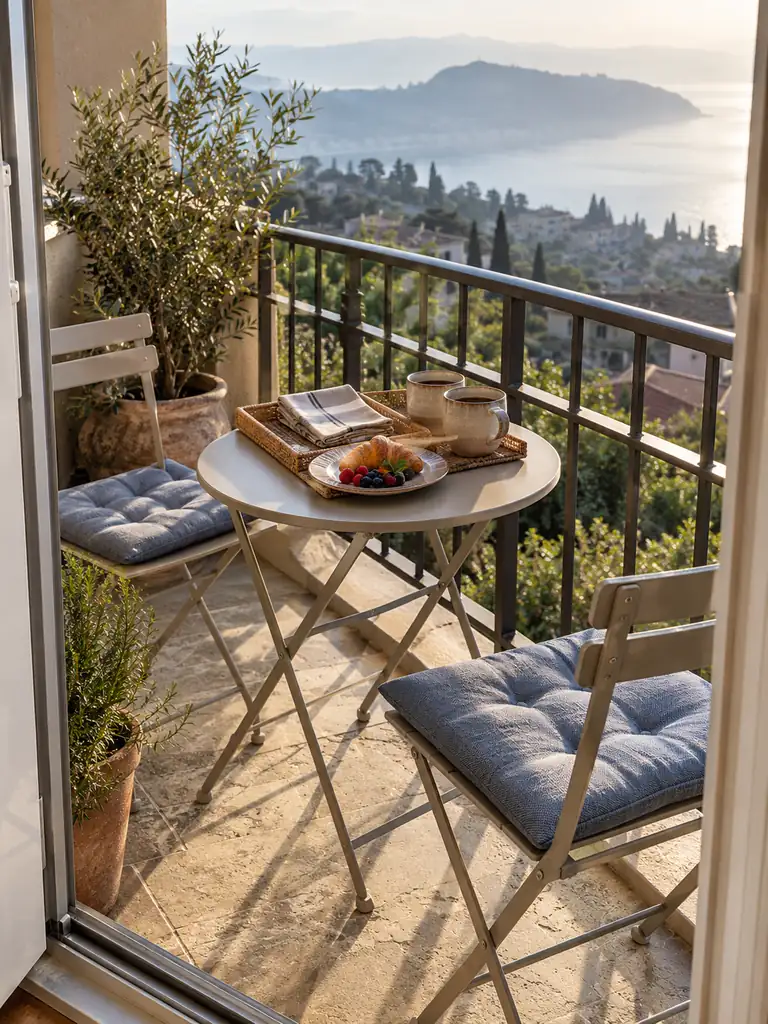
Quick Tip:
Keep the setup portable rather than leaving food, cups, or napkins outdoors. A small tray with raised edges allows everything to travel between the kitchen and balcony in one safe, simple movement.
A dedicated coffee tray makes short balcony visits feel intentional without requiring permanent storage. Choose a weather-resistant surface that fits the table comfortably, leaving room for hands and elbows. Include only daily essentials, wipe the tray after each use, and carry it indoors before rain, strong wind, or extended sun exposure.
Reading Retreat Basket
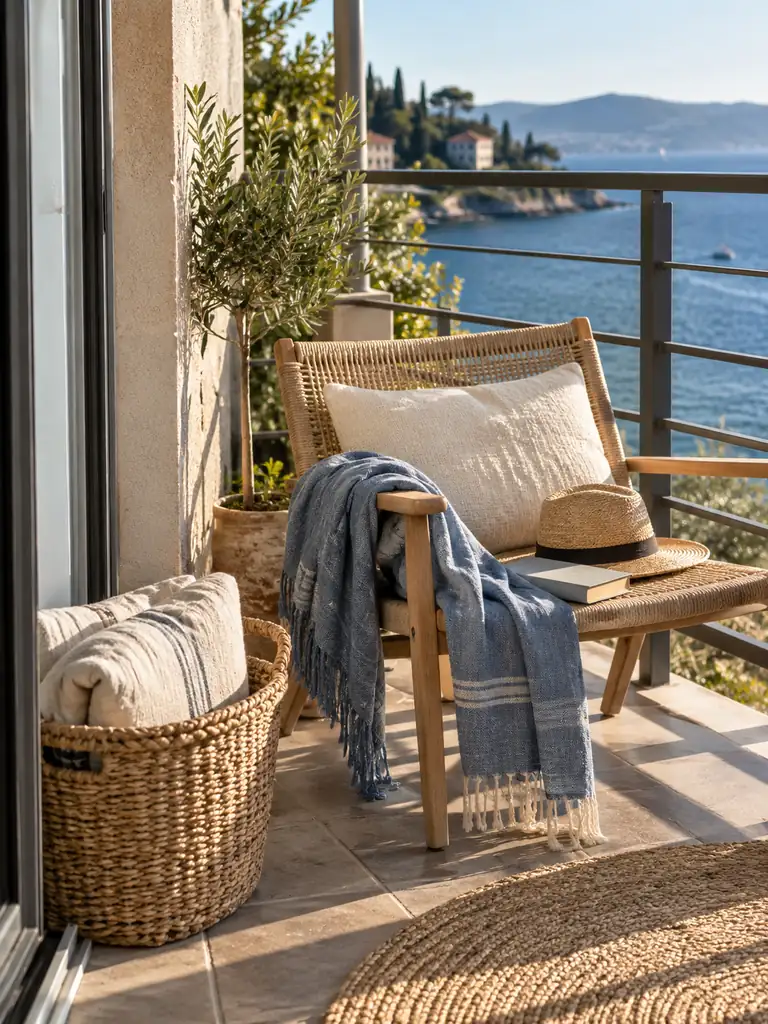
BEFORE:
Books, throws, cushions, and sun protection are stored in different rooms, so preparing the balcony takes longer than the reading session itself. Textiles may also be left outside where moisture or dust can damage them.
AFTER:
One portable basket keeps a lightweight cushion, throw, book, and sun protection together. The complete reading setup moves outdoors and returns inside in a single trip.
A reading basket turns the balcony into an easy retreat without creating permanent clutter. Choose a lightweight container with comfortable handles and enough structure to protect its contents. Store it indoors near the balcony door, refresh the book regularly, and wash or air textiles according to their care instructions.
Weather-Ready Storage Box
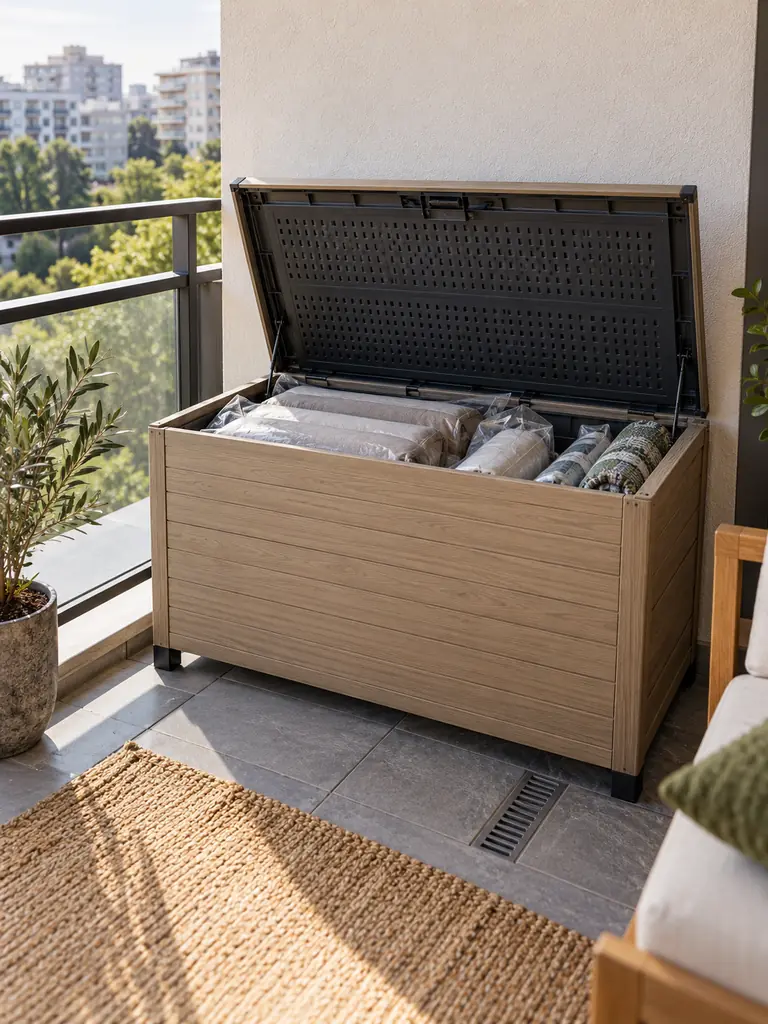
- Measure the available footprint. Preserve access to the door, drainage, utilities, and comfortable seating.
- Confirm building rules. Check whether outdoor storage and its proposed position are permitted.
- Choose suitable construction. Look for weather-resistant material, ventilation, a secure lid, and a stable base.
- Protect the contents. Place textiles inside sealed internal bags or containers.
- Inspect the box regularly. Check for moisture, insects, damage, or movement after strong weather.
A compact storage box keeps outdoor cushions and accessories close without leaving them exposed. Avoid treating it as permanent seating unless the manufacturer specifically approves that use. Raise it only with suitable supports, maintain airflow beneath, and limit the contents so the box remains manageable during seasonal cleaning or emergencies.
For additional ways to organize compact areas without creating clutter, explore these practical Small Space Storage Ideas.
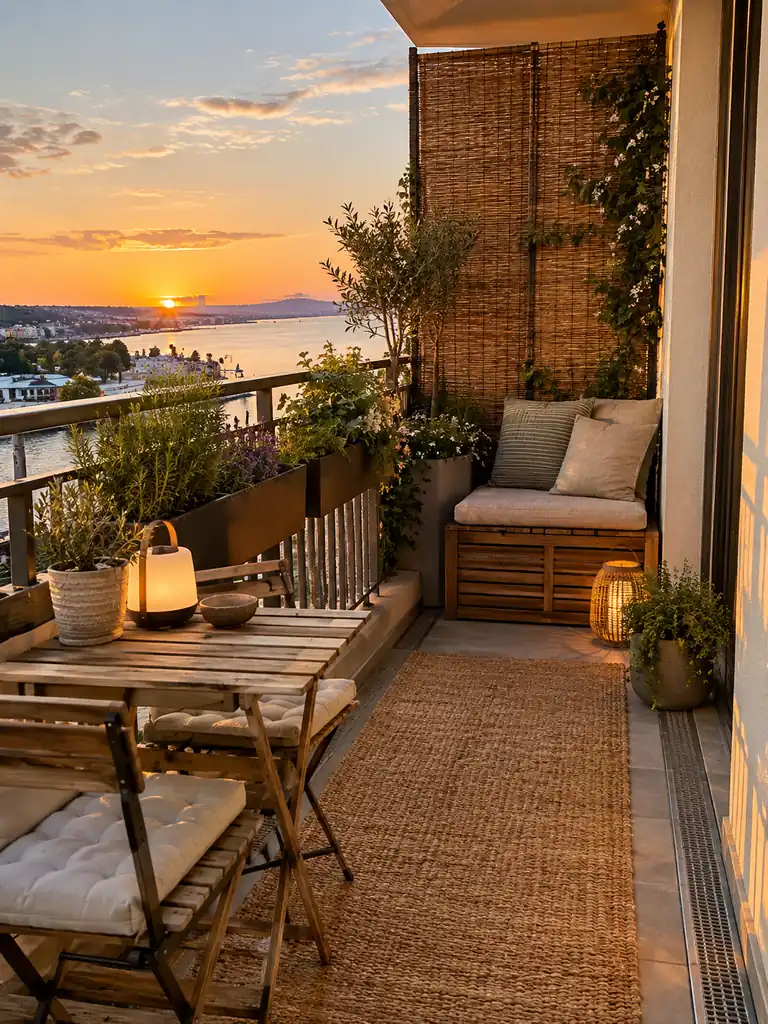
Balcony Escape Edit
| Checkpoint | Needs Attention | Ready to Enjoy |
|---|---|---|
| Walking route | Furniture blocks movement | Door and pathway remain clear |
| Wind safety | Loose decor or unstable pieces | Every item is secured or removable |
| Drainage | Rugs or pots cover outlets | Water can flow without obstruction |
| Comfort | Seating lacks shade or support | Seating suits regular use |
| Plant care | Light and watering needs conflict | Plants match balcony conditions |
The final edit should make the balcony safer, calmer, and easier to maintain. Sit in every chair, open the door fully, inspect railing attachments, and test the evening lighting. Remove anything unstable, unnecessary, or difficult to store, then keep only the pieces that genuinely support your outdoor escape.
Conclusion
A comfortable balcony does not require a large footprint or an expensive makeover. These Small Apartment Balcony Ideas show how folding furniture, portable lighting, vertical greenery, outdoor textiles, and weather-ready storage can create a practical escape. I’ve seen how one comfortable chair and a healthy plant can change how often an overlooked balcony gets used. Save this post on Pinterest so you can return to your favorite ideas, then begin with one update that fits your space and building rules. Share the article with another apartment dweller, and start creating an outdoor corner that feels calm, useful, and distinctly yours.