

A small bedroom can gain valuable storage without sacrificing light, movement, or comfort. These Small Bedroom Shelving Ideas show how overlooked walls, corners, alcoves, and furniture sides can support practical storage while keeping the room visually calm.
You will find options for books, clothing, accessories, work supplies, and decorative pieces, including solutions suitable for renters. Each idea considers shelf depth, placement, weight, accessibility, and the way people actually move around a bedroom. In my experience, measuring clearance before choosing shelves prevents most crowding problems. With thoughtful spacing and a restrained styling approach, you can organize more belongings while helping your compact bedroom feel open and comfortable.
Table of Contents
Shelf Clearance Map
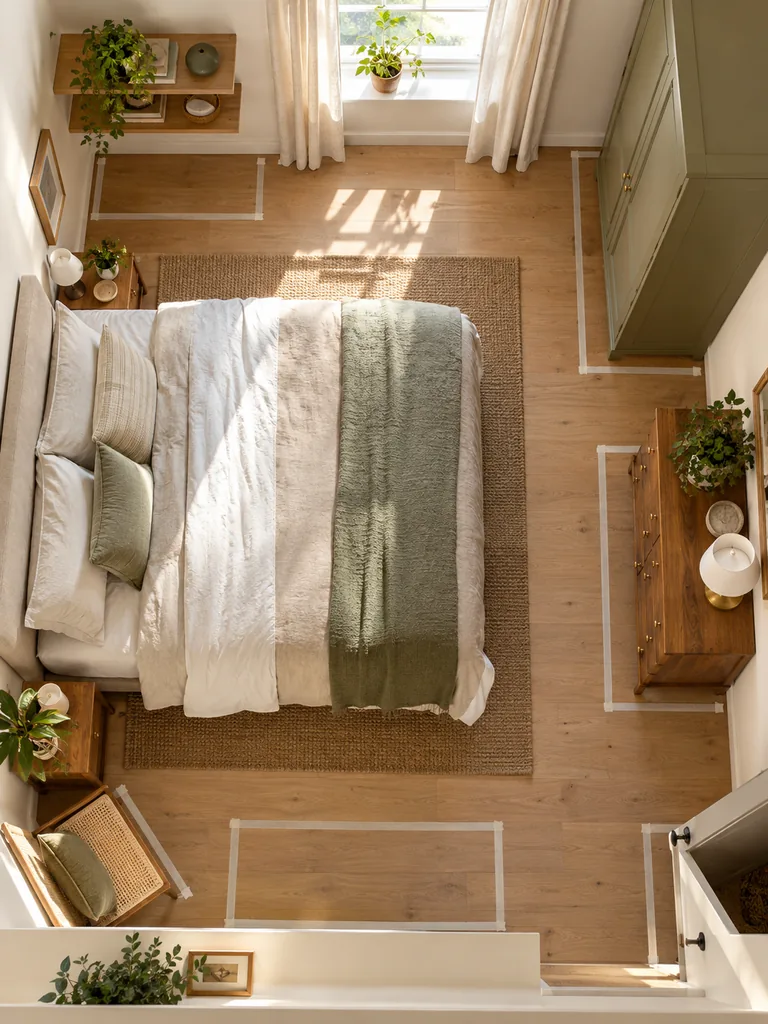
Good shelving begins with empty space that remains comfortable to use. Measure the distance beside the bed, above the dresser, around windows, and near wardrobe doors. Mark door swings, curtain movement, electrical outlets, and the natural route from the entrance to the bed.
Test each proposed shelf depth with removable tape before drilling or buying furniture. In my experience, a shelf that appears shallow on paper can still feel intrusive near shoulder height. Prioritize walls that support daily routines without narrowing passages, blocking daylight, or making furniture difficult to access.
Before installing shelves, review these Small Bedroom Layout Ideas to protect walking routes, wardrobe clearance, and comfortable bed access.
Corner Radius Shelves
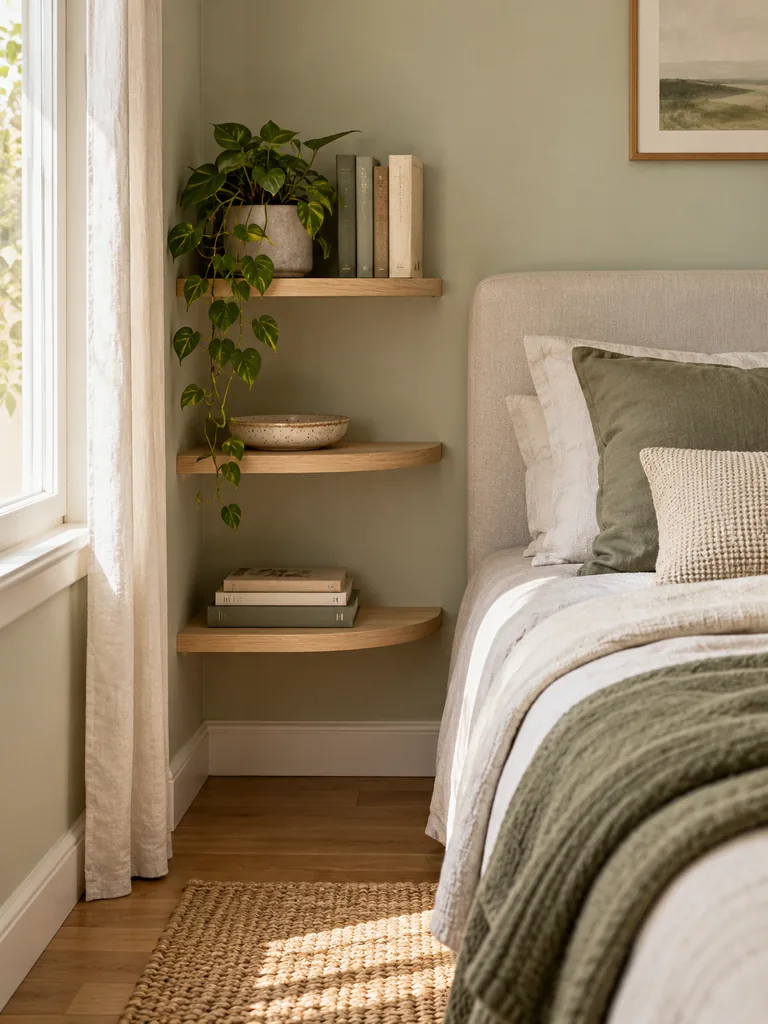
- Choose rounded shelves without projecting corners near the walking path.
- Keep the depth suitable for books, a small plant, or one storage basket.
- Mount each shelf into the correct wall support for its expected load.
- Leave comfortable vertical spacing between shelves.
- Place heavier belongings on the lowest level.
Rounded corner shelves recover storage from a space that is often left empty while reducing sharp edges near the bed or doorway. Limit each level to a few useful objects, and repeat similar colors or containers. The result feels lighter than a tall rectangular bookcase occupying the same corner.
Headboard Wall Rail
Quick Tip:
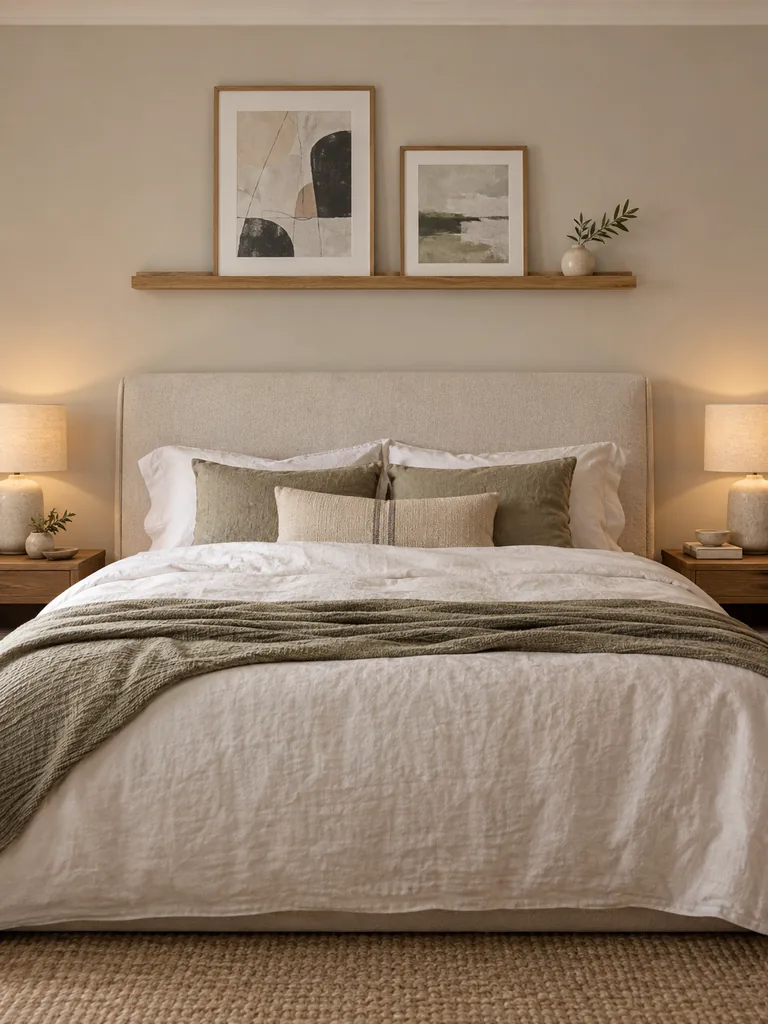
Position the rail high enough to avoid contact when sitting in bed. Use secure wall fixings, follow the manufacturer’s weight limit, and display only lightweight, stable pieces.
A shallow picture rail creates a flexible focal point without requiring several scattered wall holes. Layer two lightweight frames with a small decorative object, keeping everything away from the mattress edge. Avoid glass, heavy books, and unstable accessories above the sleeping area, even when the shelf appears firmly attached.
Window Return Library

BEFORE:
Books spread across a dresser or bedside table consume surfaces needed for daily essentials. A bulky bookcase near the window may also block daylight, curtains, or ventilation.
AFTER:
Shallow shelves along the side wall create a compact vertical library. Books remain visible while the window and surrounding floor area stay accessible.
Window-side shelving works best when its depth matches the narrow wall return rather than extending into the room. Keep shelves clear of handles, blinds, radiators, and curtain movement. Place frequently read books at eye level, with heavier volumes lower down, then leave some open space to prevent a crowded appearance.
Wardrobe End Shelves
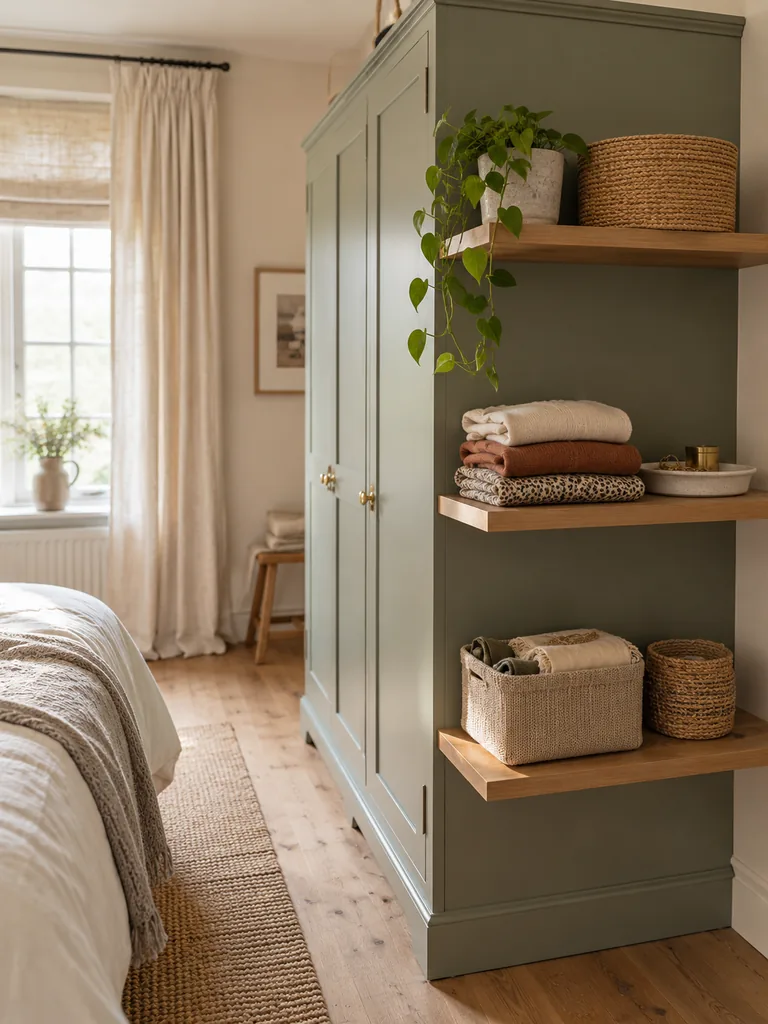
- Check the wardrobe: Confirm the unit is stable and suitable for approved attachments.
- Measure the side panel: Record the available width, shelf depth, and nearby walking clearance.
- Choose light storage: Plan space for accessories, folded items, or compact baskets rather than heavy objects.
- Install securely: Follow the shelving and wardrobe manufacturer’s guidance.
- Test movement: Open doors and drawers fully before loading the shelves.
The exposed end of a wardrobe can support useful storage without taking another section of floor. Keep the shelves shallower than the wardrobe body and place everyday accessories within easy reach. Matching baskets control visual clutter, while an empty section helps the arrangement feel intentional rather than overloaded.
Desk Canopy Shelf

| Detail | Crowded Desktop | Overhead Shelf |
|---|---|---|
| Work surface | Covered with supplies | Mostly clear |
| Storage | Mixed piles | Defined categories |
| Visibility | Important items disappear | Essentials remain easy to scan |
| Floor use | Extra drawer unit needed | No added footprint |
A shallow shelf above the desk keeps notebooks, stationery, and lightweight supplies close without shrinking the work area. Mount it beyond comfortable head clearance and avoid overloading it with files. Keep daily tools in one basket, display only a few objects, and route nearby cables separately from the shelf supports.
Dresser Span Shelf
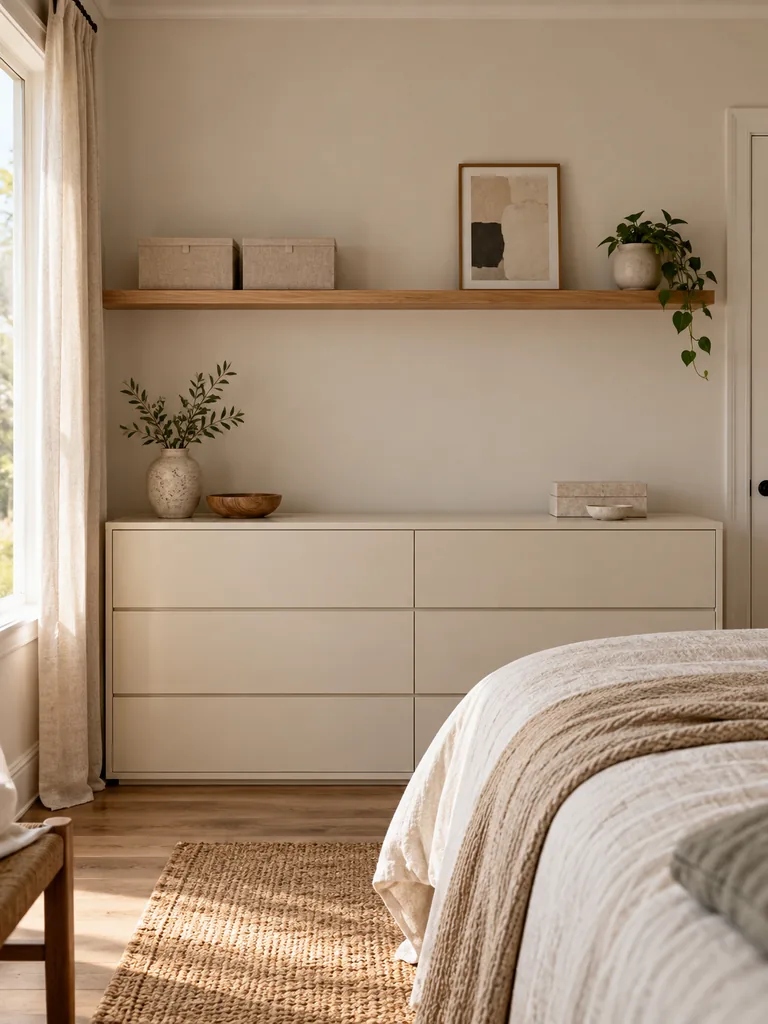
DO
- Measure the dresser width and wall space before choosing shelf length.
- Leave enough vertical clearance for lamps, mirrors, and daily items.
- Store lightweight baskets and decorative objects securely.
- Align the shelf visually with the furniture below.
DON’T
- Mount the shelf where standing users may hit their heads.
- Exceed the shelf or wall fixing weight limit.
- Fill every section with small decorations.
- Store unstable glass objects near the edge.
A long shelf connects the dresser to the wall above while keeping the furniture surface available for daily use. Repeat two or three storage containers rather than mixing many styles. I’ve noticed that leaving part of the shelf empty makes both the storage and the bedroom feel calmer.
Clothing Rail Topper
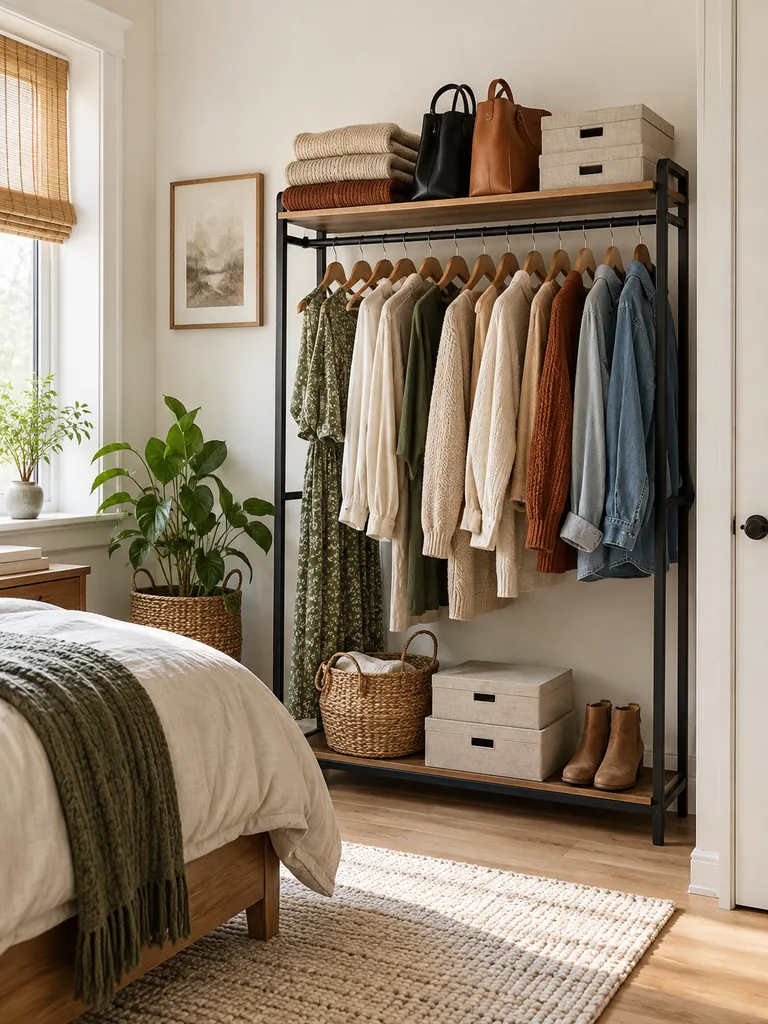
Cost: Moderate
Setup Time: About 30 to 45 minutes
Best For: Bedrooms with limited wardrobe storage
Result: Hanging and folded clothing share one compact footprint
A garment rack with an integrated upper shelf makes better use of the height above hanging clothes. Store lightweight bags, folded sweaters, or labeled fabric boxes on top, keeping heavy belongings elsewhere. Choose a stable rack with suitable load ratings, and leave enough space to remove items comfortably.
If your room lacks built-in clothing space, these No Closet Bedroom Storage Ideas provide more practical ways to organize hanging and folded items.
Alcove Shelf Stack

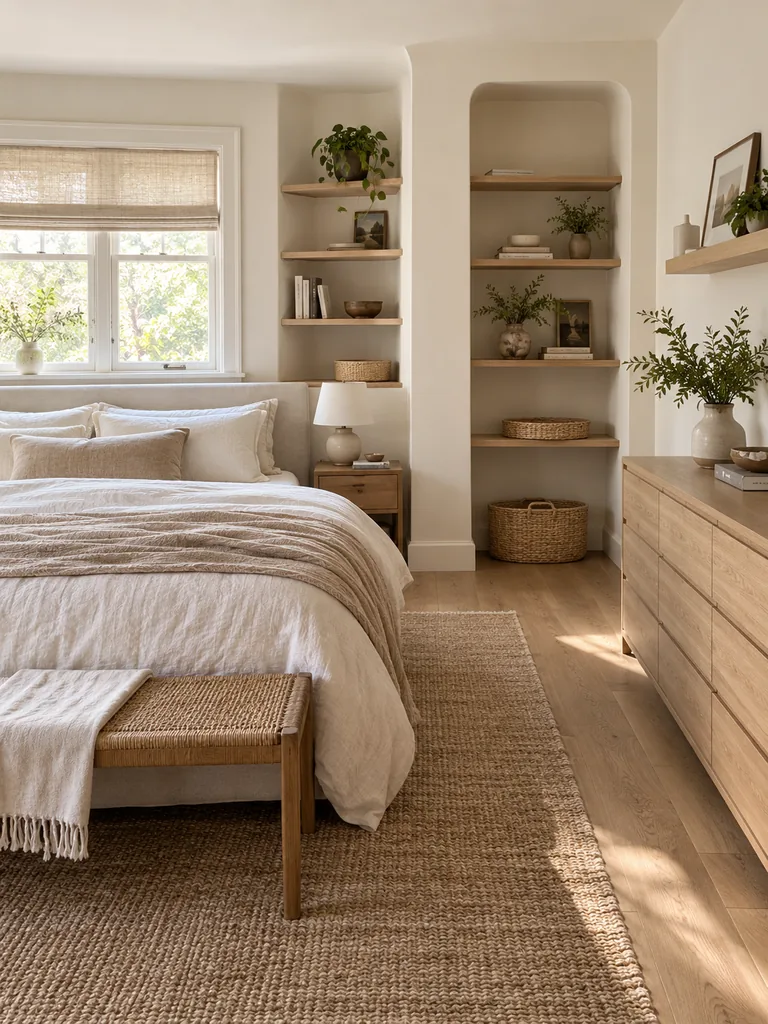
A recessed alcove can hold substantial storage without allowing furniture to project into the room. Measure the width at several heights because older walls may not be perfectly even. Adjustable shelves make it easier to accommodate books, folded clothing, baskets, and changing storage needs.
Keep the deepest or heaviest belongings on lower levels and reserve eye-level shelves for frequently used items. In my experience, matching baskets create order without making the recess feel closed in. Leave gaps between categories, and avoid extending shelves across vents, outlets, or access panels.
Low Bed-End Shelf
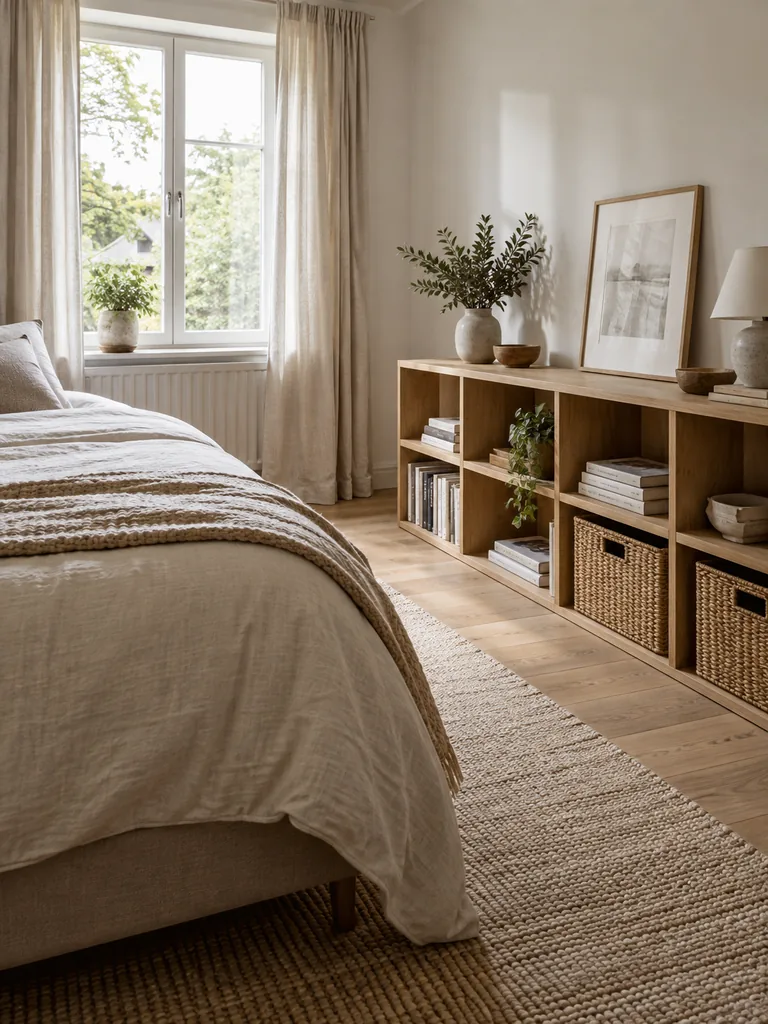
- Measure the clearance between the bed and opposite wall before adding furniture.
- Choose a low shelf that does not extend beyond the mattress width.
- Keep heavier books or storage baskets on the bottom level.
- Leave the top partly open for temporary daily items.
- Confirm that drawers, doors, and walking routes remain accessible.
A low bed-end shelf adds storage while preserving an open view across the bedroom. It works best where generous passage space remains after installation. Choose rounded corners when possible, avoid stacking objects above mattress height, and secure the unit if the manufacturer recommends anchoring it.
Mirror Side Shelves

Quick Tip:
Mark the mirror’s full viewing area before placing shelves. Install them on one side rather than both when symmetrical storage would make a narrow dressing zone feel crowded.
Slim shelves beside a mirror keep perfume, grooming tools, jewelry dishes, and daily accessories within reach. Select a shallow depth that does not interfere with movement, then use trays to contain small items. Keep electrical styling tools unplugged and stored safely once they have cooled completely.
The same approach to using narrow wall areas can be applied through these vertical bathroom storage ideas, including shelves and cabinets above the toilet.
Reversible Crate Shelves

BEFORE:
Loose crates stacked without a plan can shift, create uneven gaps, and make the bedroom resemble temporary storage. Mixed orientations may also hide items or waste usable space.
AFTER:
A low, secured crate arrangement provides flexible shelves with consistent openings. The units can be reoriented later when storage needs or furniture placement change.
Crates work best when their condition, strength, and dimensions are checked before assembly. Sand rough surfaces, connect adjoining units with appropriate hardware, and keep the arrangement low. Use fitted baskets for smaller belongings, place heavier objects at the base, and avoid relying on unstable friction stacking.
Tension Pole Shelves
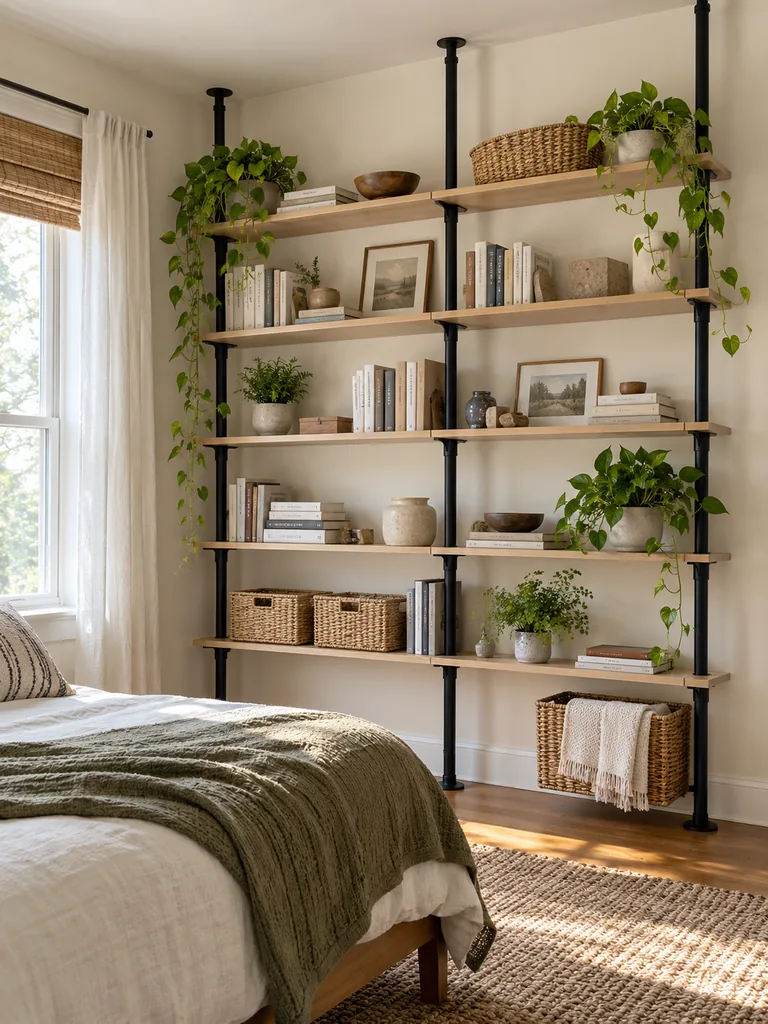
- Confirm permission: Review the rental agreement and product requirements before installation.
- Measure accurately: Record the floor-to-ceiling height at the exact placement point.
- Choose light contents: Plan storage for books, accessories, or small baskets within the rated capacity.
- Install correctly: Follow the manufacturer’s tension and surface-protection instructions.
- Test stability: Check every shelf before adding belongings.
A tension-pole system creates vertical storage without occupying the width of a conventional bookcase. Keep the arrangement away from ceiling fixtures, vents, and busy walkways. Distribute weight evenly, inspect the tension regularly, and remove the unit immediately if it begins shifting or marking either surface.
Shelf Basket Pairing
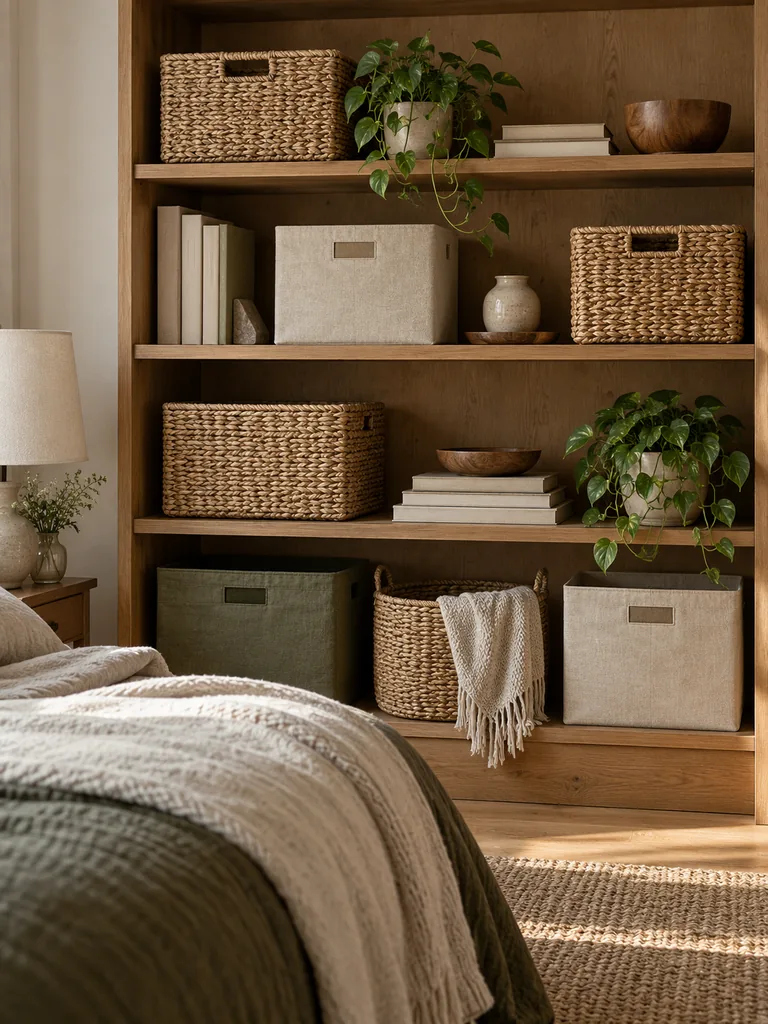
| Detail | Open Shelf Only | Shelf With Baskets |
|---|---|---|
| Small items | Appear scattered | Stay grouped |
| Visual effect | Can feel busy | Looks more controlled |
| Access | Individual pieces are exposed | Categories move together |
| Cleaning | Requires moving many objects | Baskets lift away quickly |
Fitted baskets allow open shelving to hold practical belongings without displaying every small item. Measure shelf height and depth before buying containers, then assign one clear category to each basket. Choose handles for frequently used items and lighter fabric bins for higher shelves to improve safe, comfortable access.
For more ways to organize clothing, accessories, and everyday belongings, explore these practical Small Bedroom Storage Ideas.
Bedroom Shelf Edit
DO
- Remove items that belong in another room.
- Keep frequently used belongings at comfortable heights.
- Check brackets, fixings, and freestanding units regularly.
- Leave selected shelf areas intentionally empty.
DON’T
- Exceed stated weight limits.
- Block windows, vents, outlets, or switches.
- Store heavy objects above the bed.
- Allow containers to project into walking routes.
The final edit determines whether bedroom shelving feels helpful or crowded. View the room from the doorway, bed, and main walkway, then remove repeated decorations and inaccessible storage. I’ve seen this work well because open space makes useful objects easier to locate while allowing the room to feel calmer.
Conclusion
Thoughtful shelving can add useful storage without making a compact bedroom feel smaller. These Small Bedroom Shelving Ideas help you use corners, alcoves, furniture sides, and overlooked wall areas while preserving comfortable movement. Start with one problem zone, measure it carefully, and select a shelf that supports what you actually use there. I’ve noticed that leaving some shelf space empty often makes the whole room feel more organized. Save this post on Pinterest, try one or more ideas in your bedroom, and share it with anyone who needs practical storage without extra clutter. Start small and build with purpose.