

Tired of searching for coffee mugs, breakfast ingredients, and clean utensils every morning? These Small Kitchen Organization Ideas will help you create a tidy, practical kitchen where everything you need is easy to find.
Limited cabinet space, crowded countertops, and overflowing drawers can make even a simple breakfast feel stressful. I’ve noticed that the biggest improvement often comes from organizing everyday essentials around your routine rather than buying more storage containers.
From dedicated coffee stations and breakfast baskets to clever cabinet organizers and compact drying racks, these 17 ideas offer practical solutions for small kitchens. You’ll discover simple ways to save counter space, reduce clutter, and prepare for busy mornings without expensive renovations or complicated organizing systems.
Table of Contents
Grab-and-Go Breakfast Shelf
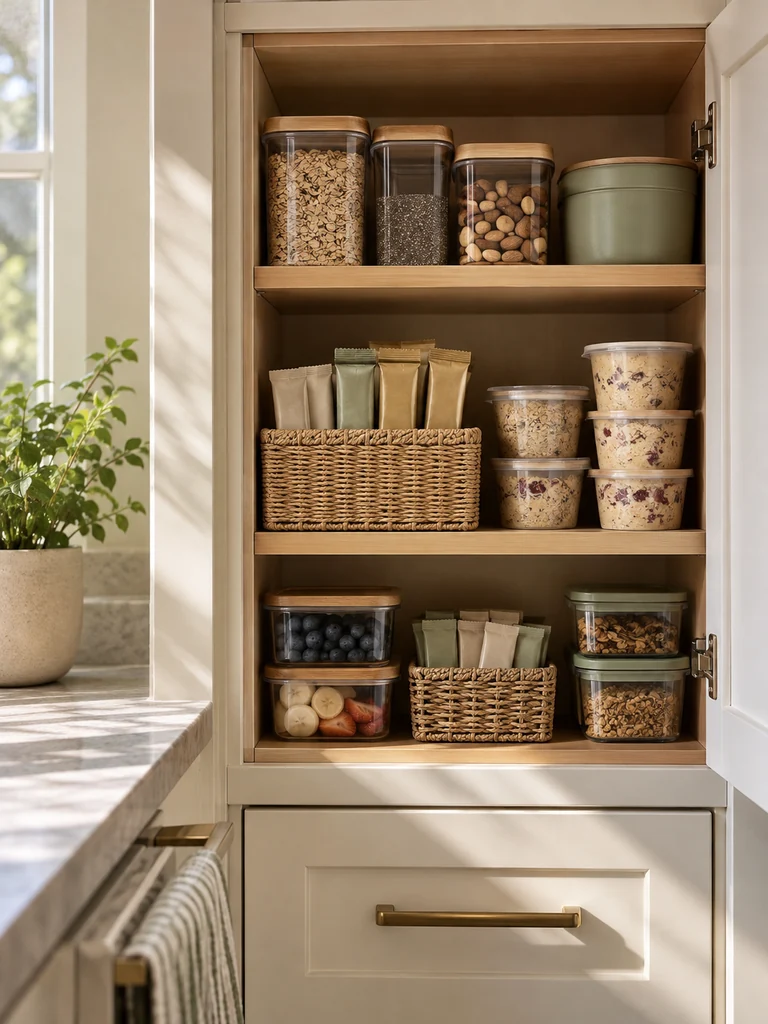
A grab-and-go breakfast shelf keeps portable morning essentials in one convenient location, making rushed mornings easier to manage. Choose an accessible cabinet shelf near your food preparation area and organize breakfast bars, oatmeal cups, and sealed snacks in shallow containers. Keep frequently used items at the front for quick access.
Divide the shelf into simple categories, such as ready-to-eat snacks, portable breakfast portions, and reusable food containers. Avoid stacking packages too high or overcrowding the space. Check supplies every weekend, rotate older products forward, and restock missing essentials so your morning routine stays organized throughout the week.
Breakfast Essentials Basket
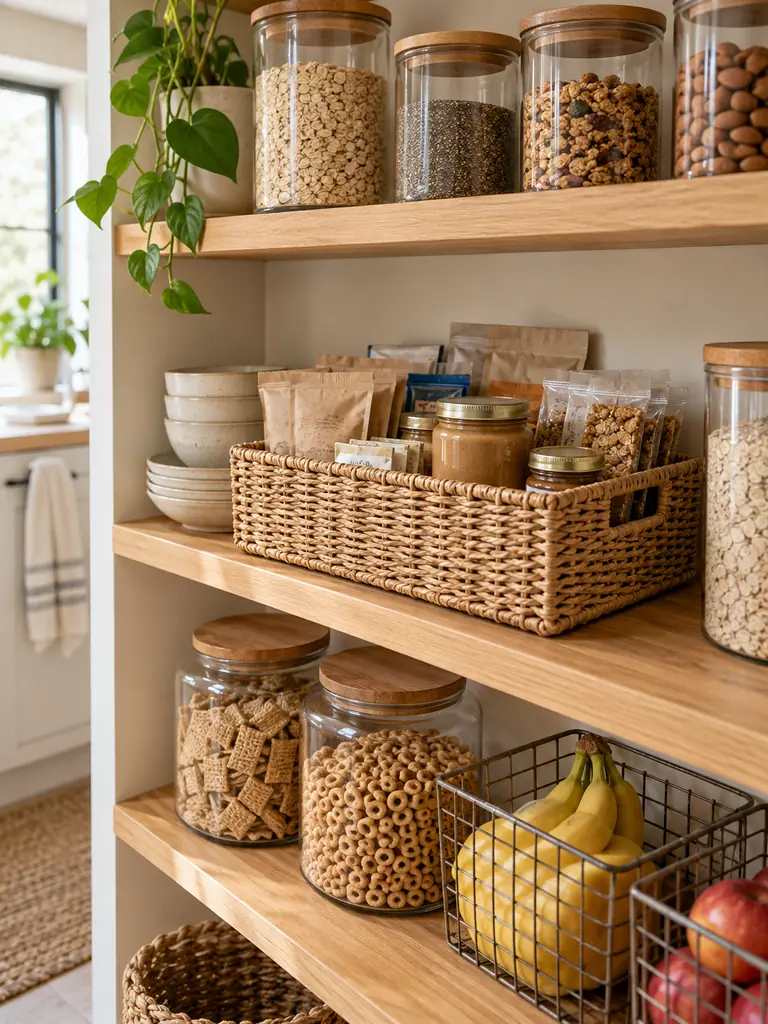
- Choose a compact basket: Pick a shallow woven or washable plastic basket that fits comfortably inside your pantry or kitchen cabinet.
- Group everyday breakfast foods: Keep oatmeal packets, cereal bars, sealed spreads, and other shelf-stable breakfast essentials together.
- Separate individual portions: Use small containers or dividers to prevent packets and snack bars from getting buried.
- Keep frequently used items accessible: Position the basket on a shelf you can reach without moving other containers.
- Check supplies weekly: Remove empty packaging, check expiration dates, and refill breakfast staples before the workweek begins.
A breakfast basket reduces the time spent searching through cabinets when everyone is getting ready. It also helps prevent duplicate grocery purchases because your everyday supplies stay visible. For families, consider separate baskets for adult and children’s breakfast items, keeping age-appropriate foods accessible and reducing unnecessary morning decisions.
Easy-Access Mug Storage
Quick Tip:
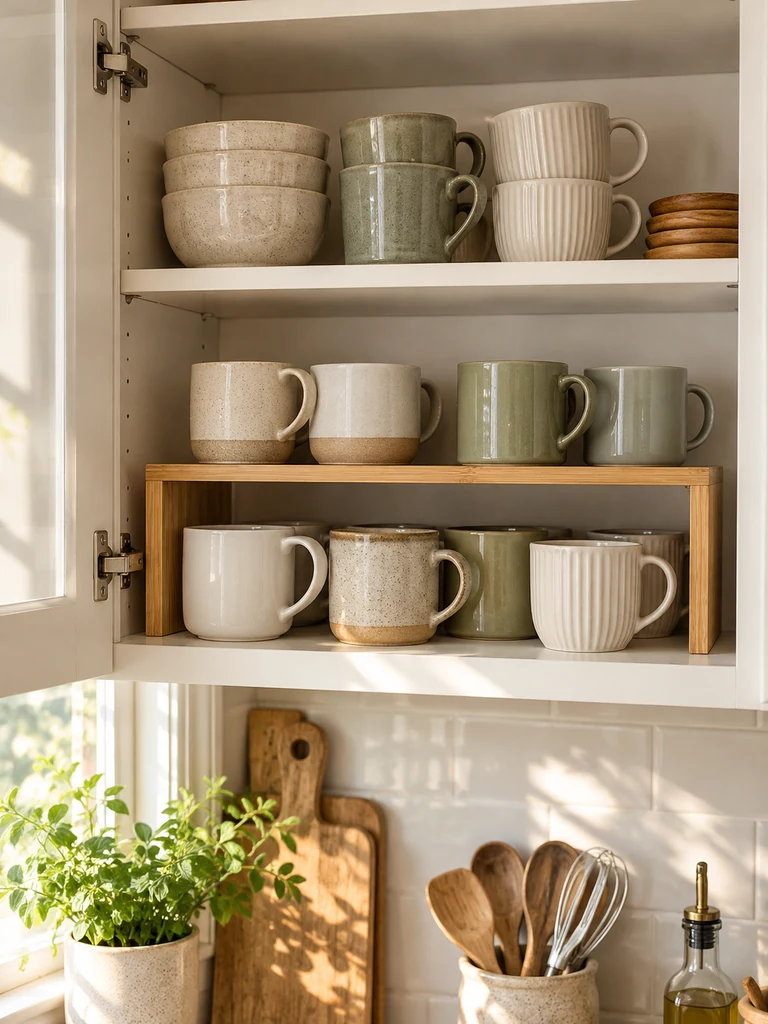
Keep your most frequently used mugs on the lowest convenient cabinet shelf, close to your coffee station. A compact shelf riser can create an extra storage level without stacking fragile mugs directly on top of one another. Avoid overcrowding shelves or placing heavy mugs on unsuitable adhesive hooks.
Organize mugs by frequency of use rather than color or size alone. Store everyday favorites at the front and occasional mugs toward the back or on a higher shelf. If cabinet space is limited, a sturdy countertop mug tree can work, provided it remains stable and doesn’t crowd your preparation area.
Countertop Appliance Zone
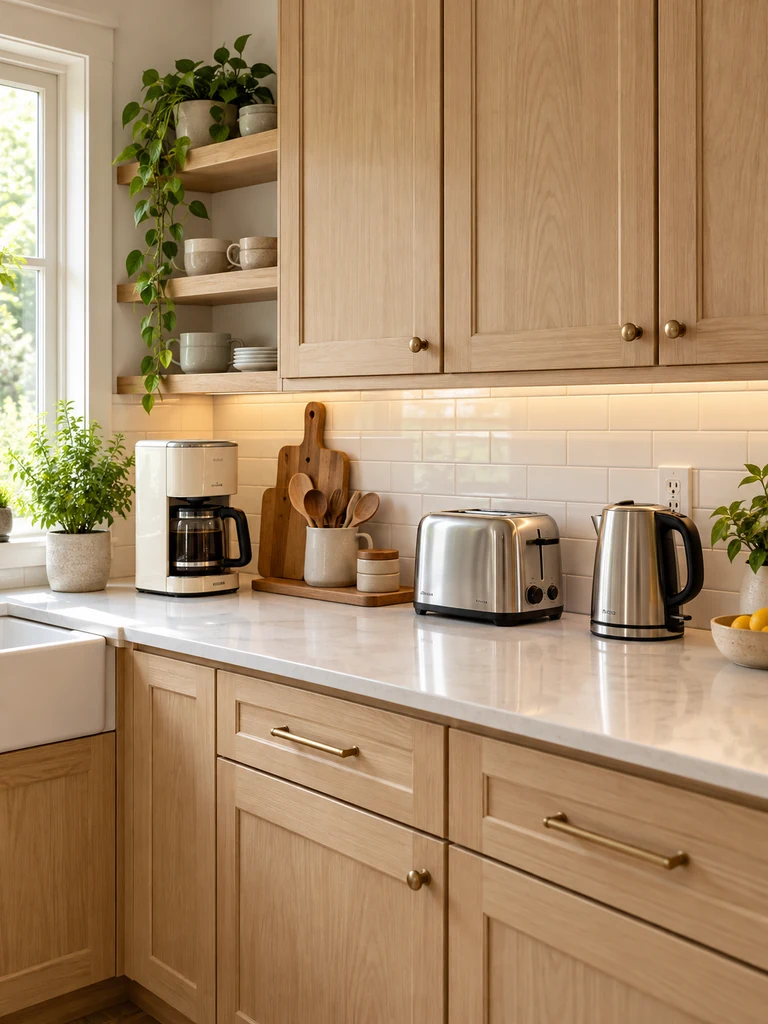
Before:
Your toaster, coffee maker, blender, and electric kettle occupy different sections of the kitchen counter. Preparing breakfast means constantly moving appliances and searching for available workspace. Tangled cords make the counter feel even more crowded.
After:
Frequently used appliances are grouped according to your morning routine, with enough space for safe operation. Less frequently used equipment stays inside accessible cabinets. A clear section of countertop remains available for preparing breakfast and packing lunches.
Start by identifying which appliances you actually use every morning. Position them near suitable electrical outlets without overloading sockets or blocking ventilation. Store occasional appliances in lower cabinets to keep counters open. Leave manufacturer-recommended clearance around heat-producing equipment and avoid placing appliances beneath low shelves when operating.
For more practical ways to keep your preparation area tidy, explore these small kitchen counter organization ideas that help maximize limited countertop space without sacrificing everyday convenience.
Organized Cutlery Drawer
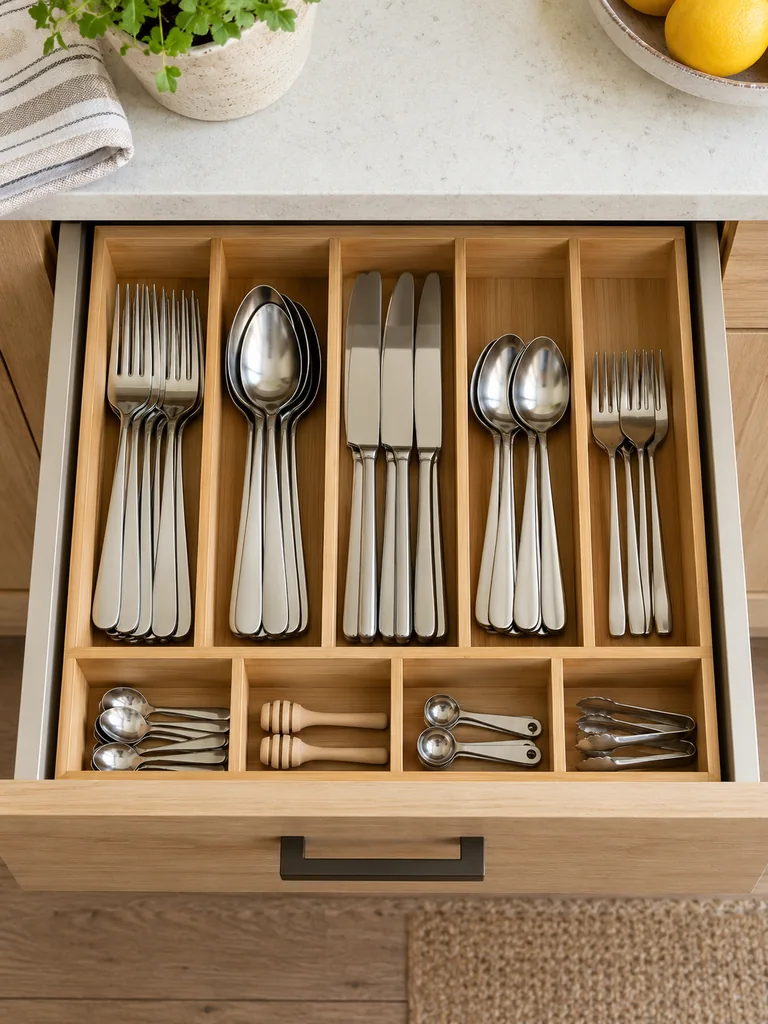
1. Empty the Drawer: Remove all utensils and wipe the interior with a damp cloth. Allow the surface to dry completely before reorganizing.
2. Sort Everyday Essentials: Separate forks, spoons, knives, and frequently used breakfast utensils. Move duplicates and rarely used serving pieces to another storage area.
3. Measure the Interior: Check the drawer’s width, depth, and height before purchasing a divider. Choose an adjustable organizer that fits without restricting drawer movement.
4. Arrange by Frequency: Place everyday cutlery in the easiest compartments to reach. Keep sharp utensils in suitable protective storage.
5. Maintain the Layout: Return clean utensils to their designated sections and remove unnecessary duplicates during regular kitchen cleanups.
A well-organized cutlery drawer makes breakfast preparation faster because everything has a predictable location. Adjustable bamboo or plastic dividers work especially well in narrow kitchen drawers. Choose compartments that accommodate your actual utensils rather than buying an oversized organizer. Keep the arrangement simple enough for everyone in the household to maintain.
Pull-Out Pantry Baskets

| Feature | Fixed Pantry Shelves | Pull-Out Pantry Baskets |
|---|---|---|
| Accessibility | Items at the back can be difficult to reach | Stored items slide forward for easier access |
| Visibility | Smaller packages may become hidden | More contents remain visible when opened |
| Organization | Products can accumulate in uneven stacks | Categories stay grouped in separate baskets |
| Installation | No additional hardware needed | Requires a compatible cabinet or freestanding sliding organizer |
| Best Use | Large containers and frequently used items | Packets, jars, snacks, and pantry essentials |
Deep kitchen cabinets often hide ingredients behind taller containers, making morning food preparation unnecessarily slow. Choose sliding baskets that fit your cabinet dimensions and support the intended weight. Group breakfast supplies separately from cooking ingredients, and avoid overloading the tracks. For rentals, consider freestanding pull-out organizers that require no permanent installation.
If your cabinets still feel overcrowded, explore these small kitchen storage ideas for clever ways to organize pantry essentials, cookware, and everyday kitchen supplies.
Vertical Cabinet Dividers

Do:
- Measure cabinet height and depth before purchasing vertical dividers.
- Store cutting boards, baking sheets, and serving trays upright in separate slots.
- Choose sturdy adjustable dividers that remain stable when items are removed.
- Keep frequently used breakfast trays near the front for easier access.
Don’t:
- Stack heavy baking sheets above delicate cutting boards.
- Force oversized trays into narrow compartments.
- Place unstable dividers where they could fall when the cabinet opens.
- Overfill every slot until individual items become difficult to remove.
Vertical storage keeps flat kitchen essentials accessible without creating messy stacks. Position dividers inside a lower cabinet where larger trays can be removed comfortably. Group similar items together, leaving enough room to slide each one out independently. This arrangement also makes it easier to notice when something needs cleaning.
Under-Sink Cleaning Caddy

Cost: Approximately $10 to $30 for a basic portable caddy and small organizers.
Time Needed: 15 to 25 minutes.
Best For: Compact kitchens with limited cleaning supply storage.
Difficulty: Beginner-friendly, with no permanent installation required.
An organized cleaning caddy keeps dish soap, sponges, and approved surface cleaners accessible for quick morning cleanups. Choose a washable container that fits around existing plumbing without blocking shutoff valves. Keep cleaning chemicals in their original labeled containers, away from food, and secured against access by children or pets.
Fridge Breakfast Zone
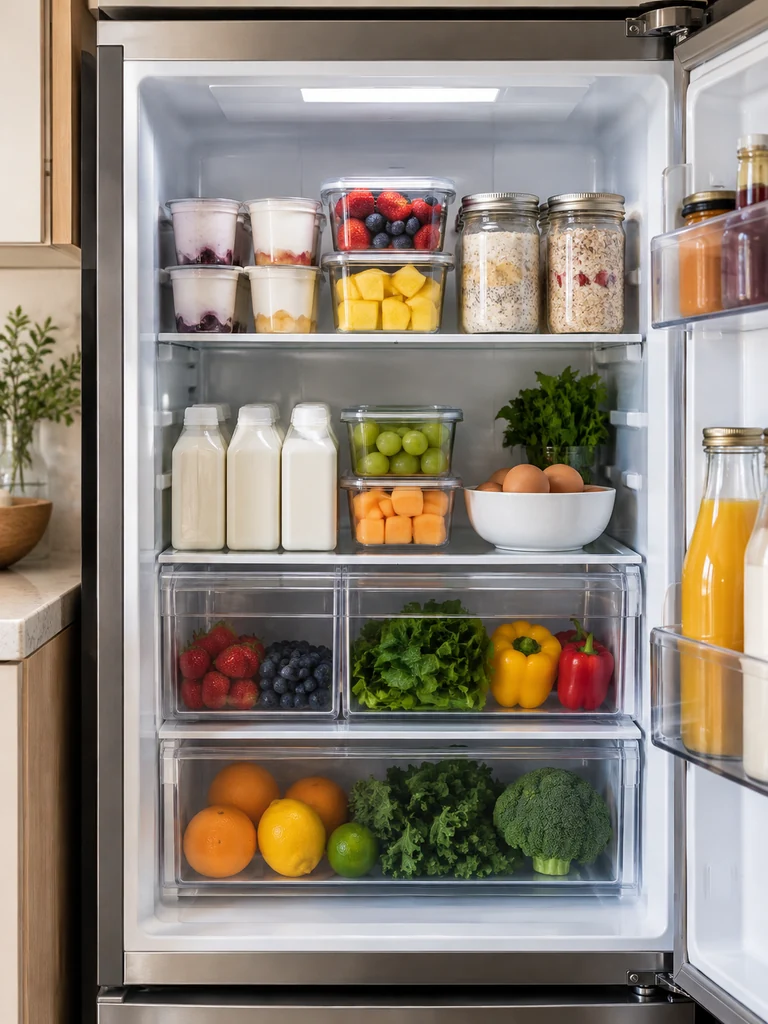
Busy mornings become easier when breakfast ingredients have a predictable location inside the refrigerator. Dedicate a clearly visible shelf section to yogurt, milk, prepared fruit, and other frequently used foods. Use shallow, refrigerator-safe bins to group smaller packages while keeping labels and expiration dates easy to check.
Place ready-to-eat items away from raw meat and potential drips, following safe refrigerator storage practices. Avoid overcrowding shelves or blocking airflow, and keep the refrigerator at 40°F (4°C) or below. Check the breakfast section before grocery shopping so you can replenish essentials without buying unnecessary duplicates.
Clear Food Storage Containers
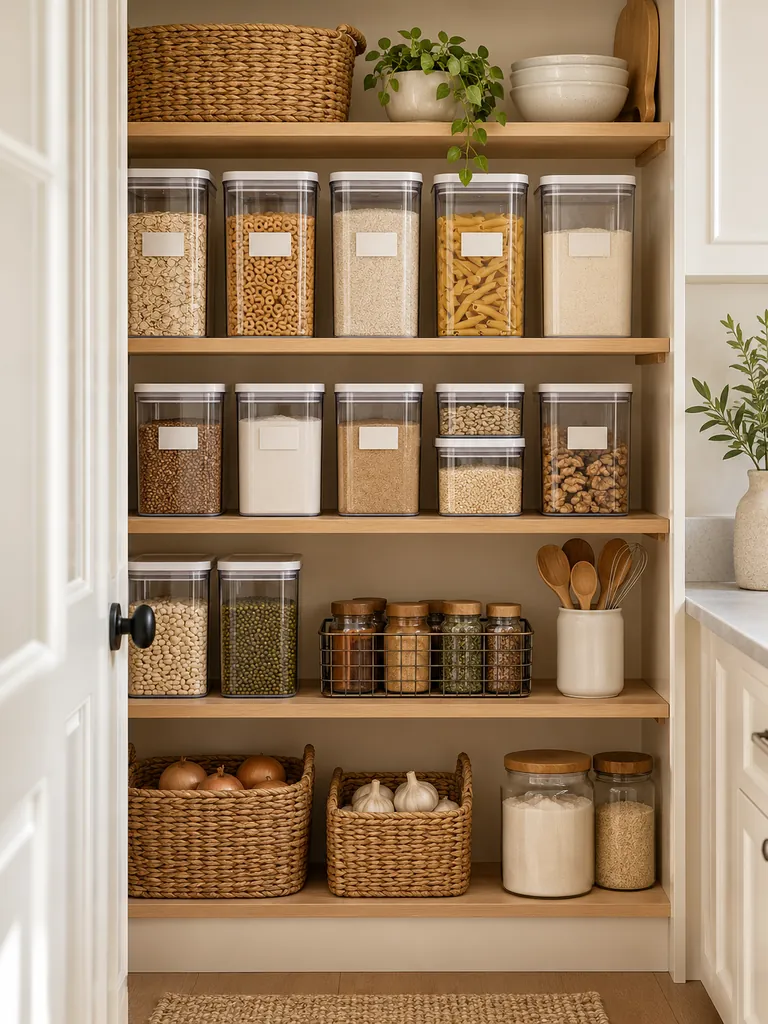
- Choose stackable containers: Select airtight, food-safe containers with flat lids that fit your cabinet shelves without wasting vertical space.
- Group similar ingredients: Store cereal, oats, rice, and other dry pantry staples in separate containers to prevent mixing and confusion.
- Add clear labels: Write the ingredient name, expiration date, and any important preparation instructions on removable labels.
- Match container sizes to quantities: Use smaller containers for frequently purchased ingredients rather than filling cabinets with oversized storage jars.
- Keep packaging information: Save cooking directions and allergen details when transferring food from its original packaging.
Clear containers help you identify breakfast ingredients quickly while keeping pantry shelves visually organized. Measure your cabinets before purchasing a matching set, and choose containers that are comfortable to lift when filled. Wash and dry each container thoroughly before use, and rotate older ingredients forward when replenishing supplies.
Slim Kitchen Rolling Cart
Quick Tip:
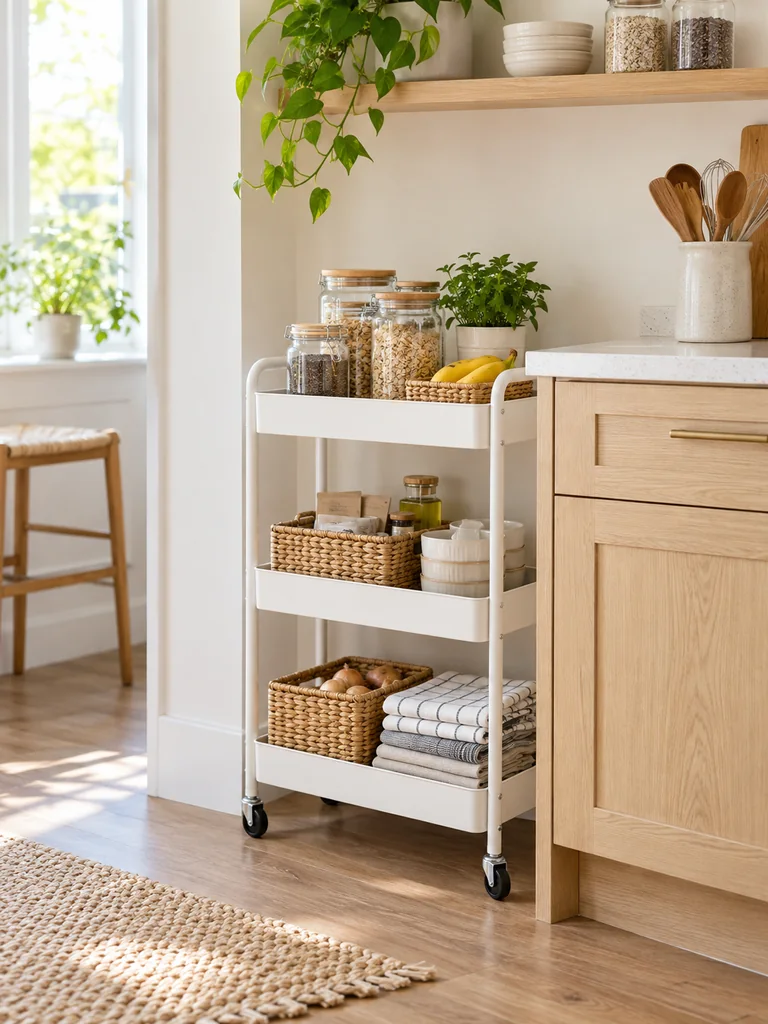
Measure the narrow gap beside your cabinets or refrigerator before choosing a rolling cart. Leave enough clearance for doors, drawers, and appliance ventilation. Select a sturdy model with locking wheels if it will stand in an area where people frequently walk.
A slim cart can hold breakfast supplies, reusable containers, and lightweight pantry items without requiring permanent installation. Arrange heavier products on the bottom shelf to improve stability, and keep frequently used essentials near the top. Avoid placing the cart beside heat sources or where it could block kitchen walkways.
For more space-saving solutions beyond the kitchen, explore these small apartment storage ideas that help organize everyday belongings without adding bulky furniture.
Wall-Mounted Kitchen Rail

Before:
Cooking utensils crowd a small countertop container, while measuring spoons and frequently used tools disappear into drawers. Limited preparation space becomes even more frustrating during busy mornings. Finding the right utensil often means moving several items out of the way.
After:
A compact kitchen rail holds selected utensils neatly above a suitable work area. Frequently used tools remain visible and easy to reach, leaving more countertop space available for food preparation. The arrangement looks organized without displaying every kitchen accessory.
Choose a rail that fits the available wall space and supports the weight of your utensils. Follow the manufacturer’s mounting instructions, and obtain permission before drilling in a rental. Keep hanging tools away from burners and electrical outlets. If wall installation is unsuitable, consider a stable freestanding utensil holder instead.
Cabinet Door Organizers

1. Measure the Cabinet Door: Check its width, thickness, and interior clearance before choosing an organizer. Make sure existing shelves and stored items will not interfere with the door closing.
2. Choose Suitable Storage: Select a lightweight over-door organizer or a manufacturer-approved mounting system that suits your cabinet material.
3. Group Small Essentials: Store lightweight items such as measuring spoons, food storage bags, or cleaning cloths in separate compartments.
4. Check Door Movement: Open and close the cabinet several times to confirm that the organizer does not scrape nearby surfaces or strain the hinges.
5. Keep the Load Light: Follow the organizer’s weight limit and remove unnecessary items during regular kitchen cleanups.
Cabinet door organizers make use of overlooked storage space without adding bulky furniture to a small kitchen. They work especially well for lightweight accessories that disappear inside deep drawers. Choose shallow designs for narrow cabinets, and avoid installing organizers where they could interfere with plumbing, hinges, or stored products.
Spice Drawer Organization
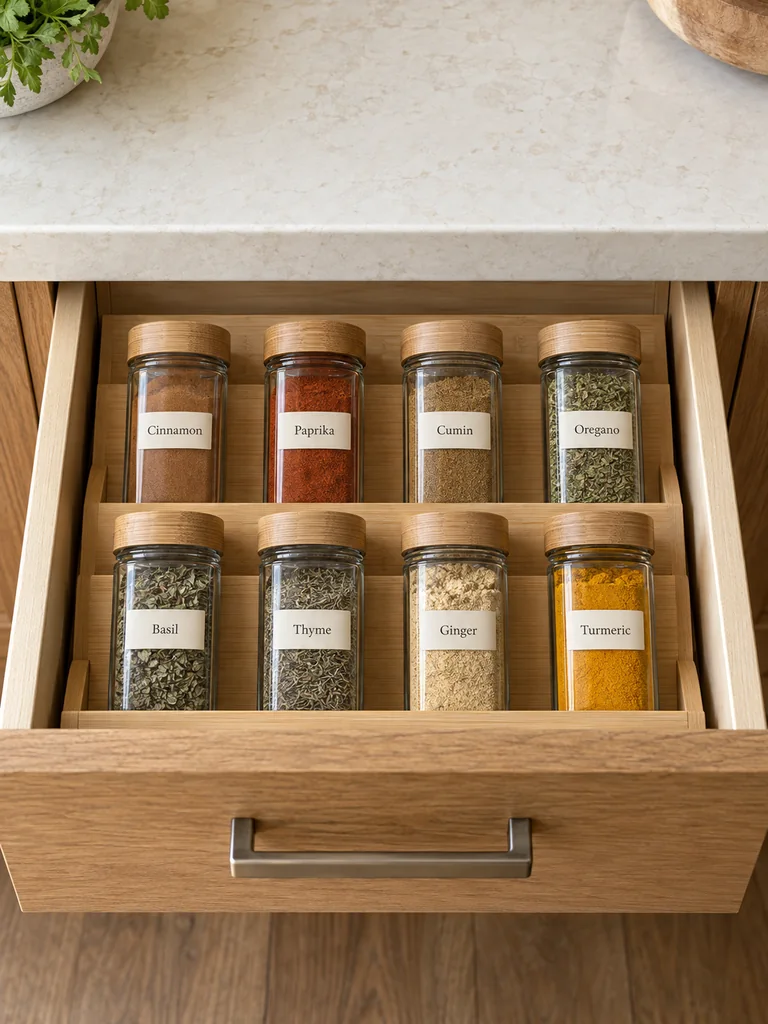
| Feature | Mixed Spice Drawer | Organized Spice Drawer |
|---|---|---|
| Arrangement | Jars scattered in different directions | Jars arranged in consistent rows |
| Visibility | Labels difficult to identify | Labels clearly visible from above |
| Accessibility | Frequent searching and rearranging | Everyday seasonings easy to reach |
| Space Usage | Uneven gaps between containers | Compact inserts maintain orderly spacing |
| Maintenance | Duplicate jars easily overlooked | Inventory easier to check and refill |
A dedicated spice drawer keeps frequently used seasonings organized without taking up valuable countertop space. Choose a low-profile insert that fits your drawer height and accommodates your existing jars. Arrange everyday spices toward the front, label lids when necessary, and keep seasonings away from excessive heat, moisture, and direct sunlight.
Compact Dish Drying Setup
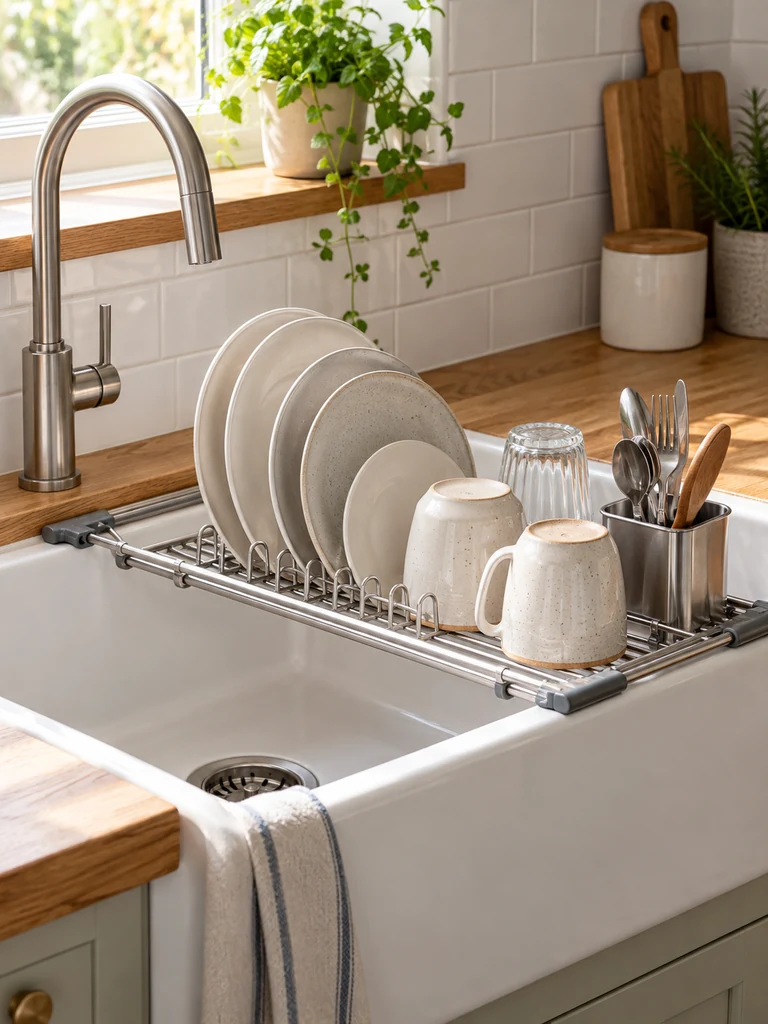
Do:
- Choose a foldable drying rack that fits beside or over your sink.
- Select rust-resistant materials suitable for frequent exposure to water.
- Keep enough space around dishes for proper airflow and drying.
- Empty and clean the draining tray regularly to prevent buildup.
Don’t:
- Overload a narrow rack with heavy pots or unstable stacks of dishes.
- Leave standing water beneath drying accessories.
- Block access to the sink or essential countertop preparation space.
- Store damp dishcloths in enclosed containers without allowing them to dry.
A compact dish drying station prevents clean dishes from taking over limited kitchen counters. Over-sink racks work well when properly sized and securely positioned, while foldable countertop versions are useful for occasional washing. Choose a setup that supports your typical dishwashing load and can be cleaned easily between uses.
Weekly Breakfast Prep Zone

Cost: Low, using existing containers and refrigerator space.
Time Needed: Approximately 20 to 30 minutes each week.
Best For: Busy households, early work schedules, and school mornings.
Result: Faster breakfast preparation with fewer last-minute decisions.
Preparing breakfast ingredients in advance helps keep hectic mornings manageable. Dedicate one refrigerator section to ready-to-use ingredients such as washed fruit, yogurt, and properly stored overnight oats. Label prepared foods with dates, use food-safe containers, and follow recommended refrigeration times. Restock the zone before the workweek begins.
Five-Minute Kitchen Reset
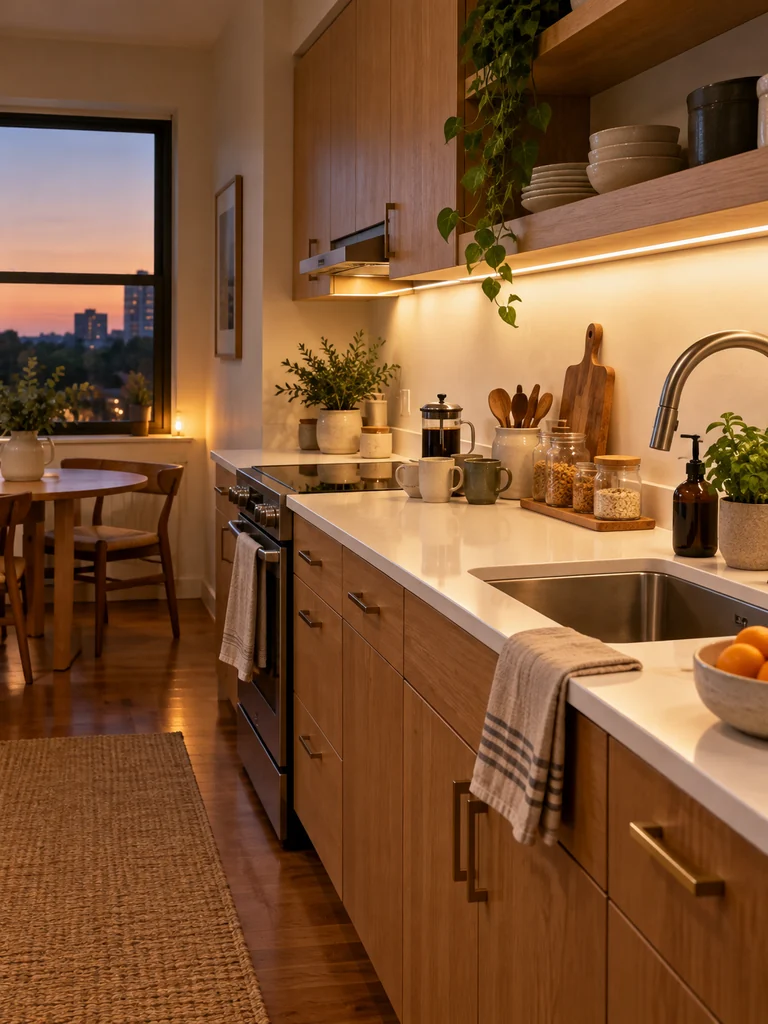
A short evening reset helps your kitchen stay functional without requiring a lengthy cleaning session. Start by clearing breakfast dishes, wiping preparation surfaces, and returning coffee supplies to their designated storage areas. Put away dry utensils, check that food is stored safely, and remove unnecessary items from the countertop.
Before leaving the kitchen, prepare anything that will simplify tomorrow’s routine, such as placing clean mugs near the coffee maker or checking breakfast ingredients. Keep the process realistic by focusing on frequently used areas rather than reorganizing every cabinet. A consistent five-minute habit makes the next morning noticeably smoother.
Conclusion
A more organized kitchen can make your entire morning feel calmer, even when counter space and storage are limited. These Small Kitchen Organization Ideas show how thoughtful storage, accessible breakfast essentials, and simple daily habits can create a more functional space.
Start with the area that causes the most frustration, whether it’s a crowded drawer, messy pantry, or cluttered coffee corner. Small improvements are often easier to maintain than a complete kitchen overhaul.
Save this article on Pinterest for future inspiration, try your favorite ideas this week, and share it with someone who needs a smoother morning routine. A calmer kitchen starts with one practical change!