

A small bedroom can look untidy after only one busy morning. These small bedroom organization ideas focus on practical routines and clear item zones that stop clothes, accessories, papers, and everyday essentials from spreading across the room.
You will learn how to organize drawers, control dresser clutter, manage laundry, prepare outfits, and reset the bedroom in just a few minutes. Each idea is designed to make daily tidying easier without requiring expensive furniture or a complete room makeover.
In my experience, organization works best when every item has an obvious home and the routine is simple enough to repeat. By the end, you will have realistic systems for keeping your bedroom calmer, cleaner, and easier to use.
Table of Contents
Daily Essentials Audit
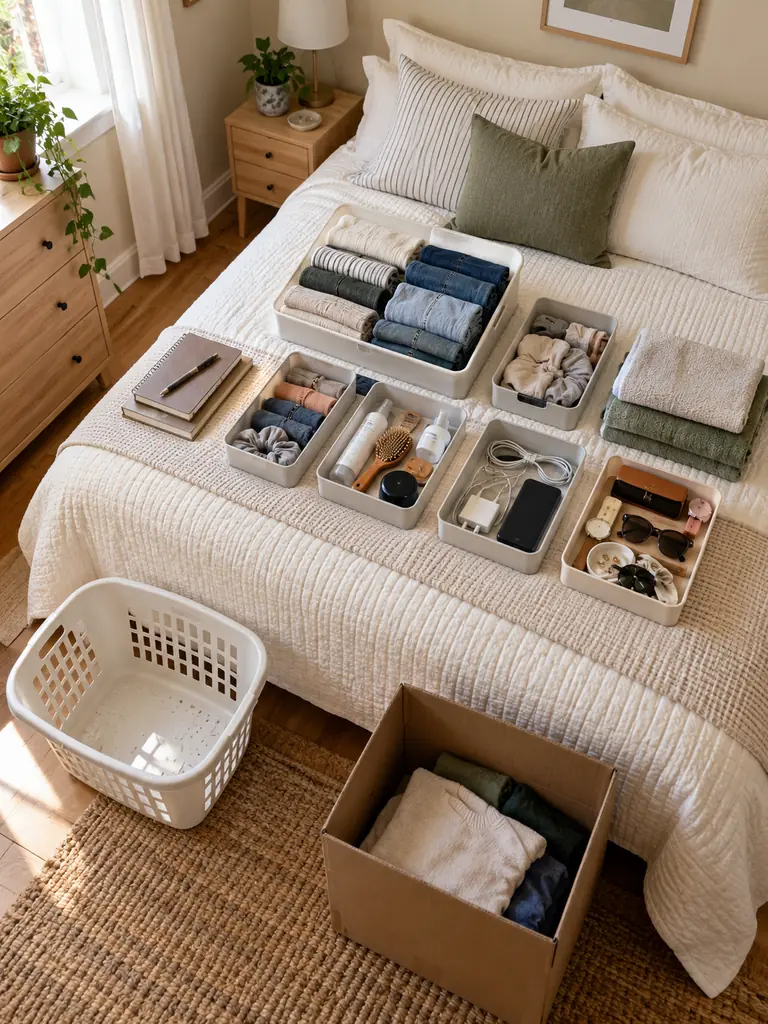
An organized bedroom starts with deciding what genuinely belongs there. Gather everything from the floor, dresser, nightstand, and chair, then separate daily essentials from occasional and misplaced items. Return anything that belongs in another room before buying organizers or creating new storage zones.
Keep daily items close to where they are used, such as sleepwear near the bed and skincare beside a mirror. Store occasional belongings farther away or remove them entirely. In my experience, small bedroom organization ideas work better after this audit because every remaining object has a reason to stay.
Before organizing individual categories, these practical Small Bedroom Storage Ideas can help you create more usable space without making the room feel crowded.
Bedside Essentials Tray
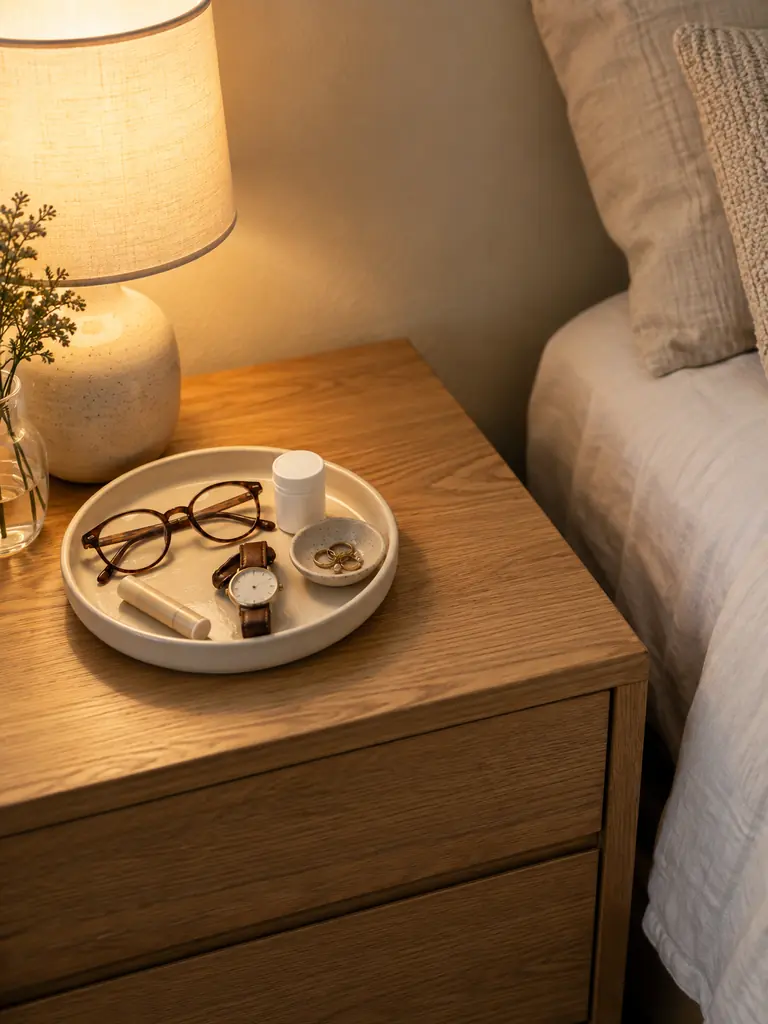
- Choose a shallow tray that leaves room for a lamp, book, phone, and glass of water.
- Keep only items used before sleep or immediately after waking inside it.
- Place medication in suitable packaging and follow its storage and safety instructions.
- Use a small dish within the tray for rings, earrings, or other easy-to-lose objects.
- Return every item to the tray during the evening bedroom reset.
A tray creates one clear boundary for small nighttime belongings that otherwise spread across the nightstand. Select a washable material and empty it weekly to remove receipts, wrappers, and unrelated objects. If the tray starts overflowing, relocate anything that is not part of the bedtime or morning routine.
Nightstand Drawer Zones

Quick Tip:
Remove everything before adding dividers, then group items by purpose rather than size. Create separate sections for electronics, personal care, reading accessories, and occasional essentials.
Drawer zones prevent small belongings from shifting into a mixed pile every time the drawer opens. Measure the interior before purchasing organizers, and choose adjustable dividers where possible. Keep frequently used items near the front, place occasional supplies behind them, and avoid stacking objects where labels become hidden.
Dresser Top Limit
Before:
Clothing, receipts, skincare, jewelry, and unrelated objects collect across the dresser. The crowded surface makes the entire bedroom appear untidy, even when the floor and bed are clean.
After:
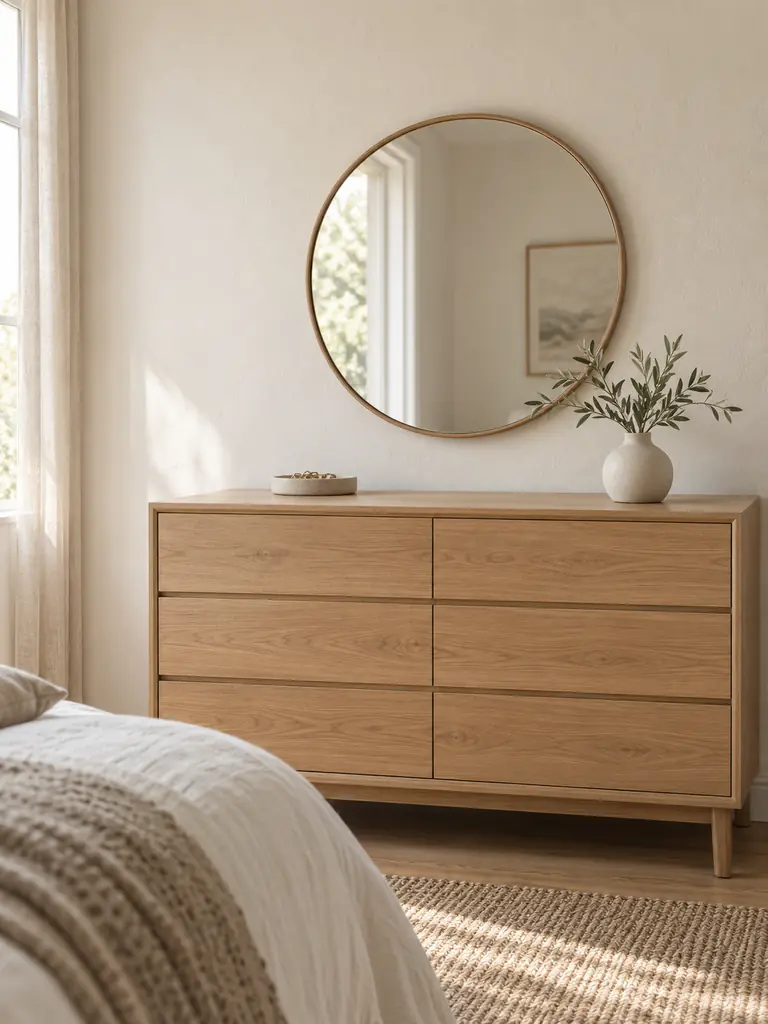
Only a few useful or meaningful objects remain visible. Daily products have assigned homes inside drawers, trays, or another appropriate area, leaving enough space for simple cleaning.
Set a clear limit, such as one mirror, one tray, and one decorative object. Return clothing immediately instead of placing it on the dresser temporarily. Wipe the surface during the weekly reset, and relocate anything that repeatedly appears there to a more convenient permanent zone.
Clothing Category Zones
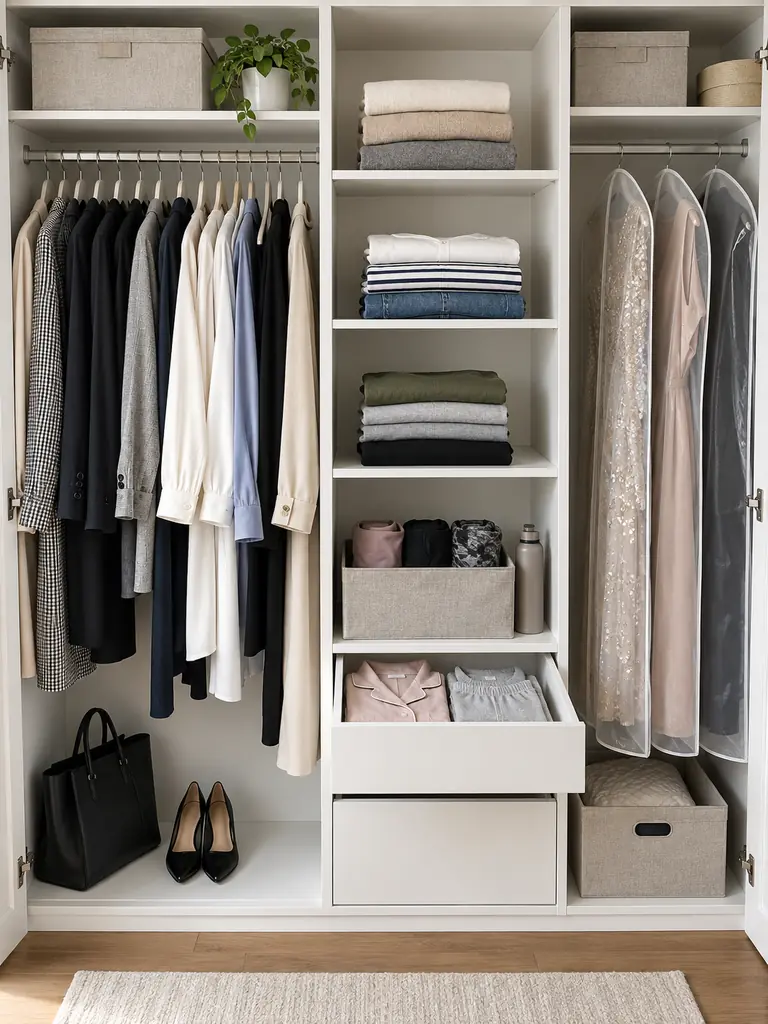
- Gather all clothing and separate it into workwear, casual wear, sleepwear, exercise clothes, and special outfits.
- Assign each category a specific drawer, shelf, rail section, or container.
- Place frequently worn categories between waist and eye level for faster daily access.
- Move special outfits and occasional clothing to less accessible areas.
- Label containers if different categories look similar when folded.
Category zones reduce searching and make it obvious where clothing should return after laundry. Keep related pieces together, but avoid dividing clothing into so many groups that the system becomes difficult to remember. Review each zone seasonally and adjust its size based on what you actually wear.
If your room lacks built-in storage, these practical ways to Organize Clothes Without A Closet can help you create clear clothing zones without filling the room with bulky furniture.
Vertical Drawer Folding
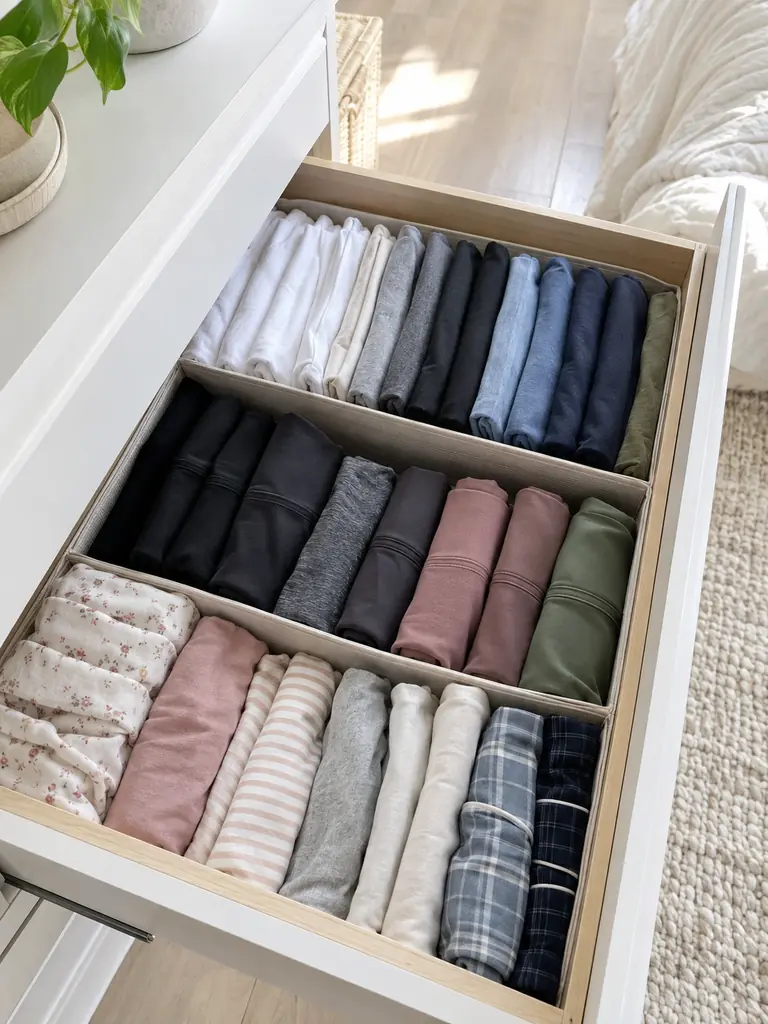
| Stacked Folding | Vertical Folding |
|---|---|
| Bottom items remain hidden | Every item stays visible |
| Removing one piece disturbs the pile | Clothing can be lifted individually |
| Uneven stacks waste drawer space | Rows create clear category sections |
| Overfilling is difficult to notice | Crowding becomes immediately visible |
Fold each garment into a compact rectangle that can stand upright without collapsing. Arrange similar items in rows and use dividers if fabrics slide. Avoid forcing extra clothing into a full drawer, since tight packing creates wrinkles and makes the system frustrating to maintain after laundry day.
Outfit Planning Hook
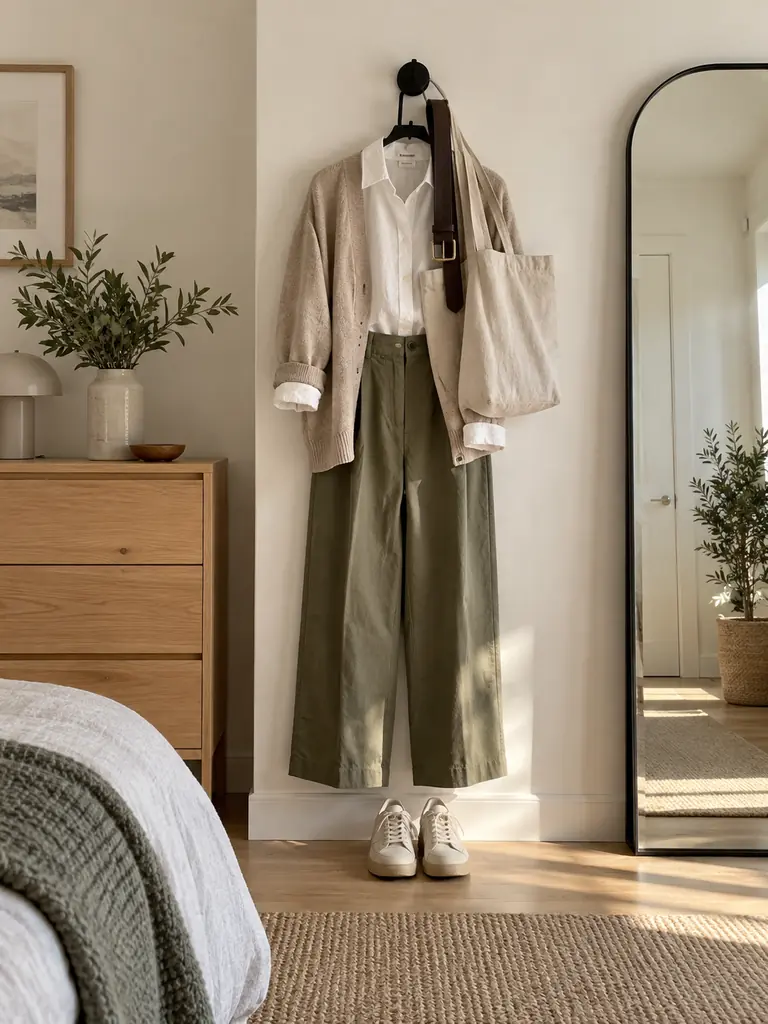
Do:
- Mount one sturdy hook near the wardrobe, mirror, or bedroom door.
- Check the hook and fastener weight rating before hanging clothing or accessories.
- Prepare only the next day’s complete outfit during the evening reset.
- Return rejected pieces immediately instead of leaving them nearby.
Don’t:
- Turn the planning hook into long-term storage for several outfits.
- Hang damp clothing, heavy bags, or delicate fabric on an unsuitable hook.
- Install hardware without checking the wall type and rental restrictions.
- Let clothing hang where it blocks doors, mirrors, or walkways.
One outfit hook reduces morning decisions and prevents clothes from collecting on a chair. Include the main clothing pieces and one lightweight accessory, but keep shoes on the floor or in their assigned area. Clear the hook each morning so it remains available for the following day’s plan.
Wear-Again Clothing Basket
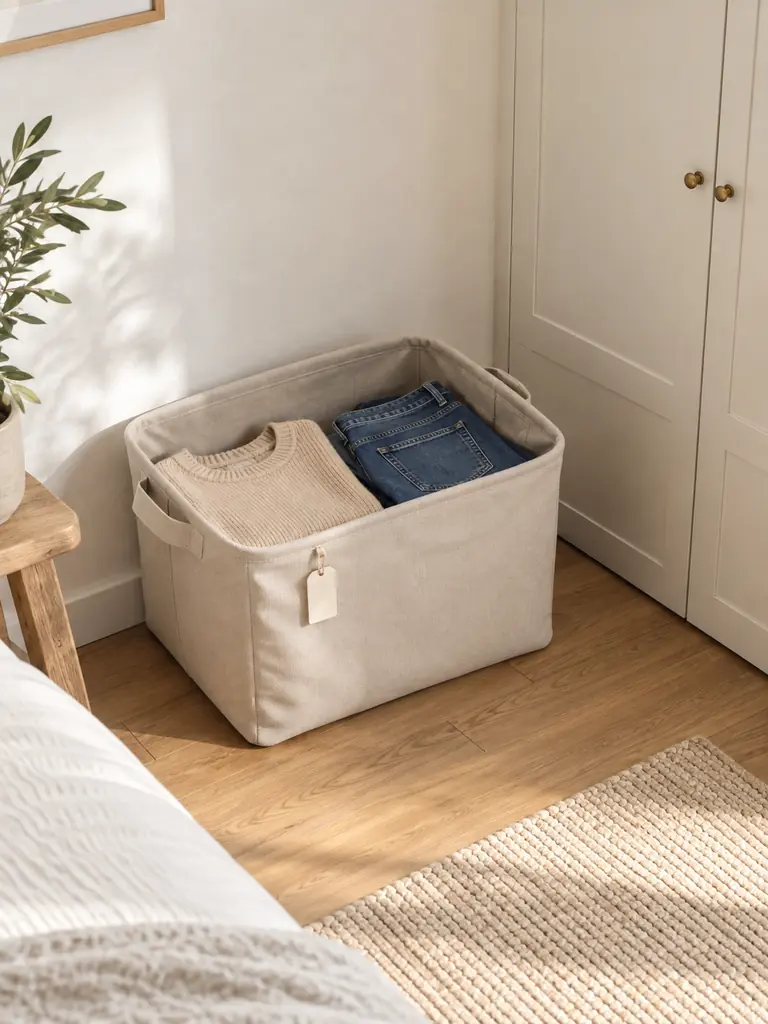
Cost: Low
Time: 5 minutes
Difficulty: Easy
Best For: Clothing that can be worn again before washing
A dedicated basket prevents lightly worn clothes from landing on the bed, chair, or floor. Choose a breathable container and fold items loosely rather than packing them tightly. Empty it at least weekly, returning fresh pieces to their proper zone and sending anything soiled, damp, or odorous to the laundry.
Laundry Sorting Station
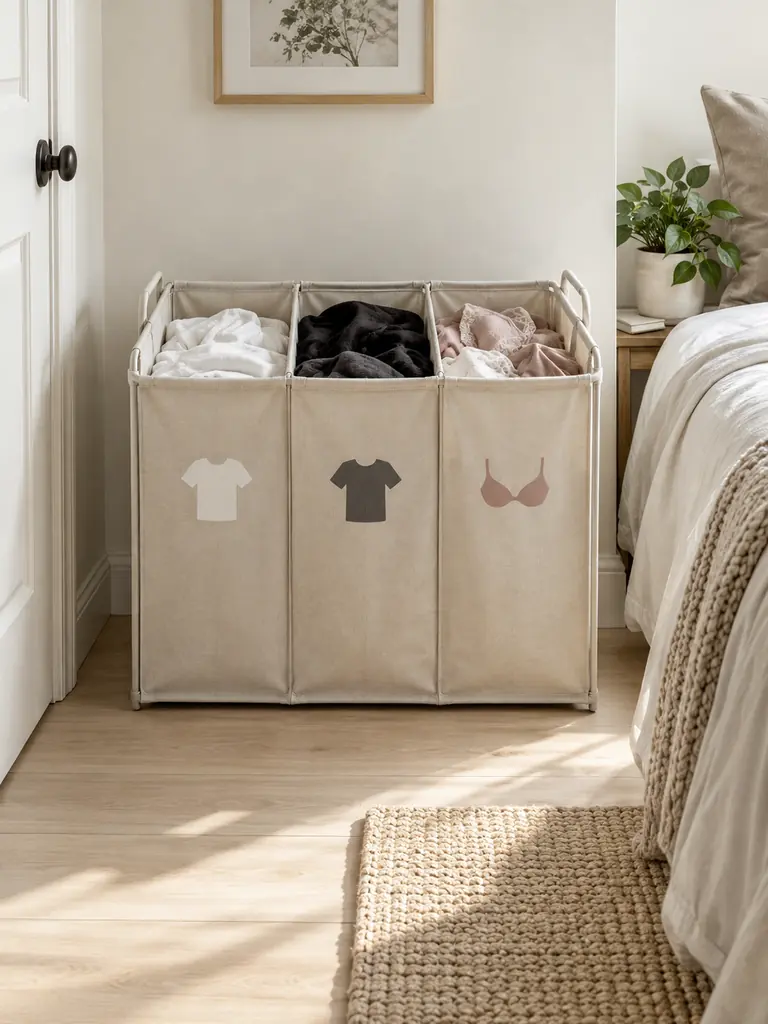
A divided hamper stops clothing from becoming a mixed floor pile and reduces sorting on laundry day. Choose two or three compartments based on how you actually wash, such as lights, darks, and delicate items. Position it near the usual undressing area for easy daily use.
Empty compartments before they overflow and check garment labels before washing. Damp towels, wet clothing, and heavily soiled items may need separate handling rather than sitting in the bedroom. A hamper with removable washable liners keeps the routine cleaner and easier to maintain every week.
Shoe Rotation System
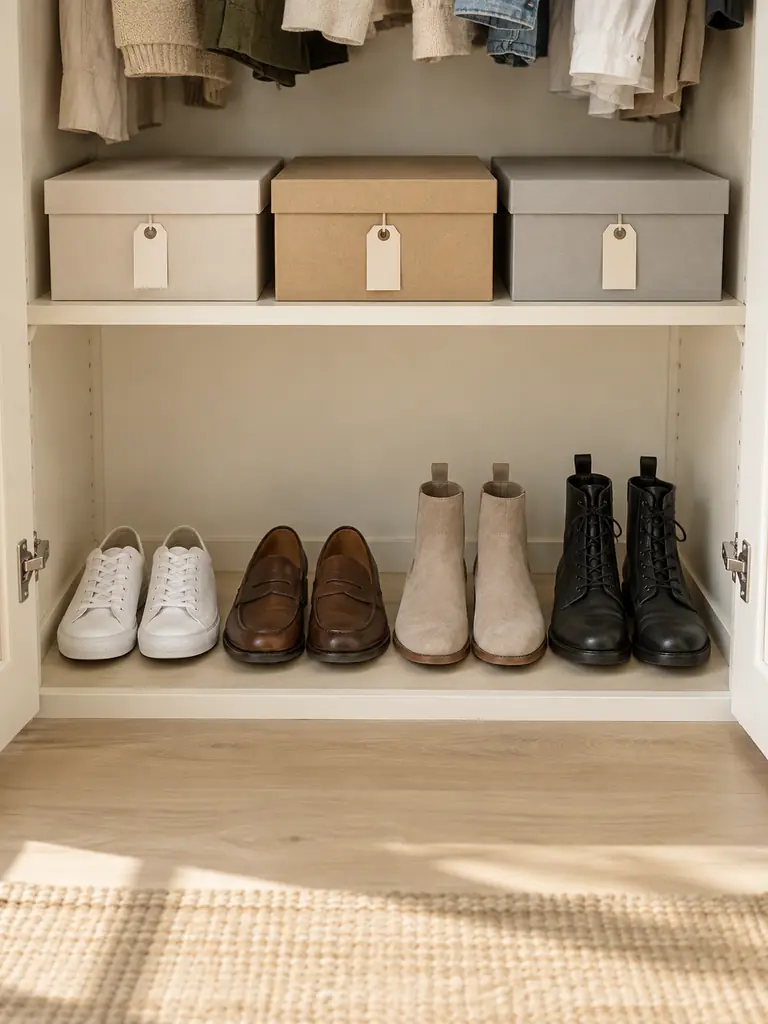
- Keep only current, frequently worn shoes in the easiest bedroom location.
- Clean soles before returning pairs to a wardrobe, shelf, or bedroom zone.
- Arrange everyday shoes in one row so every pair remains visible.
- Move formal and out-of-season footwear to labeled boxes or another appropriate area.
- Review the rotation whenever weather, work, or routine changes.
A limited shoe rotation prevents the wardrobe floor and bedroom entrance from becoming crowded. Set a practical pair limit based on the available space, then exchange shoes instead of adding more. Keep damp footwear in a ventilated area until dry, and never store muddy pairs beside clean clothing or bedding.
Accessory Category Trays
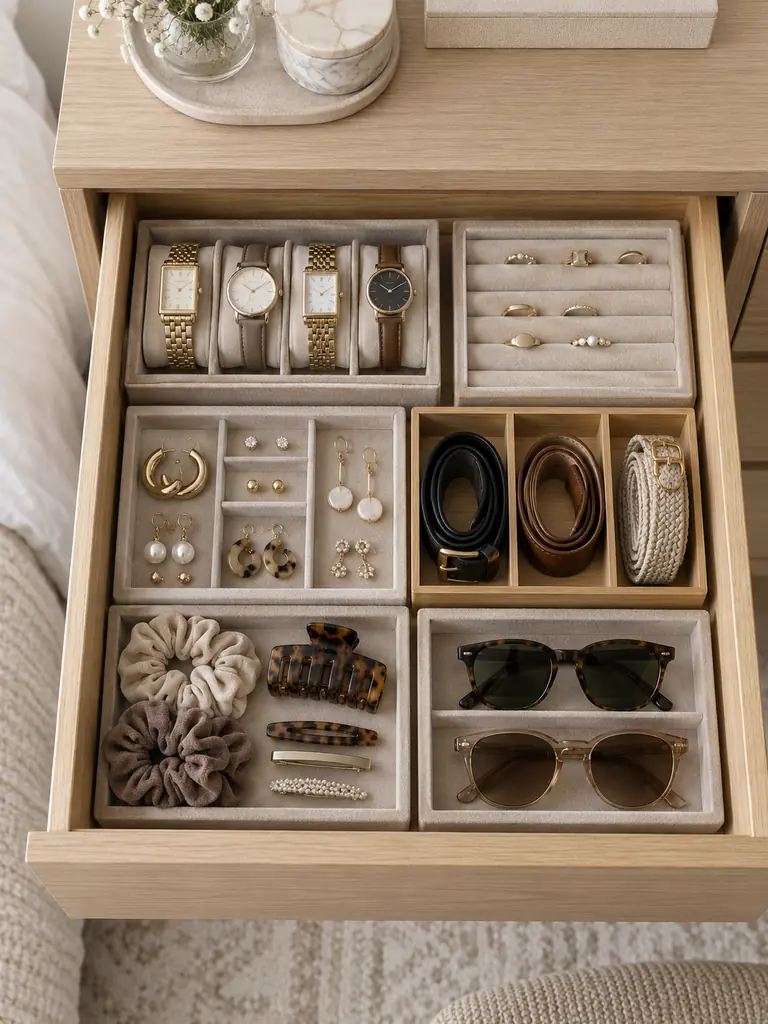
Quick Tip:
Group accessories by type before selecting trays, because the collection should determine the compartment sizes. Keep frequently worn pieces near the front and special items farther back.
Category trays prevent jewelry, watches, hair accessories, and small personal items from becoming tangled or misplaced. Choose soft-lined compartments for delicate pieces and longer sections for belts or sunglasses. Review the trays monthly, return misplaced items, and remove damaged accessories that are taking up useful space.
Bed Linen Limit
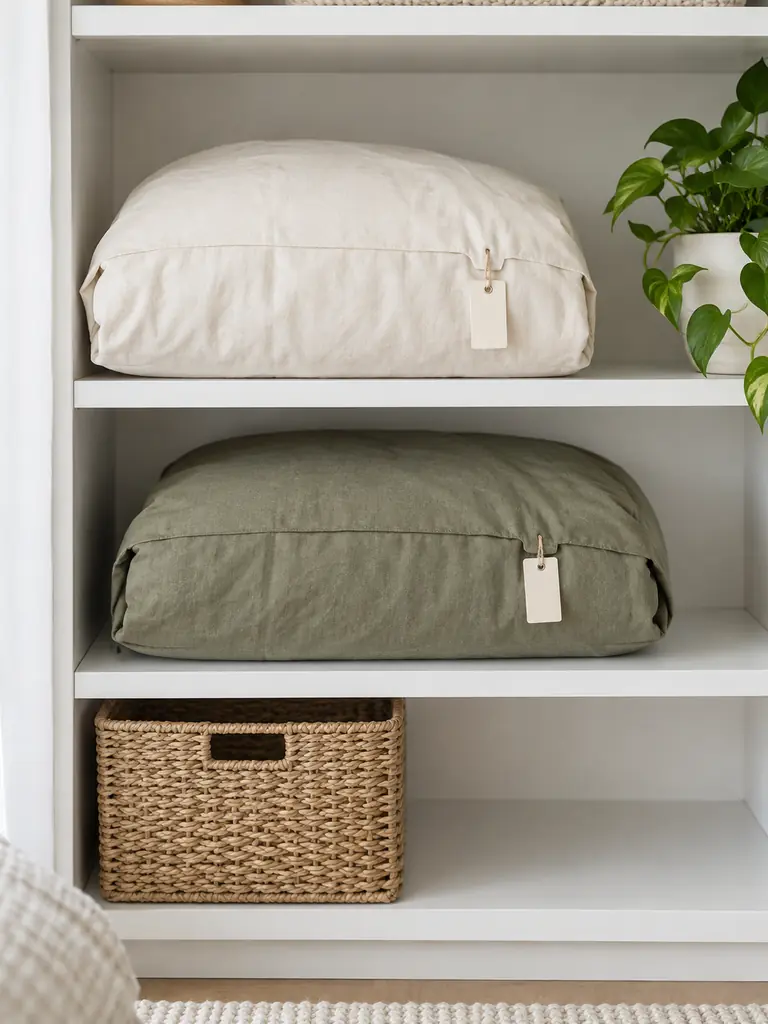
Before:
Mismatched sheets, unused pillowcases, and worn bedding fill the available shelf or drawer. Finding a complete set requires unfolding several piles.
After:
Only correctly sized, regularly used bedding sets remain. Each set is folded together inside one matching pillowcase, making changes faster and the available space easier to manage.
Keep two or three complete sets per bed unless household needs require more. Check sizes before folding, repair minor damage where practical, and responsibly discard or repurpose linens that are no longer usable. Store guest bedding separately so everyday sets remain accessible without disturbing the entire shelf.
Charging Cable Station
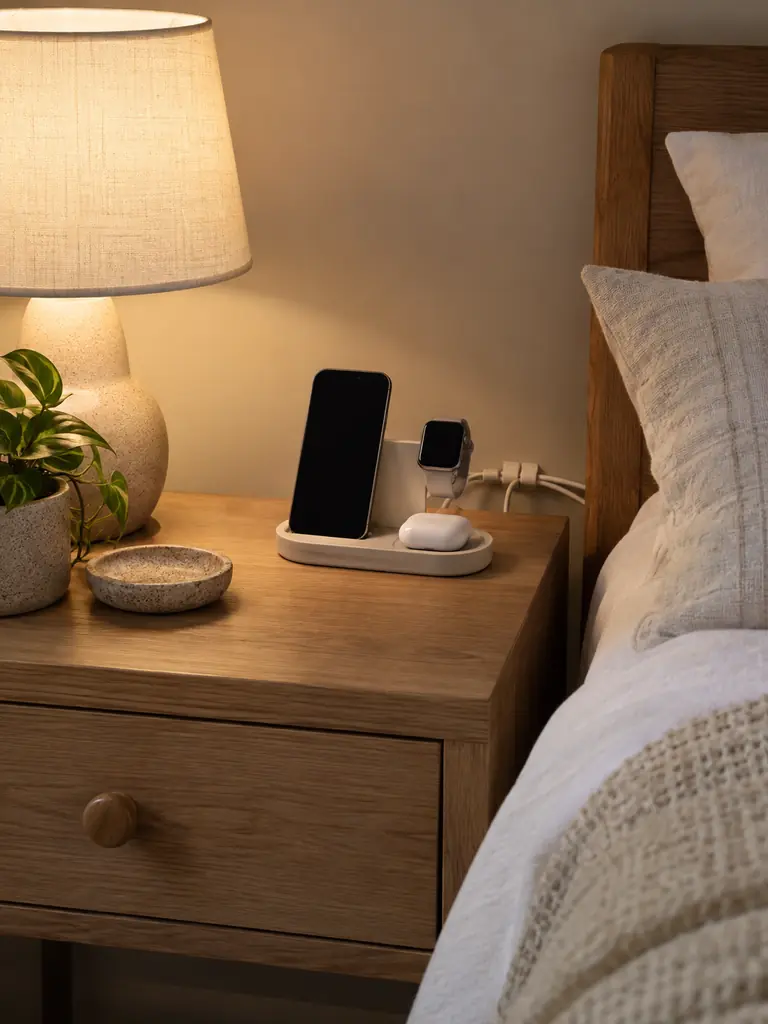
- Choose one ventilated location away from bedding, curtains, water, and direct heat.
- Use chargers and cables that are compatible with each device and in good condition.
- Label similar cables near their ends so the correct connector is easy to identify.
- Secure excess cable length with reusable ties and removable clips behind the furniture.
- Unplug damaged accessories and follow device manufacturers’ charging and safety guidance.
A defined charging station keeps electronics and loose cables from spreading across the bed and dresser. Avoid charging devices beneath pillows or inside closed containers where heat can build. Remove unused cords during the weekly reset, and keep the station accessible enough that devices return there every evening.
Paper Clutter Folder
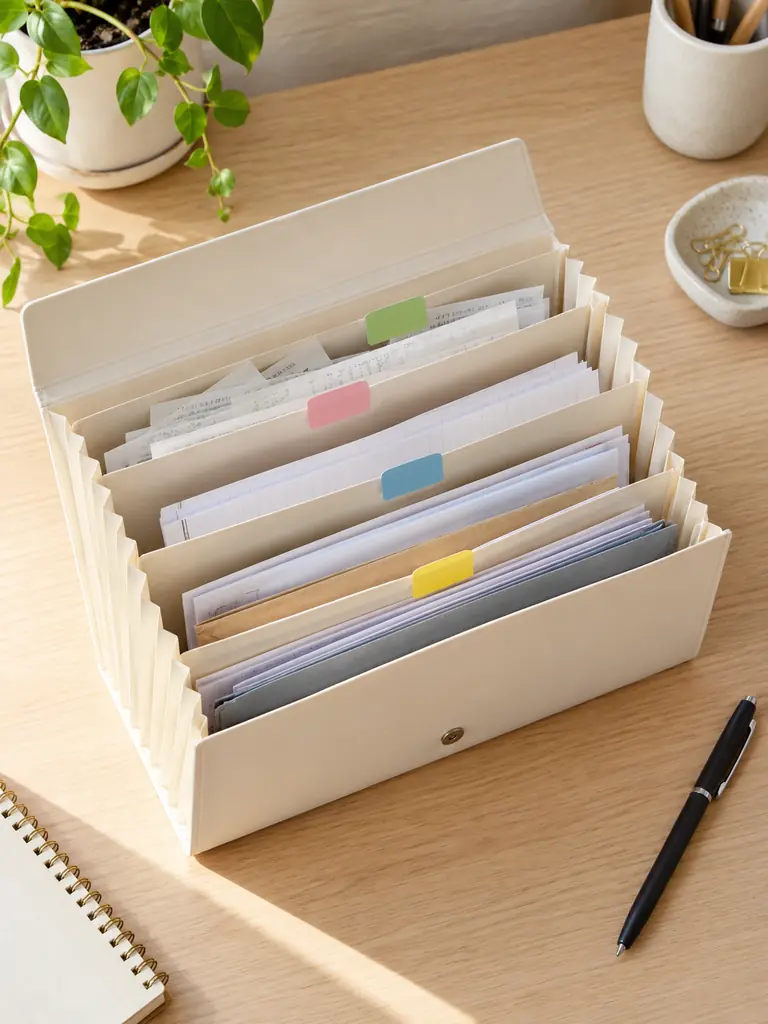
| Loose Paper Pile | Single Sorting Folder |
|---|---|
| Receipts disappear beneath other items | Receipts stay in one labeled section |
| Important notes are easily overlooked | Notes remain visible and grouped |
| Old papers collect indefinitely | Contents receive a regular review |
| Surfaces become difficult to clean | The desk and dresser remain clear |
A single folder gives temporary papers a defined stopping point without turning the bedroom into an office archive. Review it weekly, completing tasks and moving important documents to secure long-term storage. Shred papers containing sensitive information, recycle what is unnecessary, and avoid keeping unopened mail beside the bed.
Memory Item Box
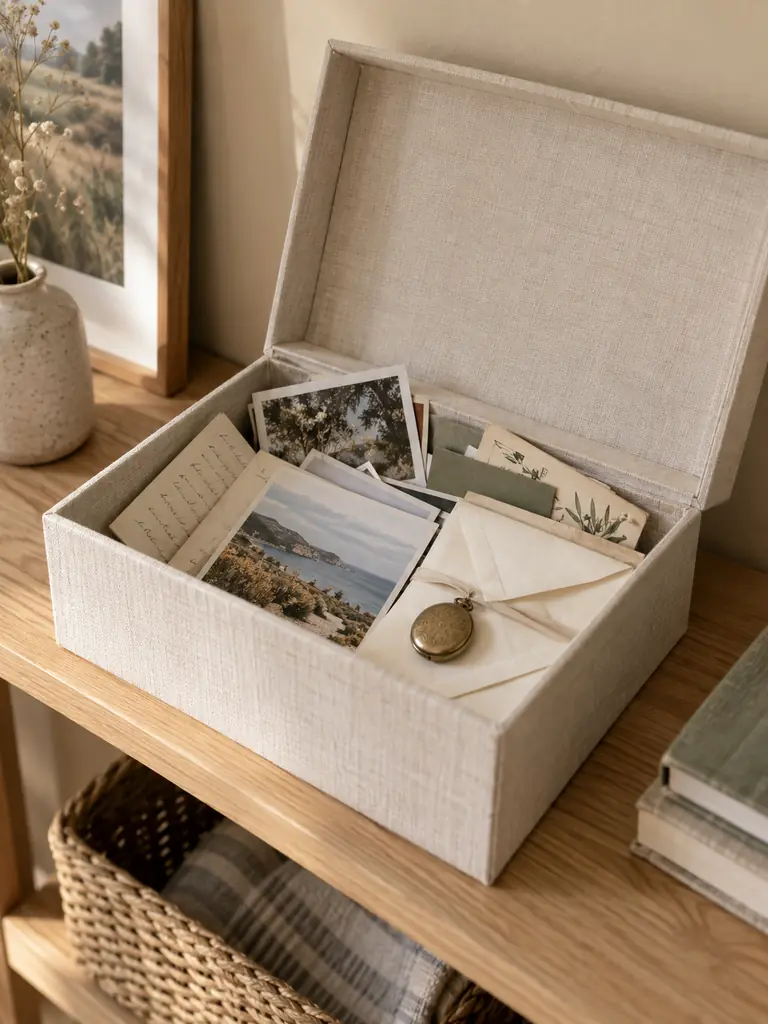
Do:
- Choose one sturdy box that fits the available shelf or drawer.
- Group photographs, letters, cards, and small objects inside protective sleeves or envelopes.
- Label the box clearly and review its contents once or twice each year.
- Store delicate paper away from moisture, strong sunlight, and heat.
Don’t:
- Force oversized or fragile objects into a container that may damage them.
- Keep every sentimental item without considering its condition or meaning.
- Mix important legal documents with personal keepsakes.
- Store irreplaceable items in damp, unstable, or unsecured locations.
A defined keepsake box protects meaningful belongings while preventing them from spreading across drawers and surfaces. Select the items that genuinely represent important memories, then photograph bulky pieces you cannot reasonably keep. For valuable or fragile objects, use suitable archival materials or consult a preservation specialist.
Morning Bed Reset

Time: 2 to 5 minutes
Difficulty: Easy
Cost: Free
Result: A visibly tidier bedroom before the day begins
Making the bed creates one large clear surface and immediately reduces visual disorder. Smooth the sheets, straighten the duvet, arrange only the pillows you use, and return nighttime belongings to their zones. Open curtains or blinds for daylight, then remove any clothing or dishes before leaving the room.
Five-Minute Evening Reset
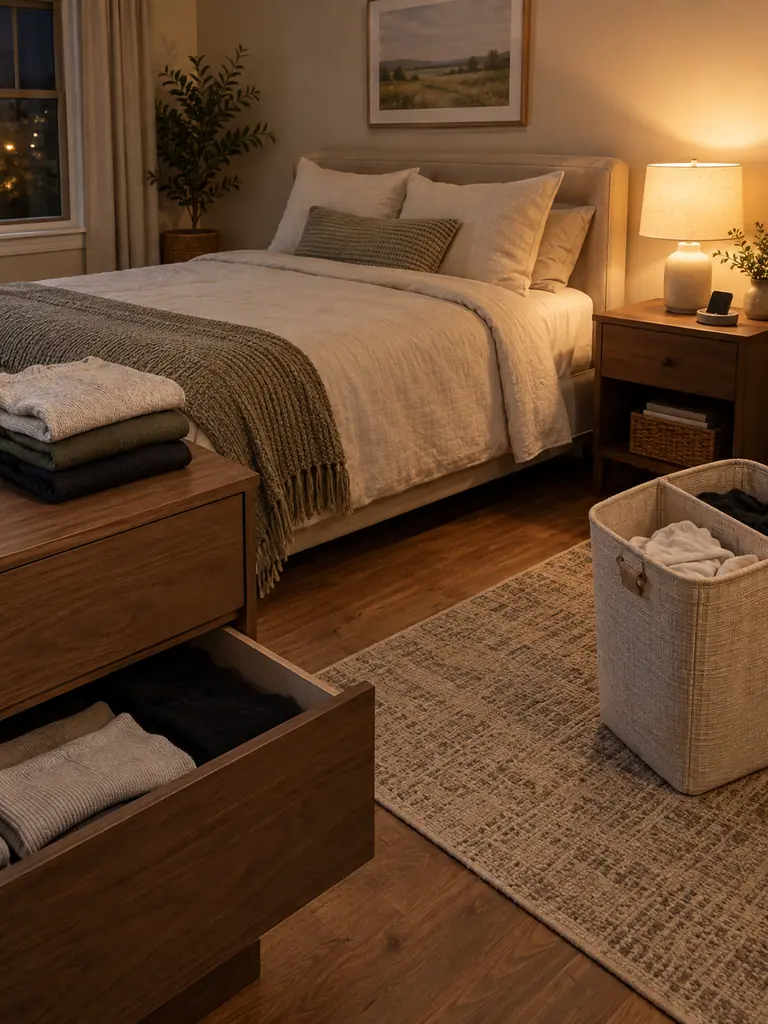
A five-minute reset prevents small daily messes from becoming a weekend project. Start by placing laundry in the hamper, returning wear-again clothes to their basket, and clearing cups or dishes. Finish by resetting the nightstand and charging station for a calmer bedtime routine.
Use the same order every evening so the routine becomes automatic. Set a timer if needed and stop when it ends rather than opening drawers or beginning larger projects. I’ve noticed consistency matters more than perfection because tomorrow’s room starts from a cleaner baseline with less visible clutter.
Weekly Bedroom Refresh
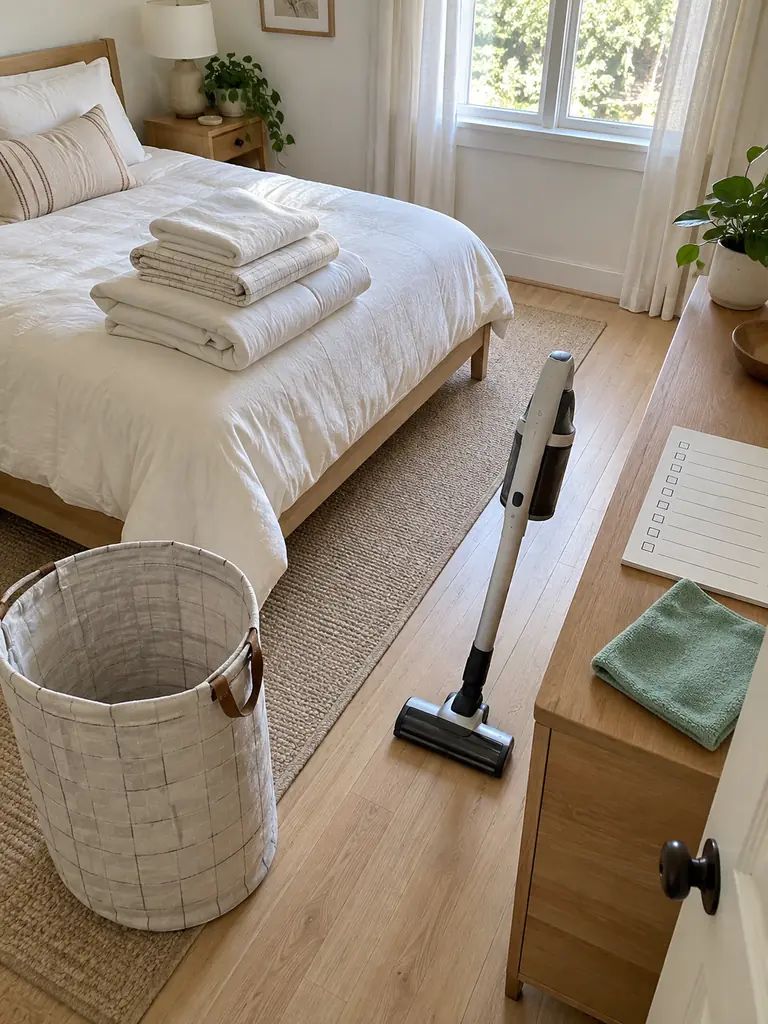
- Wash or change bedding according to household needs and care instructions.
- Empty laundry containers and return clean clothing to its assigned category.
- Dust the nightstand, dresser, frames, lamps, and other reachable surfaces.
- Vacuum or sweep beneath accessible furniture and around the room edges.
- Review the wear-again basket, paper folder, and daily clutter zones.
A weekly refresh handles tasks that do not fit into the morning or evening reset. Choose one consistent day and follow the same order to reduce decision-making. Keep the routine realistic for your schedule, focusing first on laundry, surfaces, floors, and any area that repeatedly becomes untidy.
A weekly reset becomes easier when every item has a home, so consider these Apartment Storage Solutions That Save Space for organizing other compact areas too.
One-In One-Out Rule
Quick Tip:
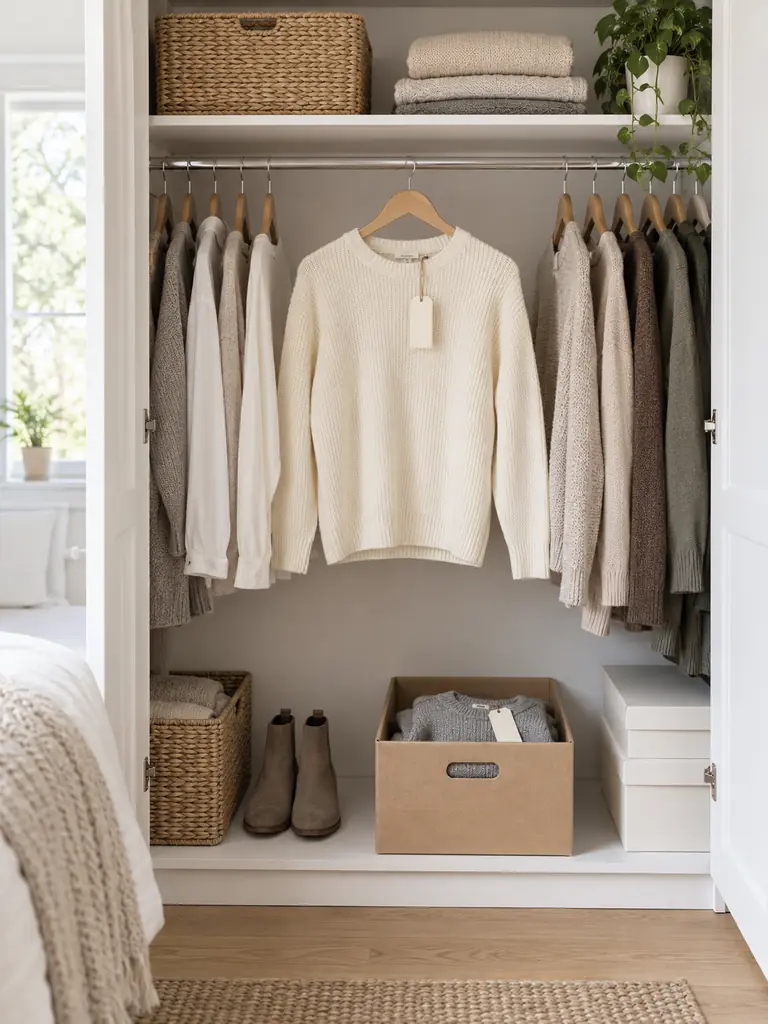
Whenever a new clothing item, accessory, or decorative object enters the bedroom, choose one similar item to remove. Make the decision before storing the new purchase so the category does not quietly expand.
The one-in one-out rule protects the organization systems you have already created. Keep a small donation bag outside the bedroom or inside a designated wardrobe section, then empty it regularly. Recycle, donate, sell, or responsibly discard removed belongings according to their condition and local options.
Conclusion
Keeping a compact bedroom tidy becomes easier when simple systems support your daily habits. These small bedroom organization ideas help you control clothing, laundry, accessories, papers, electronics, and surface clutter without creating a complicated routine.
Start with the area that causes the most frustration, then add another system once the first one feels natural. I’ve seen how small changes like these can completely shift the way a space feels. Save this post on Pinterest for future reference, try one or more ideas this week, and share it with someone who needs an easier bedroom routine. Start small and stay consistent.