
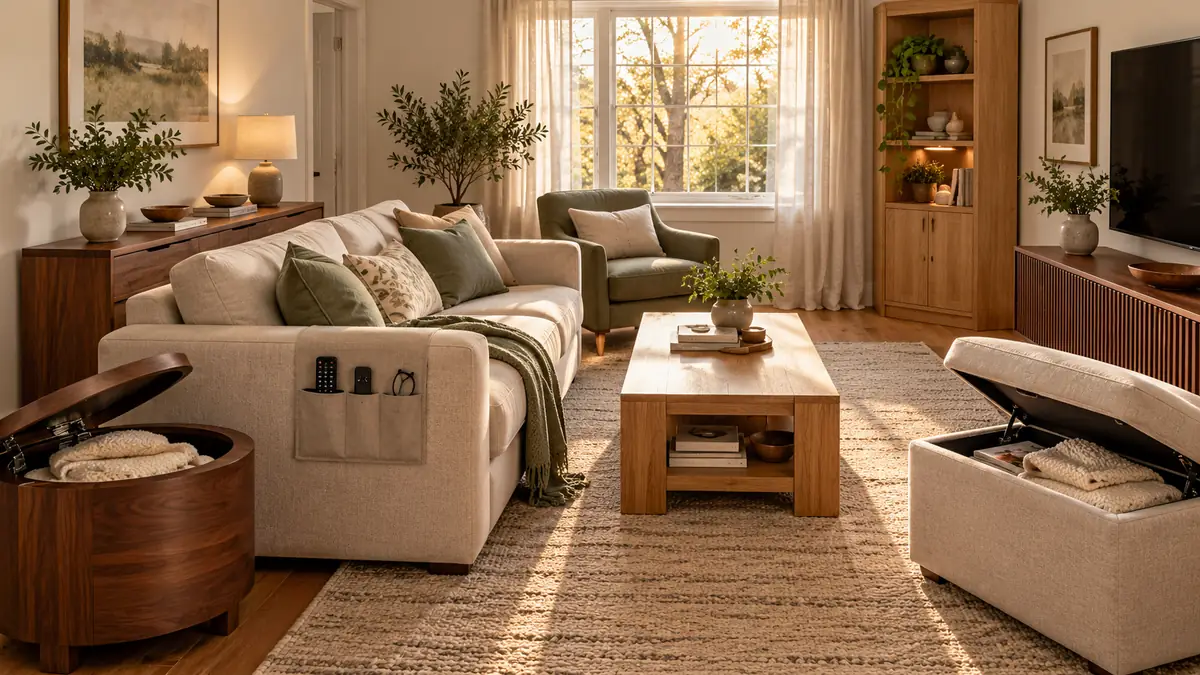
Tired of seeing remotes, blankets, magazines, and everyday essentials scattered around your living room? These small living room storage ideas will help you reclaim valuable space without sacrificing comfort or style.
When your living room is compact, even a few misplaced items can make the entire space feel crowded. Coffee tables become cluttered, sofa corners collect accessories, and finding room for extra storage furniture feels almost impossible.
The good news? You don’t need a bigger living room or an expensive makeover to create a more organized home.
From clever hidden compartments and multifunctional furniture to narrow cabinets and overlooked storage spots, these 23 practical ideas offer solutions for everyday clutter.
Whether you’re decorating a small apartment, organizing a family living room, or simply looking for ways to keep things tidy, you’ll find inspiration that’s functional, achievable, and easy to adapt to your space.
For more ways to make every inch count, explore these small apartment living room ideas that balance comfort, style, and everyday functionality.
Table of Contents
Hidden Sofa Arm Organizer
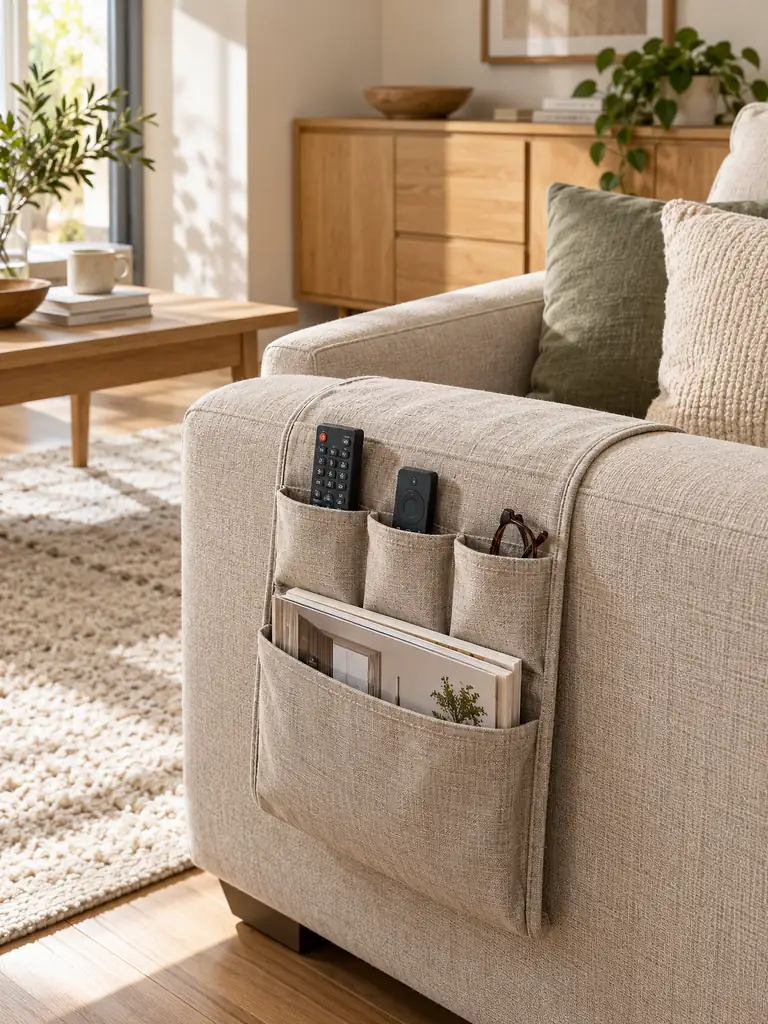
A cluttered sofa arm can make even a tidy living room feel disorganized. A slim fabric organizer keeps remotes, reading glasses, charging cables, and magazines within easy reach without requiring another side table. Choose a structured design in oatmeal, charcoal, or warm beige that blends with your upholstery.
Look for an organizer with separate pockets and a non-slip backing to prevent shifting. Tuck its weighted flap securely beneath the seat cushion, keeping the outer pockets accessible. This simple solution works especially well in narrow living rooms where extra furniture would restrict movement.
Hidden Storage Picture Frame
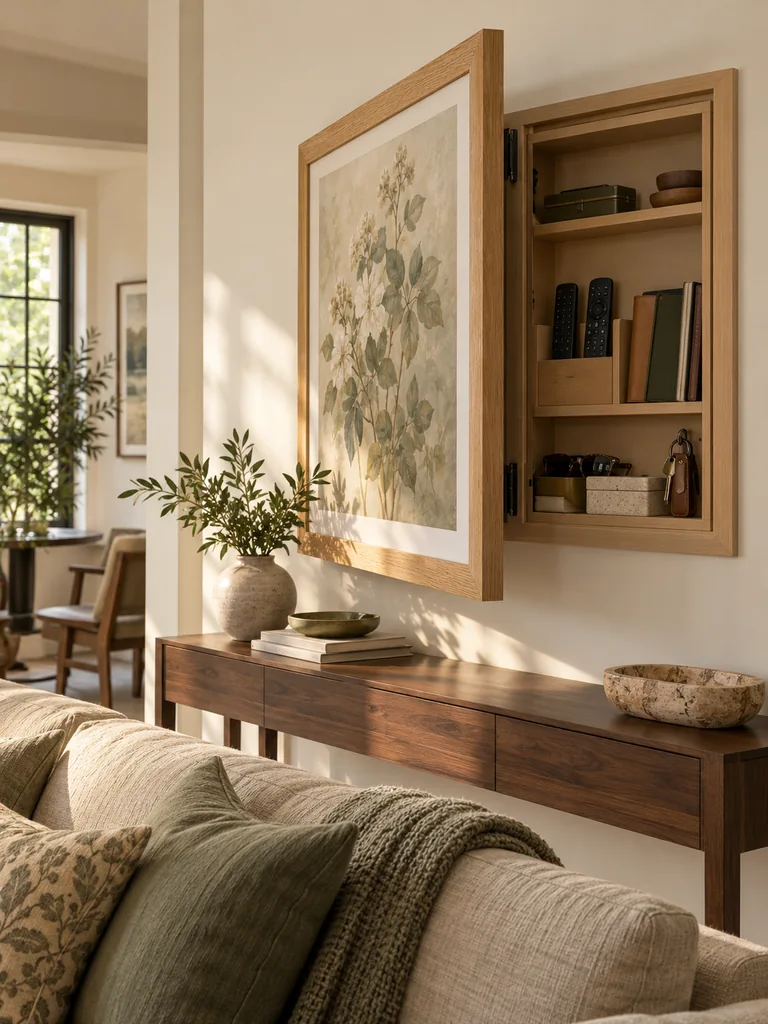
- Choose a shallow cabinet: Select a wall-mounted storage unit with a hinged decorative frame front and enough depth for small everyday essentials.
- Check the wall space: Position it above a console or beside the seating area where the door can open comfortably.
- Install secure hardware: Use suitable wall anchors and hinges according to the cabinet’s weight and wall material.
- Organize small accessories: Add shallow compartments for remotes, reading glasses, and lightweight household items.
- Keep the artwork coordinated: Choose a frame finish and print that complement your living room’s existing color palette.
A hidden storage picture frame disguises practical organization behind decorative wall art, helping a compact living room feel less cluttered. Its shallow design keeps small accessories accessible without occupying floor space. Choose a sturdy, purpose-built unit, and avoid storing heavy objects that could strain the wall mounting hardware.
Behind Sofa Storage Console
Quick Tip:
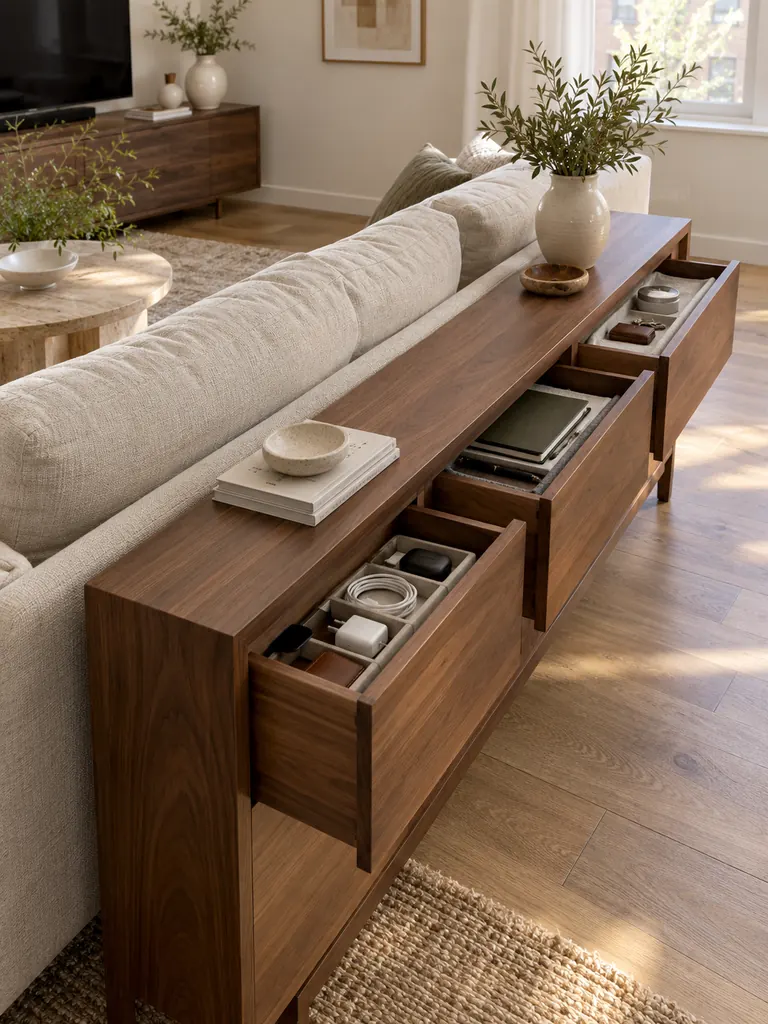
Measure the gap behind your sofa before choosing a narrow console with built-in drawers or closed compartments. Allow enough clearance for curtains, outlets, and walking space. A shallow design can provide useful storage without pushing the sofa too far into the room.
A behind sofa storage console turns an overlooked area into a practical organization zone. Use its compartments for chargers, spare remotes, notebooks, and small household essentials. Choose a finish close to your sofa or wall color for a streamlined appearance, and secure tall or unstable furniture appropriately.
Slim Recliner Side Caddy
Before:
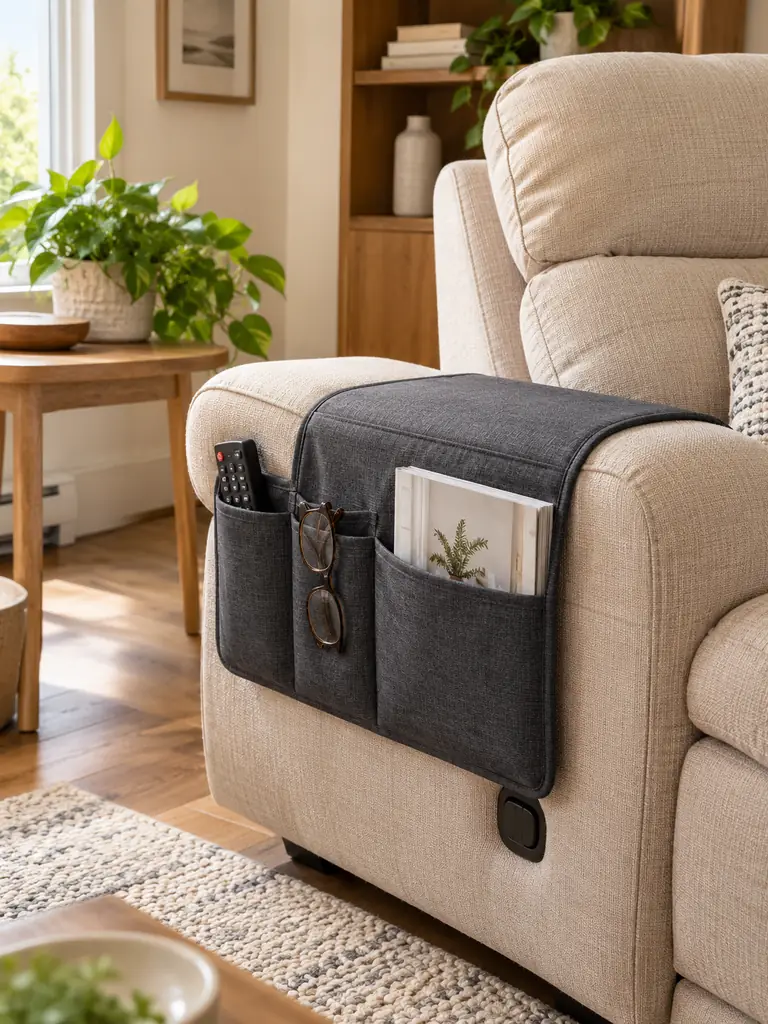
A comfortable recliner can quickly become surrounded by scattered remotes, reading glasses, magazines, and charging accessories. In a narrow living room, adding another side table may block the walkway or make the seating area feel crowded. Everyday essentials often end up misplaced between cushions.
After:
A slim recliner side caddy keeps frequently used items organized in separate pockets along the chair’s armrest. Its compact fabric design preserves valuable floor space while making everything easy to reach. Coordinating the fabric with the recliner upholstery creates a tidy, understated appearance.
Choose a caddy with reinforced stitching, several pocket sizes, and a secure non-slip backing. Keep heavier objects out of the hanging pockets to prevent shifting. This practical organizer works particularly well beside reading chairs, compact recliners, and living room seating where additional furniture would restrict comfortable movement.
Wall Mounted Magazine Rack
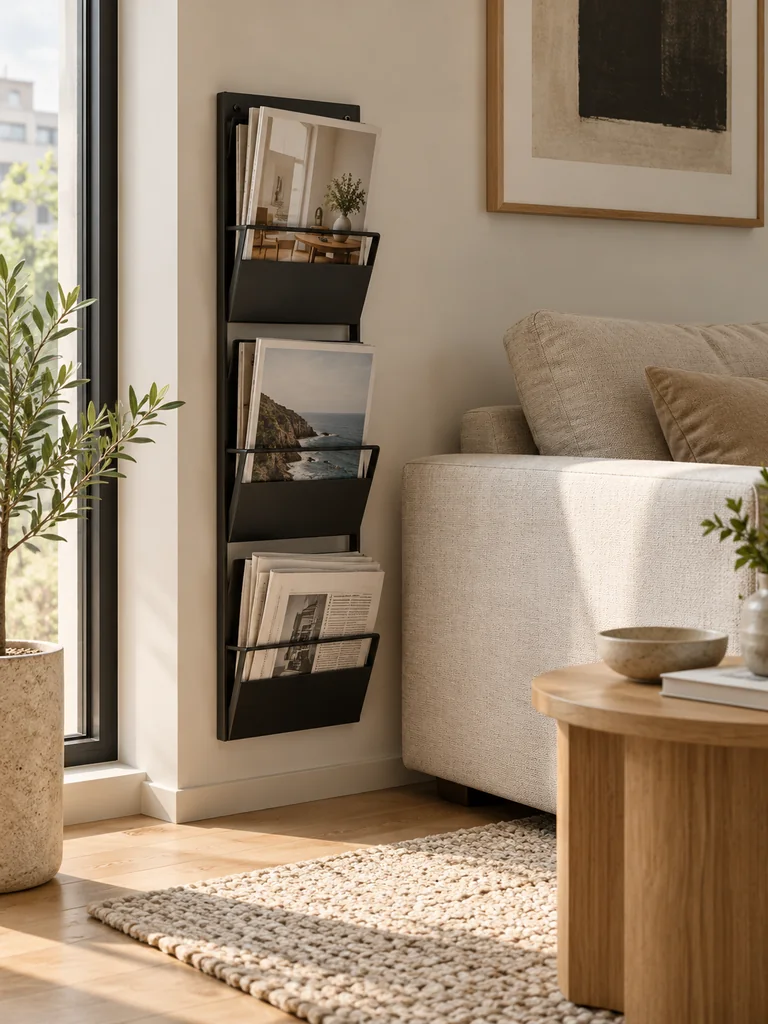
- Choose a narrow rack: Select a slim metal, wooden, or fabric wall-mounted organizer that holds magazines without projecting too far into the room.
- Find a convenient location: Position the rack beside the sofa or reading chair, keeping it clear of doorways and walking paths.
- Install suitable hardware: Use the manufacturer’s recommended screws and wall anchors for your wall material and expected load.
- Organize by frequency: Keep current magazines and frequently used reading materials in front, removing outdated issues regularly.
- Maintain a tidy display: Limit the number of items so the rack remains visually balanced and easy to access.
A wall mounted magazine rack frees up coffee table space while creating an organized reading corner. Its vertical placement makes use of otherwise empty wall space without adding bulky furniture. Choose a finish that coordinates with nearby lighting or furniture hardware for a polished, intentional appearance.
Storage Ottoman With Compartments
| Design Detail | Standard Ottoman | Compartment Storage Ottoman |
|---|---|---|
| Main Function | Footrest or occasional seating | Footrest with concealed organization |
| Interior Space | No dedicated storage | Separate compartments for everyday items |
| Clutter Control | Requires additional storage furniture | Keeps blankets and accessories hidden |
| Small Room Benefit | Adds comfort | Combines comfort with practical storage |
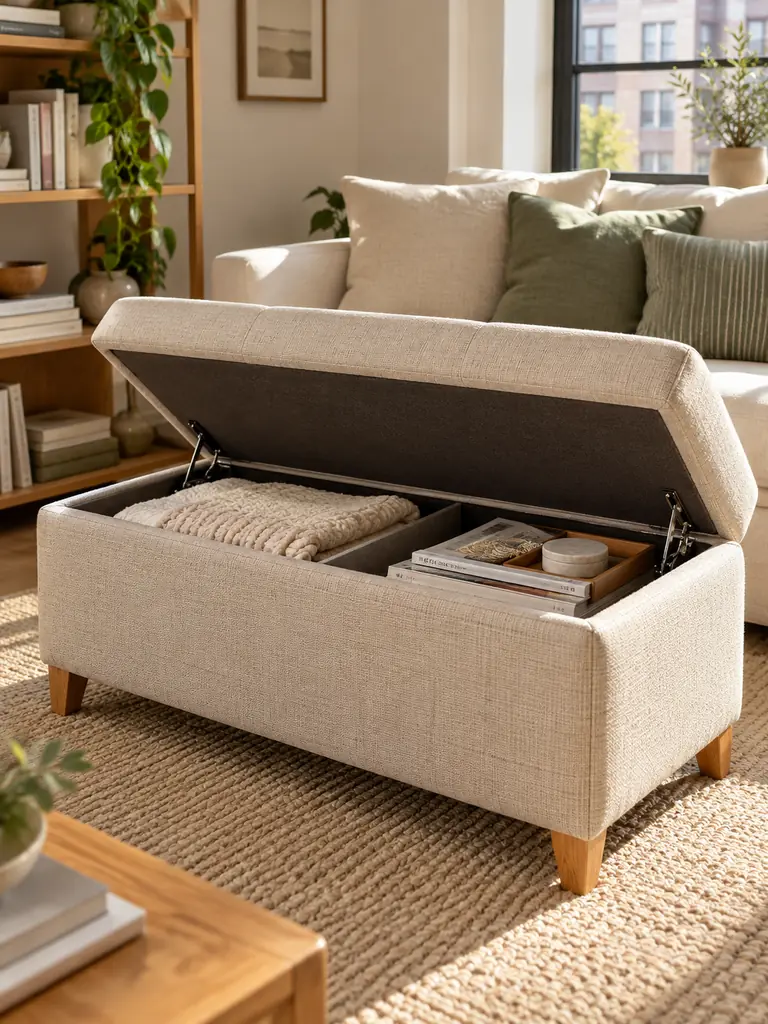
A storage ottoman with compartments keeps blankets, magazines, and small accessories organized without adding another cabinet. Choose a compact design with a sturdy frame and a secure, easy-to-open lid. Divided sections prevent smaller items from becoming mixed together, making everyday cleanup faster and more convenient.
Under Sofa Rolling Drawers
Do:
- Measure the clearance beneath your sofa before purchasing rolling drawers.
- Choose low-profile containers with smooth wheels and sturdy handles.
- Organize blankets, magazines, and occasional-use accessories in separate drawers.
- Select covered drawers to protect stored items from dust.
Don’t:
- Force oversized drawers beneath a sofa with insufficient clearance.
- Store heavy objects that make drawers difficult to move safely.
- Use exposed wheels that could scratch delicate flooring.
- Block sofa supports or adjustable furniture mechanisms.
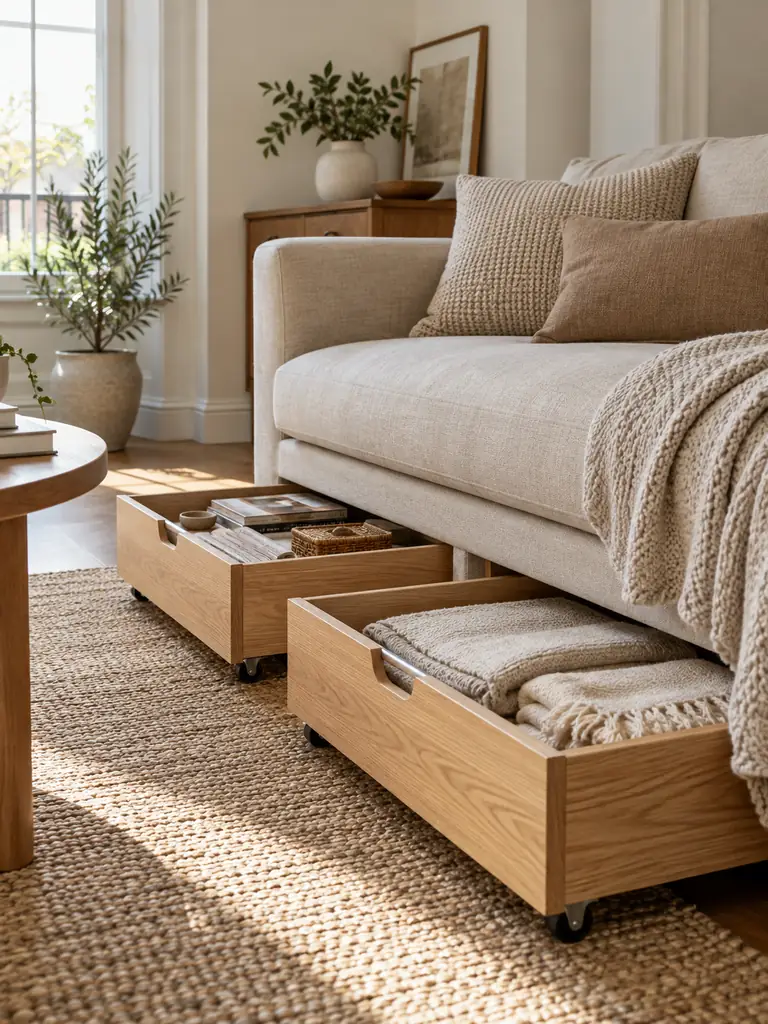
Under sofa rolling drawers turn unused floor space into discreet storage without changing your living room layout. They work particularly well beneath raised sofas with enough clearance for easy access. Choose containers that complement your furniture, and leave sufficient room to pull each drawer out without moving nearby pieces.
Vertical Corner Storage Tower
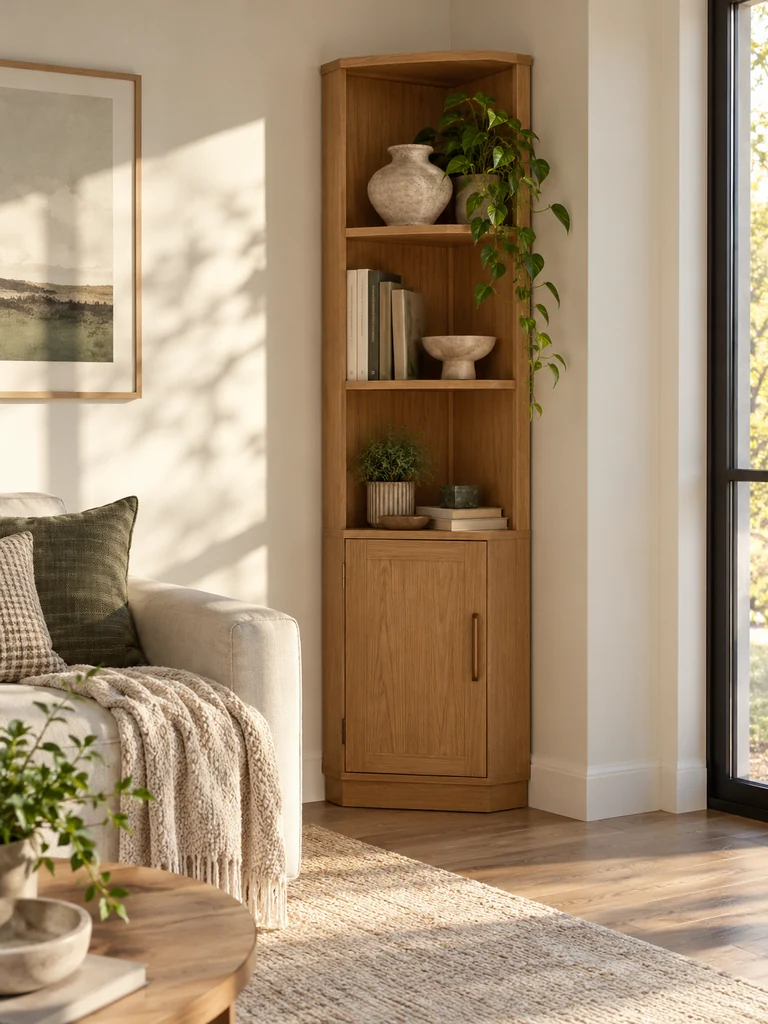
Best For: Unused corners beside sofas, windows, or media furniture.
Storage Type: Closed lower compartments with optional open upper shelving.
Space Requirement: Narrow floor footprint with sufficient vertical clearance.
Installation: Secure tall furniture to the wall using appropriate anti-tip hardware.
A vertical corner storage tower makes an awkward living room corner more functional without spreading furniture across the floor. Choose a slim design with closed lower compartments for clutter and a few upper shelves for display. Measure the corner carefully, including baseboards and nearby door clearance, before selecting a unit.
If you want your room to feel open while adding storage, these small living room ideas offer more inspiration for compact layouts.
Concealed Router Storage Box
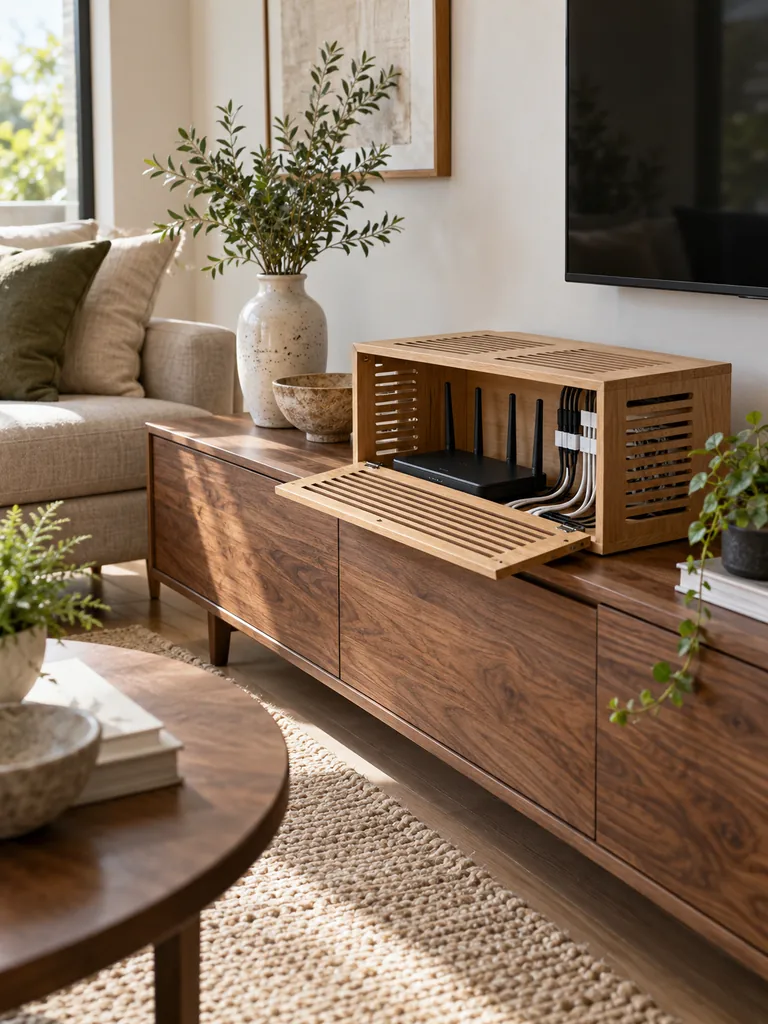
Messy internet cables can make an otherwise organized living room look unfinished. A ventilated router storage box helps contain excess wiring and keeps networking equipment visually discreet. Choose a lightweight enclosure with generous airflow openings, accessible cable ports, and enough interior clearance to avoid trapping heat around the device.
Place the box on an open shelf rather than inside a tightly enclosed cabinet, and follow your router manufacturer’s ventilation requirements. Avoid metal enclosures that may interfere with wireless signals. Use reusable cable ties to organize loose cords while keeping power connections accessible for maintenance and troubleshooting.
Window Seat Storage Drawers
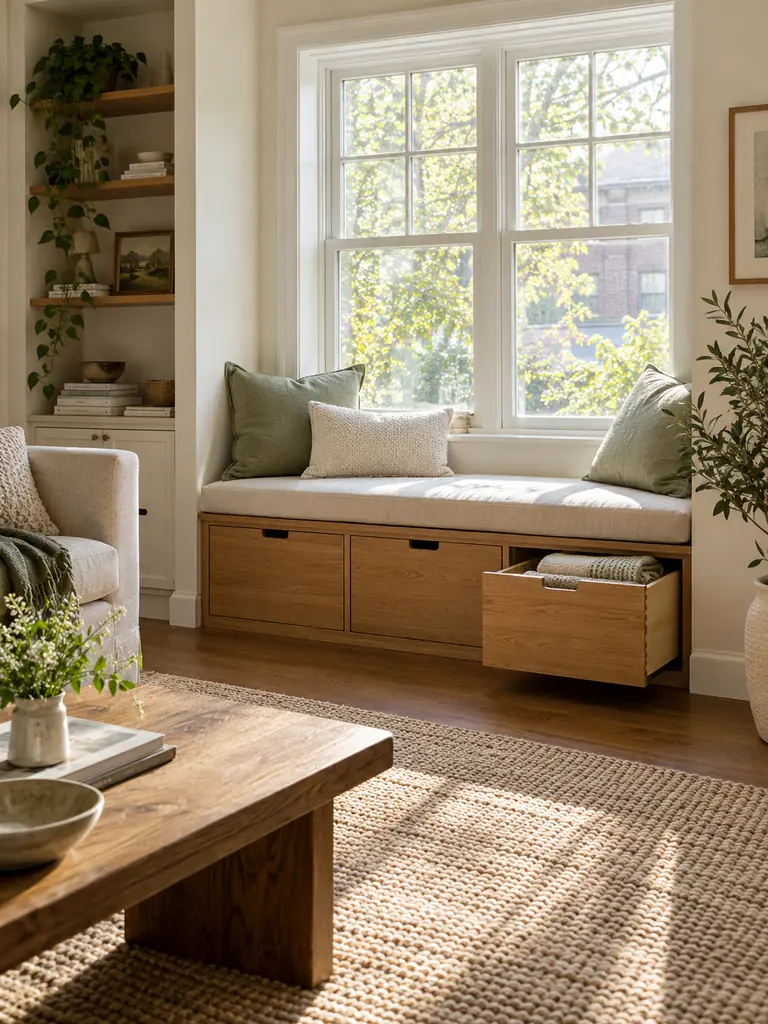
- Choose deep drawers: Select compartments large enough to hold folded blankets, seasonal cushion covers, or board games without overcrowding.
- Add comfortable seating: Place a fitted foam cushion on top, covered in durable linen-look fabric for easy maintenance.
- Use smooth drawer runners: Install quality slides that allow drawers to open comfortably without catching on nearby furniture.
- Organize by category: Dedicate individual drawers to blankets, entertainment accessories, and occasional-use items.
- Check the structure: Make sure the window seat is designed to support seated weight and does not obstruct heating vents.
Window seat storage drawers combine extra seating with concealed organization, making them useful in compact living rooms. The built-in design keeps bulky items out of sight while preserving a clean appearance. Choose finishes that coordinate with nearby furniture, and ensure the drawers open fully without blocking essential walking space.
Narrow Sofa Side Cabinet
Quick Tip:
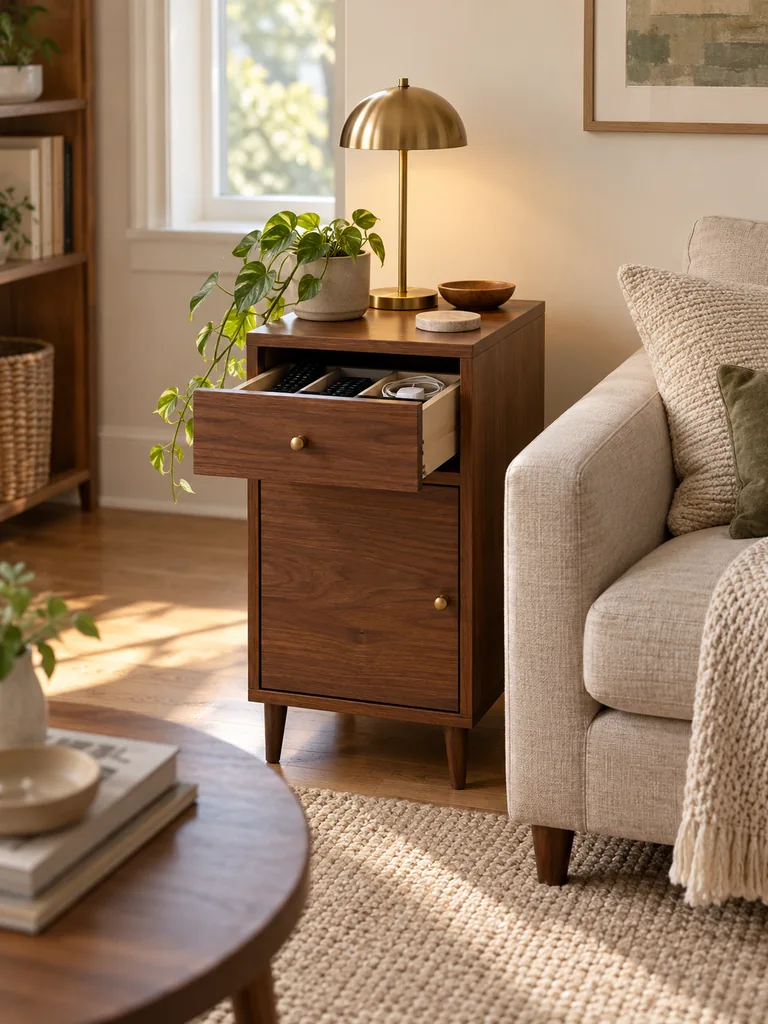
Measure the available gap beside your sofa before choosing a narrow cabinet. Look for a model with a shallow depth, easy-access drawers, and a stable base. Leave enough clearance for comfortable movement and unobstructed access to nearby outlets.
A narrow sofa side cabinet provides discreet storage without requiring a bulky end table. Use the upper drawer for remotes, glasses, and charging accessories, while reserving the lower compartment for less frequently used essentials. Choose a finish that complements your existing furniture to maintain a coordinated, uncluttered appearance.
Entryway Drop Zone Cabinet
Before:
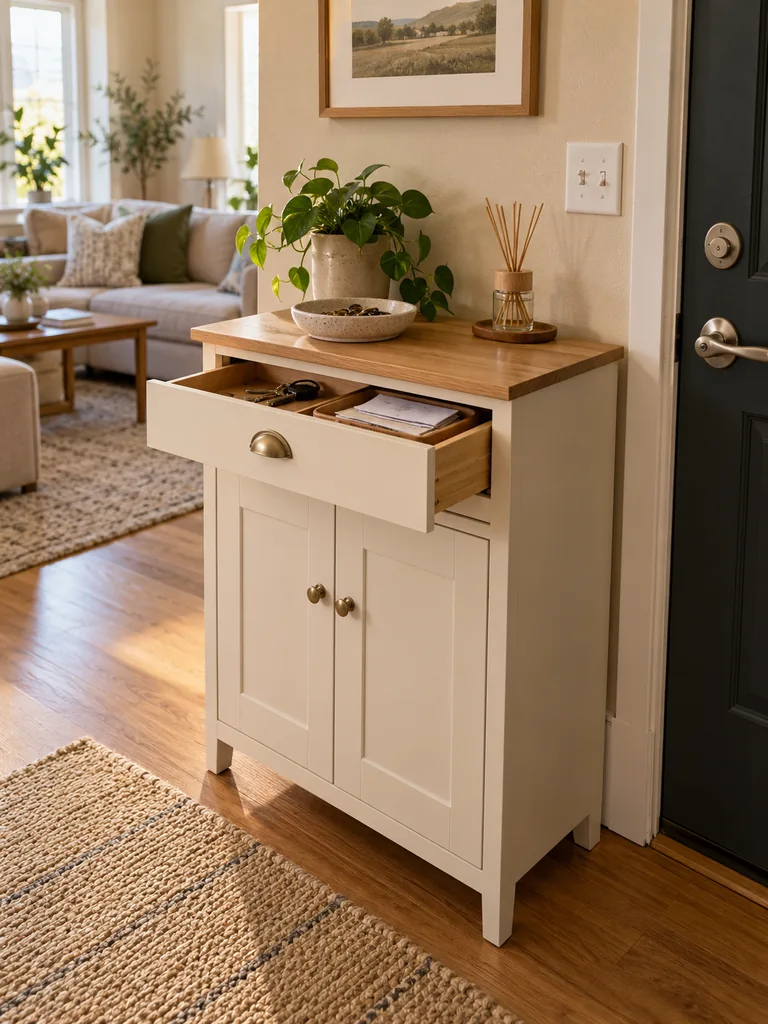
Keys, unopened mail, shopping bags, and everyday accessories often accumulate on the nearest living room surface. In an apartment without a separate entryway, these items can quickly spread across coffee tables and sofa arms. The entrance begins to feel crowded and disorganized.
After:
A compact drop zone cabinet gives frequently used essentials a dedicated place near the front door. Small drawers organize keys and paperwork, while closed compartments conceal bags and other accessories. The living room stays visually calmer because incoming clutter no longer reaches the main seating area.
Choose a shallow cabinet that fits comfortably beside the entrance without restricting the doorway. Add drawer dividers for keys, chargers, and small accessories, then place a simple catchall tray on top. A consistent daily routine of returning items to their compartments helps prevent clutter from rebuilding.
Stackable Game Storage Boxes
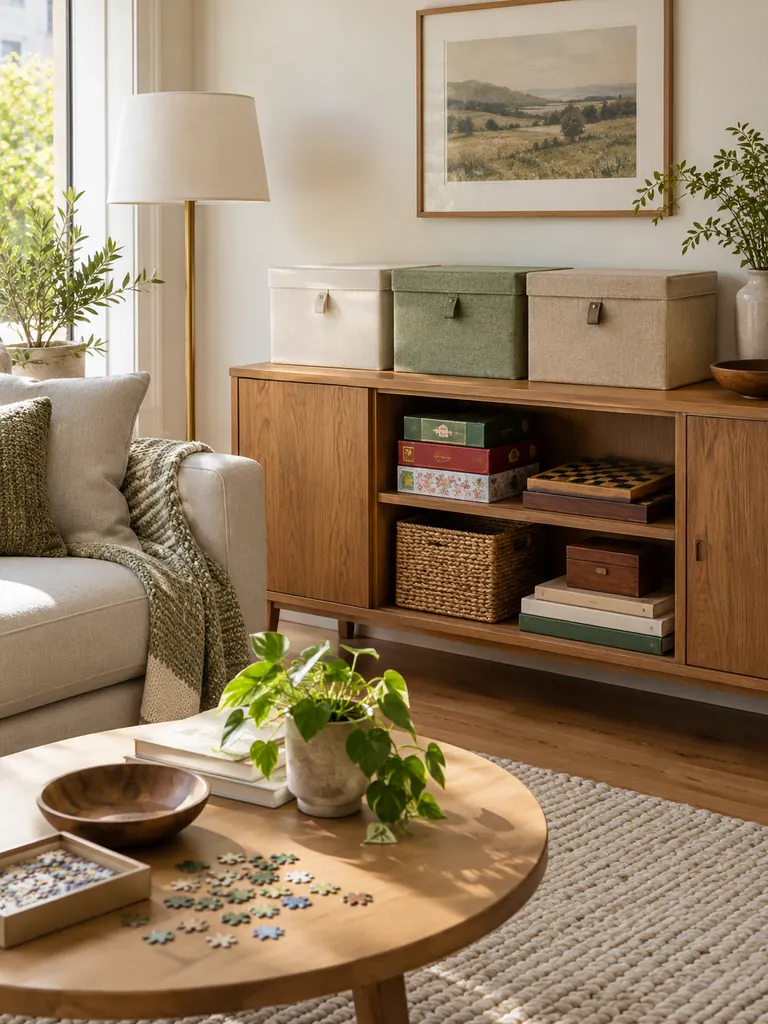
- Sort your games: Separate board games, playing cards, puzzles, and small accessories into categories before choosing storage containers.
- Select sturdy boxes: Choose stackable containers with reinforced sides and secure lids that fit your cabinet or shelving dimensions.
- Organize small pieces: Place loose game components in labeled pouches or smaller containers to prevent missing pieces.
- Label each box: Use discreet labels on the front or side so family members can quickly identify the contents.
- Stack safely: Keep heavier boxes at the bottom and avoid stacking above a comfortable reaching height.
Stackable game storage boxes keep entertainment essentials organized without filling your living room with mismatched packaging. Choose coordinated containers that fit inside an existing cabinet or shelving unit. This approach makes family game nights easier to manage while keeping loose cards, puzzle pieces, and accessories neatly contained between uses.
Hidden Toy Storage Bench
| Feature | Open Toy Basket | Hidden Toy Storage Bench |
|---|---|---|
| Appearance | Toys remain partly visible | Toys disappear inside closed storage |
| Function | Dedicated toy container | Combines storage with optional seating |
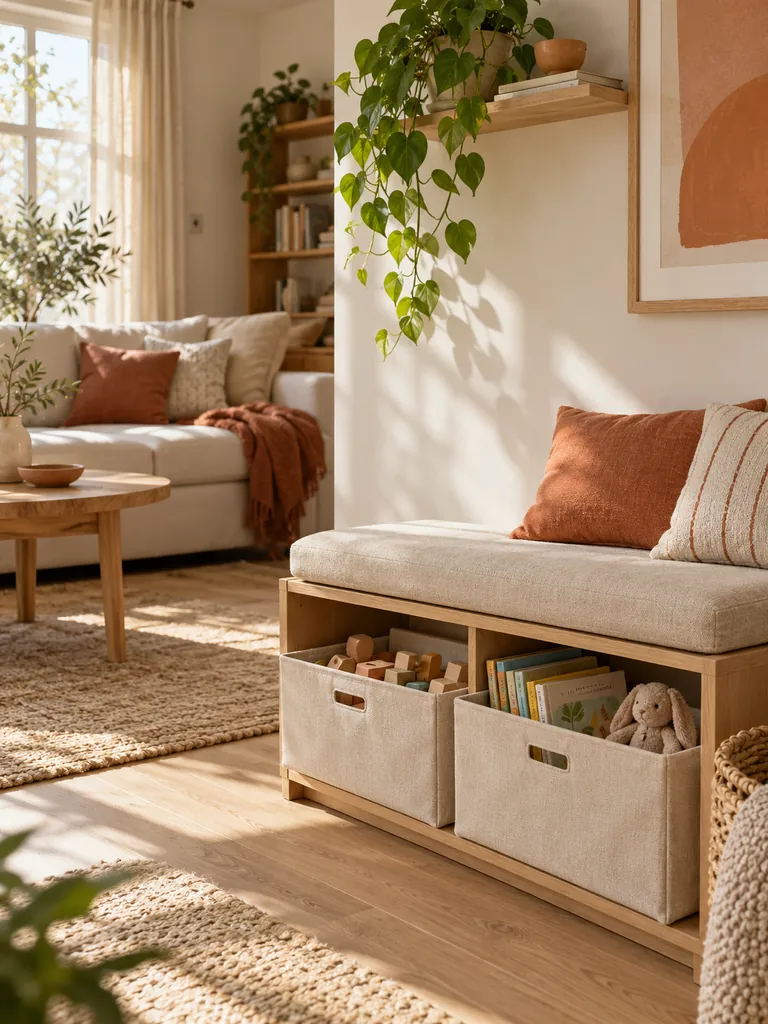
| Organization | Items may become mixed | Separate bins organize toy categories |
| Small Room Benefit | Requires dedicated floor space | Combines two furniture functions |
A hidden toy storage bench keeps children’s play essentials close without leaving colorful toys scattered across the living room. Choose a sturdy, child-safe design with soft-close hardware or accessible pull-out bins. Keep frequently used toys in easy-to-reach compartments, and regularly remove broken or unused items to prevent overcrowding.
Once everyday clutter is under control, explore these cozy living room ideas to make your seating area feel more inviting.
Wall Mounted Remote Holder
Do:
- Install the holder within comfortable reach of the main seating area.
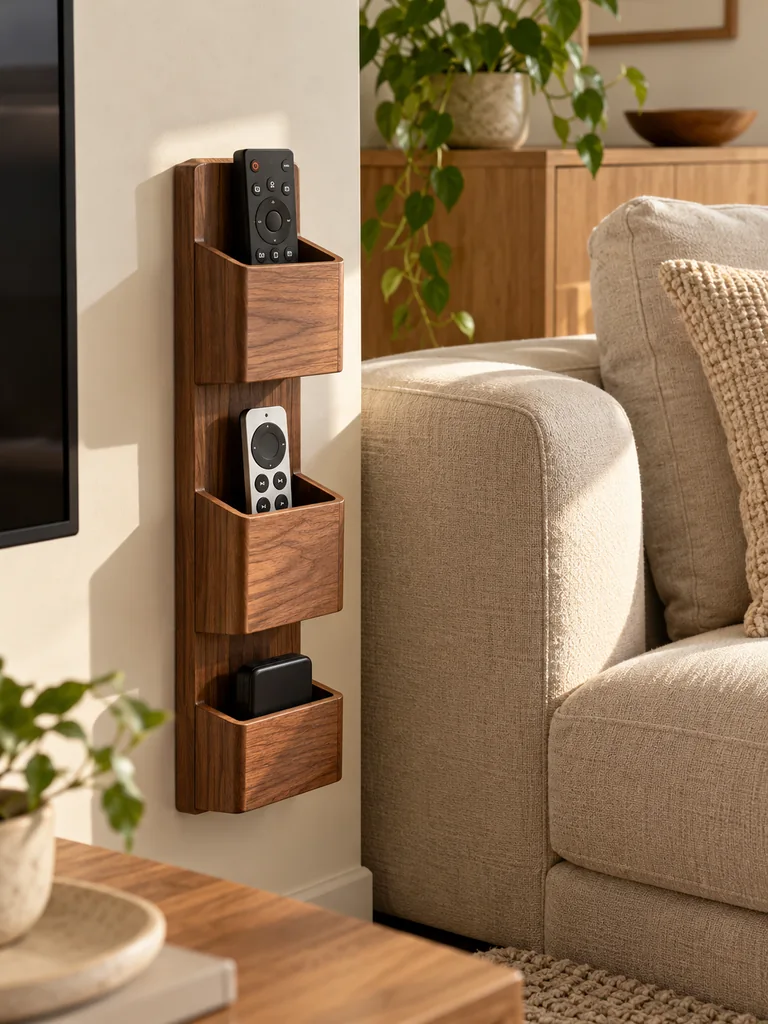
- Choose a slim design with separate compartments for multiple remotes.
- Use suitable wall fixings for the holder’s material and weight.
- Coordinate the finish with nearby furniture or wall accessories.
Don’t:
- Position the holder where it interferes with walking paths.
- Install it directly above electrical outlets or switches.
- Overload small compartments with heavy electronic devices.
- Choose oversized designs that dominate a narrow wall.
A wall mounted remote holder gives television accessories a dedicated home without occupying coffee table space. Position it near the sofa where everyone can reach it comfortably. Choose a design with enough compartments for your devices, and return each remote after use to prevent the familiar search between cushions.
Pull Out Media Cabinet
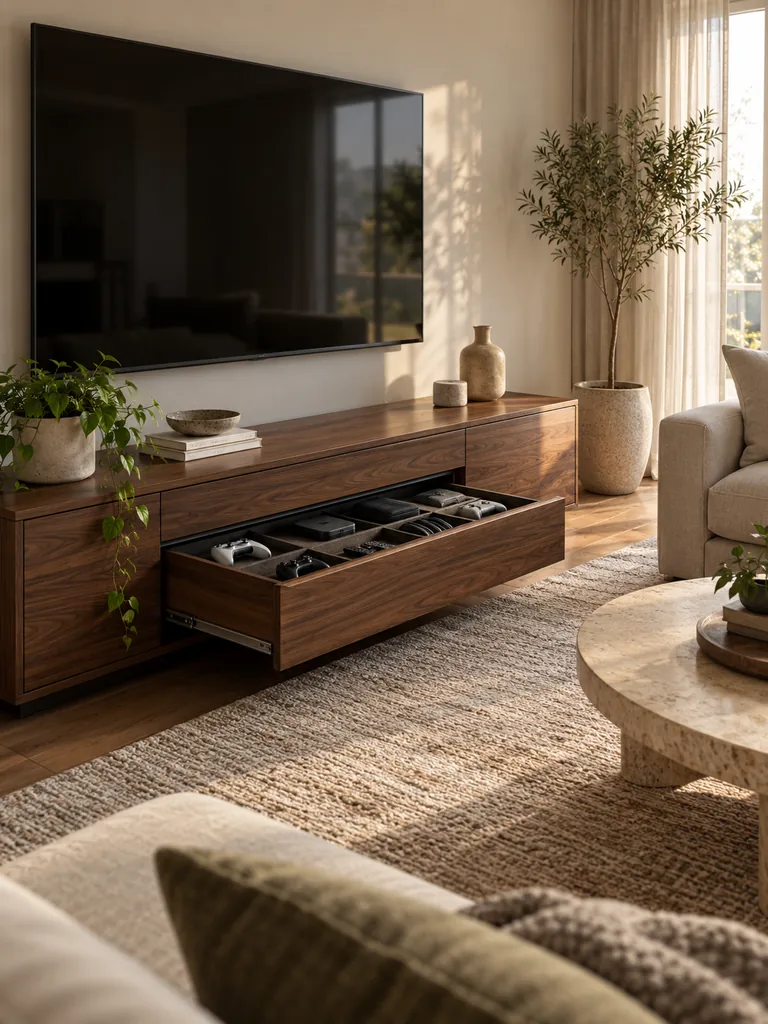
Best For: Organizing gaming accessories, remotes, and small entertainment essentials.
Storage Type: Pull-out trays or drawers with adjustable dividers.
Space Requirement: Low-profile cabinet with adequate clearance for fully extended drawers.
Maintenance: Periodically sort accessories and remove unused cables.
A pull out media cabinet keeps entertainment accessories accessible without leaving them scattered around the television. Choose smooth drawer runners and compartments sized for your devices. Store frequently used controllers near the front, and keep powered equipment properly ventilated according to manufacturer instructions rather than enclosing it in unventilated drawers.
Blanket Storage Side Table
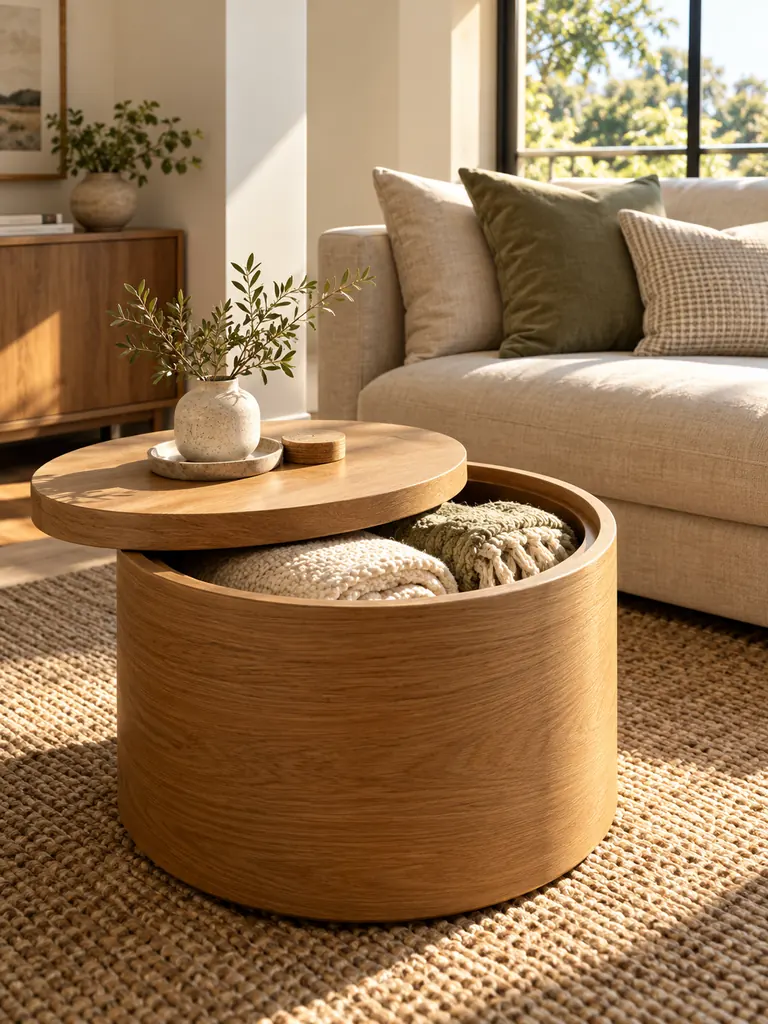
A pile of throw blankets can quickly overwhelm a compact seating area, especially when there is no room for a separate storage basket. A blanket storage side table solves this problem by combining a useful tabletop with a concealed compartment. Choose a design with a lightweight, secure lid and enough interior depth for folded throws.
Position the table beside your sofa so blankets remain easy to reach during cooler evenings. Roll lightweight throws to maximize space, keeping heavier blankets folded flat if necessary. Avoid overfilling the compartment, and select a stable design that can safely support everyday tabletop items such as lamps or drinks.
Hidden Curtain Rod Storage
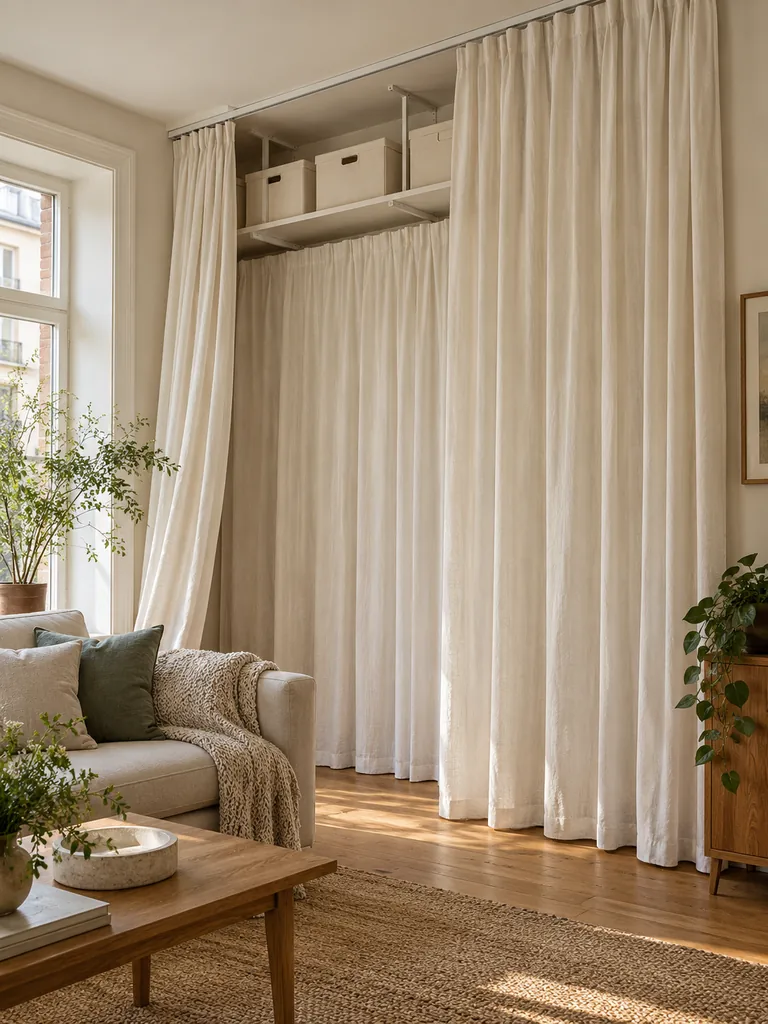
- Choose a suitable location: Identify an unused wall section where a shallow storage shelf can sit behind a full-length curtain.
- Install secure shelving: Use appropriate brackets and wall anchors to support lightweight storage containers.
- Add a ceiling-mounted curtain track: Position the curtain so it conceals the storage area without obstructing windows or ventilation.
- Organize lightweight essentials: Store seasonal accessories, spare linens, and occasional-use items in labeled boxes.
- Maintain easy access: Leave enough clearance to slide the curtain aside and reach the stored items comfortably.
A concealed curtain storage setup creates a discreet organization area without adding bulky cabinets to a compact living room. The fabric softens the space while hiding neatly arranged storage containers. Choose curtains that coordinate with existing window treatments, and avoid placing shelves where they obstruct walkways or electrical fixtures.
Floating Drawer Nightstand
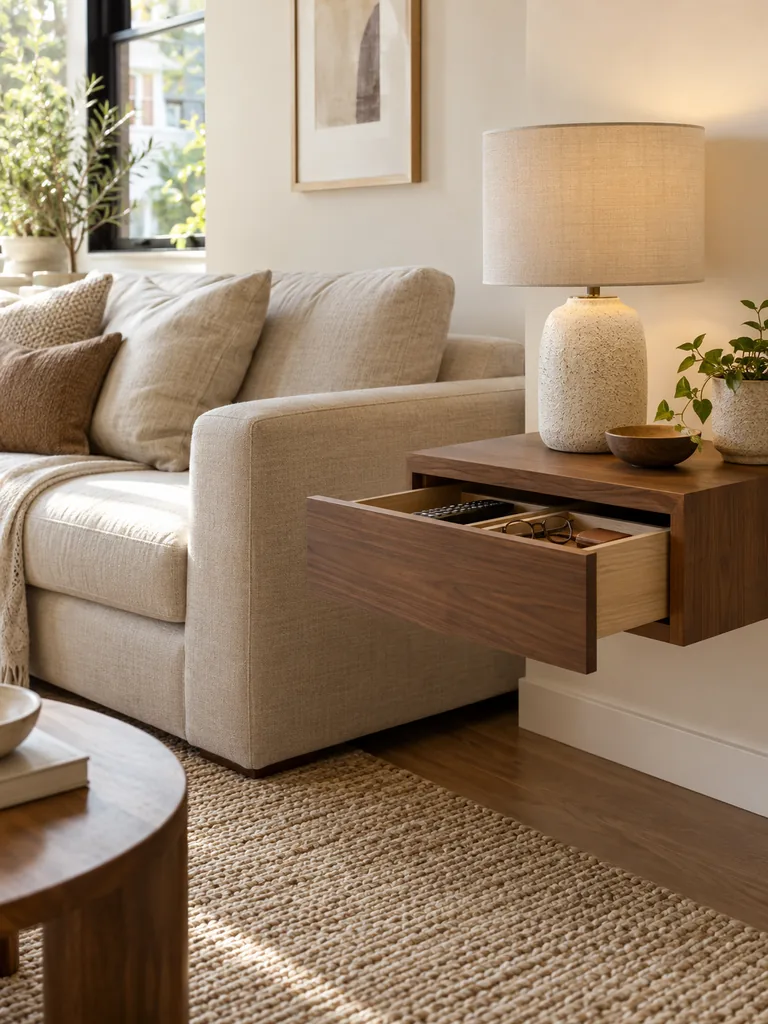
Quick Tip:
Choose a floating nightstand with a fully enclosed drawer and enough depth for your everyday essentials. Install it beside the sofa at a comfortable reaching height, using wall anchors appropriate for the surface. Keep the space underneath clear to maintain an open floor area.
A floating drawer nightstand offers discreet living room storage without taking up valuable floor space. Repurposing a compact bedside unit can be especially useful beside narrow sofas where traditional side tables feel bulky. Choose a finish that complements nearby furniture, and follow the manufacturer’s installation and weight limits.
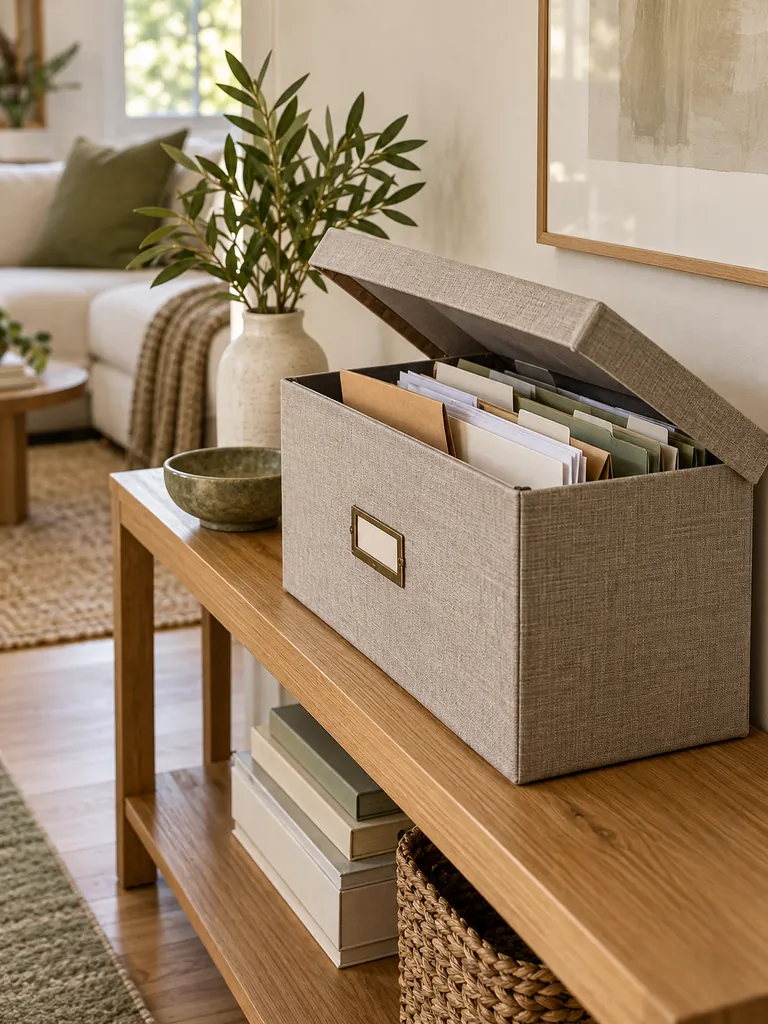
Decorative File Storage Box
Before:
Unopened mail, receipts, appliance manuals, and household documents often accumulate on coffee tables or media consoles. Without a dedicated storage location, important papers become mixed with everyday clutter. Even a carefully decorated living room can feel untidy when paperwork remains visible.
After:
A decorative file storage box keeps household documents organized behind a coordinated exterior. Labeled folders separate bills, manuals, and important correspondence, making papers easier to locate. The box sits neatly on a shelf or console without creating the appearance of an office filing system.
Choose a rigid box with a secure lid and enough interior space for standard document folders. Use simple category labels and review the contents regularly to discard unnecessary paperwork safely. Store sensitive or irreplaceable documents in a more secure location rather than leaving them accessible in shared living areas.
Modular Cube Storage Wall
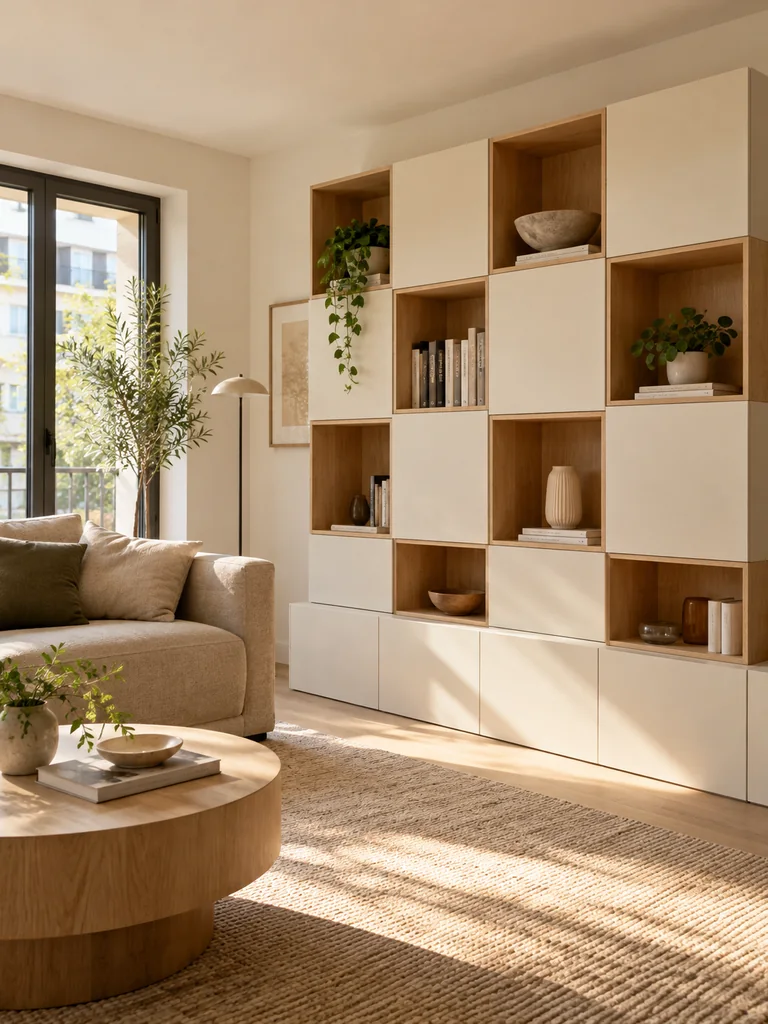
- Measure the wall: Identify the available width and height, leaving clearance around doors, windows, and electrical outlets.
- Choose modular units: Select cube storage components that can be arranged vertically or horizontally to suit your living room layout.
- Add closed compartments: Use compatible cabinet doors or fitted bins to conceal items that would otherwise create visual clutter.
- Organize by frequency: Keep everyday essentials in accessible lower compartments and occasional-use items higher up.
- Secure the structure: Follow the manufacturer’s assembly instructions and anchor tall units to the wall to reduce tipping risks.
A modular cube storage wall creates flexible organization for compact living rooms without requiring several separate cabinets. Combining concealed compartments with a few open shelves keeps the arrangement visually balanced. Choose consistent finishes and avoid filling every cubby with decor, allowing the overall design to remain clean and intentional.
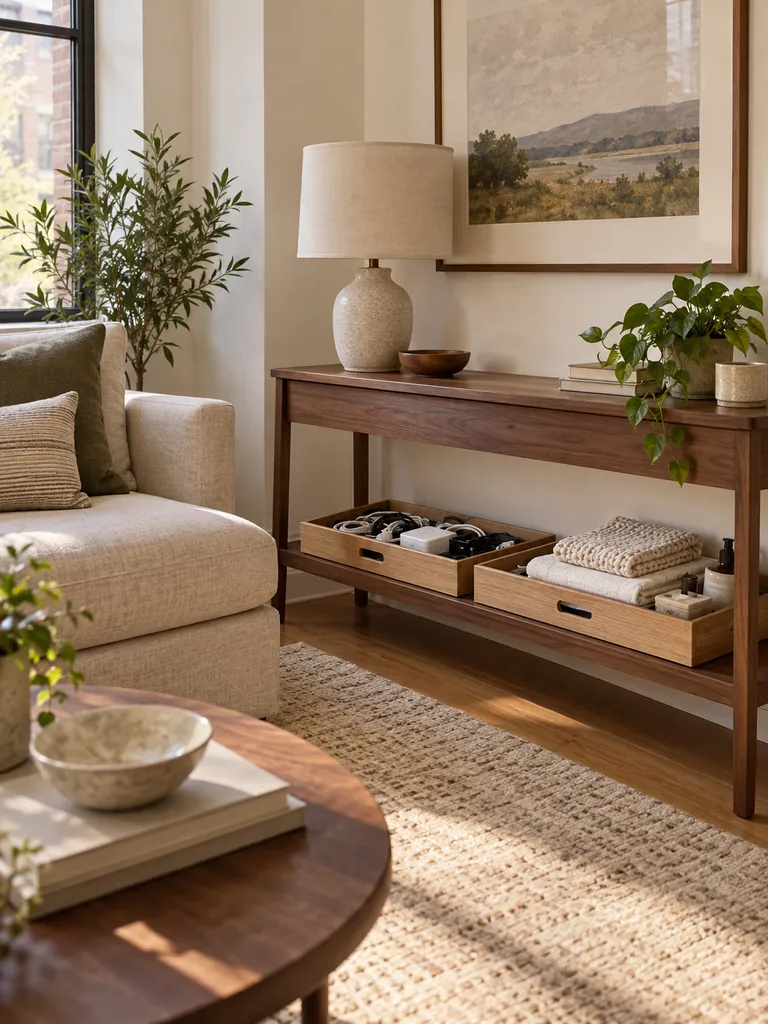
Under Console Storage Trays
Do:
- Choose shallow trays that fit comfortably beneath your existing console table.
- Group similar accessories into separate trays for easier organization.
- Select wood, woven, or fabric-lined finishes that complement your furniture.
- Leave enough clearance to slide each tray out without moving the console.
Don’t:
- Stack loose objects above the tray edges where they may fall.
- Block electrical outlets or ventilation openings behind the console.
- Overfill trays with heavy items that make them difficult to remove.
- Mix unrelated accessories without smaller organizers or dividers.
Under console storage trays turn an overlooked furniture shelf into an organized space for everyday essentials. Their low-profile design keeps accessories contained without requiring additional cabinets. Choose matching trays for a coordinated appearance, and position frequently used items toward the front so they remain accessible during daily routines.
Vertical Cleaning Supply Cabinet
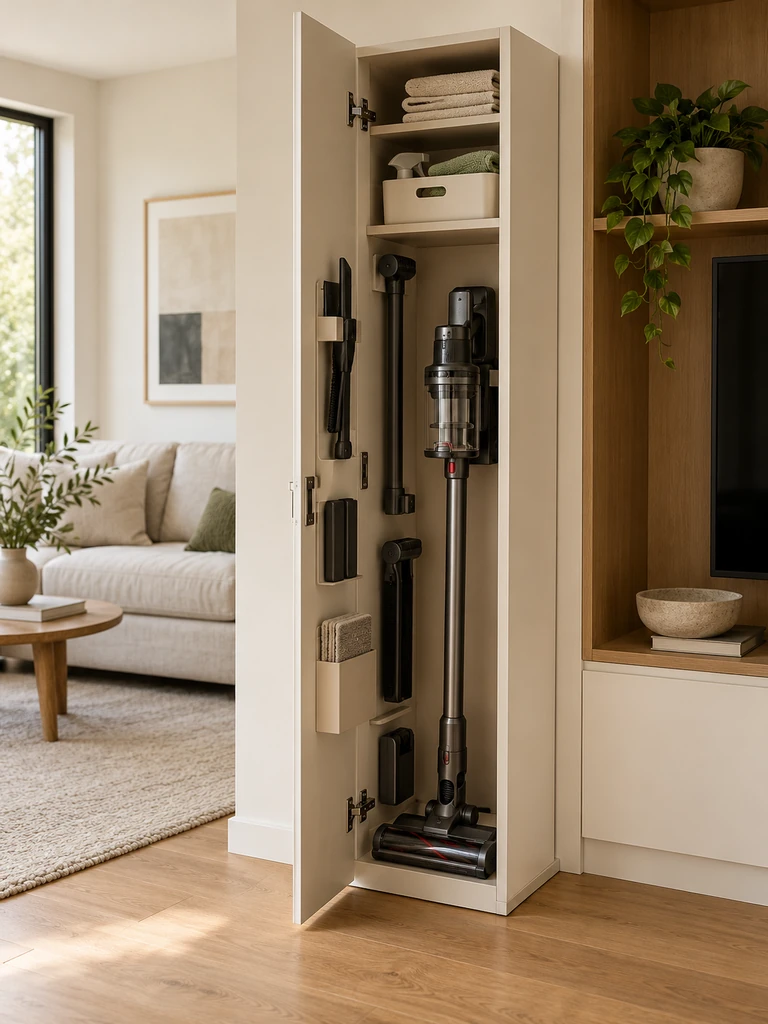
Best For: Apartments without a dedicated utility closet.
Storage Type: Tall enclosed cabinet with adjustable shelves and upright equipment space.
Space Requirement: Narrow floor footprint with sufficient height for cleaning tools.
Safety: Store cleaning chemicals securely, away from children, pets, and heat sources.
A vertical cleaning supply cabinet keeps household maintenance tools hidden without occupying a large section of the living room. Choose a narrow unit with separate compartments for a vacuum, microfiber cloths, and cleaning accessories. Secure tall cabinets against tipping, and keep chemicals in their original containers behind child-resistant storage where needed.
Conclusion
A clutter-free living room doesn’t require extra square footage. With the right small living room storage ideas, you can make everyday essentials easier to find while creating a calmer, more inviting space.
Start with one problem area, whether it’s scattered remotes, overflowing blankets, or unused space beneath your furniture. Small, thoughtful changes can gradually transform how your room looks and functions.
Save these ideas to your favorite Pinterest board so you can revisit them later, try a few solutions that suit your home, and share this article with someone who needs fresh storage inspiration.
A more organized living room starts with one smart change!